
Psalms 90:15
in Psalms 90Make us glad for as many days as You have afflicted us, for as many years as we have seen evil.
BSB
The same verse in ASV and KJV ▾
ASV
Make us glad according to the days wherein thou hast afflicted us, And the years wherein we have seen evil.
KJV
Make us glad according to the days wherein thou hast afflicted us, and the years wherein we have seen evil.
⋯
This verse in Psalms 90
Commentary
12 notes on this verseA commentator
Albert Barnes1798–1870
Notes, Explanatory and Practical, on the Old and New Testaments (1832-1869)
Make us glad according to the days wherein thou hast afflicted us - Let the one correspond with the other. Let our occasions of joy be measured by the sorrows which have come upon us. As our sufferings have been great, so let our joys and triumphs be. And the years wherein we have seen evil - Affliction and sorrow. They have been continued through many wearisome years; so let the years of peace and joy be many also.
This site's exposition
Return, O LORD
on Psalms 90:13-15
Return in verse 13 is the verb of verse 3, now turned on God. Verse 14 asks to be filled in the morning, where verse 6 had the grass withering by evening. Verse 15 measures the glad days by the afflicted ones.
This site's exposition
Make us glad
Charles Spurgeon heard Moses behind the request, a man who watched a whole generation die through forty years in the wilderness. Adam Clarke placed the psalm later and counted the seventy years of the captivity. Either way the prayer asks God to fill the other scale.
The record, by era
The Church Fathers1 voice
Next, in anticipation of future blessings, of which he speaks as already vouchsafed, he says, "We are satisfied with Your mercy in the morning" [Psalm 90:14]. Prophecy has thus been kindled for us, in the midst of these toils and sorrows of the night, like a lamp in the darkness, until day dawn, and the Day-star arise in our hearts. [2 Peter 1:19] For blessed are the pure in heart, for they shall see God: then shall the righteous be filled with that blessing for which they hunger and thirst now, [Matthew 5:8, 6] while, walking in faith, they are absent from the Lord. [2 Corinthians 5:6] Hence are the words, "In Your presence is fullness of joy:" and, "Early in the morning they shall stand by, and shall look up:" and as other translators have said it, "We shall be satisfied with Your mercy in the morning;" then they shall be satisfied. As he says elsewhere, "I shall be satisfied, when Your glory shall be revealed." So it is said, "Lord, show us the Father, and it suffices us:" and our Lord Himself answers, "I will manifest Myself to Zion;" [John 14:8, 21] and until this promise is fulfilled, no blessing satisfies us, or ought to do so, lest our longings should be arrested in their course, when they ought to be increased until they gain their objects. "And we rejoiced and were glad all the days of our life." Those days are days without end: they all exist together: it is thus they satisfy us: for they give not way to days succeeding: since there is nothing there which exists not yet because it has not reached us, or ceases to exist because it has passed; all are together: because there is one day only, which remains and passes not away: this is eternity itself. […]
The Puritans and the Awakening3 voices
They pray for the mercy of God; for they pretend not to plead any merit of their own. Have mercy upon us, O God! is a prayer we are all concerned to say Amen to. Let us pray for early mercy, the seasonable communications of divine mercy, that God's tender mercies may speedily prevent us, early in the morning of our days, when we are young and flourishing,
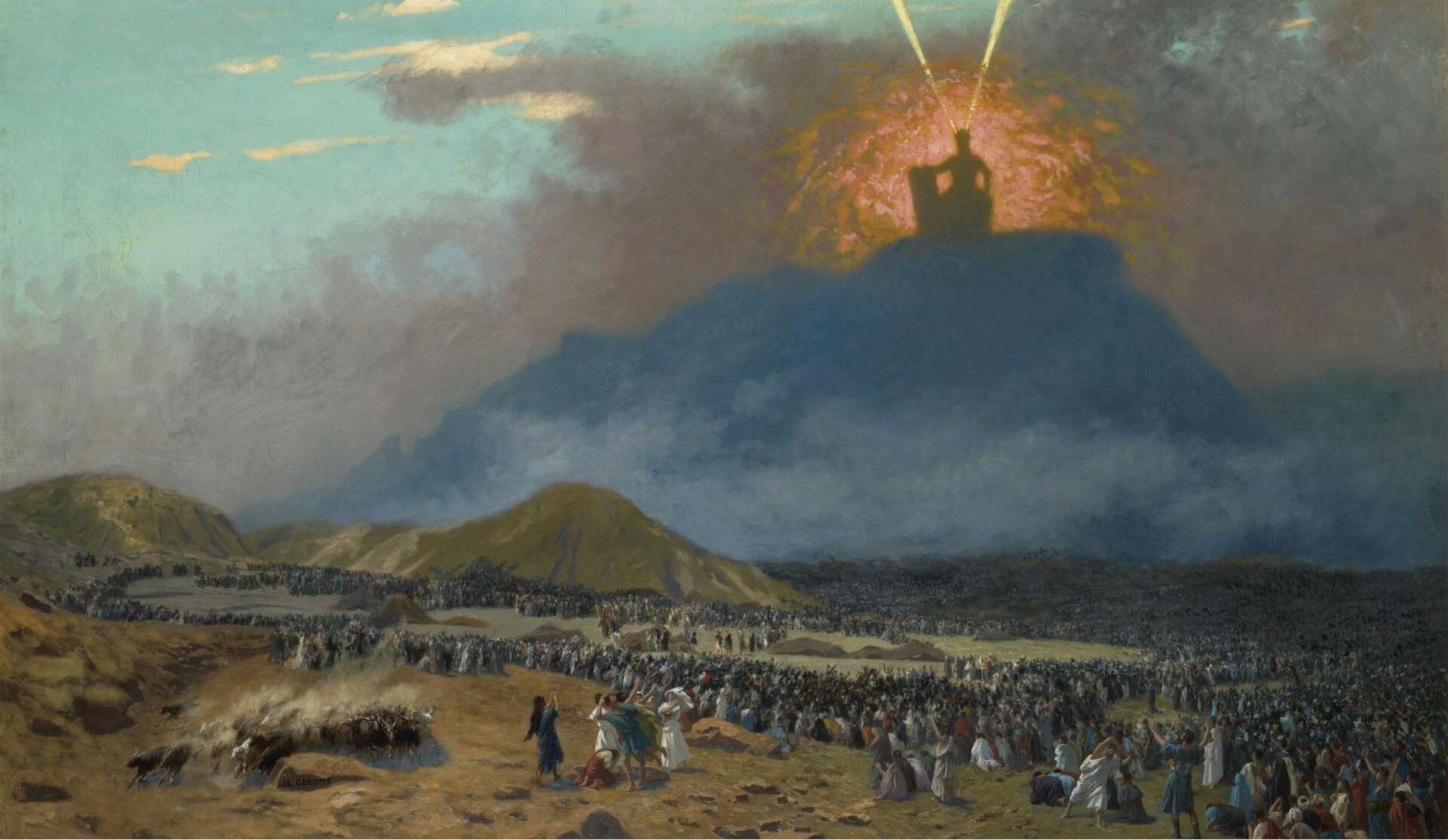
5 Thou carriest them away as with a flood; they are as a sleep: in the morning they are like grass which groweth up. 6 In the morning it flourisheth, and groweth up; in the evening it is cut down, and withereth. This psalm is entitled a prayer of Moses.
quarantine:scripture (2026-07-29) — scripture-overlap:88%@v4-6
Make us glad according to the days wherein thou hast afflicted us,....
The Nineteenth Century1 voice
Make us glad according to the days wherein thou hast afflicted us, and the years wherein we have seen evil. None can gladden the heart as thou canst, O Lord, therefore as thou hast made us sad be pleased to make us glad. Fill the other scale. Proportion thy dispensations. Give us the lamb, since thou has sent us the bitter herbs. Make our days as long as our nights.
4 more voices on this verse
The Nineteenth Century4 voices
TO understand this Psalm, you must observe its black border. Remember the sorrows of Moses, the man of God, who saw a whole generation die in the wilderness and was, himself, denied admission to the promised land. The man, Moses, was greatly afflicted. I might almost call him, as far as his life in the wilderness was concerned, "a man of sorrows and acquainted with grief." He dug the desert till it became a cemetery, for he lived amid 40 years of funerals.
Make us glad according to the days wherein thou hast afflicted us, and the years wherein we have seen evil. None can gladden the heart as thou canst, O Lord, therefore as thou hast made us sad be pleased to make us glad. Fill the other scale. Proportion thy dispensations. Give us the lamb, since thou has sent us the bitter herbs. Make our days as long as our nights. The prayer is original, childlike, and full of meaning; it is moreover based upon a great principle in providential goodness, by which the Lord puts the good over against the evil in due measure. Great trial enables us to bear great joy, and may be regarded as the herald of extraordinary grace. God's dealings are according to scale; small lives are small throughout; and great histories are great both in sorrow and happiness. Where there are high hills there are also deep valleys. As God provides the sea for leviathan, so does he find a pool for the minnow; in the sea all things are in fit proportion for the mighty monster, while in the little brook all things befit the tiny fish. If we have fierce afflictions we may look for overflowing delights, and our faith may boldly ask for them. God who is great in justice when he chastens will not be little in mercy when he blesses, he will be great all through: let us appeal to him with unstaggering faith.
TO understand this Psalm, you must observe its black border. Remember the sorrows of Moses, the man of God, who saw a whole generation die in the wilderness and was, himself, denied admission to the promised land. The man, Moses, was greatly afflicted. I might almost call him, as far as his life in the wilderness was concerned, "a man of sorrows and acquainted with grief." He dug the desert till it became a cemetery, for he lived amid 40 years of funerals. This 90th Psalm is saturated with the griefs of a sentenced generation, by whom it could be truly said, "We are consumed by Your anger, and by Your wrath are we troubled." We have, in our own case, as a Church and people, a double black border to surround our text this morning, for death has despoiled us a second time. We were, last Wednesday, burying our honored deacon, William Higgs, and at the moment of our meeting for that solemn purpose, another greatly esteemed deacon, William Mills, (William Mills, Esq., for many years a beloved deacon of the Church in the Metropolitan Tabernacle, was taken to his rest January 12th, 1883, at the age of sixty-two), was suddenly stricken down with paralysis, to linger for a few hours and then to breathe out his soul unto God. I shall not trust myself to speak about him, for this double loss has, to a great extent, unnerved me. But this I must say, that he was an experienced and mature Christian and, above all, a quiet, diligent, loving, gracious servant of our common Master, whose care was the poor of the Church, to whom he distributed our alms with discretion and tenderness. It was pleasant to hear from him the story of his Christian experience. His was a calm and lowly walk. Of late, being weakly, he was much at home and there the Psalms of David and the Morning and Evening Portions were his comfort.
Make us glad according to the days - Let thy people have as many years of prosperity as they have had of adversity. We have now suffered seventy years of a most distressful captivity.
How the passage was read
What the Jewish commentators add
On the verses either side of this one
Satiate us in the morning On the day of the redemption and the salvation, which is the morning of the night of the trouble, the sighing, and the darkness.
This section is reception history: how the passage was read and kept in the Jewish tradition. Where a reading parts from an essential of the Christian faith, the section says so at that point.
Texts and citation data: Sefaria; each excerpt follows its version’s licence. 3 further sources are cited on this chapter that carry no English text this site may quote or only restate the verse.
The words behind it
6 Hebrew wordsEvery Hebrew word of this verse in the order it stands, with what it means and the door to its own study. The last column counts the times a word stands in the whole Bible: the rarer the word, the more the places it appears belong together.
| Hebrew | Sound | Meaning | Word study | In the Bible |
|---|---|---|---|---|
| שַׂ֭מְּחֵנוּ | samchenu | make rejoice us | H8055 → | 155 times |
| כִּימ֣וֹת | kimot | according to [the] days | H3117 → | 2304 times |
| עִנִּיתָ֑נוּ | ʾinitanu | <of> [which] you afflicted us | H6031 → | 82 times |
| שְׁ֝נ֗וֹת | shenot | [the] years | H8141 → | 877 times |
| רָאִ֥ינוּ | rainu | <of> [which] we saw | H7200 → | 1300 times |
| רָעָֽה׃ | raah | trouble | H7451 → | 662 times |
שַׂ֭מְּחֵנוּmake rejoice us
samchenuH8055 →155 times
כִּימ֣וֹתaccording to [the] days
kimotH3117 →2304 times
עִנִּיתָ֑נוּ<of> [which] you afflicted us
ʾinitanuH6031 →82 times
שְׁ֝נ֗וֹת[the] years
shenotH8141 →877 times
רָאִ֥ינוּ<of> [which] we saw
rainuH7200 →1300 times
רָעָֽה׃trouble
raahH7451 →662 times
A shaded row is a word that stands 400 times or fewer in the Bible.
The walk
8 stopsEach card is a verse this one points to, and under it the verses that one points to in turn. Where several paths arrive at the same place, that place is listed first: the text keeps returning to it.
Through
Psalms 30:5For His anger is fleeting, but His favor lasts a lifetime. Weeping may stay the night, but joy comes in the morning.
it leads to
- Psalms 126:5–6
Those who sow in tears will reap with shouts of joy.
Reached by 2 separate paths from here.
- Matthew 5:4
Blessed are those who mourn, for they will be comforted.
Reached by 2 separate paths from here.
- Isaiah 54:7–8
“For a brief moment I forsook you, but with great compassion I will bring you back.
- 2 Corinthians 4:17
For our light and momentary affliction is producing for us an eternal weight of glory that is far beyond comparison.
- John 16:20–22
Truly, truly, I tell you, you will weep and wail while the world rejoices. You will grieve, but your grief will turn to joy.
- Psalms 126:5–6
Through
John 16:20Truly, truly, I tell you, you will weep and wail while the world rejoices. You will grieve, but your grief will turn to joy.
it leads to
- James 1:2
Consider it pure joy, my brothers, when you encounter trials of many kinds,
- Revelation 7:14–17
“Sir,” I answered, “you know.” So he replied, “These are the ones who have come out of the great tribulation; they have washed their robes and made them white in the blood of the…
- Mark 16:10
She went and told those who had been with Him, who were mourning and weeping.
- James 1:2
About Psalms
This page draws on 10 works. Open the list of works
This page draws on Adam Clarke, Commentary on the Bible; Albert Barnes, Notes, Explanatory and Practical, on the Old and New Testaments (1832-1869); Albert Barnes, Notes on the Book of Psalms; Augustine of Hippo, Exposition on Psalm 90; Charles Spurgeon, The Metropolitan Tabernacle Pulpit; Charles Spurgeon, The Treasury of David, Vol. 4; Charles Spurgeon, The Metropolitan Tabernacle Pulpit, Sermon No. 1701: “Gladness For Sadness” (lightly modernized text, CCEL edition); Franz Delitzsch, Biblical Commentary on the Psalms; John Gill, Exposition of the Old Testament (1748-1763) and Matthew Henry, Commentary on the Whole Bible.