
Psalms 8:3
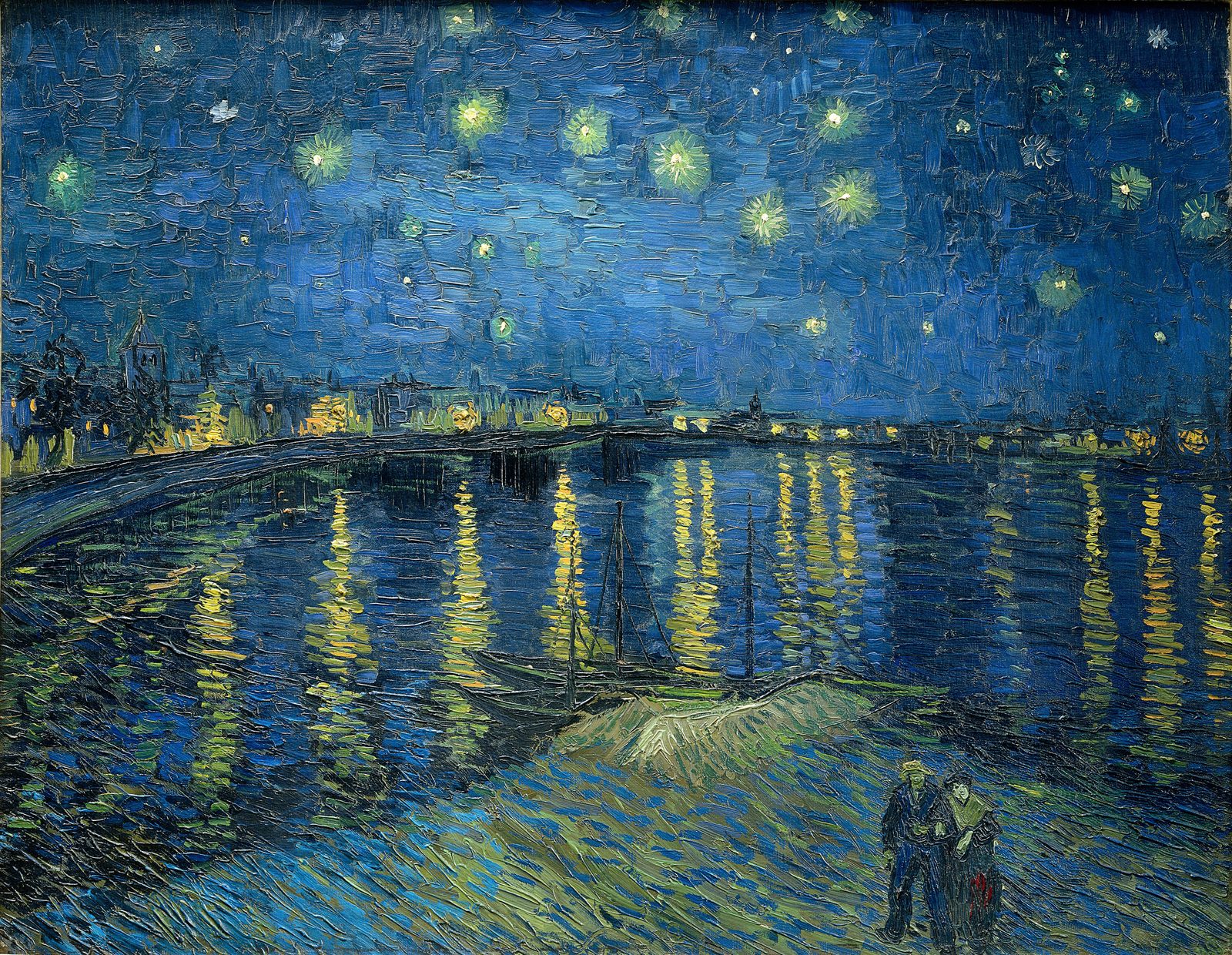
in Psalms 8When I behold Your heavens, the work of Your fingers, the moon and the stars, which You have set in place—
BSB
The same verse in ASV and KJV ▾
ASV
When I consider thy heavens, the work of thy fingers, The moon and the stars, which thou hast ordained;
KJV
When I consider thy heavens, the work of thy fingers, the moon and the stars, which thou hast ordained;
⋯
This verse in Psalms 8
Commentary
20 notes on this verseWhen I consider thy heavens,.... Where God dwells, and which he has made; the airy and starry heavens, which are to be seen with the bodily eye; and the heaven of heavens, which is to be beheld and considered by faith: the work of thy fingers; being curiously wrought by his power, and garnished by his Spirit: for the finger of God is the Spirit of God; see Mat 12:28; compared with Luk 11:20; the moon and the stars, which thou hast ordained, or "prepared" (h), for various uses to the earth, and the inhabitants of it.
This site's exposition
the work of Your fingers
on Psalms 8:3-4
David looks up at the heavens, the moon and the stars, and calls them the work of God's fingers. Against that scale he asks what man is, that God keeps him in mind and cares for him. Son of man here means a human being.
The record, by era
The Church Fathers5 voices
"For I shall see Your heavens, the works of Your fingers" [Psalm 8:3]. We read that the law was written with the finger of God, and given through Moses, His holy servant: by which finger of God many understand the Holy Ghost. Wherefore if, by the fingers of God, we are right in understanding these same ministers filled with the Holy Ghost, by reason of this same Spirit which works in them, since by them all holy Scripture has been completed for us; we understand consistently with this, that, in this place, the books of both Testaments are called "the heavens." Now it is said too of Moses himself, by the magicians of king Pharaoh, when they were conquered by him, "This is the finger of God." [Exodus 8:19] And what is written, "The heavens shall be rolled up as a book." Although it be said of this æthereal heaven, yet naturally, according to the same image, the heavens of books are named by allegory. "For I shall see," he says, "the heavens, the works of Your fingers:" that is, I shall discern and understand the Scriptures, which You, by the operation of the Holy Ghost, hast written by Your ministers.
You are mindful of man, and you have concern for him because you did not make him as if he were a small and worthless animal, but he is worthy of so much honor that he is celebrated with hymns from the mouths of infants and sucklings.
A commentator
Gregory of NazianzusON THEOLOGY, THEOLOGICAL ORATION 2(28).6 · Written before 390.
proposed
Our very eyes and the law of nature teach us that God exists and that he is the efficient and maintaining cause of all things: our eyes, because they fall on visible objects and see them in beautiful stability and progress, immovably moving and revolving, if I may so say; natural law, because through these visible things and their order it reasons back to their author. For how could this universe have come into being or been put together unless God had called it into existence and held it together? For everyone who sees a beautifully made lute and considers the skill with which it has been fitted together and arranged, or who hears its melody, would think of none but the lutemaker or the luteplayer, and would recur to him in mind, though he might not know him by sight. And thus to us also is manifested that which made and moves and preserves all created things, even though he is not comprehended by the mind.
And why did he not say "your hands" instead of "your fingers"? To show that visible things are a work requiring the least power, and the extraordinary aspect of creation, namely, that the stars hang there without falling; at any rate, though the very nature of the foundations required, not that they be suspended above but lie below, still the excellent Architect and Creator produced a surprise in making most of the visible things surpass the logic of nature.
"What is it about human beings?" … Taking full account of such marvelous care and such wonderful providence on God's part, and the arrangements he put in place for the salvation of the human race, [the psalmist] is struck with complete wonder and amazement as to why on earth God considered them worthy of attention. Consider, after all, that all the visible things were for their sake. For them the design implemented from the time of Adam up to his coming; for them paradise, commandments, punishments, miracles, retribution, kindnesses after the Law; for them the Son of God became human. What could anyone say of the future they are intended to enjoy? So all those things are going through his mind when he says, to be thought worthy of such wonderful privileges, what must the human being be? I mean, if you consider what was done and is being done for their sake, and what they will enjoy afterwards, you will be stricken with awe, and then you will see clearly how this being is an object of such attention on God's part.
13 more voices on this verse
The Church Fathers4 voices
Now this Father of our Lord Jesus Christ is not circumscribed to some place, nor is there heaven beyond him, but "the heavens are the work of his fingers," and "the whole earth is holden in the hollow of his hand." He is in everything, and yet nothing contains him. Do not imagine that God is smaller than the sun or that he is as large as the sun. For, as he made the sun, he must have been already incomparably greater than the sun and more resplendent with light. He knows what is to come, and nothing equals him in power. He knows everything and does as he wills. He is not subject to any law of sequence, or genesis, or fortune or fate. He is perfect by every measure. He possesses unchangeably every kind of virtue, never less and never more, but ever in the same degree and manner.
The psalmist is speaking here of the frailty of the body and of human weakness, and what does he say? If you consider his flesh, what is a person? If you consider his spirit, he is noble. Let us by no means scorn the flesh, but let us reject its works. Let us not despise the body that will reign in heaven with Christ. "Flesh and blood can obtain no part in the kingdom of God"; no, not flesh and blood of themselves, but the works of the flesh.
A commentator
Gregory of NazianzusON HIS BROTHER ST. CAESARIUS, ORATION 7:23 · Written before 390.
proposed
Would that I might mortify my members that are on the earth! Would that I might spend all for the spirit, walking in the way that is narrow and trodden by few, not the way that is broad and easy! For what comes after this life is splendid and great, and our hope is greater than our worth. "What is man that you are mindful of him?" What is this new mystery concerning me? I am small and great, lowly and exalted, mortal and immortal, earthly and heavenly. I am connected with the world below, and likewise with God; I am connected with the flesh, and likewise with the spirit. I must be buried with Christ, rise with Christ, be joint heir with Christ, become the Son of God, even God himself.
But how shall I tell what God makes? Behold the whole universe; it is His work: and the heaven, and the sun, and angels, and men, are the works of His fingers. How great is the power of God! His bare volition was the creation of the universe. For God alone made it, because He alone is truly God. By the bare exercise of volition He creates; His mere willing was followed by the springing into being of what He willed. Consequently the choir of philosophers are in error, who indeed most nobly confess that man was made for the contemplation of the heavens, but who worship the objects that appear in the heavens and are apprehended by sight. For if the heavenly bodies are not the works of men, they were certainly created for man. Let none of you worship the sun, but set his desires on the Maker of the sun; nor deify the universe, but seek after the Creator of the universe.
The Medieval Church3 voices
A commentator
BonaventureCollations on the Hexaemeron, Collation 9 · Written in the 13th century.
proposed
When I behold Your heavens, the work of Your fingers, that is, the heavenly men in whom we see this threefold light, the work of God's fingers. The magicians of Pharaoh lacked this third finger, that is, the miracles.
Next he attaches the reason for this manifestation, saying "For." Cicero says in the book On the Nature of the Gods, and it was also said by Aristotle, although it is not found in his books that we have, that if any man were to …
By saying "founded" he meant the stability and immutability of the order and succession given them by God.
The Puritans and the Awakening2 voices
The moon - Either the sun is included under this general title: or he omitted it, because he made this psalm by night. Ordained - Placed in that excellent and unalterable order, and directed to their several motions.
We must always consider the heavens as God's heavens, not only as all the world is his, even the earth and the fulness thereof, but in a more peculiar manner. The heavens, even the heavens, are the Lord's ( Ps. cxv. 16 ); they are the place of the residence of his glory and we are taught to call him Our Father in heaven.
The Nineteenth Century4 voices
A commentator
Albert Barnes1798–1870
Notes, Explanatory and Practical, on the Old and New Testaments (1832-1869)
When I consider thy heavens - When I contemplate or look upon. They are called his heavens because he made them - because he is the proprietor of them - perhaps because they are his abode. The work of thy fingers - Which thy fingers have made. The fingers are the instruments by which we construct a piece of work - perhaps indicating skill rather than strength; and hence so used in respect to God, as it is by his skill that the heavens have been made.
At the close of that excellent little manual entitled "The Solar System, " written by Dr. Dick, we find an eloquent passage which beautifully expounds the text:—A survey of the solar system has a tendency to moderate the pride of man and to promote humility. Pride is one of the distinguishing characteristics of puny man, and has been one of the chief causes of all the contentions, wars, devastations, systems of slavery, and ambitious projects which have desolated and demoralized our sinful world. Yet there is no disposition more incongruous to the character and circumstances of man.
At the close of that excellent little manual entitled "The Solar System, " written by Dr. Dick, we find an eloquent passage which beautifully expounds the text:—A survey of the solar system has a tendency to moderate the pride of man and to promote humility. Pride is one of the distinguishing characteristics of puny man, and has been one of the chief causes of all the contentions, wars, devastations, systems of slavery, and ambitious projects which have desolated and demoralized our sinful world. Yet there is no disposition more incongruous to the character and circumstances of man. Perhaps there are no rational beings throughout the universe among whom pride would appear more unseemly or incompatible than in man, considering the situation in which he is placed. He is exposed to numerous degradations and calamities, to the rage of storms and tempests, the devastations of earthquakes and volcanoes, the fury of whirlwinds, and the tempestuous billows of the ocean, to the ravages of the sword, famine, pestilence, and numerous diseases; and at length he must sink into the grave, and his body must become the companion of worms! The most dignified and haughty of the sons of men are liable to these and similar degradations as well as the meanest of the human family. Yet, in such circumstances, man—that puny worm of the dust, whose knowledge is so limited, and whose follies are so numerous and glaring—has the effrontery to strut in all the haughtiness of pride, and to glory in his shame. When other arguments and motives produce little effect on certain minds, no considerations seem likely to have a more powerful tendency to counteract this deplorable propensity in human beings, than those which are borrowed from the objects connected with astronomy. They show us what an insignificant being— what a mere atom, indeed, man appears amidst the immensity of creation!
When I Consider thy heavens - כי אראה ki ereh; Because I will see. He had often seen the heavens with astonishment, and he purposes to make them frequent subjects of contemplation; and he could not behold them without being affected with the skill, contrivance, and power, manifested in their formation. The work of thy fingers - What a view does this give of the majesty of God! The earth is nearly eight thousand English miles in diameter: but to form an adequate conception of its magnitude, we must consider it in its superficial and solid contents. Upon the supposition that the earth’s polar diameter is seven thousand nine hundred and forty miles, and its equatorial, seven thousand nine hundred and seventy-seven, (estimates considered to very near approximations to the truth), the whole superficies of the terraqueous globe will amount to about one hundred and ninety-eight millions, nine hundred and eighty thousand, seven hundred square miles; and its solid contents, in cubic miles will be expressed by the following figures: 264,544,857,944, i.e., two hundred and sixty-four thousand five hundred and forty-four millions, eight hundred and fifty-seven thousand, nine hundred and forty-four. Great as we have shown the bulk of the earth to be, from the most accurate estimates of its diameter it is but small when compared with the bulks of some of the other bodies in the solar system. The planet Herschel, or Georgium Sidus, known on the continent of Europe by the name of Uranus, is eighty times and a half greater than the earth; Saturn, nine hundred and ninety-five times greater; Jupiter, one thousand two hundred and eighty-one times greater; and the sun, the most prodigious body in the system, one million three hundred and eightyfour thousand, four hundred and sixty-two times greater. […]
How the passage was read
What the Jewish commentators add
Out of the mouth of babes and sucklings You have established strength You caused Your Shechinah to rest in the Temple, and You decreed that we thank You.
2 more on this passage, in their own words ▾
how mighty is Your name more than the strength of the measure of the earthlings. The earthlings did not deserve that You should cause Your Shechinah to rest among them.
When I consider Thy heavens, the work of Thy fingers, The moon and the stars which Thou hast ordained: – He does not mention the sun. Some say that (David) uttered this Psalm at night, at a time when he was considering the moon and stars, and discerning the wonders of the Creator. Others also say (Ibn Ezra, ad loc.) that in the daytime only the sun is seen, while at night a very great host is seen.
This section is reception history: how the passage was read and kept in the Jewish tradition. Where a reading parts from an essential of the Christian faith, the section says so at that point.
Texts and citation data: Sefaria; each excerpt follows its version’s licence. 2 further sources are cited on this chapter that carry no English text this site may quote or only restate the verse.
The words behind it
9 Hebrew wordsEvery Hebrew word of this verse in the order it stands, with what it means and the door to its own study. The last column counts the times a word stands in the whole Bible: the rarer the word, the more the places it appears belong together.
| Hebrew | Sound | Meaning | Word study | In the Bible |
|---|---|---|---|---|
| כִּֽי־ | ki- | if | H3588 → | 4482 times |
| אֶרְאֶ֣ה | ʾereh | I will see | H7200 → | 1300 times |
| שָׁ֭מֶיךָ | shameikha | heavens your | H8064 → | 421 times |
| מַעֲשֵׂ֣י | maasei | [the] works | H4639 → | 236 times |
| אֶצְבְּעֹתֶ֑יךָ | ʾetzbeoteikha | fingers your | H676 → | |
| יָרֵ֥חַ | yareach | [the] moon | H3394 → | 27 times |
| וְ֝כוֹכָבִ֗ים | vekhokhavim | and [the] stars | H3556 → | 37 times |
| אֲשֶׁ֣ר | ʾasher | which | H834 → | 5497 times |
| כּוֹנָֽנְתָּה׃ | konanetah | you have established | H3559 → | 217 times |
כִּֽי־if
ki-H3588 →4482 times
אֶרְאֶ֣הI will see
ʾerehH7200 →1300 times
שָׁ֭מֶיךָheavens your
shameikhaH8064 →421 times
מַעֲשֵׂ֣י[the] works
maaseiH4639 →236 times
אֶצְבְּעֹתֶ֑יךָfingers your
ʾetzbeoteikhaH676 →
יָרֵ֥חַ[the] moon
yareachH3394 →27 times
וְ֝כוֹכָבִ֗יםand [the] stars
vekhokhavimH3556 →37 times
אֲשֶׁ֣רwhich
ʾasherH834 →5497 times
כּוֹנָֽנְתָּה׃you have established
konanetahH3559 →217 times
A shaded row is a word that stands 400 times or fewer in the Bible.
The walk
5 stopsEach card is a verse this one points to, and under it the verses that one points to in turn. Where several paths arrive at the same place, that place is listed first: the text keeps returning to it.
Through
Genesis 1:1In the beginning God created the heavens and the earth.
it leads to
- Hebrews 11:3
By faith we understand that the universe was formed at God’s command, so that what is seen was not made out of what was visible.
Reached by 2 separate paths from here.
- John 1:1–3
In the beginning was the Word, and the Word was with God, and the Word was God.
- Isaiah 45:18
For thus says the LORD, who created the heavens—He is God; He formed the earth and fashioned it; He established it; He did not create it to be empty, but formed it to be…
- Revelation 4:11
“Worthy are You, our Lord and God, to receive glory and honor and power, for You created all things; by Your will they exist and came to be.”
- Hebrews 1:10
And: “In the beginning, O Lord, You laid the foundations of the earth, and the heavens are the work of Your hands.
- Hebrews 11:3
Where this verse is studied
By subject
Creation34 verses
On this page
Studies3
On this verse
On this chapter
About Psalms
This page draws on 20 works. Open the list of works
This page draws on Adam Clarke, Commentary on the Bible; Albert Barnes, Notes, Explanatory and Practical, on the Old and New Testaments (1832-1869); Augustine of Hippo, Exposition on Psalm 8; Bonaventure, Collations on the Hexaemeron, Collation 9; Charles Spurgeon, The Treasury of David; Charles Spurgeon, The Treasury of David, Vol. 1; Clement of Alexandria, Exhortation to the Heathen; Cyril of Jerusalem, Catechetical Lecture 4:5; Eusebius of Caesarea, COMMENTARY ON PSALMS 8:4-5; Franz Delitzsch, Biblical Commentary on the Psalms; Gregory of Nazianzus, ON THEOLOGY, THEOLOGICAL ORATION 2(28).6; Gregory of Nazianzus, ON HIS BROTHER ST. CAESARIUS, ORATION 7:23; Jerome, HOMILY ON PSALM 143; John Chrysostom, COMMENTARY ON THE PSALMS 8:6; John Chrysostom, COMMENTARY ON THE PSALMS 8:6-7; John Damascene, ORTHODOX FAITH 2:7; John Gill, Exposition of the Old Testament (1748-1763); John Wesley, Explanatory Notes upon the Old Testament; Matthew Henry, Commentary on the Whole Bible and Thomas Aquinas, Exposition on the Psalms of David.