
Psalms 110:2
in Psalms 110The LORD extends Your mighty scepter from Zion: “Rule in the midst of Your enemies.”
BSB
The same verse in ASV and KJV ▾
ASV
Jehovah will send forth the rod of thy strength out of Zion: Rule thou in the midst of thine enemies.
KJV
The Lord shall send the rod of thy strength out of Zion: rule thou in the midst of thine enemies.
⋯
This verse in Psalms 110
Commentary
13 notes on this verseThe Lord shall send forth the rod of your power out of Sion. "The rod." In the Hebrew it has not so much "rod" as "scepter," that is, the emblem of royal power. The Lord shall send forth the rod of your power out of Sion. "For out of Sion shall go forth the law, and the word of the Lord out of Jerusalem." Rule in the midst of your enemies. He did not say, Kill your enemies. But what? Rule in the midst of your enemies. Make your enemies, who had been strangers, begin to be yours.
This site's exposition
Your mighty scepter from Zion
on Psalms 110:2-3
The LORD sends the scepter out from Zion. The rule runs in the middle of the enemies, and the people come willing on the day of battle, arrayed in holy splendor. Gill and Barnes read the dew of the dawn as a host as fresh and countless as morning dew.
The record, by era
The Church Fathers3 voices
And what followeth? "The Lord shall send the rod of Thy power out of Sion." It appeareth, brethren, it most clearly appeareth, that the Prophet is not speaking of that kingdom of Christ, in which He reigneth for ever with His Father, Ruler of the things which are made through Him: for when doth not God the Word reign, who is in the beginning with God? For it is said, "Now unto the King eternal, immortal, invisible, the only wise God, be honour and glory for ever and ever." To what eternal King? To one invisible, incorruptible. For in this, that Christ is with the Father, invisible and incorruptible, because He is His Word, and His Power, and His Wisdom, and God with God, through whom all things were made; He is "King eternal;" but, nevertheless, that reign of temporal government, by which, through the mediation of His flesh, He called us into eternity, beginneth with Christians; but of His reign there shall be no end. His enemies therefore are made His footstool, while He is sitting on the right hand of His Father, as it is written; this is now going on, this will go on unto the end. ...
And that God the Father of all would bring Christ to heaven after He had raised Him from the dead, and would keep Him there until He has subdued His enemies the devils, and until the number of those who are foreknown by Him as good and virtuous is complete, on whose account He has still delayed the consummation-hear what was said by the prophet David. These are his words: "The Lord said unto My Lord, Sit Thou at My right hand, until I make Thine enemies Thy footstool. The Lord shall send to Thee the rod of power out of Jerusalem; and rule Thou in the midst of Thine enemies. With Thee is the government in the day of Thy power, in the beauties of Thy saints: from the womb of morning have I begotten Thee." That which he says, "He shall send to Thee the rod of power out of Jerusalem," is predictive of the mighty word, which His apostles, going forth from Jerusalem, preached everywhere; and though death is decreed against those who teach or at all confess the name of Christ, we everywhere both embrace and teach it. And if you also read these words in a hostile spirit, ye can do no more, as I said before, than kill us; which indeed does no harm to us, but to you and all who unjustly hate us, and do not repent, brings eternal punishment by fire.
Now they went about in the public place: with boldness they attacked even the market, and in the midst of enemies they prevailed, and that saying was fulfilled, "Be Thou Ruler in the midst among Thine enemies." This was a greater miracle, that they, arrested, cast into prison, should do such acts as these!
The Medieval Church1 voice
A commentator
BonaventureCollations on the Hexaemeron, Collation 14 · Written in the 13th century.
proposed
Under the Law in the mystery of the giving of the Law, Christ is symbolized by Moses' staff with which he chastised the Egyptians and dried up the sea, and which is the scepter of power which the Lord stretched forth from Sion.
The Puritans and the Awakening1 voice
The Lord shall send the rod of thy strength out of Zion,.... His royal and powerful sceptre, called the sceptre of righteousness, Psa 45:6 and is no other than the Gospel, the power of God unto salvation; and which is mighty through him, for the reducing souls to the obedience of Christ; when it comes with power, and works effectually.
6 more voices on this verse
The Puritans and the Awakening2 voices
The rod - Thy strong or powerful rod, and the rod is put for his scepter, or kingly power: but as the kingdom of Christ is not carnal, but spiritual, so this scepter is nothing else but his word.
It was sent out of Zion, for there the Spirit was given, and there the preaching of the gospel among all nations must begin, at Jerusalem. Out of Zion must go forth the law of faith, Isa. ii. Note, The gospel of Christ, being sent of God, is mighty through God to do wonders, 2 Cor. x.
The Nineteenth Century4 voices
The Lord shall send the rod of thy strength out of Zion. It is in and through the church that for the present the power of the Messiah is known. Jehovah has given to Jesus all authority in the midst of his people, whom he rules with his royal sceptre, and this power goes forth with divine energy from the church for the ingathering of the elect, and the subduing of all evil. We have need to pray for the sending out of the rod of divine strength.
The Lord shall send the rod of thy strength out of Zion. It is in and through the church that for the present the power of the Messiah is known. Jehovah has given to Jesus all authority in the midst of his people, whom he rules with his royal sceptre, and this power goes forth with divine energy from the church for the ingathering of the elect, and the subduing of all evil. We have need to pray for the sending out of the rod of divine strength. It was by his rod that Moses smote the Egyptians, and wrought wonders for Israel, and even so whenever the Lord Jesus sends forth the rod of his strength, our spiritual enemies are overcome. There may be an allusion here to Aaron's rod which budded and so proved his power; this was laid up in the ark, but our Lord's rod is sent forth to subdue his foes. This promise began to be fulfilled at Pentecost, and it continues even to this day, and shall yet have a grander fulfilment. O God of eternal might, let the strength of our Lord Jesus be more clearly seen, and let the nations see it as coming forth out of the midst of thy feeble people, even from Zion, the place of thine abode. Rule thou in the midst of thine enemies as he does whenever his mighty sceptre of grace is stretched forth to renew and save them. Moses' rod brought water out of the flinty rock, and the gospel of Jesus soon causes repentance to flow in rivers from the once hardened heart of man. Or the text may mean that though the church is situated in the midst of a hostile world, yet it exerts a great influence, it continues to manifest an inward majesty, and is after all the ruling power among the nations because the shout of a king is in her midst. Jesus, however hated by men, is still the King of kings. His rule is over even the most unwilling, so as to overrule their fiercest opposition to the advancement of Iris cause.
The rod of thy strength - The Gospel - the doctrine of Christ crucified; which is the powerful scepter of the Lord that bought us, is quick and powerful, sharper than any two-edged sword; and is the power of God to salvation to all them that believe. The kingdom of our Lord was to be founded in Zion, and thence, by gradual conquests, to be extended over the whole earth. It was in Zion the preaching of the Gospel first began; and it is by the Gospel that Christ rules, even in the midst of his enemies; for the Gospel extends a moralizing influence over multitudes who do not receive it to their salvation.
A commentator
Albert Barnes1798–1870
Notes, Explanatory and Practical, on the Old and New Testaments (1832-1869)
proposed
The Lord shall send the rod of thy strength out of Zion - The scepter of thy power; that with which thou shalt rule. It will be given to thee by Yahweh; and it will be given to thee, as it were, “out of Zion;” that is, as proceeding from the church, and as derived from that. It will be an appointment connected with the church, and will be “as if” the church had conferred it on thee. The idea is, that the Messiah would receive, as it were, his designation, authority, commission, power from the church. He would spring from it Isa 11:1; would act for it; would do what was needful for its good; would wield the power which properly belongs to the church on the earth. Compare the notes at Psa 2:9. Rule thou in the midst of thine enemies - Set up thy power over them, and reign in them. This is a commission to set up a kingdom “in the very midst” of those who were his enemies; in the hearts of those who had been and were rebellious. His kingdom is set up not by destroying them, but by “subduing” them so that they become his willing servants. They yield to him, and he rules over them. It is not here a commission to cut them off, but one much more difficult of execution - to make them his friends, and to dispose them to submit to his authority. Mere “power” may crush people; it requires more than that to make rebels willingly submissive, and to dispose them voluntarily to obey.
How the passage was read
What the Jewish commentators add
On the verses either side of this one
The word of the Lord to my master Our Rabbis interpreted it as referring to Abraham our father, and I shall explain it according to their words (Mid.
This section is reception history: how the passage was read and kept in the Jewish tradition. Where a reading parts from an essential of the Christian faith, the section says so at that point.
Texts and citation data: Sefaria; each excerpt follows its version’s licence. 6 further sources are cited on this chapter that carry no English text this site may quote or only restate the verse.
The words behind it
8 Hebrew wordsEvery Hebrew word of this verse in the order it stands, with what it means and the door to its own study. The last column counts the times a word stands in the whole Bible: the rarer the word, the more the places it appears belong together.
| Hebrew | Sound | Meaning | Word study | In the Bible |
|---|---|---|---|---|
| מַטֵּֽה־ | mateh- | [the] staff of | H4294 → | |
| עֻזְּךָ֗ | ʾuzekha | strength your | H5797 → | 92 times |
| יִשְׁלַ֣ח | yishlach | he will stretch out | H7971 → | 845 times |
| יְ֭הוָה | yahweh | Yahweh | H3068 → | 6520 times |
| מִצִּיּ֑וֹן | mitziyon | from Zion | H6726 → | 154 times |
| רְ֝דֵ֗ה | redeh | rule | H7287 → | 26 times |
| בְּקֶ֣רֶב | bekerev | in [the] midst of | H7130 → | 227 times |
| אֹיְבֶֽיךָ׃ | ʾoyeveikha | enemies your | H341 → | 282 times |
מַטֵּֽה־[the] staff of
mateh-H4294 →
עֻזְּךָ֗strength your
ʾuzekhaH5797 →92 times
יִשְׁלַ֣חhe will stretch out
yishlachH7971 →845 times
יְ֭הוָהYahweh
yahwehH3068 →6520 times
מִצִּיּ֑וֹןfrom Zion
mitziyonH6726 →154 times
רְ֝דֵ֗הrule
redehH7287 →26 times
בְּקֶ֣רֶבin [the] midst of
bekerevH7130 →227 times
אֹיְבֶֽיךָ׃enemies your
ʾoyeveikhaH341 →282 times
A shaded row is a word that stands 400 times or fewer in the Bible.
The walk
8 stopsEach card is a verse this one points to, and under it the verses that one points to in turn. Where several paths arrive at the same place, that place is listed first: the text keeps returning to it.
Through
Psalms 72:8May he rule from sea to sea, and from the Euphrates to the ends of the earth.
it leads to
- Exodus 23:31
And I will establish your borders from the Red Sea to the Sea of the Philistines, and from the desert to the Euphrates. For I will deliver the inhabitants into your hand, and you…
- Zechariah 9:10
And I will cut off the chariot from Ephraim and the horse from Jerusalem, and the bow of war will be broken. Then He will proclaim peace to the nations. His dominion will extend…
- 1 Kings 4:21–24
And Solomon reigned over all the kingdoms from the Euphrates to the land of the Philistines, as far as the border of Egypt. These kingdoms offered tribute and served Solomon all the days of…
- Psalms 80:11
It sent out its branches to the Sea, and its shoots toward the River.
- Psalms 2:8
Ask Me, and I will make the nations Your inheritance, the ends of the earth Your possession.
- Exodus 23:31
Through
Jeremiah 48:17Mourn for him, all you who surround him, everyone who knows his name; tell how the mighty scepter is shattered—the glorious staff!
it leads to
- Isaiah 9:4
For as in the day of Midian You have shattered the yoke of their burden, the bar across their shoulders, and the rod of their oppressor.
- Jeremiah 48:39
“How shattered it is! How they wail! How Moab has turned his back in shame! Moab has become an object of ridicule and horror to all those around him.”
- Isaiah 14:4–5
you will sing this song of contempt against the king of Babylon: How the oppressor has ceased, and how his fury has ended!
- Isaiah 9:4
Where this verse is studied
On this page
Studies13
On this chapter
About Psalms
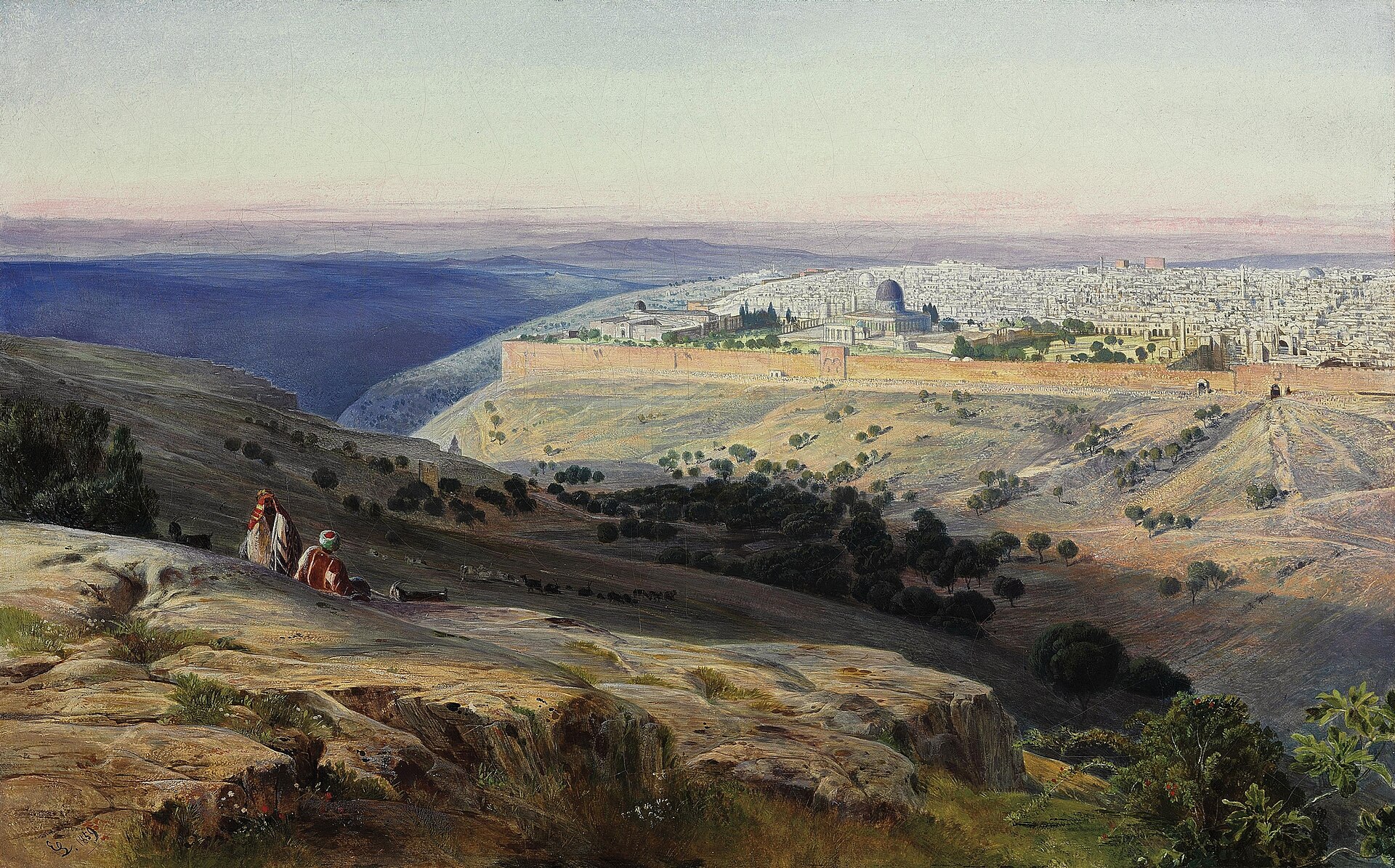
Who and where
1 name in this verse with a page on the site.
This page draws on 13 works. Open the list of works
This page draws on Adam Clarke, Commentary on the Bible; Albert Barnes, Notes on the Book of Psalms; Albert Barnes, Notes, Explanatory and Practical, on the Old and New Testaments (1832-1869); Augustine of Hippo, Exposition on Psalm 110; Bonaventure, Collations on the Hexaemeron, Collation 14; Charles Spurgeon, The Treasury of David, Vol. 5; Jerome, Homily 36, on Psalm 109; John Chrysostom, Homily on Acts 12; John Gill, Exposition of the Old Testament; John Gill, Exposition of the Old Testament (1748-1763); John Wesley, Explanatory Notes upon the Old Testament; Justin Martyr, The First Apology, Chapter XLV and Matthew Henry, Commentary on the Whole Bible.