
Nehemiah 7:43
in Nehemiah 7The Levites: the descendants of Jeshua (through Kadmiel, through the line of Hodevah), 74.
BSB
The same verse in ASV and KJV ▾
ASV
The Levites: the children of Jeshua, of Kadmiel, of the children of Hodevah, seventy and four.
KJV
The Levites: the children of Jeshua, of Kadmiel, and of the children of Hodevah, seventy and four.
⋯
This verse in Nehemiah 7
Commentary
3 notes on this verseOr perhaps one was the account of them when they set out from Babylon with Zerubbabel, the other when they came to Jerusalem. The sum totals are all just the same there and here, except of the singing-men and singing-women, which there are 200, here 245.
This site's exposition
the children of Jedaiah
on Nehemiah 7:39-45
The register turns from the laity to temple service: the priests by four courses, Jedaiah, Immer, Pashur and Harim, then the Levites, the singers of Asaph and the porters at the gates. Only four of the priestly courses David had organized returned from Babylon, and those four were later divided again to restore the full twenty-four; Luke's Gospel still finds one of the recovered courses, Abia, serving centuries later. The temple's staff is rebuilt in miniature before the temple's worship is ever described.
The record, by era
The Puritans and the Awakening1 voice
He appointed the porters, singers, and Levites, in their places to their work. This is meant of their work in general, which was to attend the temple service; it had been neglected in some degree, but now was revived. God's worship is the defence of a place, and his ministers, when they mind their duty, are watchmen on the walls.
The words behind it
8 Hebrew wordsEvery Hebrew word of this verse in the order it stands, with what it means and the door to its own study. The last column counts the times a word stands in the whole Bible: the rarer the word, the more the places it appears belong together.
| Hebrew | Sound | Meaning | Word study | In the Bible |
|---|---|---|---|---|
| הַלְוִיִּ֑ם | halviyim | the Levites | H3881 → | 291 times |
| בְּנֵֽי־ | benei- | [the] descendants of | H1121 → | 4930 times |
| יֵשׁ֧וּעַ | yeshua' | Jeshua | H3442 → | 29 times |
| לְקַדְמִיאֵ֛ל | lekadmiel | of Kadmiel | H6934 → | 8 times |
| לִבְנֵ֥י | livnei | of [the] descendants | H1121 → | 4930 times |
| לְהוֹדְוָ֖ה | lehodvah | of Hodaviah | H1937 → | |
| שִׁבְעִ֥ים | shivim | seventy | H7657 → | 91 times |
| וְאַרְבָּעָֽה׃ ס | vearbaah | and four | H702 → | 318 times |
הַלְוִיִּ֑םthe Levites
halviyimH3881 →291 times
בְּנֵֽי־[the] descendants of
benei-H1121 →4930 times
יֵשׁ֧וּעַJeshua
yeshua'H3442 →29 times
לְקַדְמִיאֵ֛לof Kadmiel
lekadmielH6934 →8 times
לִבְנֵ֥יof [the] descendants
livneiH1121 →4930 times
לְהוֹדְוָ֖הof Hodaviah
lehodvahH1937 →
שִׁבְעִ֥יםseventy
shivimH7657 →91 times
וְאַרְבָּעָֽה׃ סand four
vearbaahH702 →318 times
A shaded row is a word that stands 400 times or fewer in the Bible.
The walk
3 stopsEach card is a verse this one points to, and under it the verses that one points to in turn. Where several paths arrive at the same place, that place is listed first: the text keeps returning to it.
Through
Nehemiah 3:9Next to them, Rephaiah son of Hur, ruler of a half-district of Jerusalem, made repairs;
it leads to
- Nehemiah 3:12
And next to them, Shallum son of Hallohesh, ruler of the other half-district of Jerusalem, made repairs, with the help of his daughters.
- Nehemiah 3:17
Next to him, the Levites made repairs under Rehum son of Bani, and next to him, Hashabiah, ruler of a half-district of Keilah, made repairs for his district.
- Nehemiah 3:12
Through
Ezra 2:40The Levites: the descendants of Jeshua and Kadmiel (through the line of Hodaviah), 74.
it leads to
- Ezra 3:9
So Jeshua and his sons and brothers, Kadmiel and his sons (descendants of Yehudah), and the sons of Henadad and their sons and brothers—all Levites—joined together to supervise those working on the house of…
- Ezra 3:9
About Nehemiah
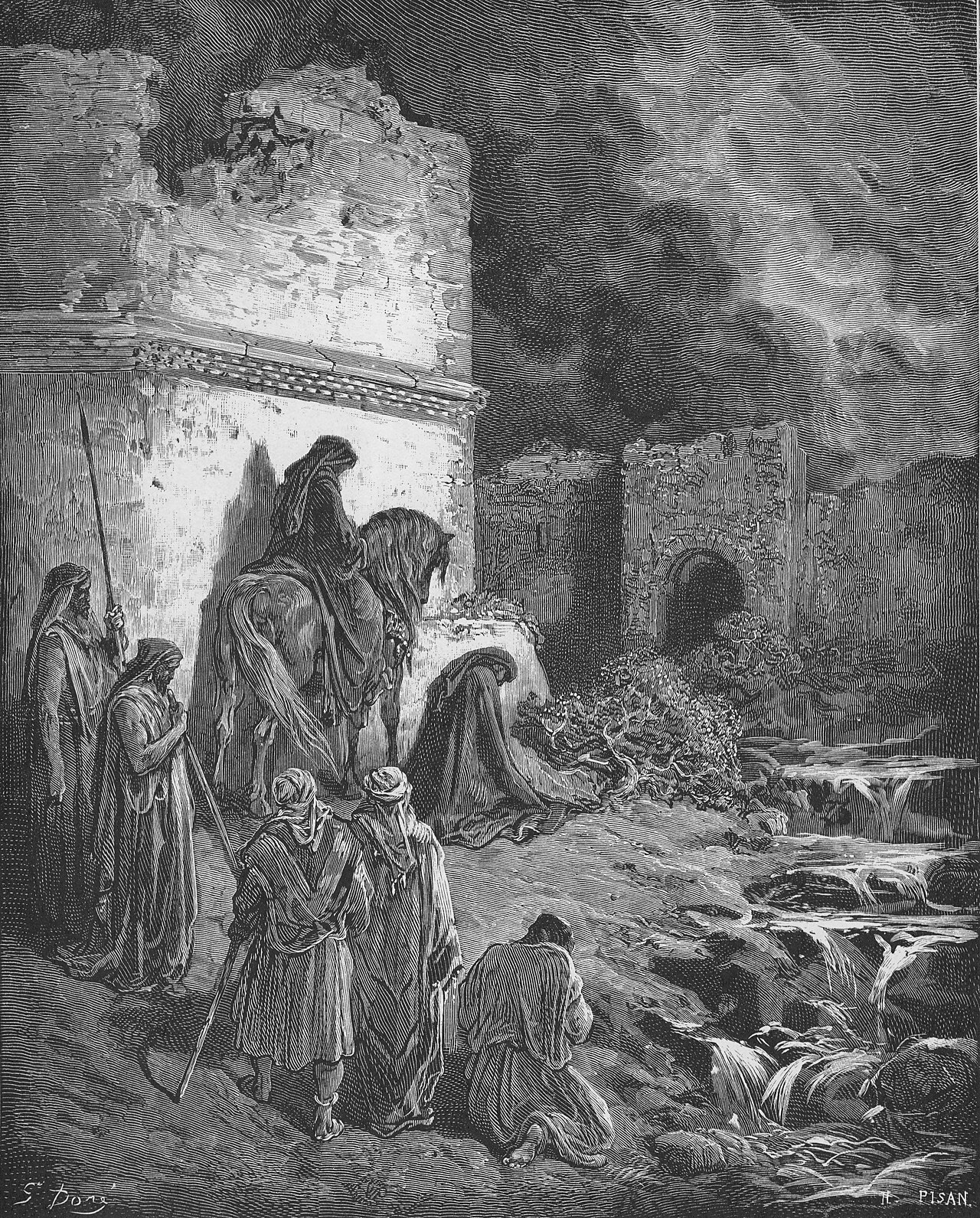
This page draws on Jamieson Fausset and Brown, Commentary Critical and Explanatory on the Whole Bible; John Gill, Exposition of the Old Testament and Matthew Henry, Commentary on the Whole Bible.