
Jonah 1:4
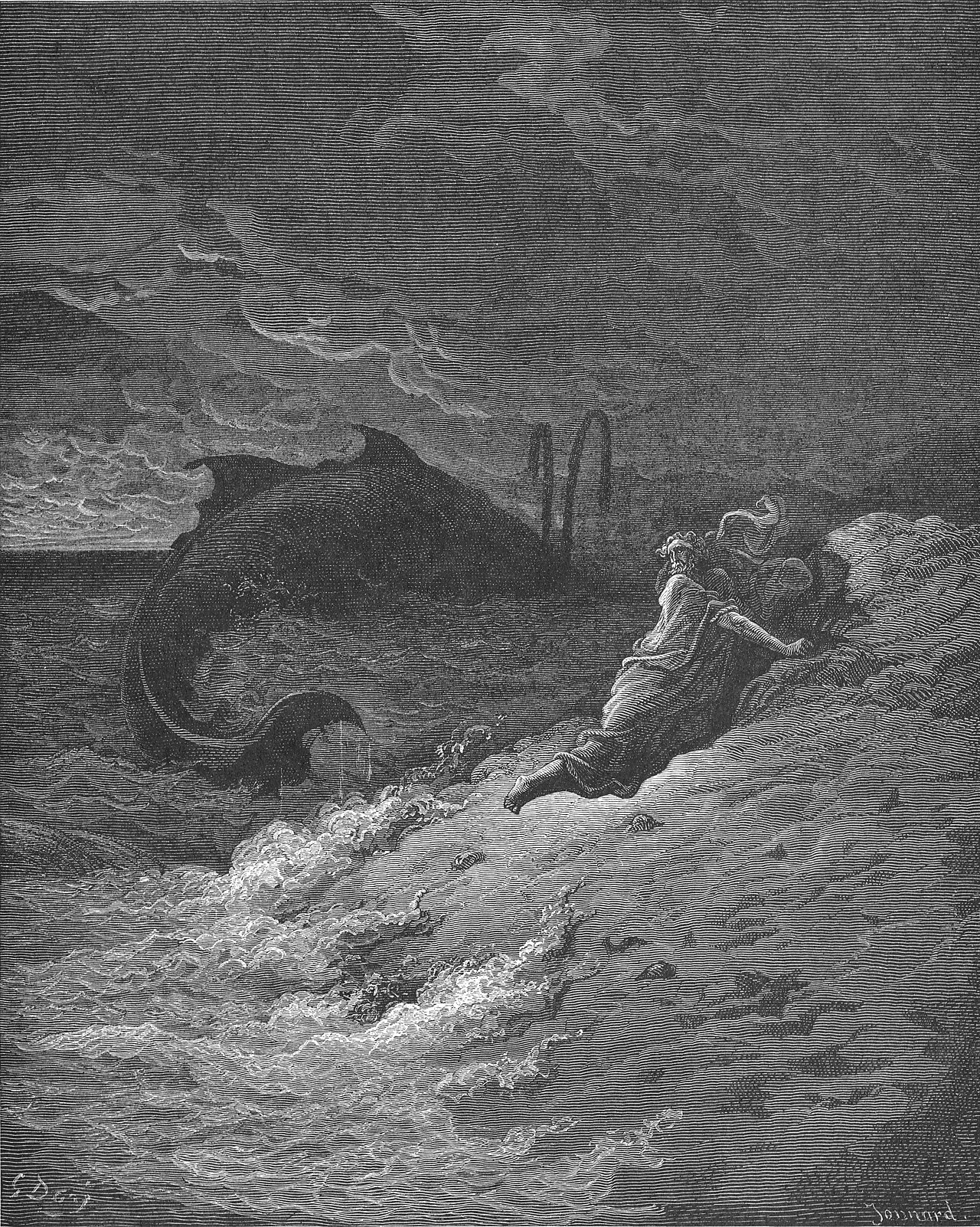
in Jonah 1Then the LORD hurled a great wind upon the sea, and such a violent storm arose that the ship was in danger of breaking apart.
BSB
The same verse in ASV and KJV ▾
ASV
But Jehovah sent out a great wind upon the sea, and there was a mighty tempest on the sea, so that the ship was like to be broken.
KJV
But the Lord sent out a great wind into the sea, and there was a mighty tempest in the sea, so that the ship was like to be broken.
⋯
This verse in Jonah 1
Commentary
6 notes on this verseBut the Lord sent out a great wind into the sea,.... He took a wind out of his treasures, and hurled it, as the word (w) signifies, into the sea: "into that sea" (x); that part of it where the ship was Jonah was in. Winds are at the command of God, which he raises at his pleasure, and fulfil his will, and are servants of his that obey his orders: this here was sent in pursuit of Jonah, to stop him in his voyage, when he thought he had got clear off, and was safe enough.
This site's exposition
But the Lord sent out a great wind into the sea
on Jonah 1:4-6
But the Lord sent out a great wind into the sea turns the fugitive's own passage into the instrument of his arrest, the ship ready to break apart while the pagan sailors each cry to his own god and pitch the cargo overboard to lighten her. Jonah alone is undisturbed, gone down into the sides of the ship and fast asleep, a stillness the commentators read as exhaustion, or as a conscience already resigned to what is coming. The shipmaster's rebuke, what meanest thou, O sleeper, puts a pagan captain in the place of calling a prophet of the Lord back to prayer, which Henry and Wesley both name as one of the book's standing ironies, Gentiles behaving better than the man sent to preach to Gentiles.
The record, by era
The Church Fathers1 voice
"But the LORD sent out a great wind into the sea, and there was a mighty tempest in the sea, so that the ship was like to be broken." LXX: "and the Lord induced a great wind over the sea and a great storm was over the sea, and the boat threatened to break up." The flight of the prophet can be related to man in general, who, forsaking the commands of God, flees from his face and goes out into the world.
The Puritans and the Awakening1 voice
Other ships were upon the same sea at the same time, yet, it should seem, that ship in which Jonah was was tossed more than any other and was more in danger. This wind was sent after Jonah, to fetch him back again to God and to his duty; and it is a great mercy to be reclaimed and called home when we go astray, though it be by a tempest.
The Nineteenth Century2 voices
A great wind - They were overtaken with a storm, which appears from the sequel to have come by the immediate direction of God. Like to be broken - They had nearly suffered shipwreck.
A commentator
Albert Barnes1798–1870
Notes, Explanatory and Practical, on the Old and New Testaments (1832-1869)
proposed
But (And) the Lord sent out - (literally ‘cast along’). Jonah had done his all. Now God’s part began. This He expresses by the word, “And.” Jonah took “his” measures, “and” now God takes “His.” He had let him have his way, as He often deals with those who rebel against Him. He lets them have their way up to a certain point. He waits, in the tranquility of His Almightiness, until they have completed their preparations; and then, when man has ended, He begins, that man may see the more that it is His doing . “He takes those who flee from Him in their flight, the wise in their counsels, sinners in their conceits and sins, and draws them back to Himself and compels them to return. Jonah thought to find rest in the sea, and lo! a tempest.” Probably, God summoned back Jonah, as soon as he had completed all on his part, and sent the tempest, soon after he left the shore. At least, such tempests often swept along that shore, and were known by their own special name, like the Euroclydon off Crete. Jonah too alone had gone down below deck to sleep, and, when the storm came, the mariners thought it possible to put back. Josephus says of that shore, “Joppa having by nature no haven, for it ends in a rough shore, mostly abrupt, but for a short space having projections, i. e., deep rocks and cliffs advancing into the sea, inclining on either side toward each other (where the traces of the chains of Andromeda yet shown accredit the antiquity of the fable,) and the north wind beating right on the shore, and dashing the high waves against the rocks which receive them, makes the station there a harborless sea. […]
The words behind it
13 Hebrew wordsEvery Hebrew word of this verse in the order it stands, with what it means and the door to its own study. The last column counts the times a word stands in the whole Bible: the rarer the word, the more the places it appears belong together.
| Hebrew | Sound | Meaning | Word study | In the Bible |
|---|---|---|---|---|
| וַֽיהוָ֗ה | vayahweh | and Yahweh | H3068 → | 6520 times |
| הֵטִ֤יל | hetil | he threw | H2904 → | 14 times |
| רֽוּחַ־ | ruach- | a wind | H7307 → | |
| גְּדוֹלָה֙ | gedolah | great | H1419 → | 526 times |
| אֶל־ | ʾel- | to | H413 → | 5510 times |
| הַיָּ֔ם | haiyam | the sea | H3220 → | 396 times |
| וַיְהִ֥י | vayhi | and it was | H1961 → | 3559 times |
| סַֽעַר־ | saar- | a storm | H5591 → | |
| גָּד֖וֹל | gadol | great | H1419 → | 526 times |
| בַּיָּ֑ם | baiyam | on the sea | H3220 → | 396 times |
| וְהָ֣אֳנִיָּ֔ה | vehooniyah | and the ship | H591 → | 31 times |
| חִשְּׁבָ֖ה | chishevah | it thought | H2803 → | |
| לְהִשָּׁבֵֽר׃ | lehishaver | to be broken | H7665 → |
וַֽיהוָ֗הand Yahweh
vayahwehH3068 →6520 times
הֵטִ֤ילhe threw
hetilH2904 →14 times
רֽוּחַ־a wind
ruach-H7307 →
גְּדוֹלָה֙great
gedolahH1419 →526 times
אֶל־to
ʾel-H413 →5510 times
הַיָּ֔םthe sea
haiyamH3220 →396 times
וַיְהִ֥יand it was
vayhiH1961 →3559 times
סַֽעַר־a storm
saar-H5591 →
גָּד֖וֹלgreat
gadolH1419 →526 times
בַּיָּ֑םon the sea
baiyamH3220 →396 times
וְהָ֣אֳנִיָּ֔הand the ship
vehooniyahH591 →31 times
חִשְּׁבָ֖הit thought
chishevahH2803 →
לְהִשָּׁבֵֽר׃to be broken
lehishaverH7665 →
A shaded row is a word that stands 400 times or fewer in the Bible.
The walk
8 stopsEach card is a verse this one points to, and under it the verses that one points to in turn. Where several paths arrive at the same place, that place is listed first: the text keeps returning to it.
Through
Amos 4:13For behold, He who forms the mountains, who creates the wind and reveals His thoughts to man, who turns the dawn to darkness and strides on the heights of the earth—the LORD, the God…
it leads to
- Amos 5:8
He who made the Pleiades and Orion, who turns darkness into dawn and darkens day into night, who summons the waters of the sea and pours them over the face of the earth—the LORD…
- Micah 1:3
For behold, the LORD comes forth from His dwelling place; He will come down and tread on the high places of the earth.
- Amos 9:6
He builds His upper rooms in the heavens and founds His vault upon the earth. He summons the waters of the sea and pours them over the face of the earth. The LORD is…
- Amos 5:8
Through
Exodus 14:21Then Moses stretched out his hand over the sea, and all that night the LORD drove back the sea with a strong east wind that turned it into dry land. So the waters were…
it leads to
- Isaiah 63:12
who sent His glorious arm to lead them by the right hand of Moses, who divided the waters before them to gain for Himself everlasting renown,
- Psalms 66:6
He turned the sea into dry land; they passed through the waters on foot; there we rejoiced in Him.
- Exodus 15:8
At the blast of Your nostrils the waters piled up; like a wall the currents stood firm; the depths congealed in the heart of the sea.
- Nehemiah 9:11
You divided the sea before them, and they crossed through it on dry ground. You hurled their pursuers into the depths like a stone into raging waters.
- Psalms 78:13
He split the sea and brought them through; He set the waters upright like a wall.
- Isaiah 63:12
Where this verse is studied
On this page
Studies2
On this verse
On this chapter
About Jonah
This page draws on Adam Clarke, Commentary on the Bible; Albert Barnes, Notes, Explanatory and Practical, on the Old and New Testaments (1832-1869); Jerome, Commentary on Jonah, Chapter 1; John Gill, Exposition of the Old Testament (1748-1763); John Wesley, Explanatory Notes upon the Old Testament and Matthew Henry, Commentary on the Whole Bible.