
Job 27:20
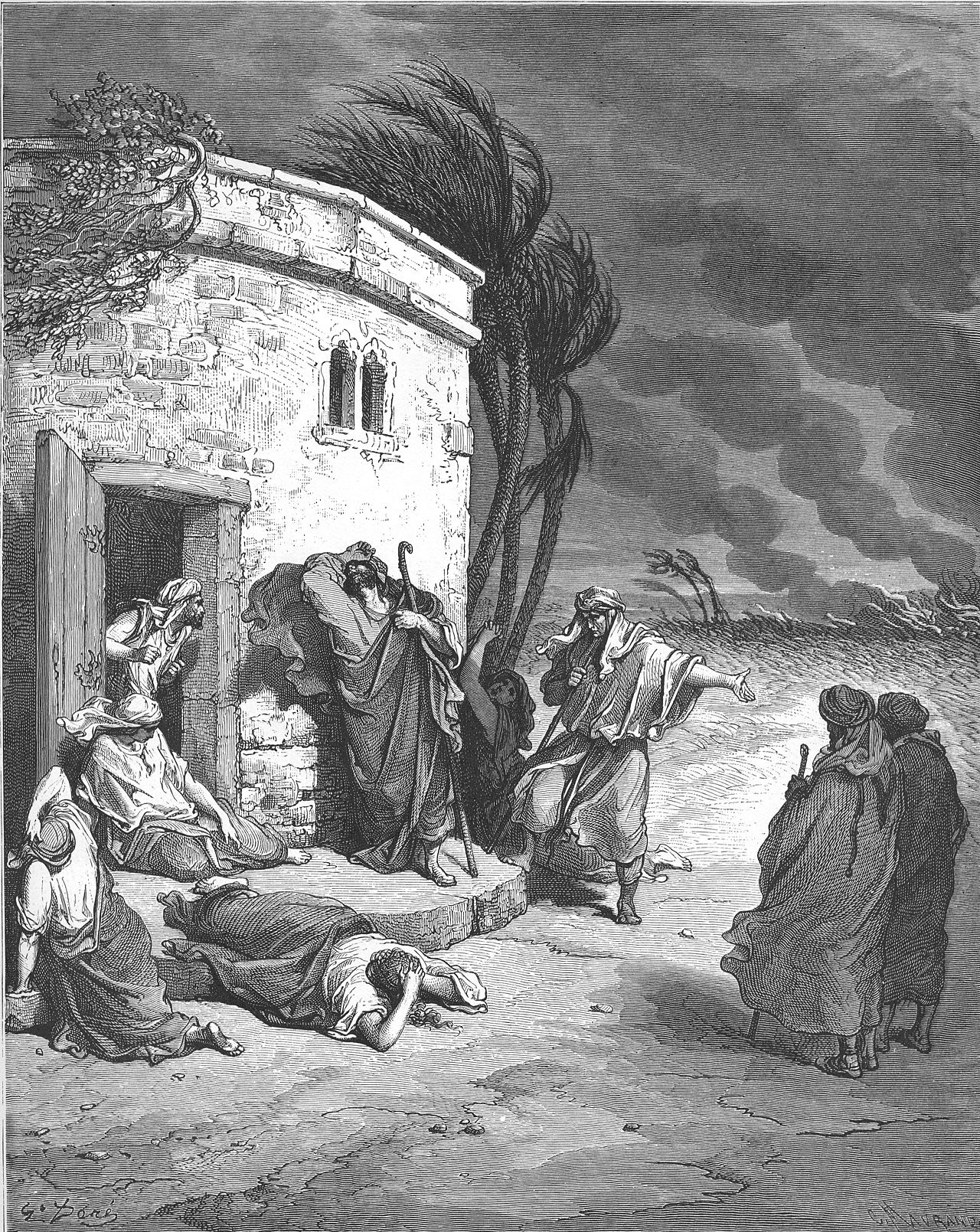
in Job 27Terrors overtake him like a flood; a tempest sweeps him away in the night.
BSB
The same verse in ASV and KJV ▾
ASV
Terrors overtake him like waters; A tempest stealeth him away in the night.
KJV
Terrors take hold on him as waters, a tempest stealeth him away in the night.
⋯
This verse in Job 27
Commentary
4 notes on this verseWant shall take hold of him like water; a tempest shall overwhelm him in the night. Let us look now at the want of the rich man as burning, whose abundance was so great as feasting. For he says, Father Abraham, have mercy on me, and send Lazarus that he may dip the tip of his finger in water, and cool my tongue for I am tormented in this flame.
This site's exposition
The rich man shall lie down, but he shall not be gathered
on Job 27:19-21
The rich man shall lie down, but he shall not be gathered pictures a death with no proper burial, a phrase Delitzsch reads against the honor patriarchal culture placed on being gathered to one's fathers. Terrors take hold on him as waters, a tempest stealeth him away in the night moves the catalogue from slow loss to sudden catastrophe, the same night imagery the book already used of the raids in chapter one. The east wind carrieth him away pictures the scorching desert wind as an agent with its own violence, and as a storm hurleth him out of his place closes the verse with total displacement.
The record, by era
The Puritans and the Awakening1 voice
on Job 27:20-21
Death, to a godly man, is like a fair gale of wind to convey him to the heavenly country, but, to a wicked man, it is like an east wind, a storm, a tempest, that hurries him away in confusion and amazement, to destruction.
The Nineteenth Century1 voice
A commentator
Jamieson, Fausset & Brown1802–1910
Commentary Critical and Explanatory on the Whole Bible (1871)
on Job 27:11-23
The fact is, it is probable that Job tacitly, by giving, in the twenty-eighth chapter, only a general answer, implies, that in spite of the wicked often dying, as he said, in prosperity, he does not mean to deny that the wicked are in the main dealt with according to right, and that God herein vindicates His moral government even here.
The words behind it
6 Hebrew wordsEvery Hebrew word of this verse in the order it stands, with what it means and the door to its own study. The last column counts the times a word stands in the whole Bible: the rarer the word, the more the places it appears belong together.
| Hebrew | Sound | Meaning | Word study | In the Bible |
|---|---|---|---|---|
| תַּשִּׂיגֵ֣הוּ | tasigehu | it overtakes him | H5381 → | 50 times |
| כַ֭מַּיִם | khamayim | like <the> waters | H4325 → | 581 times |
| בַּלָּה֑וֹת | balahot | sudden terror<s> | H1091 → | 10 times |
| לַ֝֗יְלָה | laylah | night | H3915 → | 233 times |
| גְּנָבַ֥תּוּ | genavatu | it steals away him | H1589 → | 40 times |
| סוּפָֽה׃ | sufah | a storm-wind | H5492 → | 16 times |
תַּשִּׂיגֵ֣הוּit overtakes him
tasigehuH5381 →50 times
כַ֭מַּיִםlike <the> waters
khamayimH4325 →581 times
בַּלָּה֑וֹתsudden terror<s>
balahotH1091 →10 times
לַ֝֗יְלָהnight
laylahH3915 →233 times
גְּנָבַ֥תּוּit steals away him
genavatuH1589 →40 times
סוּפָֽה׃a storm-wind
sufahH5492 →16 times
A shaded row is a word that stands 400 times or fewer in the Bible.
The walk
8 stopsEach card is a verse this one points to, and under it the verses that one points to in turn. Where several paths arrive at the same place, that place is listed first: the text keeps returning to it.
Through
Job 15:21Sounds of terror fill his ears; in his prosperity the destroyer attacks him.
it leads to
- Leviticus 26:36
As for those of you who survive, I will send a faintness into their hearts in the lands of their enemies, so that even the sound of a windblown leaf will put them to…
Reached by 2 separate paths from here.
- Job 18:11
Terrors frighten him on every side and harass his every step.
- 1 Thessalonians 5:3
While people are saying, “Peace and security,” destruction will come upon them suddenly, like labor pains on a pregnant woman, and they will not escape.
- Leviticus 26:36
Through
2 Kings 19:35And that very night the angel of the LORD went out and struck down 185,000 men in the camp of the Assyrians. When the people got up the next morning, there were all the…
it leads to
- 2 Chronicles 32:21–22
and the LORD sent an angel who annihilated every mighty man of valor and every leader and commander in the camp of the king of Assyria. So he withdrew to his own land in…
- 2 Samuel 24:16
But when the angel stretched out his hand to destroy Jerusalem, the LORD relented from the calamity and said to the angel who was destroying the people, “Enough! Withdraw your hand now!” At that…
- 2 Chronicles 32:21–22
Through
Exodus 12:29Now at midnight the LORD struck down every firstborn male in the land of Egypt, from the firstborn of Pharaoh, who sat on his throne, to the firstborn of the prisoner in the dungeon,…
it leads to
- Psalms 78:51
He struck all the firstborn of Egypt, the virility in the tents of Ham.
- Exodus 4:23
and I told you to let My son go so that he may worship Me. But since you have refused to let him go, behold, I will kill your firstborn son!’”
- Psalms 78:51
Through
Job 20:23When he has filled his stomach, God will vent His fury upon him, raining it down on him as he eats.
it leads to
- Psalms 78:30–31
Yet before they had filled their desire, with the food still in their mouths,
- Psalms 78:30–31
About Job
This page draws on Albert Barnes, Notes on the Book of Job; Franz Delitzsch, Biblical Commentary on the Book of Job; Gregory the Dialogist, Morals on the Book of Job, Book XVIII; Jamieson, Fausset & Brown, Commentary Critical and Explanatory on the Whole Bible and Matthew Henry, Commentary on the Whole Bible.