
Job 27:19
in Job 27He lies down wealthy, but will do so no more; when he opens his eyes, all is gone.
BSB
The same verse in ASV and KJV ▾
ASV
He lieth down rich, but he shall not be gathered to his fathers; He openeth his eyes, and he is not.
KJV
The rich man shall lie down, but he shall not be gathered: he openeth his eyes, and he is not.
⋯
This verse in Job 27
Commentary
5 notes on this verseWhen the rich man sleepeth, he shall take nothing away with him, he shall open his eyes and shall find nought. In harmony with which same sentence the Psalmist saith, All the foolish in heart are troubled, they have slept their sleep, and all the men of riches have found nothing in their hands. For in order that the rich after death may 'find something in their hand,' it is told to them before death, in whose hands they should place their riches.
This site's exposition
The rich man shall lie down, but he shall not be gathered
on Job 27:19-21
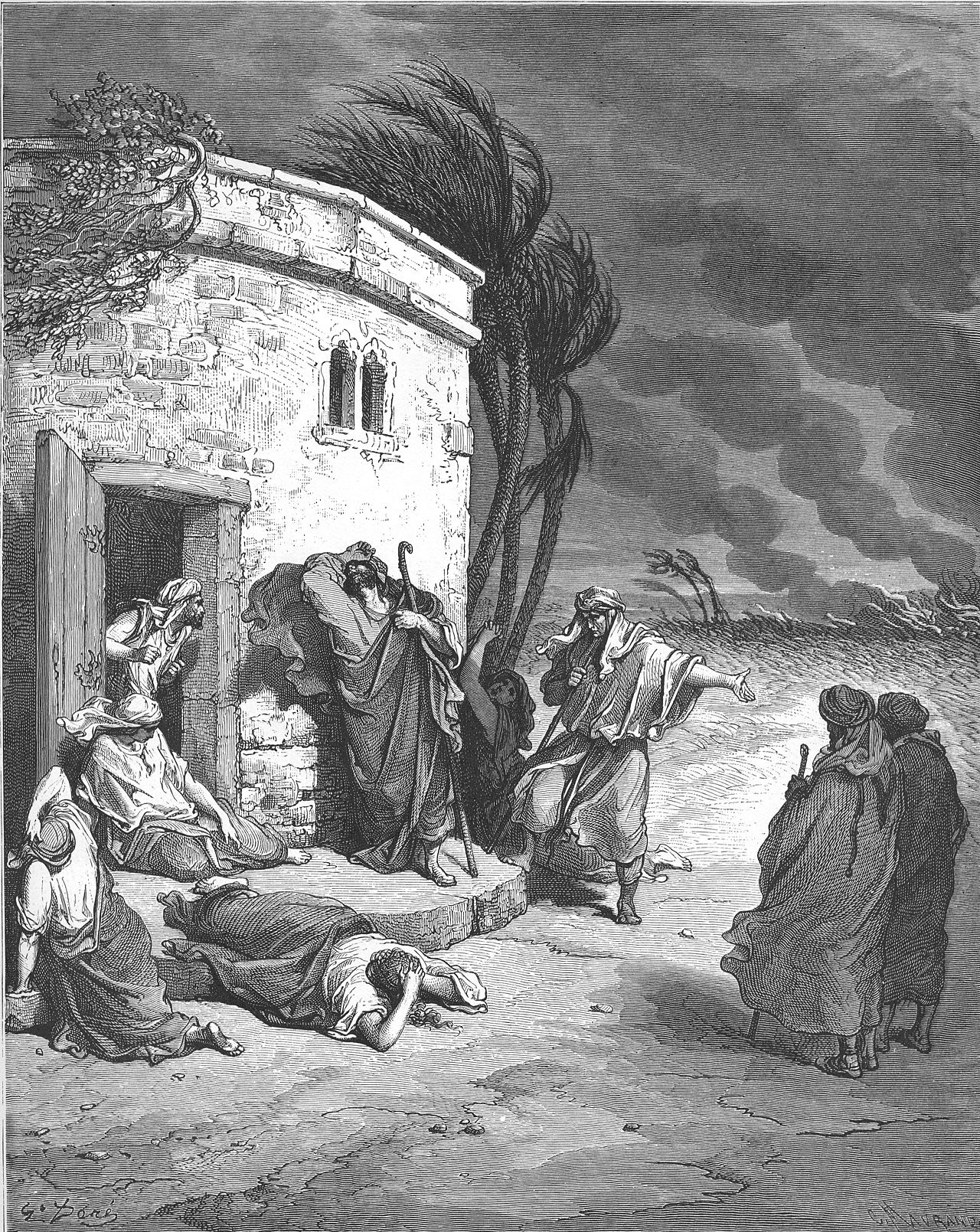
The rich man shall lie down, but he shall not be gathered pictures a death with no proper burial, a phrase Delitzsch reads against the honor patriarchal culture placed on being gathered to one's fathers. Terrors take hold on him as waters, a tempest stealeth him away in the night moves the catalogue from slow loss to sudden catastrophe, the same night imagery the book already used of the raids in chapter one. The east wind carrieth him away pictures the scorching desert wind as an agent with its own violence, and as a storm hurleth him out of his place closes the verse with total displacement.
The record, by era
The Puritans and the Awakening1 voice
Not gathered - Instead of that honourable interment with his fathers, his carcase shall lie like dung upon the earth. One openeth his eyes - That is, while a man can open his eyes, in the twinkling of an eye. He is as if he had never been, dead and gone, and his family and name extinct with him.
The Nineteenth Century2 voices
A commentator
Albert Barnes1798–1870
Notes, Explanatory and Practical, on the Old and New Testaments (1832-1869)
The rich man - That is, the rich man who is wicked. Shall lie down - Shalt die - for so the connection demands. But he shall not be gathered - In an honorable burial. The slain in battle are gathered together for burial; but he shall be unburied. The expressions “to be gathered,” “to be gathered to one’s fathers,” frequently occur in the Scriptures, and seem to be used to denote a peaceful and happy death and an honorable burial.
A commentator
Jamieson, Fausset & Brown1802–1910
Commentary Critical and Explanatory on the Whole Bible (1871)
on Job 27:11-23
The fact is, it is probable that Job tacitly, by giving, in the twenty-eighth chapter, only a general answer, implies, that in spite of the wicked often dying, as he said, in prosperity, he does not mean to deny that the wicked are in the main dealt with according to right, and that God herein vindicates His moral government even here.
The words behind it
7 Hebrew wordsEvery Hebrew word of this verse in the order it stands, with what it means and the door to its own study. The last column counts the times a word stands in the whole Bible: the rarer the word, the more the places it appears belong together.
| Hebrew | Sound | Meaning | Word study | In the Bible |
|---|---|---|---|---|
| עָשִׁ֣יר | ʾashir | rich | H6223 → | |
| יִ֭שְׁכַּב | yishkav | he will lie down | H7901 → | 212 times |
| וְלֹ֣א | velo' | and not | H3808 → | 5168 times |
| יֵאָסֵ֑ף | yeasef | he will be removed | H622 → | 200 times |
| עֵינָ֖יו | ʾeinav | eyes his | H5869 → | 887 times |
| פָּקַ֣ח | pakach | he opens | H6491 → | |
| וְאֵינֶֽנּוּ׃ | veeinenu | and there not [is] it | H369 → | 789 times |
עָשִׁ֣ירrich
ʾashirH6223 →
יִ֭שְׁכַּבhe will lie down
yishkavH7901 →212 times
וְלֹ֣אand not
velo'H3808 →5168 times
יֵאָסֵ֑ףhe will be removed
yeasefH622 →200 times
עֵינָ֖יוeyes his
ʾeinavH5869 →887 times
פָּקַ֣חhe opens
pakachH6491 →
וְאֵינֶֽנּוּ׃and there not [is] it
veeinenuH369 →789 times
A shaded row is a word that stands 400 times or fewer in the Bible.
The walk
8 stopsEach card is a verse this one points to, and under it the verses that one points to in turn. Where several paths arrive at the same place, that place is listed first: the text keeps returning to it.
Through
Matthew 3:12His winnowing fork is in His hand to clear His threshing floor and to gather His wheat into the barn; but He will burn up the chaff with unquenchable fire.”
it leads to
- Malachi 4:1
“For behold, the day is coming, burning like a furnace, when all the arrogant and every evildoer will be stubble; the day is coming when I will set them ablaze,” says the LORD of…
- Matthew 13:30
Let both grow together until the harvest. At that time I will tell the harvesters: First collect the weeds and tie them in bundles to be burned; then gather the wheat into my barn.’”
- Luke 3:17
His winnowing fork is in His hand to clear His threshing floor and to gather the wheat into His barn; but He will burn up the chaff with unquenchable fire.”
- Isaiah 41:16
You will winnow them, and a wind will carry them away; a gale will scatter them. But you will rejoice in the LORD; you will glory in the Holy One of Israel.
- Jeremiah 51:2
I will send strangers to Babylon to winnow her and empty her land; for they will come against her from every side in her day of disaster.
- Malachi 4:1
Through
Job 24:24They are exalted for a moment, then they are gone; they are brought low and gathered up like all others; they are cut off like heads of grain.
it leads to
- Psalms 37:10
Yet a little while, and the wicked will be no more; though you look for them, they will not be found.
- Psalms 37:10
Through
Psalms 58:9Before your pots can feel the burning thorns— whether green or dry— He will sweep them away.
it leads to
- Proverbs 10:25
When the whirlwind passes, the wicked are no more, but the righteous are secure forever.
- Psalms 118:12
They swarmed around me like bees, but they were extinguished like burning thorns; in the name of the LORD I cut them off.
- Proverbs 10:25
About Job
This page draws on Albert Barnes, Notes on the Book of Job; Albert Barnes, Notes, Explanatory and Practical, on the Old and New Testaments (1832-1869); Franz Delitzsch, Biblical Commentary on the Book of Job; Gregory the Dialogist, Morals on the Book of Job, Book XVIII; Jamieson, Fausset & Brown, Commentary Critical and Explanatory on the Whole Bible and John Wesley, Explanatory Notes upon the Old Testament.