
Jeremiah 18:20
in Jeremiah 18Should good be repaid with evil? Yet they have dug a pit for me. Remember how I stood before You to speak good on their behalf, to turn Your wrath from them.
BSB
The same verse in ASV and KJV ▾
ASV
Shall evil be recompensed for good? for they have digged a pit for my soul. Remember how I stood before thee to speak good for them, to turn away thy wrath from them.
KJV
Shall evil be recompensed for good? for they have digged a pit for my soul. Remember that I stood before thee to speak good for them, and to turn away thy wrath from them.
⋯
This verse in Jeremiah 18
Commentary
4 notes on this verseThey have digged a pit for my soul - For my life; this they wish to take away. Stood before thee to speak good for them - I was their continual intercessor.
This site's exposition
Give heed to me, O Lord
on Jeremiah 18:19-23
Give heed to me, O Lord opens the harshest of Jeremiah's recorded prayers, asking that the children of his plotters be given to famine and their wives be made widows, because they have digged a pit for my soul. Calvin reads the imprecation as an honest cry from a man appointed to intercede for these very people, verse 20 recalling that he once stood before the Lord to speak good for them, now driven to ask judgment instead. Henry sets the prayer beside the confessions around it as a plea left in God's hand rather than acted on by Jeremiah's own, an appeal to the Judge who alone knows all their counsel against him.
The record, by era
The Puritans and the Awakening1 voice
(2.) It was very grievous to him, as the like was to David. 4 , For my love they are my adversaries. Thus disingenuously do sinners deal with the great intercessor, crucifying him afresh, and speaking against him on earth, while his blood is speaking for them in heaven.
The Nineteenth Century1 voice
A commentator
Jamieson, Fausset & Brown1802–1910
Commentary Critical and Explanatory on the Whole Bible (1871)
In the particulars here specified, Jeremiah was a type of Jesus Christ (Ps 109:4, 5; Joh 15:25). my soul--my life; me (Ps 35:7). I stood before thee . . . to turn away thy wrath--so Moses (Ps 106:23; compare Eze 22:30).
The words behind it
18 Hebrew wordsEvery Hebrew word of this verse in the order it stands, with what it means and the door to its own study. The last column counts the times a word stands in the whole Bible: the rarer the word, the more the places it appears belong together.
| Hebrew | Sound | Meaning | Word study | In the Bible |
|---|---|---|---|---|
| הַיְשֻׁלַּ֤ם | hayshulam | ¿ will it be repaid | H7999 → | 116 times |
| תַּֽחַת־ | tachat- | in place of | H8478 → | 505 times |
| טוֹבָה֙ | tovah | good | H2896 → | 538 times |
| רָעָ֔ה | raah | evil | H7451 → | 662 times |
| כִּֽי־ | ki- | for | H3588 → | 4482 times |
| כָר֥וּ | kharu | they have dug | H3738 → | |
| שׁוּחָ֖ה | shuchah | a pit | H7745 → | 5 times |
| לְנַפְשִׁ֑י | lenafshi | for self my | H5315 → | 754 times |
| זְכֹ֣ר׀ | zekhor | remember | H2142 → | 230 times |
| עָמְדִ֣י | ʾamedi | standing my | H5975 → | 521 times |
| לְפָנֶ֗יךָ | lefaneikha | <to> before you | H6440 → | 2123 times |
| לְדַבֵּ֤ר | ledaber | to speak | H1696 → | 1141 times |
| עֲלֵיהֶם֙ | ʾaleihem | on them | H5921 → | 5755 times |
| טוֹבָ֔ה | tovah | good | H2896 → | 538 times |
| לְהָשִׁ֥יב | lehashiv | to turn back | H7725 → | 1056 times |
| אֶת־ | ʾet- | <obj.> | H853 → | 10935 times |
| חֲמָתְךָ֖ | chamatekha | rage your | H2534 → | 125 times |
| מֵהֶֽם׃ | mehem | from <the> them |
הַיְשֻׁלַּ֤ם¿ will it be repaid
hayshulamH7999 →116 times
תַּֽחַת־in place of
tachat-H8478 →505 times
טוֹבָה֙good
tovahH2896 →538 times
רָעָ֔הevil
raahH7451 →662 times
כִּֽי־for
ki-H3588 →4482 times
כָר֥וּthey have dug
kharuH3738 →
שׁוּחָ֖הa pit
shuchahH7745 →5 times
לְנַפְשִׁ֑יfor self my
lenafshiH5315 →754 times
זְכֹ֣ר׀remember
zekhorH2142 →230 times
עָמְדִ֣יstanding my
ʾamediH5975 →521 times
לְפָנֶ֗יךָ<to> before you
lefaneikhaH6440 →2123 times
לְדַבֵּ֤רto speak
ledaberH1696 →1141 times
עֲלֵיהֶם֙on them
ʾaleihemH5921 →5755 times
טוֹבָ֔הgood
tovahH2896 →538 times
לְהָשִׁ֥יבto turn back
lehashivH7725 →1056 times
אֶת־<obj.>
ʾet-H853 →10935 times
חֲמָתְךָ֖rage your
chamatekhaH2534 →125 times
מֵהֶֽם׃from <the> them
mehem
A shaded row is a word that stands 400 times or fewer in the Bible.
The walk
8 stopsEach card is a verse this one points to, and under it the verses that one points to in turn. Where several paths arrive at the same place, that place is listed first: the text keeps returning to it.
Through
Psalms 35:7For without cause they laid their net for me; without reason they dug a pit for my soul.
it leads to
- Psalms 140:5
The proud hide a snare for me; the cords of their net are spread along the path, and lures are set out for me. Selah
Reached by 2 separate paths from here.
- John 15:25
But this is to fulfill what is written in their Law: ‘They hated Me without reason.’
- Psalms 140:5
Through
Psalms 35:12They repay me evil for good, to the bereavement of my soul.
it leads to
- John 10:32
But Jesus responded, “I have shown you many good works from the Father. For which of these do you stone Me?”
- Psalms 38:20
Those who repay my good with evil attack me for pursuing the good.
- John 10:32
Through
Psalms 57:6They spread a net for my feet; my soul was despondent. They dug a pit before me, but they themselves have fallen into it! Selah
it leads to
- Psalms 145:14
The LORD upholds all who fall and lifts up all who are bowed down.
- Proverbs 28:10
He who leads the upright along the path of evil will fall into his own pit, but the blameless will inherit what is good.
- Psalms 7:15–16
He has dug a hole and hollowed it out; he has fallen into a pit of his own making.
- Micah 7:2
The godly man has perished from the earth; there is no one upright among men. They all lie in wait for blood; they hunt one another with a net.
- Psalms 145:14
Where this verse is studied
On this page
About Jeremiah
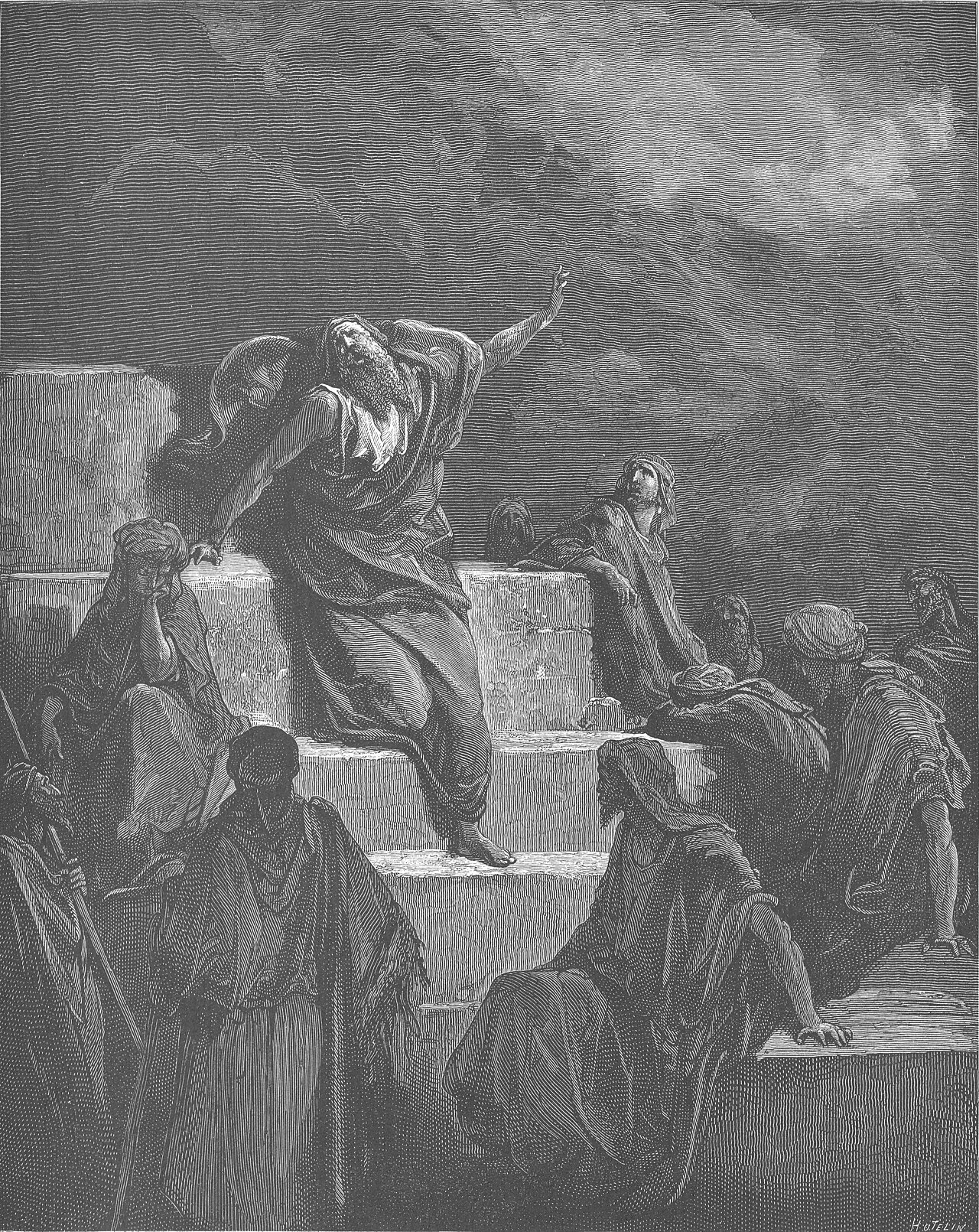
This page draws on Adam Clarke, Commentary on the Bible; Jamieson, Fausset & Brown, Commentary Critical and Explanatory on the Whole Bible; John Calvin, Commentary on Jeremiah and Lamentations and Matthew Henry, Commentary on the Whole Bible.