
Isaiah 23:6
in Isaiah 23Cross over to Tarshish; wail, O inhabitants of the coastland!
BSB
The same verse in ASV and KJV ▾
ASV
Pass ye over to Tarshish; wail, ye inhabitants of the coast.
KJV
Pass ye over to Tarshish; howl, ye inhabitants of the isle.
⋯
This verse in Isaiah 23
Commentary
7 notes on this verse(Verse 6, 7.) Go to Carthage: howl, you who dwell in this island. Is this not your insult from the beginning before it was handed over? They will lead it far on foot to wander. That which follows: They will lead it far on foot to wander, is added from Hebrew, and is prenoted by an asterisk, that is, by illuminating stars.
This site's exposition
Pass ye over to Tarshish
on Isaiah 23:6-9
The joyous city whose antiquity is of ancient days, whose merchants are princes and traffickers the honourable of the earth, is sent to sojourn on her own feet. Then the oracle asks its question and answers it, and the answer is the chapter's center: who hath taken this counsel against Tyre? The Lord of hosts hath purposed it, to stain the pride of all glory, and to bring into contempt all the honourable of the earth. The purpose clause governs every burden in this section, as Henry notes: the judgments on the nations are one argument about glory, whose is durable and whose is stained.
The record, by era
The Church Fathers1 voice
(Verse 6.) Cross over, O sea! Cry out, you who dwell on the island! Once again, they have carried Carthage across the sea and to Tharsis, seventy ships. We read in the histories of the Assyrians that the besieged Tyrians, seeing no hope of escape, fled to Carthage, either to other islands of the Ionian and Aegean seas. Hence it is said in Ezekiel: No wages were given to him, nor to his army from Tyre (Ezek. 29); because all the wealth of the city has been transferred, and all its nobles have abandoned it empty.
The Medieval Church1 voice
Pass over the seas. Here he foretells the flight of the fearful, as to those who, when Nabuchodonosor was attacking the city, fled into Egypt with their ships. And first, he exhorts them to flight, second, to constancy or haste of flight: pass your land …
The Puritans and the Awakening2 voices
Pass ye over to Tarshish,....
"It is time to howl now, for you must pass over to Tarshish. The best course you can take is to make the best of your way to Tarshish, to the sea" (to Taressus, a city in Spain; so some), "or to some other of your plantations." Those that think their mountain stands strong, and cannot be moved, will find that here they have no continuing city.
The Nineteenth Century1 voice
A commentator
Albert Barnes1798–1870
Notes, Explanatory and Practical, on the Old and New Testaments (1832-1869)
Pass ye over - That is, ye inhabitants of tyre. This is an address to Tyre, in view of her approaching destruction; and is designed to signify that when the city was destroyed, its inhabitants would flee to its colonies, and seek refuge and safety there. As Tarshish was one of its principal colonies, and as the ships employed by Tyre would naturally sail to Tarshish, the inhabitants are represented as fleeing there on the attack of Nebucbadnezzar.
The words behind it
5 Hebrew wordsEvery Hebrew word of this verse in the order it stands, with what it means and the door to its own study. The last column counts the times a word stands in the whole Bible: the rarer the word, the more the places it appears belong together.
| Hebrew | Sound | Meaning | Word study | In the Bible |
|---|---|---|---|---|
| עִבְר֖וּ | ʾivru | pass over | H5674 → | 556 times |
| תַּרְשִׁ֑ישָׁה | tarshishah | Tarshish towards | H8659 → | 28 times |
| הֵילִ֖ילוּ | heililu | wail | H3213 → | 30 times |
| יֹ֥שְׁבֵי | yoshevei | O inhabitants of | H3427 → | 1079 times |
| אִֽי׃ | 'I | [the] coastland | H339 → | 36 times |
עִבְר֖וּpass over
ʾivruH5674 →556 times
תַּרְשִׁ֑ישָׁהTarshish towards
tarshishahH8659 →28 times
הֵילִ֖ילוּwail
heililuH3213 →30 times
יֹ֥שְׁבֵיO inhabitants of
yosheveiH3427 →1079 times
אִֽי׃[the] coastland
'IH339 →36 times
A shaded row is a word that stands 400 times or fewer in the Bible.
The walk
8 stopsEach card is a verse this one points to, and under it the verses that one points to in turn. Where several paths arrive at the same place, that place is listed first: the text keeps returning to it.
Through
Isaiah 16:7Therefore let Moab wail; let them wail together for Moab. Moan for the raisin cakes of Kir-hareseth, you who are utterly stricken.
it leads to
- 2 Kings 3:25
They destroyed the cities, and each man threw stones on every good field until it was covered. They stopped up every spring and cut down every good tree. Only Kir-haraseth was left with stones…
- Jeremiah 48:20
Moab is put to shame, for it has been shattered. Wail and cry out! Declare by the Arnon that Moab is destroyed.
- 1 Chronicles 16:3
Then he distributed to every man and woman of Israel a loaf of bread, a date cake, and a raisin cake.
- 2 Kings 3:25
Through
Isaiah 23:12He said, “You shall rejoice no more, O oppressed Virgin Daughter of Sidon. Get up and cross over to Cyprus—even there you will find no rest.”
it leads to
- Revelation 18:22
And the sound of harpists and musicians, of flute players and trumpeters, will never ring out in you again. Nor will any craftsmen of any trade be found in you again, nor the sound…
- Isaiah 47:1
“Go down and sit in the dust, O Virgin Daughter of Babylon. Sit on the ground without a throne, O Daughter of Chaldea! For you will no longer be called tender or delicate.
- Revelation 18:22
Through
Isaiah 21:15For they flee from the sword—the sword that is drawn—from the bow that is bent, and from the stress of battle.
it leads to
- Job 6:19–20
The caravans of Tema look for water; the travelers of Sheba hope to find it.
- Job 6:19–20
Through
Isaiah 23:10Cultivate your land like the Nile, O Daughter of Tarshish; there is no longer a harbor.
it leads to
- 1 Samuel 28:20
Immediately Saul fell flat on the ground, terrified by the words of Samuel. And his strength was gone, because he had not eaten anything all that day and night.
- Isaiah 23:14
Wail, O ships of Tarshish, for your harbor has been destroyed!
- 1 Samuel 28:20
Where this verse is studied
On this page
Studies1
About Isaiah
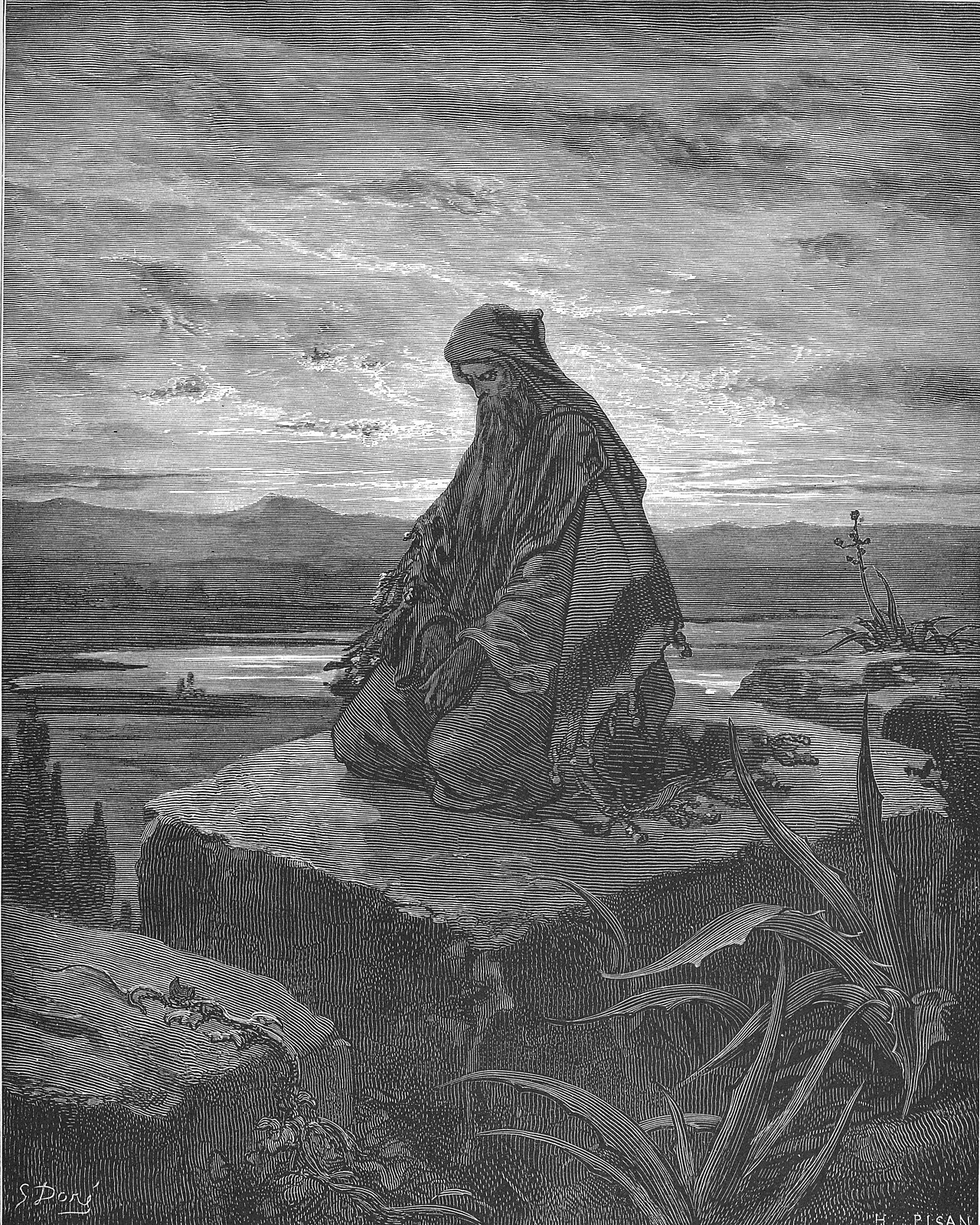
This page draws on Albert Barnes, Notes on the Book of Isaiah; Albert Barnes, Notes, Explanatory and Practical, on the Old and New Testaments (1832-1869); Jerome, Commentary on Isaiah; John Gill, Exposition of the Old Testament (1748-1763); Matthew Henry, Commentary on the Whole Bible and Thomas Aquinas, Commentary on Isaiah.