
Ezekiel 6:1
in Ezekiel 6And the word of the LORD came to me, saying,
BSB
The same verse in ASV and KJV ▾
ASV
And the word of Jehovah came unto me, saying,
KJV
And the word of the Lord came unto me, saying,
⋯
This verse in Ezekiel 6
Commentary
4 notes on this verseon Ezekiel 6:1-3
(Chapter 6, Verses 1 onwards) And the word of the Lord came to me, saying: Son of man, turn your face towards the mountains of Israel and prophesy against them. And you shall say: Mountains of Israel, hear the word of the Lord God. Thus says the Lord God to the mountains and hills, to the cliffs and valleys. That which is often said in this Prophet as 'Adonai Dominus' seems to be briefly explained for the Greeks and Latins who do not have knowledge of the Hebrew language.
This site's exposition
the word of the Lord came unto me, saying,
on Ezekiel 6:1-3
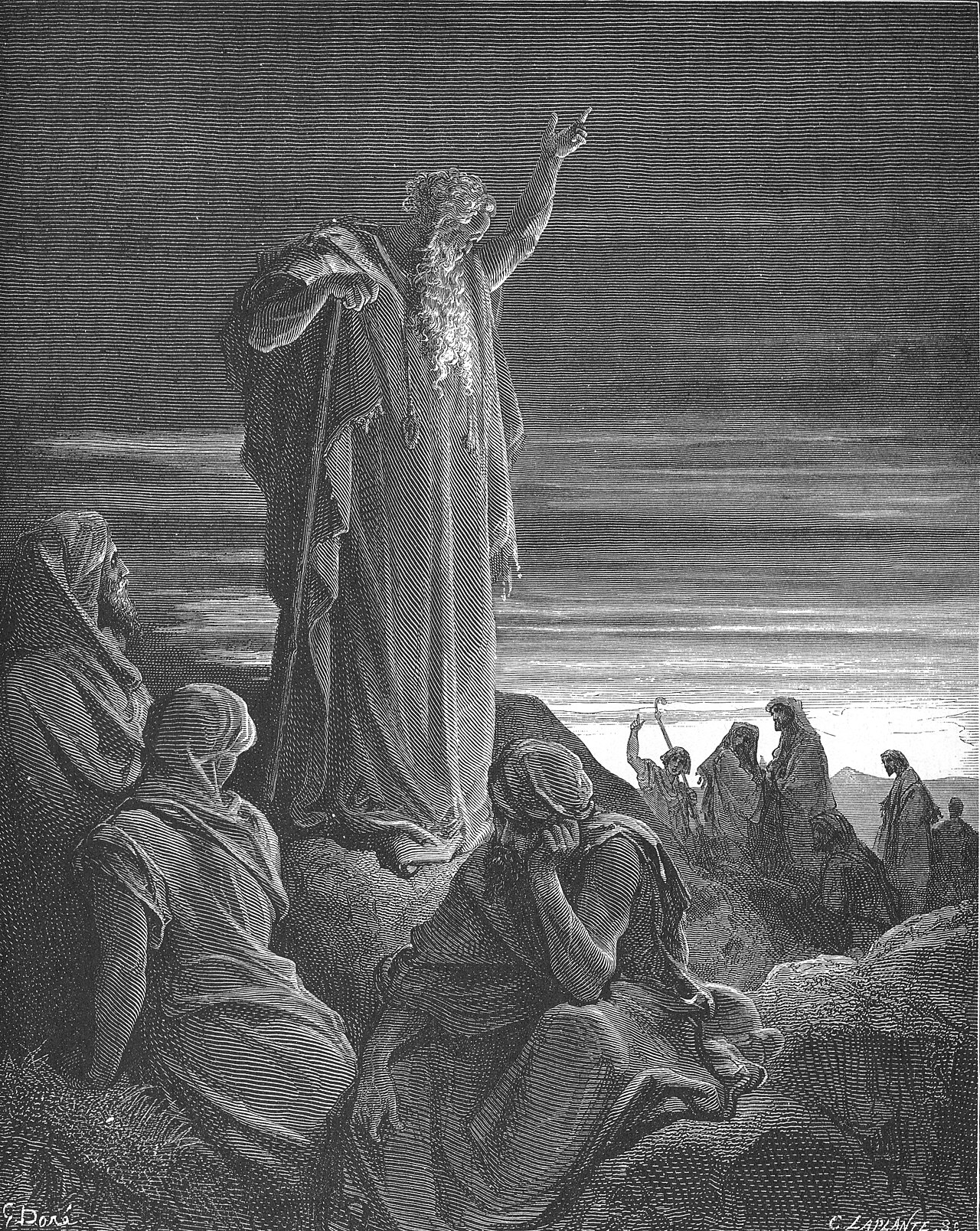
The word comes to Ezekiel with an unusual address, prophesy not to the people directly but to the mountains of Israel, and through them to the hills, rivers and valleys, the whole terrain that carried the nation's worship. The Lord announces a sword against them and the destruction of the high places, the local shrines scattered across the hill country where idolatry had rooted itself alongside the official cult. Henry reads the address to the land itself as a way of showing that the coming judgment reaches the physical places of sin, not the people only, since the high places had become as much the offenders as those who built them. Gill notes that speaking to inanimate mountains follows a prophetic convention of calling creation to witness a covenant charge, the same device Moses uses in Deuteronomy 32.
The record, by era
The Puritans and the Awakening1 voice
And the word of the Lord came unto me, saying. That is, the word of prophecy from the Lord, as the Targum: this, according to Junius, was delivered out by the prophet on a sabbath day, the twenty first of the fifth month, and in the sixth year of King Jehoiachin's captivity; and so was more than a year after the vision at Chebar, Eze 1:1.
The Nineteenth Century1 voice
A commentator
Albert Barnes1798–1870
Notes, Explanatory and Practical, on the Old and New Testaments (1832-1869)
The former prophecies concerned the city of Jerusalem and the inhabitants of Judaea. The present is addressed to the whole land and people of Israel, which is to be included in a like judgment, The ground of the judgment is “idolatry,” and the whole rests on Deut. 12. The prophecy is against the “mountains” of Israel, because the mountains and valleys were the seats of idol-worship. It is also the proclamation of the final judgment of Israel. It is the picture of the future judgment of the world.
The words behind it
5 Hebrew wordsEvery Hebrew word of this verse in the order it stands, with what it means and the door to its own study. The last column counts the times a word stands in the whole Bible: the rarer the word, the more the places it appears belong together.
| Hebrew | Sound | Meaning | Word study | In the Bible |
|---|---|---|---|---|
| וַיְהִ֥י | vayhi | and it came | H1961 → | 3559 times |
| דְבַר־ | devar- | [the] word of | H1697 → | 1440 times |
| יְהוָ֖ה | yahweh | Yahweh | H3068 → | 6520 times |
| אֵלַ֥י | ʾelai | to me | H413 → | 5510 times |
| לֵאמֹֽר׃ | lemor | <to> saying | H559 → | 5305 times |
וַיְהִ֥יand it came
vayhiH1961 →3559 times
דְבַר־[the] word of
devar-H1697 →1440 times
יְהוָ֖הYahweh
yahwehH3068 →6520 times
אֵלַ֥יto me
ʾelaiH413 →5510 times
לֵאמֹֽר׃<to> saying
lemorH559 →5305 times
A shaded row is a word that stands 400 times or fewer in the Bible.
About Ezekiel
This page draws on Albert Barnes, Notes, Explanatory and Practical, on the Old and New Testaments (1832-1869); Jerome, Commentary on Ezekiel; John Gill, Exposition of the Old Testament; John Gill, Exposition of the Old Testament (1748-1763) and Matthew Henry, Commentary on the Whole Bible.