
Esther 7:8
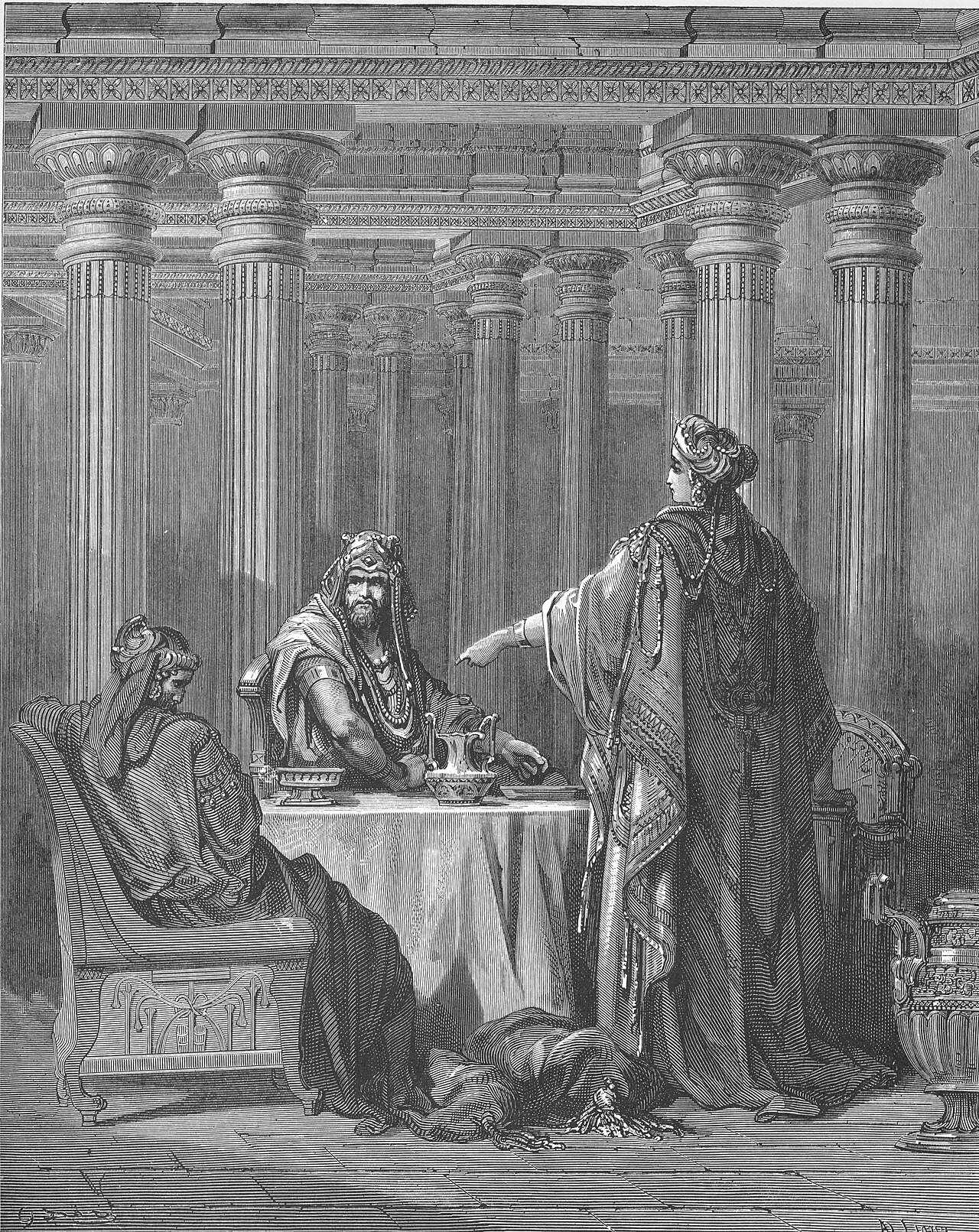
in Esther 7Just as the king returned from the palace garden to the banquet hall, Haman was falling on the couch where Esther was reclining. The king exclaimed, “Would he actually assault the queen while I am in the palace?” As soon as the words had left the king’s mouth, they covered Haman’s face.
BSB
The same verse in ASV and KJV ▾
ASV
Then the king returned out of the palace garden into the place of the banquet of wine; and Haman was fallen upon the couch whereon Esther was. Then said the king, Will he even force the queen before me in the house? As the word went out of the king’s mouth, they covered Haman’s face.
KJV
Then the king returned out of the palace garden into the place of the banquet of wine; and Haman was fallen upon the bed whereon Esther was. Then said the king, Will he force the queen also before me in the house? As the word went out of the king’s mouth, they covered Haman’s face.
⋯
This verse in Esther 7
Commentary
8 notes on this verseWill he force the queen - On the king’s return he found him at the queen’s knees; and, professing to think that he intended to do violence to her honor, used the above expressions; though he must have known that, in such circumstances, the thought of perpetrating an act of this kind could not possibly exist. They covered Haman’s face - This was a sign of his being devoted to death: for the attendants saw that the king was determined on his destruction.
This site's exposition
Just as the king returned
The king returns to find Haman fallen upon the couch where Esther reclines, a suppliant's posture the king reads as an assault. The misreading seals him; as the word left the king's mouth they covered Haman's face, the customary sign that a man stands already condemned.
The record, by era
The Medieval Church2 voices
Haman's appeal to Queen Esther was considered by King Ahasuerus to be an act of deceit. Indeed, when the day of judgment is about to come, the petition of the wicked is no longer a prayer but a source of irritation. This is what is …
That is, Haman's attempt to beseech Queen Esther was regarded by King Ahasuerus as a ruse, because when the day of judgment arrives the petitions of the wicked are seen not as prayer but as provocation. Hence it is written in the Psalm: "When he …
The Puritans and the Awakening2 voices
1 So the king and Haman came to banquet with Esther the queen. 2 And the king said again unto Esther on the second day at the banquet of wine, What is thy petition, queen Esther? and it shall be granted thee: and what is thy request? and it shall be performed, even to the half of the kingdom.
quarantine:scripture (2026-07-29) — verbatim-scripture
Then the king returned out of the palace garden into the place of the banquet of wine,....
The Nineteenth Century1 voice
A commentator
Jamieson, Fausset & Brown1802–1910
Commentary Critical and Explanatory on the Whole Bible (1871)
Haman was fallen upon the bed whereon Esther was--We do not know the precise form of the couches on which the Persians reclined at table. But it is probable that they were not very different from those used by the Greeks and Romans.
1 more voice on this verse
The Nineteenth Century1 voice
A commentator
Albert Barnes1798–1870
Notes, Explanatory and Practical, on the Old and New Testaments (1832-1869)
proposed
Like the Greeks and Romans, the Persians reclined at their meals on sofas or couches. Haman, in the intensity of his supplication, had thrown himself upon the couch at Esther’s feet. They covered Haman’s face - The Macedonians and the Romans are known to have commonly muffled the heads of prisoners before executing them. It may have also been a Persian custom.
How the passage was read
What the Jewish commentators add
Haman had fallen. The angel pushed him. 3 Ibid. The literal translation is “and Haman was falling,” meaning that he tried to rise but the angel kept pushing him onto the couch and into a compromising position, which infuriated the king even more.
2 more on this passage, in their own words ▾
That it would end up. The evil, the hatred, and the vengeance were decided.
Moreover, there is the gallows. He “also” committed another evil, that he prepared the gallows to hang the king’s friend, who saved the king from [being] poison[ed].
This section is reception history: how the passage was read and kept in the Jewish tradition. Where a reading parts from an essential of the Christian faith, the section says so at that point.
Texts and citation data: Sefaria; each excerpt follows its version’s licence. 2 further sources are cited on this chapter that carry no English text this site may quote or only restate the verse.
The words behind it
30 Hebrew wordsEvery Hebrew word of this verse in the order it stands, with what it means and the door to its own study. The last column counts the times a word stands in the whole Bible: the rarer the word, the more the places it appears belong together.
| Hebrew | Sound | Meaning | Word study | In the Bible |
|---|---|---|---|---|
| וְהַמֶּ֡לֶךְ | vehamelekh | and the king | H4428 → | 2525 times |
| שָׁב֩ | shav | he returned | H7725 → | 1056 times |
| מִגִּנַּ֨ת | miginat | from [the] garden of | H1594 → | 4 times |
| הַבִּיתָ֜ן | habitan | the palace | H1055 → | 3 times |
| אֶל־ | ʾel- | to | H413 → | 5510 times |
| בֵּ֣ית׀ | beit | [the] house of | H1004 → | 2046 times |
| מִשְׁתֵּ֣ה | mishteh | [the] feast of | H4960 → | 46 times |
| הַיַּ֗יִן | haiyayin | <the> wine | H3196 → | 141 times |
| וְהָמָן֙ | vehaman | and Haman | H2001 → | 54 times |
| נֹפֵ֔ל | nofel | [was] falling | H5307 → | 435 times |
| עַל־ | ʾal- | on | H5921 → | 5755 times |
| הַמִּטָּה֙ | hamitah | the couch | H4296 → | |
| אֲשֶׁ֣ר | ʾasher | which | H834 → | 5497 times |
| אֶסְתֵּ֣ר | ʾester | Esther | H635 → | 55 times |
| עָלֶ֔יהָ | ʾaleiha | [was] on it | H5921 → | 5755 times |
| וַיֹּ֣אמֶר | vaiyomer | and he said | H559 → | 5305 times |
| הַמֶּ֔לֶךְ | hamelekh | the king | H4428 → | 2525 times |
| הֲ֠גַם | hagam | ¿ also | H1571 → | 769 times |
| לִכְבּ֧וֹשׁ | likhboosh | to violate | H3533 → | |
| אֶת־ | ʾet- | <obj.> | H853 → | 10935 times |
| הַמַּלְכָּ֛ה | hamalkah | the queen | H4436 → | 35 times |
| עִמִּ֖י | ʾimi | with me | H5973 → | 1050 times |
| בַּבָּ֑יִת | babayit | in the house | H1004 → | 2046 times |
| הַדָּבָ֗ר | hadavar | the word | H1697 → | 1440 times |
| יָצָא֙ | yatza' | it came out | H3318 → | 1067 times |
| מִפִּ֣י | mipi | from [the] mouth of | H6310 → | |
| הַמֶּ֔לֶךְ | hamelekh | the king | H4428 → | 2525 times |
| וּפְנֵ֥י | ufenei | and [the] face of | H6440 → | 2123 times |
| הָמָ֖ן | haman | Haman | H2001 → | 54 times |
| חָפֽוּ׃ ס | chafu | people covered | H2645 → |
וְהַמֶּ֡לֶךְand the king
vehamelekhH4428 →2525 times
שָׁב֩he returned
shavH7725 →1056 times
מִגִּנַּ֨תfrom [the] garden of
miginatH1594 →4 times
הַבִּיתָ֜ןthe palace
habitanH1055 →3 times
אֶל־to
ʾel-H413 →5510 times
בֵּ֣ית׀[the] house of
beitH1004 →2046 times
מִשְׁתֵּ֣ה[the] feast of
mishtehH4960 →46 times
הַיַּ֗יִן<the> wine
haiyayinH3196 →141 times
וְהָמָן֙and Haman
vehamanH2001 →54 times
נֹפֵ֔ל[was] falling
nofelH5307 →435 times
עַל־on
ʾal-H5921 →5755 times
הַמִּטָּה֙the couch
hamitahH4296 →
אֲשֶׁ֣רwhich
ʾasherH834 →5497 times
אֶסְתֵּ֣רEsther
ʾesterH635 →55 times
עָלֶ֔יהָ[was] on it
ʾaleihaH5921 →5755 times
וַיֹּ֣אמֶרand he said
vaiyomerH559 →5305 times
הַמֶּ֔לֶךְthe king
hamelekhH4428 →2525 times
הֲ֠גַם¿ also
hagamH1571 →769 times
לִכְבּ֧וֹשׁto violate
likhbooshH3533 →
אֶת־<obj.>
ʾet-H853 →10935 times
הַמַּלְכָּ֛הthe queen
hamalkahH4436 →35 times
עִמִּ֖יwith me
ʾimiH5973 →1050 times
בַּבָּ֑יִתin the house
babayitH1004 →2046 times
הַדָּבָ֗רthe word
hadavarH1697 →1440 times
יָצָא֙it came out
yatza'H3318 →1067 times
מִפִּ֣יfrom [the] mouth of
mipiH6310 →
הַמֶּ֔לֶךְthe king
hamelekhH4428 →2525 times
וּפְנֵ֥יand [the] face of
ufeneiH6440 →2123 times
הָמָ֖ןHaman
hamanH2001 →54 times
חָפֽוּ׃ סpeople covered
chafuH2645 →
A shaded row is a word that stands 400 times or fewer in the Bible.
The walk
8 stopsEach card is a verse this one points to, and under it the verses that one points to in turn. Where several paths arrive at the same place, that place is listed first: the text keeps returning to it.
Through
Isaiah 49:23Kings will be your foster fathers, and their queens your nursing mothers. They will bow to you facedown and lick the dust at your feet. Then you will know that I am the LORD;…
it leads to
- Isaiah 60:14
The sons of your oppressors will come and bow down to you; all who reviled you will fall facedown at your feet and call you the City of the LORD, Zion of the Holy…
- Isaiah 60:16
You will drink the milk of nations and nurse at the breasts of royalty; you will know that I, the LORD, am your Savior and your Redeemer, the Mighty One of Jacob.
- Isaiah 60:3
Nations will come to your light, and kings to the brightness of your dawn.
- Micah 7:17
They will lick the dust like a snake, like reptiles slithering on the ground. They will crawl from their holes in the presence of the LORD our God; they will tremble in fear of…
- Isaiah 45:14
This is what the LORD says: “The products of Egypt and the merchandise of Cush, along with the Sabeans, men of stature, will come over to you and will be yours; they will trudge…
- Isaiah 60:14
Through
Esther 6:12Then Mordecai returned to the king’s gate. But Haman rushed home, with his head covered in grief.
it leads to
- 2 Samuel 15:30
But David continued up the Mount of Olives, weeping as he went up. His head was covered, and he was walking barefoot. And all the people with him covered their heads and went up,…
Reached by 2 separate paths from here.
- 2 Samuel 15:30
Through
Job 9:24The earth is given into the hand of the wicked; He blindfolds its judges. If it is not He, then who is it?
it leads to
- Job 10:3
Does it please You to oppress me, to reject the work of Your hands and favor the schemes of the wicked?
- Job 10:3
Through
Esther 1:6Hangings of white and blue linen were fastened with cords of fine white and purple material to silver rings on the marble pillars. Gold and silver couches were arranged on a mosaic pavement of…
it leads to
- Amos 6:4
You lie on beds inlaid with ivory, and lounge upon your couches. You dine on lambs from the flock and calves from the stall.
- Amos 6:4
Where this verse is studied
About Esther
Who and where
1 name in this verse with a page on the site.
This page draws on Adam Clarke, Commentary on the Bible; Albert Barnes, Notes, Explanatory and Practical, on the Old and New Testaments (1832-1869); Jamieson, Fausset & Brown, Commentary Critical and Explanatory on the Whole Bible; John Gill, Exposition of the Old Testament (1748-1763); Matthew Henry, Commentary on the Whole Bible; Rabanus Maurus, EXPLANATION ON THE BOOK OF ESTHER 10 and Rabanus Maurus, Commentary on Esther.