
Deuteronomy 27:11
in Deuteronomy 27On that day Moses commanded the people:
BSB
The same verse in ASV and KJV ▾
ASV
And Moses charged the people the same day, saying,
KJV
And Moses charged the people the same day, saying,
⋯
This verse in Deuteronomy 27
Commentary
6 notes on this verse[Daniel 9:11] "'And (the curse) has come upon us drop by drop.'" That is, Thou hast not poured out upon us all of Thy wrath, for we should not have been able to bear it, but Thou hast poured forth a mere droplet of Thy fury, in order that we might return unto Thee once we have been immeshed in Thy snare. "'The malediction and the curse which were written in the book of Moses, the servant of God...'" In Deuteronomy we read the curses and blessings of the Lord (Deuteronomy 27:11-28:14), which were afterwards uttered in Mount Gerizim and Ebal upon the righteous and upon the sinners.
This site's exposition
And Moses charged the people
on Deuteronomy 27:11-13
Six tribes stand on Gerizim to bless and six on Ebal to curse, and Albert Barnes points out that the division follows the mothers. Every tribe on the blessing side descends from Leah or Rachel, and all four tribes born to the handmaids Bilhah and Zilpah stand on the cursing side, joined by Reuben and Zebulun. Adam Clarke reads the preposition as by rather than upon, since Joshua 8:33, where the ceremony is carried out, has the people standing over against the two mountains. Matthew Henry marks what the chapter does next, that twelve curses are written out in full and the blessings are left unwritten.
The record, by era
The Puritans and the Awakening2 voices
And Moses charged the people the same,.... That he gave the above orders to set up stones, and plaster them, and write the law on them, and build an altar in the same place, and offer sacrifices when come into the land of Canaan: saying; as follows.
10 Thou shalt therefore obey the voice of the L ORD thy God, and do his commandments and his statutes, which I command thee this day. A general charge to the people to keep God's commandments; for in vain did they know them, unless they would do them. This is pressed upon them, 1.
The Nineteenth Century2 voices
A commentator
Albert Barnes1798–1870
Notes, Explanatory and Practical, on the Old and New Testaments (1832-1869)
Compare Jos 8:32-35. The solemnity was apparently designed only for the single occasion on which it actually took place. Deu 27:12, Deu 27:13 The tribes appointed to stand on Gerizim to bless the people all sprang from the two wives of Jacob, Leah and Rachel. All the four tribes which sprang from the handmaids Zilpah and Bilhah are located on Ebal.
A commentator
Jamieson, Fausset & Brown1802–1910
Commentary Critical and Explanatory on the Whole Bible (1871)
These curses attendant on disobedience to the divine will, which had been revealed as a law from heaven, be it observed, are given in the form of a declaration, not a wish, as the words should be rendered, "Cursed is he," and not, "Cursed be he."
The words behind it
7 Hebrew wordsEvery Hebrew word of this verse in the order it stands, with what it means and the door to its own study. The last column counts the times a word stands in the whole Bible: the rarer the word, the more the places it appears belong together.
| Hebrew | Sound | Meaning | Word study | In the Bible |
|---|---|---|---|---|
| וַיְצַ֤ו | vaytzav | and he commanded | H6680 → | 494 times |
| מֹשֶׁה֙ | mosheh | Moses | H4872 → | 765 times |
| אֶת־ | ʾet- | <obj.> | H853 → | 10935 times |
| הָעָ֔ם | haam | the people | H5971 → | 1873 times |
| בַּיּ֥וֹם | baiyom | on the day | H3117 → | 2304 times |
| הַה֖וּא | hahu' | <the> that | H1931 → | 1879 times |
| לֵאמֹֽר׃ | lemor | <to> saying | H559 → | 5305 times |
וַיְצַ֤וand he commanded
vaytzavH6680 →494 times
מֹשֶׁה֙Moses
moshehH4872 →765 times
אֶת־<obj.>
ʾet-H853 →10935 times
הָעָ֔םthe people
haamH5971 →1873 times
בַּיּ֥וֹםon the day
baiyomH3117 →2304 times
הַה֖וּא<the> that
hahu'H1931 →1879 times
לֵאמֹֽר׃<to> saying
lemorH559 →5305 times
A shaded row is a word that stands 400 times or fewer in the Bible.
Where this verse is studied
On this page
About Deuteronomy
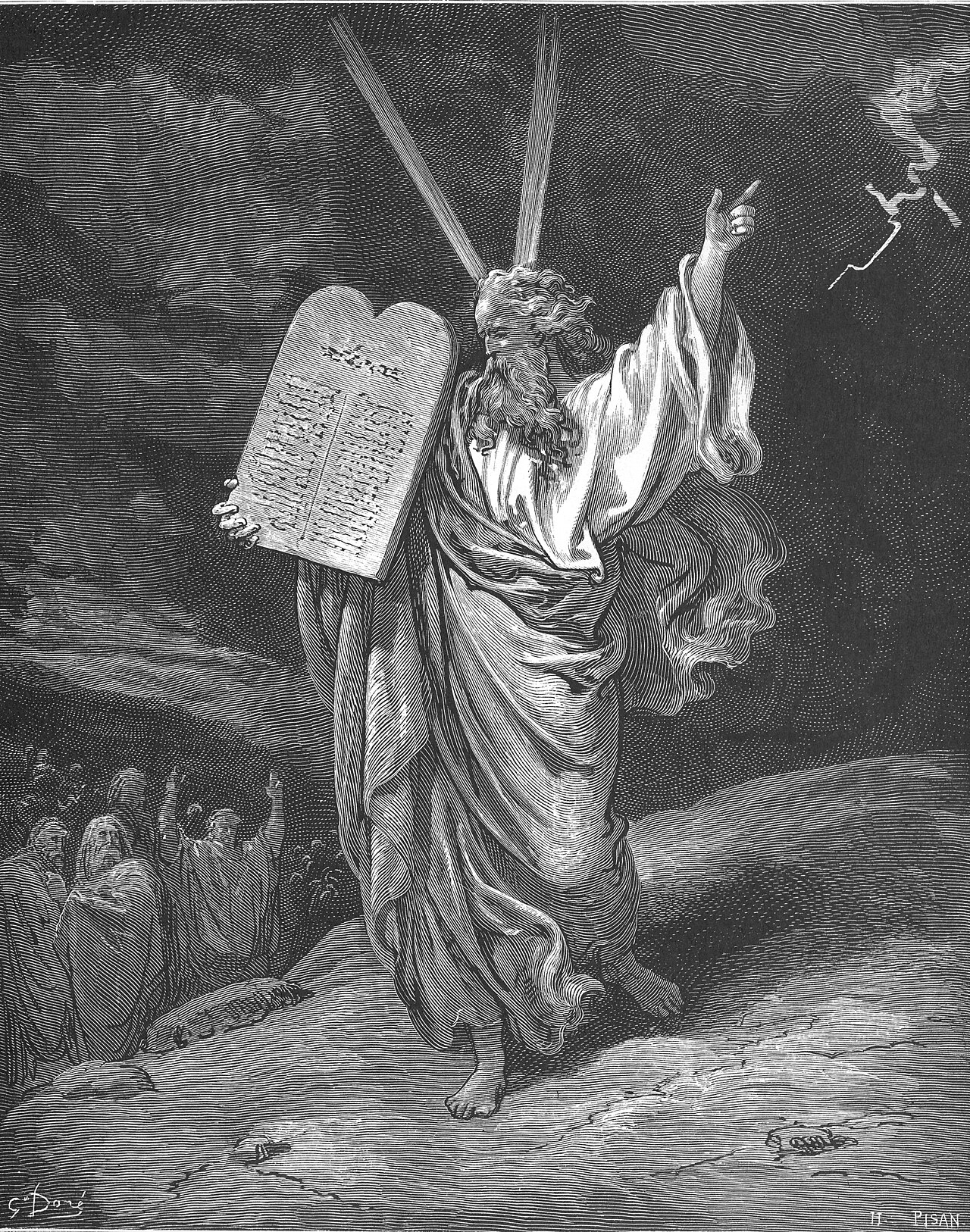
Who and where
1 name in this verse with a page on the site.
This page draws on Adam Clarke, Commentary on the Bible; Albert Barnes, Notes on the Old Testament; Albert Barnes, Notes, Explanatory and Practical, on the Old and New Testaments (1832-1869); Jamieson, Fausset & Brown, Commentary Critical and Explanatory on the Whole Bible; Jerome, St. Jerome, Commentary on Daniel, CHAPTER NINE; John Gill, Exposition of the Old Testament (1748-1763) and Matthew Henry, Commentary on the Whole Bible.