
2 Samuel 4:7
in 2 Samuel 4They had entered the house while Ish-bosheth was lying on his bed, and having stabbed and killed him, they beheaded him, took his head, and traveled all night by way of the Arabah.
BSB
The same verse in ASV and KJV ▾
ASV
Now when they came into the house, as he lay on his bed in his bedchamber, they smote him, and slew him, and beheaded him, and took his head, and went by the way of the Arabah all night.
KJV
For when they came into the house, he lay on his bed in his bedchamber, and they smote him, and slew him, and beheaded him, and took his head, and gat them away through the plain all night.
⋯
This verse in 2 Samuel 4
Commentary
2 notes on this verseThis site's exposition
about the heat of the day
on 2 Samuel 4:5-7
The captains walk in as though they would fetch wheat, the ordinary errand that gets two armed men past the door to a sleeping king. Ish-bosheth is struck under the fifth rib, the same wound the narrator gave Asahel falling to Abner's spear at 2:23 and Abner falling to Joab's hand at 3:27, with Amasa struck in the fifth rib at 20:10 the fourth private killing this book measures the same way. Verse 7 adds the detail the confession of verse 8 will need: the captains behead him and carry the head north through the plain all night.
The record, by era
The Puritans and the Awakening1 voice
For when they came into the house, he lay on his bed in his bedchamber,....
The words behind it
21 Hebrew wordsEvery Hebrew word of this verse in the order it stands, with what it means and the door to its own study. The last column counts the times a word stands in the whole Bible: the rarer the word, the more the places it appears belong together.
| Hebrew | Sound | Meaning | Word study | In the Bible |
|---|---|---|---|---|
| וַיָּבֹ֣אוּ | vaiyavou | and they came | H935 → | 2568 times |
| הַבַּ֗יִת | habayit | the house | H1004 → | 2046 times |
| וְהֽוּא־ | vehu'- | and he | H1931 → | 1879 times |
| שֹׁכֵ֤ב | shokhev | [was] lying | H7901 → | 212 times |
| עַל־ | ʾal- | on | H5921 → | 5755 times |
| מִטָּתוֹ֙ | mitato | bed his | H4296 → | |
| בַּחֲדַ֣ר | bachadar | in [the] chamber of | H2315 → | 38 times |
| מִשְׁכָּב֔וֹ | mishkavo | lying down his | H4904 → | 46 times |
| וַיַּכֻּ֙הוּ֙ | vaiyakuhu | and they struck him | H5221 → | 499 times |
| וַיְמִתֻ֔הוּ | vaymituhu | and they killed him | H4191 → | 839 times |
| וַיָּסִ֖ירוּ | vaiyasiru | and they removed | H5493 → | 299 times |
| אֶת־ | ʾet- | <obj.> | H853 → | 10935 times |
| רֹאשׁ֑וֹ | rosho | head his | H7218 → | 599 times |
| וַיִּקְחוּ֙ | vaiyikchu | and they took | H3947 → | 966 times |
| אֶת־ | ʾet- | <obj.> | H853 → | 10935 times |
| רֹאשׁ֔וֹ | rosho | head his | H7218 → | 599 times |
| וַיֵּֽלְכ֛וּ | vaiyelekhu | and they went | H1980 → | 1546 times |
| דֶּ֥רֶךְ | derekh | [the] way of | H1870 → | 707 times |
| הָעֲרָבָ֖ה | haaravah | the Arabah | H6160 → | 61 times |
| כָּל־ | kol- | all | H3605 → | 5413 times |
| הַלָּֽיְלָה׃ | halayelah | the night | H3915 → | 233 times |
וַיָּבֹ֣אוּand they came
vaiyavouH935 →2568 times
הַבַּ֗יִתthe house
habayitH1004 →2046 times
וְהֽוּא־and he
vehu'-H1931 →1879 times
שֹׁכֵ֤ב[was] lying
shokhevH7901 →212 times
עַל־on
ʾal-H5921 →5755 times
מִטָּתוֹ֙bed his
mitatoH4296 →
בַּחֲדַ֣רin [the] chamber of
bachadarH2315 →38 times
מִשְׁכָּב֔וֹlying down his
mishkavoH4904 →46 times
וַיַּכֻּ֙הוּ֙and they struck him
vaiyakuhuH5221 →499 times
וַיְמִתֻ֔הוּand they killed him
vaymituhuH4191 →839 times
וַיָּסִ֖ירוּand they removed
vaiyasiruH5493 →299 times
אֶת־<obj.>
ʾet-H853 →10935 times
רֹאשׁ֑וֹhead his
roshoH7218 →599 times
וַיִּקְחוּ֙and they took
vaiyikchuH3947 →966 times
אֶת־<obj.>
ʾet-H853 →10935 times
רֹאשׁ֔וֹhead his
roshoH7218 →599 times
וַיֵּֽלְכ֛וּand they went
vaiyelekhuH1980 →1546 times
דֶּ֥רֶךְ[the] way of
derekhH1870 →707 times
הָעֲרָבָ֖הthe Arabah
haaravahH6160 →61 times
כָּל־all
kol-H3605 →5413 times
הַלָּֽיְלָה׃the night
halayelahH3915 →233 times
A shaded row is a word that stands 400 times or fewer in the Bible.
The walk
8 stopsEach card is a verse this one points to, and under it the verses that one points to in turn. Where several paths arrive at the same place, that place is listed first: the text keeps returning to it.
Through
1 Samuel 31:9They cut off Saul’s head, stripped off his armor, and sent messengers throughout the land of the Philistines to proclaim the news in the temples of their idols and among their people.
it leads to
- 2 Samuel 1:20
Tell it not in Gath; proclaim it not in the streets of Ashkelon, lest the daughters of the Philistines rejoice, and the daughters of the uncircumcised exult.
- Judges 16:23–24
Now the lords of the Philistines gathered together to offer a great sacrifice to their god Dagon. They rejoiced and said, “Our god has delivered Samson our enemy into our hands.”
- 1 Samuel 31:4
Then Saul said to his armor-bearer, “Draw your sword and run it through me, or these uncircumcised men will come and run me through and torture me!” But his armor-bearer was terrified and refused…
- 1 Samuel 17:54
David took the head of the Philistine and brought it to Jerusalem, and he put Goliath’s weapons in his own tent.
- 1 Samuel 17:51
David ran and stood over him. He grabbed the Philistine’s sword and pulled it from its sheath and killed him; and he cut off his head with the sword. When the Philistines saw that…
- 2 Samuel 1:20
Through
Matthew 14:11John’s head was brought in on a platter and presented to the girl, who carried it to her mother.
it leads to
- Revelation 16:6
For they have spilled the blood of saints and prophets, and You have given them blood to drink, as they deserve.”
- Genesis 49:7
Cursed be their anger, for it is strong, and their wrath, for it is cruel! I will disperse them in Jacob and scatter them in Israel.
- Revelation 16:6
Through
2 Samuel 2:29And all that night Abner and his men marched through the Arabah. They crossed the Jordan, marched all morning, and arrived at Mahanaim.
it leads to
- 2 Samuel 2:8
Meanwhile, Abner son of Ner, the commander of Saul’s army, took Saul’s son Ish-bosheth, moved him to Mahanaim,
- 2 Samuel 2:8
About 2 Samuel
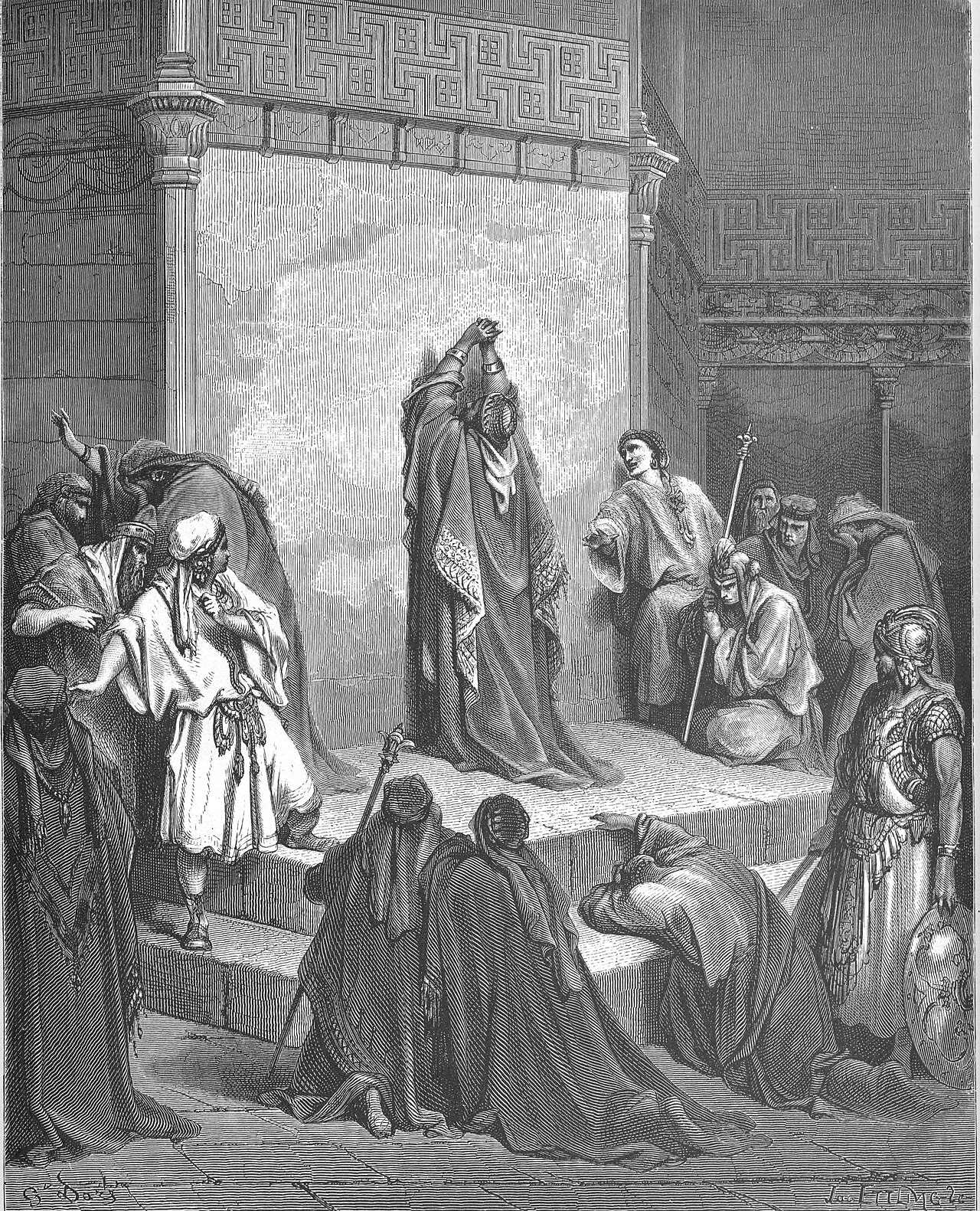
This page draws on Adam Clarke, Commentary on the Bible; John Gill, Exposition of the Old Testament (1748-1763) and John Wesley, Explanatory Notes upon the Old Testament.