
1 Samuel 6:19
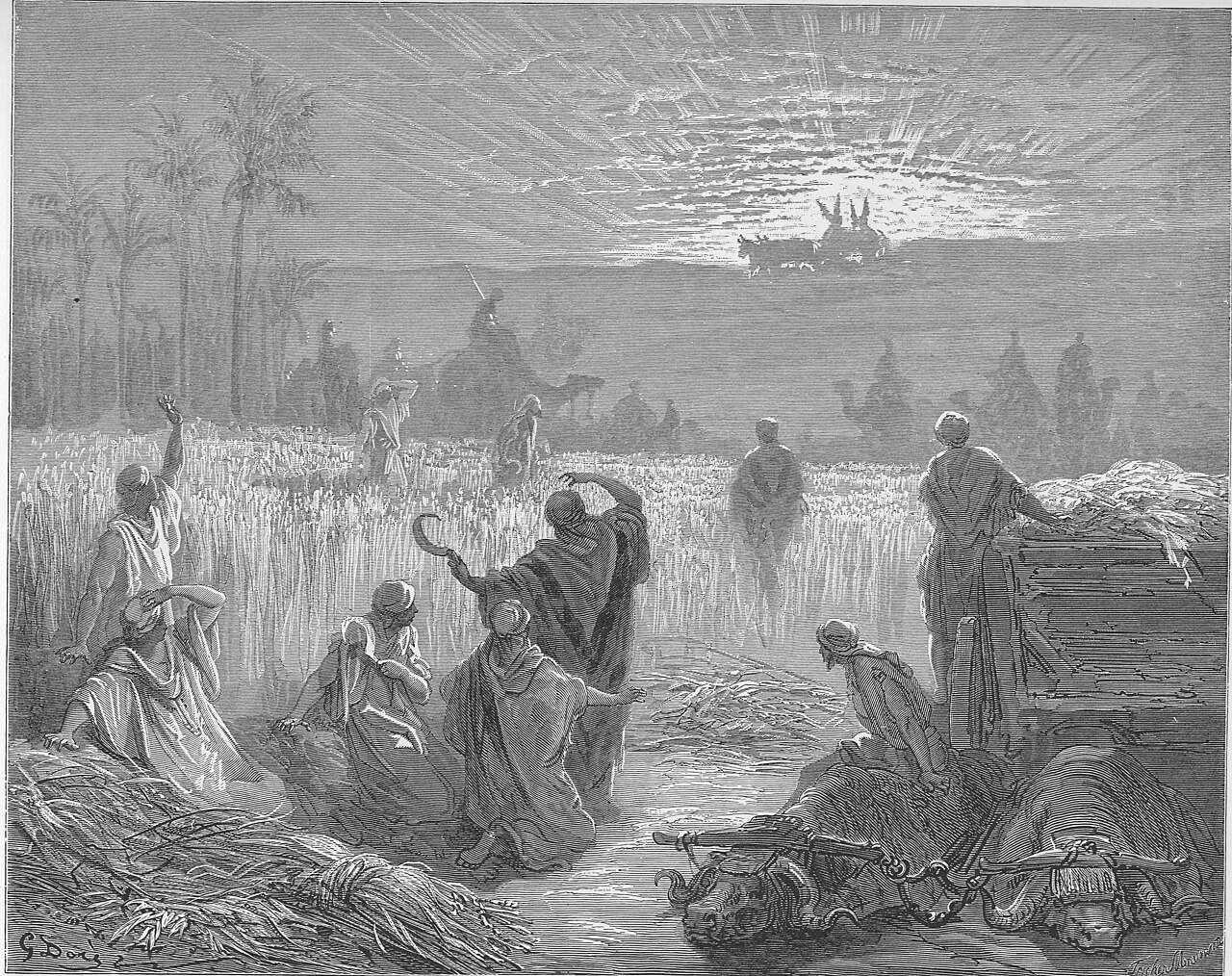
in 1 Samuel 6But God struck down some of the people of Beth-shemesh because they looked inside the ark of the LORD. He struck down seventy men, and the people mourned because the LORD had struck them with a great slaughter.
BSB
The same verse in ASV and KJV ▾
ASV
And he smote of the men of Beth-shemesh, because they had looked into the ark of Jehovah, he smote of the people seventy men, and fifty thousand men; and the people mourned, because Jehovah had smitten the people with a great slaughter.
KJV
And he smote the men of Beth–shemesh, because they had looked into the ark of the Lord, even he smote of the people fifty thousand and threescore and ten men: and the people lamented, because the Lord had smitten many of the people with a great slaughter.
⋯
This verse in 1 Samuel 6
Commentary
13 notes on this verseA commentator
Albert Barnes1798–1870
Notes, Explanatory and Practical, on the Old and New Testaments (1832-1869)
Fifty thousand and three score and ten - Read “three” score and “ten”, omitting “fifty thousand”, which appears to have crept into the text from the margin. It is not improbable that in their festive rejoicing priests, Levites, and people may have fallen into intemperance, and hence, into presumptuous irreverence (compare Lev 10:1, Lev 10:9). God had just vindicated His own honor against the Philistines; it must now be seen that He would be sanctified in them that come near Him Lev 10:
This site's exposition
because they looked inside the ark of the LORD
The number of the dead is a textual question: some Hebrew manuscripts and Josephus give seventy alone, and Barnes reads the fifty thousand of the received text as a marginal note. Jamieson, Fausset and Brown keep the received text and cite Josephus's count of seventy out of fourteen hundred. The ground of judgment is plain, for the men “looked inside the ark of the LORD”, and the town mourned.
The record, by era
The Medieval Church4 voices
"And he struck down from the people seventy men, and fifty thousand of the common people." [1 Samuel 6:19] This was said of those who dared to see the Ark of the Lord returned from the land of the Philistines, although they were not of …
But he smote certain men of Beth-shemesh, etc. Not the priests and Levites, whose office it was to carry the ark; but the ignoble common people, to whom it was not even lawful to look upon it, he smote. To prevent this, in Exodus the …
And the people lamented, for the Lord had struck them, etc. Because the Church laments with tears over its infirm or faltering members to restore them to their former state; and enkindled with zeal for the well-being of its flourishing members, who it sees have …
A commentator
Gregory the DialogistCommentary on 1 Kings, Book 3, Chapter 4 · Written before 604.
proposed
30. Who are the struck-down Beth-shemites, if not heretics deceived by false contemplation? For the Beth-shemites existed not in truth, but in presumption. Therefore, while they presumed to look upon the ark on the stone, they were struck down: because when they, being unworthy, scrutinized the sacraments of our Lord and Redeemer, they were cast down into the snares of eternal damnation through the deceit of their own error. But what does it mean that seventy men of the people, and fifty thousand of the common folk, were struck down?
The Puritans and the Awakening1 voice
Be not deceived, God is not mocked. Those that will not fear his goodness, and reverently use the tokens of his grace, shall be made to feel his justice, and sink under the tokens of his displeasure. Those that pry into what is forbidden, and come too near to holy fire, will find it is at their peril.
6 more voices on this verse
The Puritans and the Awakening4 voices
Perhaps this made many say (as we are apt to covet that which is forbidden) what a great deal they would give for a sight of it. Some of these Beth-shemites, we may suppose, for that reason, rejoiced to see the ark (
quarantine:debris (2026-07-29) — unbalanced-parens
Had looked - Having now an opportunity which they never yet had, it is not strange they had a vehement curiosity to see the contents of the ark. Of the people - In and near Beth-shemesh and coming from all parts on this occasion.
And he smote the men of Bethshemesh,....
In the field of the Philistines (so it is in the original), from which some gather that, having tried it in all their cities, and found it a plague to the inhabitants of each, at length they sent it into the open fields, upon which mice sprang up out of the ground in great multitudes, and destroyed the corn which was now nearly ripe and marred the land.
The Nineteenth Century2 voices
A commentator
Jamieson, Fausset & Brown1802–1910
Commentary Critical and Explanatory on the Whole Bible (1871)
God, instead of decimating, according to an ancient usage, slew only a twentieth part; that is, according to JOSEPHUS, seventy out of fourteen hundred (see Nu 4:18-22).
He smote of the people fifty thousand and threescore and ten men - The present Hebrew text of this most extraordinary reading stands thus: ויך באנשי בית־שמש - ויך בעם שבעים איש חמשים אלף איש vaiyach beanshey Beith-shemesh - vaiyach baam shibim ish, chamishshim eleph ish; “And he smote among the men of Beth-shemesh, (because they looked into the ark of Jehovah), and he smote among the people Seventy men, Fifty Thousand men.” From the manner in which the text stands, and from the great improbability of the thing, it is most likely that there is a corruption in this text, or that some explanatory word is lost, or that the number fifty thousand has been added by ignorance or design; it being very improbable that such a small village as Beth-shemesh should contain or be capable of employing fifty thousand and seventy men in the fields at wheat harvest, much less that they could all peep into the ark on the stone of Abel, in the corn-field of Joshua. That the words are not naturally connected in the Hebrew text, is evident; and they do not stand better in the versions. 1. The Vulgate renders it thus: - Et percussit de populo Septuaginta viros; et Quinquaginta Milla plebis; “And he smote of the (chief) people Seventy men, and Fifty Thousand of the (common) people.” This distinction, I suppose, St. Jerome intended between plebis and populus; which he might think was warranted by the אנשים anashim, and איש ish, of the Hebrew text. 2. The Targum of Jonathan is something similar to the Vulgate: - “And he smote בסבי עמא besabey amma, of the elders of the people Seventy men; ובקהלא ubekahala, and of the congregation Fifty Thousand men.” 3. The Septuagint follow the Hebrew text: Και επαταξεν εν αυτοις ἑβδομηκοντα ανδρας, και πεντηκοντα χιλιαδας ανδρων; “And he smote of them Seventy men; and Fifty Thousand men.” εκ του λαου, of the people, is added by some copies. 4. […]
The words behind it
23 Hebrew wordsEvery Hebrew word of this verse in the order it stands, with what it means and the door to its own study. The last column counts the times a word stands in the whole Bible: the rarer the word, the more the places it appears belong together.
| Hebrew | Sound | Meaning | Word study | In the Bible |
|---|---|---|---|---|
| וַיַּ֞ךְ | vaiyakh | and he struck down | H5221 → | 499 times |
| בְּאַנְשֵׁ֣י | beanshei | among [the] people of | H582 → | 566 times |
| בֵֽית־ | veit- | Beth | H1053 → | 42 times |
| שֶׁ֗מֶשׁ | shemesh | Shemesh | H1053 → | 42 times |
| כִּ֤י | ki | for | H3588 → | 4482 times |
| רָאוּ֙ | rau | they had looked | H7200 → | 1300 times |
| בַּאֲר֣וֹן | baaron | in [the] ark of | H727 → | 202 times |
| יְהוָ֔ה | yahweh | Yahweh | H3068 → | 6520 times |
| וַיַּ֤ךְ | vaiyakh | and he struck down | H5221 → | 499 times |
| בָּעָם֙ | baam | among the people | H5971 → | 1873 times |
| שִׁבְעִ֣ים | shivim | seventy | H7657 → | |
| אִ֔ישׁ | ʾish | man | H376 → | 1663 times |
| חֲמִשִּׁ֥ים | chamishim | fifty | H2572 → | |
| אֶ֖לֶף | ʾelef | thousand | H505 → | 505 times |
| אִ֑ישׁ | ʾish | man | H376 → | 1663 times |
| וַיִּֽתְאַבְּל֣וּ | vaiyitabelu | and they mourned | H56 → | 39 times |
| הָעָ֔ם | haam | the people | H5971 → | 1873 times |
| כִּֽי־ | ki- | for | H3588 → | 4482 times |
| הִכָּ֧ה | hikah | he had struck | H5221 → | 499 times |
| יְהוָ֛ה | yahweh | Yahweh | H3068 → | 6520 times |
| בָּעָ֖ם | baam | <in> the people | H5971 → | 1873 times |
| מַכָּ֥ה | makah | a blow | H4347 → | 48 times |
| גְדוֹלָֽה | gedolah | great | H1419 → | 526 times |
וַיַּ֞ךְand he struck down
vaiyakhH5221 →499 times
בְּאַנְשֵׁ֣יamong [the] people of
beansheiH582 →566 times
בֵֽית־Beth
veit-H1053 →42 times
שֶׁ֗מֶשׁShemesh
shemeshH1053 →42 times
כִּ֤יfor
kiH3588 →4482 times
רָאוּ֙they had looked
rauH7200 →1300 times
בַּאֲר֣וֹןin [the] ark of
baaronH727 →202 times
יְהוָ֔הYahweh
yahwehH3068 →6520 times
וַיַּ֤ךְand he struck down
vaiyakhH5221 →499 times
בָּעָם֙among the people
baamH5971 →1873 times
שִׁבְעִ֣יםseventy
shivimH7657 →
אִ֔ישׁman
ʾishH376 →1663 times
חֲמִשִּׁ֥יםfifty
chamishimH2572 →
אֶ֖לֶףthousand
ʾelefH505 →505 times
אִ֑ישׁman
ʾishH376 →1663 times
וַיִּֽתְאַבְּל֣וּand they mourned
vaiyitabeluH56 →39 times
הָעָ֔םthe people
haamH5971 →1873 times
כִּֽי־for
ki-H3588 →4482 times
הִכָּ֧הhe had struck
hikahH5221 →499 times
יְהוָ֛הYahweh
yahwehH3068 →6520 times
בָּעָ֖ם<in> the people
baamH5971 →1873 times
מַכָּ֥הa blow
makahH4347 →48 times
גְדוֹלָֽהgreat
gedolahH1419 →526 times
A shaded row is a word that stands 400 times or fewer in the Bible.
The walk
8 stopsEach card is a verse this one points to, and under it the verses that one points to in turn. Where several paths arrive at the same place, that place is listed first: the text keeps returning to it.
Through
Colossians 2:18Do not let anyone who delights in false humility and the worship of angels disqualify you with speculation about what he has seen. Such a person is puffed up without basis by his unspiritual…
it leads to
- Colossians 2:8
See to it that no one takes you captive through philosophy and empty deception, which are based on human tradition and the spiritual forces of the world rather than on Christ.
- 1 John 4:1–2
Beloved, do not believe every spirit, but test the spirits to see whether they are from God. For many false prophets have gone out into the world.
- Colossians 2:23
Such restrictions indeed have an appearance of wisdom, with their self-prescribed worship, their false humility, and their harsh treatment of the body; but they are of no value against the indulgence of the flesh.
- 1 Timothy 4:1
Now the Spirit expressly states that in later times some will abandon the faith to follow deceitful spirits and the teachings of demons,
- 1 Timothy 1:7
They want to be teachers of the law, but they do not understand what they are saying or that which they so confidently assert.
- Colossians 2:8
Through
2 Samuel 6:7And the anger of the LORD burned against Uzzah, and God struck him down on the spot for his irreverence, and he died there beside the ark of God.
it leads to
- 1 Chronicles 15:13
It was because you Levites were not with us the first time that the LORD our God burst forth in anger against us. For we did not consult Him about the proper order.”
- 1 Chronicles 15:13
Through
Numbers 4:15When Aaron and his sons have finished covering the holy objects and all their equipment, as soon as the camp is ready to move, the Kohathites shall come and do the carrying. But they…
it leads to
- 2 Samuel 6:6–7
When they came to the threshing floor of Nacon, Uzzah reached out and took hold of the ark of God, because the oxen had stumbled.
- 2 Samuel 6:6–7
Through
Numbers 4:20But the Kohathites are not to go in and look at the holy objects, even for a moment, or they will die.”
it leads to
- Exodus 19:21
and the LORD said to him, “Go down and warn the people not to break through to see the LORD, lest many of them perish.
- Exodus 19:21
Where this verse is studied
On this page
Studies1
About 1 Samuel
This page draws on 11 works. Open the list of works
This page draws on Adam Clarke, Commentary on the Bible; Albert Barnes, Notes, Explanatory and Practical, on the Old and New Testaments (1832-1869); Albert Barnes, Notes on the Old Testament; Bede, Questions on the Book of Kings #3; Bede, Commentary on Samuel; Gregory the Dialogist, Commentary on 1 Kings, Book 3, Chapter 4; Jamieson Fausset and Brown, Commentary Critical and Explanatory on the Whole Bible; Jamieson, Fausset & Brown, Commentary Critical and Explanatory on the Whole Bible; John Gill, Exposition of the Old Testament (1748-1763); John Wesley, Explanatory Notes upon the Old Testament and Matthew Henry, Commentary on the Whole Bible.