
1 Samuel 31:7
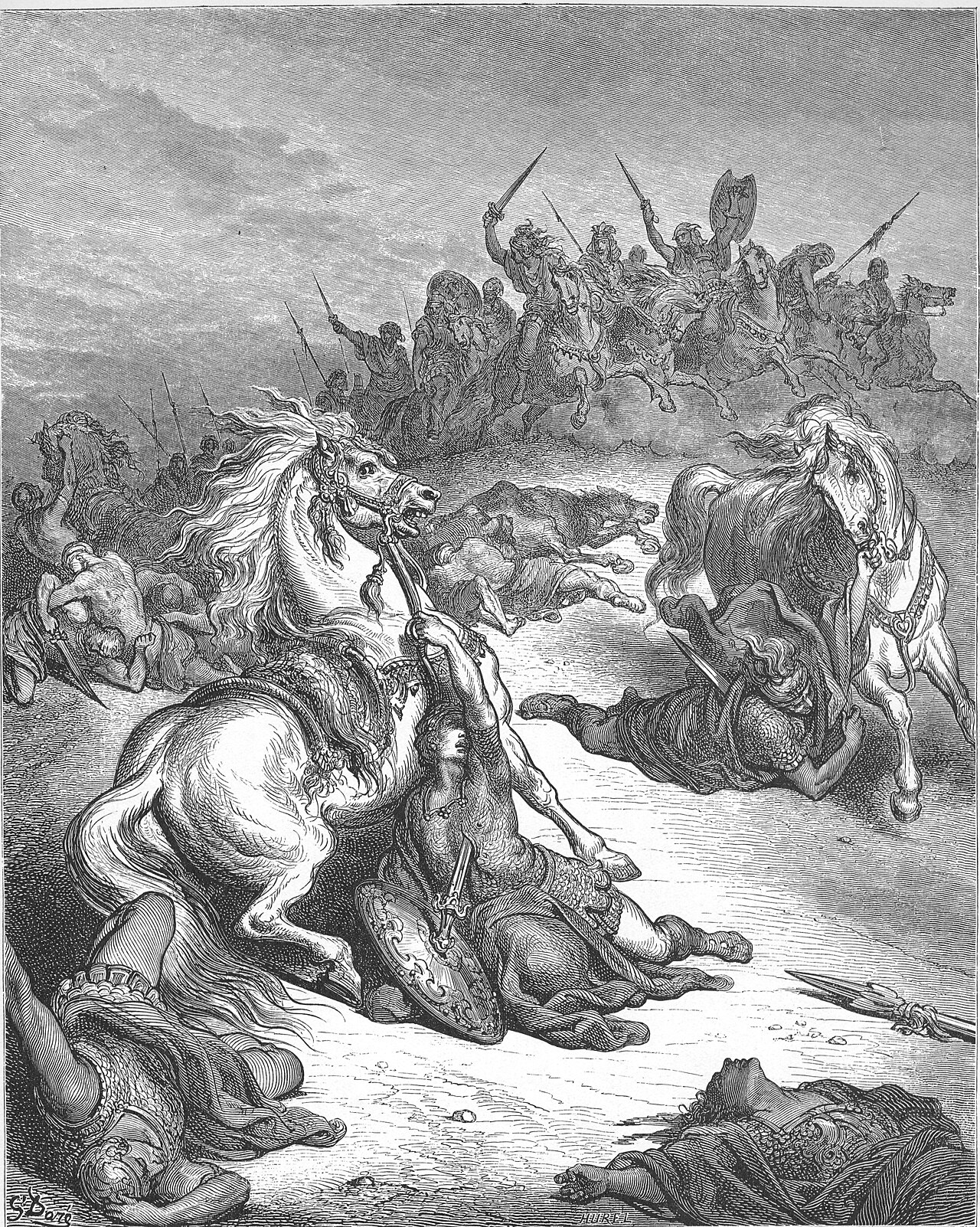
in 1 Samuel 31When the Israelites along the valley and those on the other side of the Jordan saw that the army of Israel had fled and that Saul and his sons had died, they abandoned their cities and ran away. So the Philistines came and occupied their cities.
BSB
The same verse in ASV and KJV ▾
ASV
And when the men of Israel that were on the other side of the valley, and they that were beyond the Jordan, saw that the men of Israel fled, and that Saul and his sons were dead, they forsook the cities, and fled; and the Philistines came and dwelt in them.
KJV
And when the men of Israel that were on the other side of the valley, and they that were on the other side Jordan, saw that the men of Israel fled, and that Saul and his sons were dead, they forsook the cities, and fled; and the Philistines came and dwelt in them.
⋯
This verse in 1 Samuel 31
Commentary
7 notes on this verseA commentator
Albert Barnes1798–1870
Notes, Explanatory and Practical, on the Old and New Testaments (1832-1869)
The men on the other side of the valley - This must mean to the north of the plain of Jezreel, and would comprise the tribe of Naphtali, and Zabulon, and probably Issachar. But the text of 1Ch 10:7 has “that were in the valley,” limiting the statement to the inhabitants of the plain of Jezreel. On the other side Jordan - This phrase most commonly means on the east of Jordan, the speaker being supposed to be on the west side. But it is also used of the west of Jordan, as here, if the text be sound.
This site's exposition
they forsook the cities, and fled
The defeat at Gilboa reaches past the battlefield: towns across the valley and beyond the Jordan empty rather than face a Philistine army with no king and no standing force left to answer it, and the Philistines settle into cities Joshua's conquest had won. Barnes locates the abandoned country in the north, the ground of Naphtali, Zebulun and Issachar, held by the tribes since the conquest itself. One lost battle undoes what generations had kept, the practical cost of the manner of a king Samuel had catalogued back at chapter eight.
The record, by era
The Medieval Church1 voice
But the men of Israel saw, etc. Seeing, however, certain unlearned and ignorant of the true remedies of humility and the salutary washing of baptism, the learned in Judea, their own teachers, being defeated in the spiritual contest by the triumph of sin, and also …
The Puritans and the Awakening2 voices
They had still done wickedly (it is to be feared) as well as he, and therefore were consumed both they and their king, as the prophet had foretold concerning them, ch. xii. And to this reference is had long after. 10, 11 , " Where are thy saviours in all thy cities, of whom thou saidst, Give me a king and princes?
quarantine:debris (2026-07-29) — odd-straight-quotes
And which the men of Israel that were on the other side of the valley,....
The Nineteenth Century2 voices
A commentator
Jamieson, Fausset & Brown1802–1910
Commentary Critical and Explanatory on the Whole Bible (1871)
They consecrated the armor of the king and his sons to the temple of Ashtaroth fastened their bodies on the temple of Shen, while they fixed the royal heads ignominiously in the temple of Dagon (1Ch 10:10); thus dividing the glory among their several deities.
The men of Israel that were on the other side of the valley - They appear to have been panic-struck, and therefore fled as far as they could out of the reach of the Philistines. As the Philistines possessed Beth-shan, situated near to Jordan, the people on the other side of that river, fearing for their safety, fled also.
The words behind it
25 Hebrew wordsEvery Hebrew word of this verse in the order it stands, with what it means and the door to its own study. The last column counts the times a word stands in the whole Bible: the rarer the word, the more the places it appears belong together.
| Hebrew | Sound | Meaning | Word study | In the Bible |
|---|---|---|---|---|
| וַיִּרְא֣וּ | vaiyiru | and they saw | H7200 → | 1300 times |
| אַנְשֵֽׁי־ | ʾanshei- | [the] men of | H582 → | 566 times |
| יִ֠שְׂרָאֵל | yisrael | Israel | H3478 → | 2507 times |
| אֲשֶׁר־ | ʾasher- | who | H834 → | 5497 times |
| בְּעֵ֨בֶר | beever | [were] on [the] other side of | H5676 → | 90 times |
| הָעֵ֜מֶק | haemek | the valley | H6010 → | 69 times |
| וַאֲשֶׁ֣ר׀ | vaasher | and who | H834 → | 5497 times |
| בְּעֵ֣בֶר | beever | [were] on [the] other side of | H5676 → | 90 times |
| הַיַּרְדֵּ֗ן | haiyarden | the Jordan | H3383 → | |
| כִּֽי־ | ki- | that | H3588 → | 4482 times |
| נָ֙סוּ֙ | nasu | they had fled | H5127 → | 159 times |
| אַנְשֵׁ֣י | ʾanshei | [the] men of | H582 → | 566 times |
| יִשְׂרָאֵ֔ל | yisrael | Israel | H3478 → | 2507 times |
| וְכִי־ | vekhi- | and that | H3588 → | 4482 times |
| מֵ֖תוּ | metu | they had died | H4191 → | 839 times |
| שָׁא֣וּל | shaul | Saul | H7586 → | 402 times |
| וּבָנָ֑יו | uvanav | and sons his | H1121 → | 4930 times |
| וַיַּעַזְב֤וּ | vaiyaazvu | and they abandoned | H5800 → | 215 times |
| אֶת־ | ʾet- | <obj.> | H853 → | 10935 times |
| הֶֽעָרִים֙ | hearim | the cities | H5892 → | 1090 times |
| וַיָּנֻ֔סוּ | vaiyanusu | and they fled | H5127 → | 159 times |
| וַיָּבֹ֣אוּ | vaiyavou | and they came | H935 → | 2568 times |
| פְלִשְׁתִּ֔ים | felishtim | [the] Philistines | H6430 → | 287 times |
| וַיֵּֽשְׁב֖וּ | vaiyeshevu | and they dwelt | H3427 → | 1079 times |
| בָּהֶֽן׃ ס | bahen | in <the> them |
וַיִּרְא֣וּand they saw
vaiyiruH7200 →1300 times
אַנְשֵֽׁי־[the] men of
ʾanshei-H582 →566 times
יִ֠שְׂרָאֵלIsrael
yisraelH3478 →2507 times
אֲשֶׁר־who
ʾasher-H834 →5497 times
בְּעֵ֨בֶר[were] on [the] other side of
beeverH5676 →90 times
הָעֵ֜מֶקthe valley
haemekH6010 →69 times
וַאֲשֶׁ֣ר׀and who
vaasherH834 →5497 times
בְּעֵ֣בֶר[were] on [the] other side of
beeverH5676 →90 times
הַיַּרְדֵּ֗ןthe Jordan
haiyardenH3383 →
כִּֽי־that
ki-H3588 →4482 times
נָ֙סוּ֙they had fled
nasuH5127 →159 times
אַנְשֵׁ֣י[the] men of
ʾansheiH582 →566 times
יִשְׂרָאֵ֔לIsrael
yisraelH3478 →2507 times
וְכִי־and that
vekhi-H3588 →4482 times
מֵ֖תוּthey had died
metuH4191 →839 times
שָׁא֣וּלSaul
shaulH7586 →402 times
וּבָנָ֑יוand sons his
uvanavH1121 →4930 times
וַיַּעַזְב֤וּand they abandoned
vaiyaazvuH5800 →215 times
אֶת־<obj.>
ʾet-H853 →10935 times
הֶֽעָרִים֙the cities
hearimH5892 →1090 times
וַיָּנֻ֔סוּand they fled
vaiyanusuH5127 →159 times
וַיָּבֹ֣אוּand they came
vaiyavouH935 →2568 times
פְלִשְׁתִּ֔ים[the] Philistines
felishtimH6430 →287 times
וַיֵּֽשְׁב֖וּand they dwelt
vaiyeshevuH3427 →1079 times
בָּהֶֽן׃ סin <the> them
bahen
A shaded row is a word that stands 400 times or fewer in the Bible.
The walk
8 stopsEach card is a verse this one points to, and under it the verses that one points to in turn. Where several paths arrive at the same place, that place is listed first: the text keeps returning to it.
Through
Judges 6:2and the hand of Midian prevailed against Israel. Because of the Midianites, the Israelites prepared shelters for themselves in the mountains, caves, and strongholds.
it leads to
- Hebrews 11:38
The world was not worthy of them. They wandered in deserts and mountains, and hid in caves and holes in the ground.
Reached by 2 separate paths from here.
- 1 Samuel 13:6
Seeing that they were in danger because their troops were hard-pressed, the men of Israel hid in caves and thickets, among the rocks, and in cellars and cisterns.
- Hebrews 11:38
Through
Leviticus 26:36As for those of you who survive, I will send a faintness into their hearts in the lands of their enemies, so that even the sound of a windblown leaf will put them to…
it leads to
- Leviticus 26:17
And I will set My face against you, so that you will be defeated by your enemies. Those who hate you will rule over you, and you will flee when no one pursues you.
Reached by 2 separate paths from here.
- Ezekiel 21:7
And when they ask, ‘Why are you groaning?’ you are to say, ‘Because of the news that is coming. Every heart will melt, and every hand will go limp. Every spirit will faint, and…
- Isaiah 30:17
A thousand will flee at the threat of one; at the threat of five you will all flee, until you are left alone like a pole on a mountaintop, like a banner on a…
- Leviticus 26:17
Through
Leviticus 26:32And I will lay waste the land, so that your enemies who dwell in it will be appalled.
it leads to
- Jeremiah 9:11
“And I will make Jerusalem a heap of rubble, a haunt for jackals; and I will make the cities of Judah a desolation, without inhabitant.”
- Jeremiah 19:8
I will make this city a desolation and an object of scorn. All who pass by will be appalled and will scoff at all her wounds.
- Jeremiah 9:11
Through
1 Samuel 13:6Seeing that they were in danger because their troops were hard-pressed, the men of Israel hid in caves and thickets, among the rocks, and in cellars and cisterns.
it leads to
- Judges 6:2
and the hand of Midian prevailed against Israel. Because of the Midianites, the Israelites prepared shelters for themselves in the mountains, caves, and strongholds.
- Judges 6:2
About 1 Samuel
Who and where
1 name in this verse with a page on the site.
This page draws on Adam Clarke, Commentary on the Bible; Albert Barnes, Notes, Explanatory and Practical, on the Old and New Testaments (1832-1869); Albert Barnes, Notes on the Old Testament; Bede, Commentary on Samuel; Jamieson, Fausset & Brown, Commentary Critical and Explanatory on the Whole Bible; John Gill, Exposition of the Old Testament (1748-1763) and Matthew Henry, Commentary on the Whole Bible.