
1 Kings 5:18
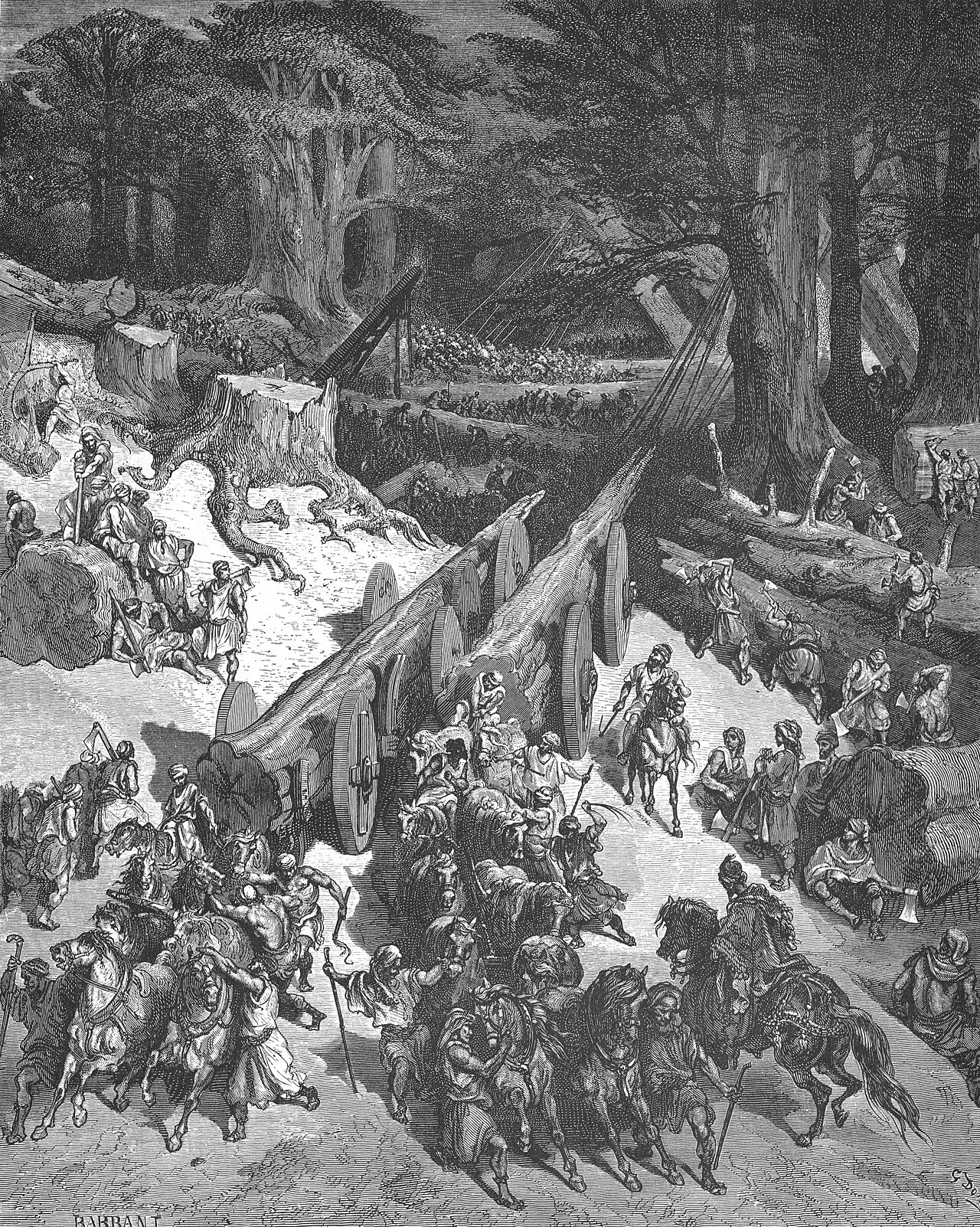
in 1 Kings 5So Solomon’s and Hiram’s builders, along with the Gebalites, quarried the stone and prepared the timber and stone for the construction of the temple.
BSB
The same verse in ASV and KJV ▾
ASV
And Solomon’s builders and Hiram’s builders and the Gebalites did fashion them, and prepared the timber and the stones to build the house.
KJV
And Solomon’s builders and Hiram’s builders did hew them, and the stonesquarers: so they prepared timber and stones to build the house.
⋯
This verse in 1 Kings 5
Commentary
10 notes on this verse"Furthermore the men of Biblos [i.e., the Giblites] prepared wood and stones to build the house." Biblos is a city in Phoenicia that Ezekiel mentions: "Your skilled men, Tyre, were your pilots. The elders of Biblos and its skilled men," for which [city] in Hebrew …
This site's exposition
brought great stones, costly stones
on 1 Kings 5:17-18
The great, costly, hewed stones for a foundation no worshipper will ever see are, Wesley writes, magnificence for its own sake unless meant as a type of Christ, the foundation stone of Isaiah 28:16, a reading he offers and does not press as the text's own statement. Barnes points to stones of comparable size still visible at the southwest corner of Jerusalem's Haram wall in his own century, one measured near thirty nine feet long and near a hundred tons, physical scale that matches what the verse describes. The Giblites of Gebal, Hiram's most skilled masons by Joshua 13:5, close the chapter's roster of nations at work on Israel's house: Sidonian fellers, Tyrian and Israelite builders, and now Phoenician stonesquarers, all named before a single stone is set inside the walls.
This site's exposition
along with the Gebalites
The Gebalites who quarried stone and prepared timber came from Gebal, a coastal city between Beirut and Tripoli that the Greeks called Byblus, as Albert Barnes notes. Adam Clarke and Bede cite Ezekiel 27:9, where its skilled men work on the ships of Tyre. Here the same skill serves the temple.
The record, by era
The Puritans and the Awakening4 voices
Stone-squarers - Hebrew. the Giblites, the inhabitants of Gebel, a place near Zidon, famous for artificers and architects, Josh. xiii, 5. These are here mentioned apart, distinct from the rest of Hiram's builders, as the most eminent of them.
Christ, who is laid for a foundation, is an elect and precious stone ( Isa. xxviii. 16 ), and the foundations of the church are said to be laid with sapphires, Isa. liv. That sincerity which is our gospel perfection obliges us to lay our foundation firm and to bestow most pains on that part of our religion which lies out of the sight of men.
It is here said of Hiram their king that he was ever a lover of David; and we have reason to think he was a worshipper of the true God, and had himself renounced, though he could not reform, the idolatry of his city.
And Solomon's builders and Hiram's builders did hew them,....
The Nineteenth Century1 voice
And the stone-squarers - Instead of stone-squarers the margin very properly reads Giblites, הגבלים haggiblim; and refers to Eze 27:9, where we find the inhabitants of Gebal celebrated for their knowledge in ship-building. Some suppose that these Giblites were the inhabitants of Biblos, at the foot of Mount Libanus, northward of Sidon, on the coast of the Mediterranean Sea; famous for its wines; and now called Gaeta. Both Ptolemy and Stephanus Byzantinus speak of a town called Gebala, to the east of Tyre: but this was different from Gebal, or Biblos.
2 more voices on this verse
The Nineteenth Century2 voices
A commentator
Jamieson, Fausset & Brown1802–1910
Commentary Critical and Explanatory on the Whole Bible (1871)
These great bevelled or grooved stones, measuring some twenty, others thirty feet in length, and from five to six feet in breadth, are still seen in the substructures about the ancient site of the temple; and, in the judgment of the most competent observers, were those originally employed "to lay the foundation of the house."
A commentator
Albert Barnes1798–1870
Notes, Explanatory and Practical, on the Old and New Testaments (1832-1869)
proposed
The stone-squarers - The Gebalites (see the margin), the inhabitants of Gebal, a Phoenician city between Beyrout and Tripolis, which the Greeks called Byblus, and which is now known as Jebeil.
The words behind it
11 Hebrew wordsEvery Hebrew word of this verse in the order it stands, with what it means and the door to its own study. The last column counts the times a word stands in the whole Bible: the rarer the word, the more the places it appears belong together.
| Hebrew | Sound | Meaning | Word study | In the Bible |
|---|---|---|---|---|
| וַֽיִּפְסְל֞וּ | vaiyifselu | and they cut [them] to shape | H6458 → | |
| בֹּנֵ֧י | bonei | [the] builders of | H1129 → | 376 times |
| שְׁלֹמֹ֛ה | shelomoh | Solomon | H8010 → | 291 times |
| וּבֹנֵ֥י | uvonei | and [the] builders of | H1129 → | 376 times |
| חִיר֖וֹם | chirom | Hiram | H2438 → | 22 times |
| וְהַגִּבְלִ֑ים | vehagivlim | and the Gebalites | H1382 → | |
| וַיָּכִ֛ינוּ | vaiyakhinu | and they prepared | H3559 → | 217 times |
| הָעֵצִ֥ים | haetzim | the wood<s> | H6086 → | 328 times |
| וְהָאֲבָנִ֖ים | vehaavanim | and the stones | H68 → | 273 times |
| לִבְנ֥וֹת | livnot | to build | H1129 → | 376 times |
| הַבָּֽיִת׃ פ | habayit | the house | H1004 → | 2046 times |
וַֽיִּפְסְל֞וּand they cut [them] to shape
vaiyifseluH6458 →
בֹּנֵ֧י[the] builders of
boneiH1129 →376 times
שְׁלֹמֹ֛הSolomon
shelomohH8010 →291 times
וּבֹנֵ֥יand [the] builders of
uvoneiH1129 →376 times
חִיר֖וֹםHiram
chiromH2438 →22 times
וְהַגִּבְלִ֑יםand the Gebalites
vehagivlimH1382 →
וַיָּכִ֛ינוּand they prepared
vaiyakhinuH3559 →217 times
הָעֵצִ֥יםthe wood<s>
haetzimH6086 →328 times
וְהָאֲבָנִ֖יםand the stones
vehaavanimH68 →273 times
לִבְנ֥וֹתto build
livnotH1129 →376 times
הַבָּֽיִת׃ פthe house
habayitH1004 →2046 times
A shaded row is a word that stands 400 times or fewer in the Bible.
The walk
8 stopsEach card is a verse this one points to, and under it the verses that one points to in turn. Where several paths arrive at the same place, that place is listed first: the text keeps returning to it.
Through
Psalms 83:7of Gebal, Ammon, and Amalek, of Philistia with the people of Tyre.
it leads to
- Joshua 13:5
the land of the Gebalites; and all Lebanon to the east, from Baal-gad below Mount Hermon to Lebo-hamath.
Reached by 2 separate paths from here.
- Ezekiel 27:3
Tell Tyre, who dwells at the gateway to the sea, merchant of the peoples on many coasts, that this is what the Lord GOD says: You have said, O Tyre, ‘I am perfect in…
- 1 Samuel 4:1
Thus the word of Samuel came to all Israel. Now the Israelites went out to meet the Philistines in battle and camped at Ebenezer, while the Philistines camped at Aphek.
- Joshua 13:5
Through
Joshua 13:5the land of the Gebalites; and all Lebanon to the east, from Baal-gad below Mount Hermon to Lebo-hamath.
it leads to
- Psalms 83:7
of Gebal, Ammon, and Amalek, of Philistia with the people of Tyre.
Reached by 2 separate paths from here.
- Ezekiel 27:9
The elders of Gebal were aboard as shipwrights, repairing your leaks. All the ships of the sea and their sailors came alongside to barter for your merchandise.
Reached by 2 separate paths from here.
- Joshua 12:7
And these are the kings of the land that Joshua and the Israelites conquered beyond the Jordan to the west, from Baal-gad in the Valley of Lebanon to Mount Halak, which rises toward Seir…
- Joshua 11:17
from Mount Halak, which rises toward Seir, as far as Baal-gad in the Valley of Lebanon at the foot of Mount Hermon. He captured all their kings and struck them down, putting them to…
- Numbers 34:8
and from Mount Hor to Lebo-hamath, then extend to Zedad,
- Psalms 83:7
About 1 Kings
This page draws on Adam Clarke, Commentary on the Bible; Albert Barnes, Notes on the Old Testament; Albert Barnes, Notes, Explanatory and Practical, on the Old and New Testaments (1832-1869); Bede, Of the Temple of Solomon 1.4.3; Jamieson, Fausset & Brown, Commentary Critical and Explanatory on the Whole Bible; John Gill, Exposition of the Old Testament (1748-1763); John Wesley, Explanatory Notes upon the Old Testament and Matthew Henry, Commentary on the Whole Bible.