
Matthew Relucio, 2022. CC BY-SA 4.0.
1929 to 1992 · The churches · Featured Study
Wycliffe Bible Translators
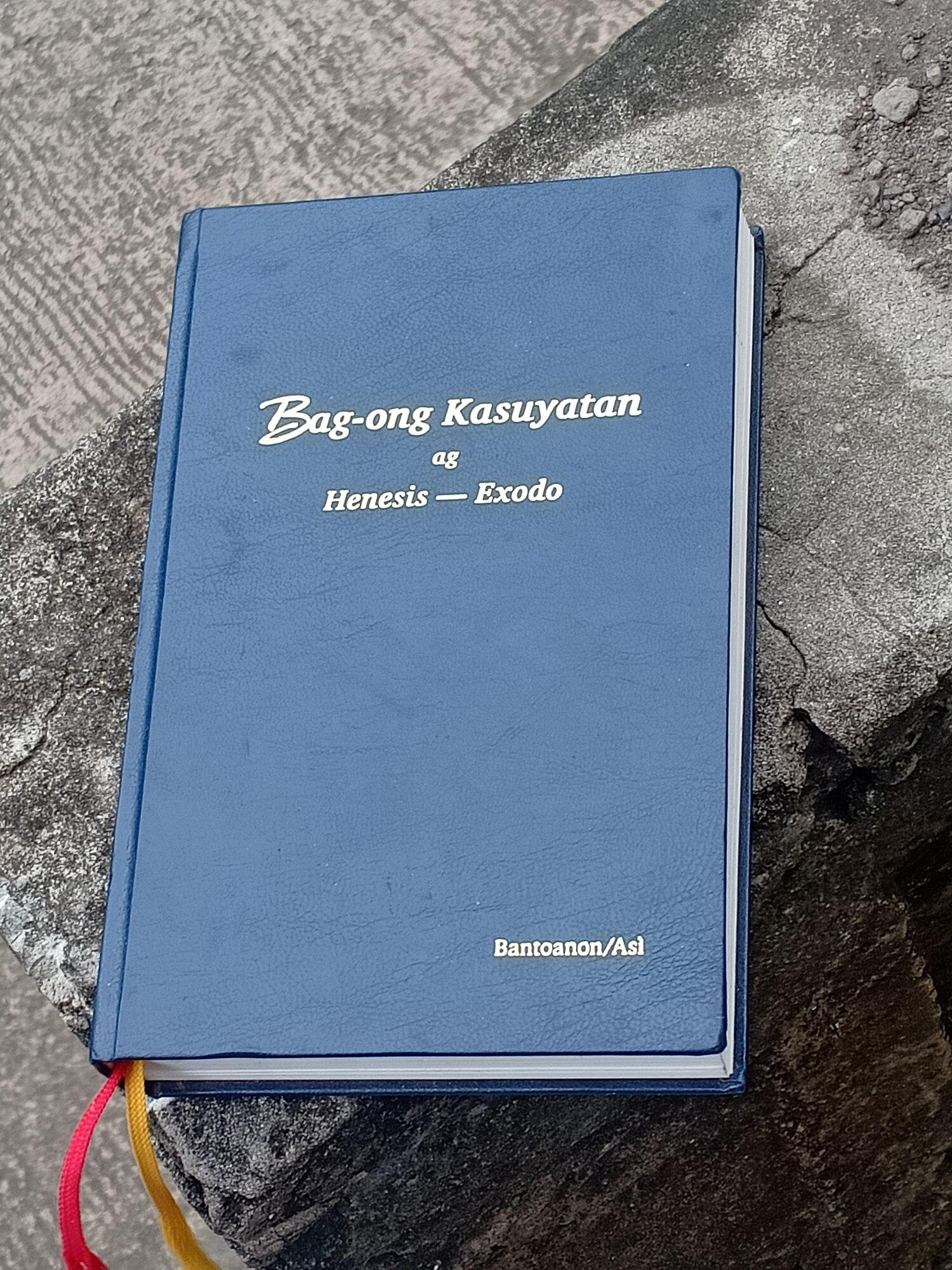
Translators who first learn a people's speech and write it down, then give that people the New Testament.
A Cakchiquel man in Guatemala asked Townsend why the God he preached had not learned the man's own language.
How is it then that each of us hears them in his own native language?
How is it then that each of us hears them in his own native language?
- Began
- 1942, the year of incorporation; organized 1933
- Bodies
- Wycliffe Bible Translators, The Summer Institute of Linguistics, The Jungle Aviation and Radio Service
Summary
Wycliffe Bible Translators and its sister body, the Summer Institute of Linguistics, train missionaries to study languages. They send them to put the Bible into tongues that had never been written. The work grew from the New Testament that W. Cameron Townsend made in the Cakchiquel tongue of Guatemala. It grew too from a summer school held in Arkansas in 1934.
- A directory of 1962 says the two bodies were formed in 1933 and made legal bodies in 1942.
- The same book counts 1,149 missionaries in twelve fields.
- Their linguists began work in Mexico in 1935 and later in Vietnam.
The Texts of Every Tongue
Scripture shows the gospel heard in each hearer's own language and every tongue before the throne.
John R. Mott wrote in 1900 that the pathway to the mind and heart of a people is through their mother tongue. Wycliffe's whole work is to give each people the Scripture in that tongue.
After this I looked and saw a multitude too large to count, from every nation and tribe and people and tongue, standing before the throne and before the Lamb. They were wearing white robes and holding palm branches in their hands.John's vision gathers the languages the translators serve into one worship.
Consequently, faith comes by hearing, and hearing by the word of Christ.A people can hear only in a language it knows, which is why a translation comes first.
The Branch from Guatemala to the Curaray
Each date is read from the Bible Society Record, the directory or the books of the time.
One New Testament in Guatemala grew into a training school, a body of translators and an air service.
1929 to 1931
- The Cakchiquel New Testament completed
- The first copies delivered
1934
- Camp Wycliffe, Sulphur Springs
1942
- The two bodies incorporated
1956 to 1962
- The deaths on the Curaray
- The Jungle Aviation and Radio Service, Waxhaw
1992
- The Waorani New Testament completed
The American Bible Society gives 1929 and 1931, Pike gives the school's first year, and the directory gives 1942.
The John Wycliffe page tells of the English Bible that bears his name, copied by hand and carried across England in the fourteenth century.
How the Work Began: A Question in Guatemala
Three printed reports tell how the work began.
The Bible Society Record of December 1929, the American Bible Society's own paper, reports that the Townsends completed the Cakchiquel New Testament on 10 October that year. Townsend told the meeting that they had begun a little over nine years before, in the hut where the believers of Patzún met.
The same paper reported in August 1932 that the first shipment of printed Cakchiquel and Spanish New Testaments reached Guatemala City in the spring of 1931. The first copy went to the President of the Republic.
Browne Sampsell wrote in The Christian Evangelist in July 1959 that this question gave Townsend the key to his work. He printed it in the man's words.
Wallis and Bennett's history of the same year gives the plea as “Why hasn't God learned our language?” The wording “If your God is so great” is later and appears in print from 1979.
The Truth They Pressed: Scripture in the Mother Tongue
The movement held that every people should read the word of God in its own language, translated with a linguist's care.
Mott recorded in 1900 the fear of Gustav Warneck that many translations were provisional, because their translators lacked scientific training. He judged it a tremendous task to translate the gospel into the hundreds of languages that did not yet carry it.
The movement's answer was a school. Kenneth L. Pike wrote that the first session of the Summer Institute of Linguistics met in 1934 in a small farmhouse at Sulphur Springs, Arkansas, with two students.
Pike describes the first summer of eleven weeks as training in reducing a language to writing. It also covered making dictionaries and primers, and analysing the grammar of an unwritten language.
The Work in Its Own Words
The directory has each body's own statement of its work.
The bodies named translation and linguistic training as their work.
| Part of the work | The directory's words |
|---|---|
| Translation | “Translation into tribal languages not previously reduced to writing” |
| Training | “preparation of missionaries for pioneer work in linguistics” |
| Related services | “Summer Institutes of Linguistic and Jungle Aviation and Radio Service” |
The Translators Counted in 1962
The Missionary Research Library counted the bodies' missionaries for its directory of December 1962.
Women outnumbered men among the translators.
The two counts as a table
| Missionaries | Number in 1962 |
|---|---|
| Women | 695 |
| Men | 454 |
Men and women among the translators, from the directory's entry 299.
The directory counts 217 new missionaries sent in 1960 and 1961, and names W. Cameron Townsend as General Director.
Pike's preface of 1959 counts about 4,500 students in the beginning courses over twenty-five years, and 570 students in five schools that year. It says the Institute then directed linguistic work in some 200 languages and dialects.
Where the Translators Went
Pike gives the year the Institute's work began in each area.
The Institute's areas multiplied in the 1950s.
- 1935Mexico
- 1944The United States
- 1946Peru
- 1952Guatemala
- 1953Ecuador and the Philippines
- 1955Bolivia and Canada
- 1956Brazil and New Guinea
- 1958Alaska
- 1959Vietnam
Taken from the preface of the Institute's bibliography of 1960.
1956, 1958, 1959
In Their Own Words
Robert Moffat (1795 to 1883)
Missionary Labours and Scenes in Southern Africa, page 201
Through an interpreter
“I have been very much troubled in my mind on hearing that the most erroneous renderings have been given to what I had said. Since acquiring the language, I have had opportunities of discovering this with my own ears, by hearing sentences translated, which at one moment were calculated to excite no more than a smile, while others would produce intense agony of mind from their bordering on blasphemy, and which the interpreter gave as the word of God.”
Congregationalist
About this saying1 paragraph
This passage stands on page 201 of the New York printing of 1844, from his years among the Bechuana.
W. Cameron Townsend (1896 to 1982)
Remarks on the completion of the Cakchiquel New Testament, as printed in the Bible Society Record 74, no. 12, December 1929, pages 196 to 197
Nine years in a hut
“We began the undertaking a little over nine years ago in the hut where the believers of Patzum held their services.”
Evangelical Protestant
About this saying1 paragraph
The Bible Society Record of December 1929 prints Townsend's words at the celebration of the finished translation.
Browne Sampsell
Breaking the Jungle Speech Barrier, The Christian Evangelist 97, no. 30, 26 July 1959, page 8
The question
“If your God is so smart,’ he asked Townsend, ‘why hasn't he learned our language?”
Other
About this saying1 paragraph
The man's words stand on page 8 of the issue of 26 July 1959, the earliest printed form found.
The Curaray, 1956, and the New Testament of 1992
Five men died before the Waorani heard the gospel, and the translation they hoped for came thirty-six years later.
Elisabeth Elliot tells in Through Gates of Splendor how five missionaries waited at a beach on the Curaray River in Ecuador. Their last radio call, after the quiet Saturday of 7 January 1956, asked for prayer, and the five were killed on 8 January.
Russell T. Hitt's time line in Jungle Pilot records that the Waorani New Testament was completed in June 1992. It records that Rachel Saint, a member of Wycliffe and SIL, died in Ecuador on 11 November 1994.
The work also carried the cost Warneck had named. A New Testament in an unwritten language took the Townsends nine years and the Waorani far longer.
Books to Read Next
Bible Society Record, December 1929
The American Bible Society · 1929
It reports the completion of the Cakchiquel New Testament with Townsend's words.
Free at the Internet ArchiveTwenty-fifth Anniversary Bibliography of the Summer Institute of Linguistics
Kenneth L. Pike and the Summer Institute of Linguistics · 1960
Pike's preface tells how the school began.
Free at the Internet ArchiveTwo Thousand Tongues to Go
Ethel E. Wallis and Mary A. Bennett · 1959
It tells the movement's story up to the year it was printed.
In print: find it wherever books are sold.
Through Gates of Splendor
Elisabeth Elliot · 1957
Elliot tells the deaths on the Curaray from the men's own journals.
In print: find it wherever books are sold.
What the Translators Handed On
The translators handed on New Testaments in languages that had no written Scripture, beginning with Cakchiquel. They also handed on a school that trains linguists before it sends them.
Sources
Scripture is the Berean Standard Bible.
- Robert Moffat, Missionary Labours and Scenes in Southern Africa (New York: Robert Carter, 1844), page 201.
- The Holy Bible, Berean Standard Bible (read 2026)
- Bible Society Record 74, no. 12 (New York: American Bible Society, December 1929), pages 196 to 197.
- R. R. Gregory, The Cakchiquel New Testament a Year After, Bible Society Record 77, no. 8 (August 1932), page 139.
- Browne Sampsell, Breaking the Jungle Speech Barrier, The Christian Evangelist 97, no. 30 (26 July 1959), page 8.
- Ethel E. Wallis and Mary A. Bennett, Two Thousand Tongues to Go (New York: Harper, 1959)
- George M. Cowan, The Word That Kindles (1979)
- Kenneth L. Pike, preface (19 September 1959), Twenty-fifth Anniversary Bibliography of the Summer Institute of Linguistics (Glendale: Summer Institute of Linguistics, January 1960), the preface.
- North American Protestant Foreign Mission Agencies, fifth edition (New York: Missionary Research Library, December 1962), entry 299, page 40.
- Elisabeth Elliot, Through Gates of Splendor (New York: Harper, 1957), pages 192 and 194.
- Russell T. Hitt, Jungle Pilot (1997 edition), the time line of later events.
- John R. Mott, The Evangelization of the World in This Generation (New York: Student Volunteer Movement for Foreign Missions, 1901 printing), page 41.
Keep Studying
Read it1