
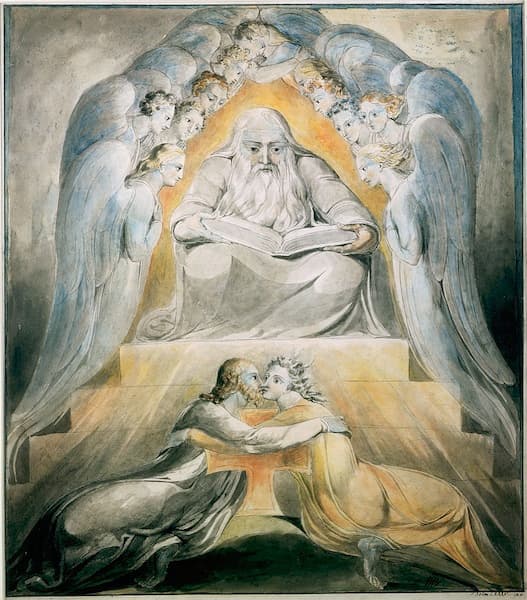
Psalm 85:10 · Symbol · Truthfulness
The Words Emet and Aletheia
Emet and aletheia are the nouns Scripture uses for truth, and sheqer and pseudos its nouns for the lie.
Paul's word for speaking the truth in love stands only once more, in a question he put to the Galatians.
Loving devotion and faithfulness have joined together; righteousness and peace have kissed.
- The word
- אֶמֶת (emet), H571
- First appears
- Genesis 24:27 “saying, “Blessed be the LORD, the God of…”
Summary
The Hebrew emet names truth as what holds, and the Berean renders it truth, faithfulness or reliability by the verse in which it stands. Its opposite in Proverbs is sheqer, and Proverbs 12:19 sets truthful lips against a lying tongue. The Greek aletheia names both the reality behind an appearance and integrity of character, and John uses it of Christ, of the Father's word and of the devil, who has none of it. Beside it stand the adjectives alethes and alethinos and the verb aletheuo, and against it the pseudos family.
- A word's sense is read from its use, so a shared root never settles what one use of emet means.
- The God of truth of Isaiah 65:16 is a use of amen (H543), a word of the same family as emet.
- Emet stands most often in the Psalms, and aletheia most often in John's Gospel.
- Emet (H571) stands 127 times in 125 verses.
- Aletheia (G225) stands 109 times in 98 verses.
Emet, Truth That Holds
The first use of emet stands in Genesis, and its glosses run from stability to truth.
Truthfulness is one of the values Scripture asks of every believer, and the words studied here carry it from the Law to the letters.
The question this study answers is what the two words meant to those who used them, how the Greek words alethes, alethinos and aletheuo differ, and which words name the lie. It gives the counts of the words, the Hebrew contrast of truth and falsehood in Proverbs, the senses of aletheia, and the cautions that keep a reader from building on a root.
The STEP Bible lexicon glosses emet as “stability” and gives its meaning as “truth: faithful”. Among its tagged uses the commonest glosses are truth (24) and faithfulness (19), and Proverbs 12:19 and Proverbs 14:25 are glossed reliability.
Its first use in the order of the canon is in the blessing spoken by Abraham's servant, where the Berean renders it faithfulness (Genesis 24:27).
Into Your hands I commit my spirit; You have redeemed me, O LORD, God of truth.The psalmist's “God of truth” is emet in the Hebrew, and the tagged text glosses the noun faithfulness.
Where Emet and Aletheia Stand
Of the thirteen words, emet is the one Scripture uses most.
The Hebrew noun for truth and the Hebrew noun for the lie stand almost as often as each other.
| Word | Gloss in the STEP Bible lexicon | Uses |
|---|---|---|
| Emet and its kin | ||
| emet, אֶמֶת, H571, noun | stability | 127 |
| emunah, אֱמוּנָה, H530, noun | literally firmness | 49 |
| aman, אָמַן, H539, verb | properly, to build up or support | 106 |
| Sheqer and kazav | ||
| sheqer, שֶׁקֶר, H8267, noun | an untruth | 113 |
| kazav, כָּזַב, H3576, verb | to lie (i.e. deceive), literally or figuratively | 16 |
| kazav, כָּזָב, H3577, noun | falsehood | 31 |
| Aletheia and its kin | ||
| aletheia, ἀλήθεια, G225, noun | truth | 109 |
| alethes, ἀληθής, G227, adjective | true (as not concealing) | 26 |
| alethinos, ἀληθινός, G228, adjective | truthful | 28 |
| aletheuo, ἀληθεύω, G226, verb | to be true (in doctrine and profession) | 2 |
| Pseudos and its kin | ||
| pseudos, ψεῦδος, G5579, noun | a falsehood | 10 |
| pseudomai, ψεύδομαι, G5574, verb | to utter an untruth or attempt to deceive by falsehood | 12 |
| pseudes, ψευδής, G5571, adjective | untrue, i.e. erroneous, deceitful, wicked | 3 |
kazav, כָּזַב, H3576, verb, kazav, כָּזָב, H3577, noun, Aletheia and its kin, aletheia, ἀλήθεια, G225, noun, alethes, ἀληθής, G227, adjective, alethinos, ἀληθινός, G228, adjective, aletheuo, ἀληθεύω, G226, verb, Pseudos and its kin and 3 more
Emet and aletheia book by book1 figure
Most books carry each word fewer than ten times.
| Book | Verses |
|---|---|
| Emet (H571) in the Hebrew Bible | |
| Psalms | 37 |
| Isaiah | 12 |
| Proverbs | 11 |
| Jeremiah | 11 |
| Genesis | 6 |
| Daniel | 6 |
| 1 Kings | 5 |
| 2 Chronicles | 5 |
| Zechariah | 5 |
| Deuteronomy | 3 |
| Joshua | 3 |
| Judges | 3 |
| 2 Samuel | 3 |
| Nehemiah | 3 |
| Exodus | 2 |
| 2 Kings | 2 |
| Ezekiel | 2 |
| 1 Samuel | 1 |
| Ecclesiastes | 1 |
| Hosea | 1 |
| Micah | 1 |
| Malachi | 1 |
| Esther | 1 |
| Aletheia (G225) in the New Testament | |
| John | 20 |
| Romans | 8 |
| 1 John | 8 |
| 2 Corinthians | 6 |
| Ephesians | 6 |
| 2 Timothy | 6 |
| 1 Timothy | 5 |
| 3 John | 5 |
| 2 John | 4 |
| Mark | 3 |
| Luke | 3 |
| Acts | 3 |
| Galatians | 3 |
| 2 Thessalonians | 3 |
| James | 3 |
| 1 Corinthians | 2 |
| Colossians | 2 |
| Titus | 2 |
| 2 Peter | 2 |
| Matthew | 1 |
| Philippians | 1 |
| Hebrews | 1 |
| 1 Peter | 1 |
Daniel, 1 Kings, 2 Chronicles, Zechariah, Deuteronomy, Joshua, Judges, 2 Samuel and 34 more
A verse can carry a word twice, as Proverbs 22:21 carries emet, so a word's uses can outnumber its verses. The counts are those of the STEP Bible tagging, and a printed concordance may differ by one or two.
Truth and the Lie in Hebrew
Proverbs names the lie with sheqer and kazav, and the false witness by one verb.
Truthful lips endure forever, but a lying tongue lasts only a moment.The Hebrew sets sfat emet, lips of truth, against leshon shaqer, a tongue of falsehood, in a single line.
The lying tongue of Proverbs 6:17 is leshon sheqer, and the lying lips of Proverbs 12:22 are siftei sheqer. Sheqer stands most often in Jeremiah (34 verses), the Psalms (22) and Proverbs (20).
The verb is yafiach, he breathes out. With kezavim, lies, it marks the false witness in five sayings, among them Proverbs 6:19 and Proverbs 19:9. In one proverb it takes emunah instead: “He who speaks the truth declares what is right, but a false witness speaks deceit” (Proverbs 12:17).
Aletheia, Truth Disclosed and Truth Kept
Abbott-Smith's Greek lexicon gives aletheia three senses, and the Gospel of John uses two of them.
Abbott-Smith's first sense of aletheia is objective, “the reality lying at the basis of an appearance; the manifested, veritable essence of a matter”, as in “the truth of the gospel” (Galatians 2:5). Its second is personal, “truthfulness, truth, not merely verbal ... but sincerity and integrity of character”. The third covers set phrases, as where Jesus is said to teach “the way of God in accordance with the truth” (Mark 12:14).
The Word became flesh and made His dwelling among us. We have seen His glory, the glory of the one and only Son from the Father, full of grace and truth.John joins grace and truth in the Word made flesh, and John 1:17 says that both came through Jesus Christ.
You belong to your father, the devil, and you want to carry out his desires. He was a murderer from the beginning, refusing to uphold the truth, because there is no truth in him. When he lies, he speaks his native language, because he is a liar and the father of lies.Jesus uses aletheia twice of the devil's character and then names his speech pseudos, the lie.
Jesus took the noun as His own name: “I am the way and the truth and the life” (John 14:6).
Sanctify them by the truth; Your word is truth.Jesus uses aletheia twice in this petition, once for the means of setting apart and once for the Father's word.
Alethes and Alethinos
Two Greek adjectives are rendered true, and the STEP Bible lexicon and one commentary describe the difference in different terms.
Whoever accepts His testimony has certified that God is truthful.John uses alethes of God, whose testimony the believer certifies as true.
Alethes is glossed “true (as not concealing)”, and alethinos “truthful”, with the meaning “true”.
“I am the true vine, and My Father is the keeper of the vineyard.Here alethinos marks Christ as the vine that is real, the one from which the branches live.
Jamieson, Fausset and Brown read alethinos at Revelation 3:14 as “not truth-speaking (Greek, ‘alethes’), but ‘perfectly realizing all that is comprehended in the name Witness’” (1871).
The Verb Aletheuo and the Pseudos Family
The Greek words built on pseudos name the lie, the liar and the false witness, beside the rare verb aletheuo.
Have I now become your enemy by telling you the truth?The tagged Greek here is aletheuon, a present participle, telling you the truth.
Instead, speaking the truth in love, we will in all things grow up into Christ Himself, who is the head.The participle aletheuontes is plural, so the truthful speech belongs to the whole church as it grows.
Aletheuo is glossed “to be true (in doctrine and profession)”, and Albert Barnes notes that the King James margin at Ephesians 4:15 reads “being sincere”.
Paul's command opens with apothemenoi to pseudos, “put off falsehood” (Ephesians 4:25), and goes on to laleite aletheian, a present imperative, speak truth. With an object the verb pseudomai means to deceive by lies. Its one use in that sense is Peter's question to Ananias, who chose “to lie to the Holy Spirit” (Acts 5:3). Paul uses pseudomartures, false witnesses, of apostles who would have preached a resurrection that did not happen (1 Corinthians 15:15).
Cautions in Reading the Words
One caution keeps a reader from drawing more from these words than their uses carry.
Emet, emunah and amen share a root, and the Berean often renders emet faithfulness, but a root cannot decide a use. James Barr's The Semantics of Biblical Language (Oxford University Press, 1961) has a chapter titled “'Faith' and 'Truth': An Examination of Some Linguistic Arguments” on reasoning drawn from the root aman.
The Amen Strand
The word amen belongs to the same family in both Testaments and is used of God and of Christ.
Where Isaiah 65:16 twice names the God of truth, the Hebrew is Elohei amen, tagged with the word amen (H543), and the noun emet is absent from the verse. Jesus' “Truly, truly” (John 1:51) is amen amen in the Greek.
Revelation joins the families in one title of Christ, “the Amen, the faithful and true Witness” (Revelation 3:14).
Voices on the Words
Clement of Alexandria reads Christ's saying that He is the truth.
died 215 · Clement of Alexandria
Clement of Alexandria stands here for the truth as a name of the Word.
Read the page on Clement of Alexandria
“Now the Word of God says, ‘I am the truth.’ The Word is then to be contemplated by the mind. ... Now the Word issuing forth was the cause of creation; then also he generated himself, ‘when the Word had become flesh,’ that He might be seen.”
Clement of Alexandria · The Stromata Book 5 · on John 1:14Patristic
Walking in the Truth
John's third letter uses aletheia of a believer who lives by it.
In the New Testament truth is a road a believer walks as well as a word he speaks. The second and third letters of John, each a single chapter, carry aletheia in nine verses between them, four in 2 John and five in 3 John. The elder opens the third by greeting “the beloved Gaius, whom I love in the truth” (3 John 1:1).
For I was overjoyed when the brothers came and testified about your devotion to the truth, in which you continue to walk.The verse uses aletheia twice, once for the brothers' testimony and once for the life it describes.
Sources
Scripture is the Berean Standard Bible.
- STEP Bible TBESH and TBESG glosses (Tyndale House, Cambridge, CC BY 4.0), the Greek glosses and senses based on Abbott-Smith (1922)
- STEP Bible, Translators Amalgamated Hebrew Old Testament and Greek New Testament, the tagged texts (Tyndale House, Cambridge), CC BY 4.0.
- Robert Jamieson, A. R. Fausset and David Brown, Commentary Critical and Explanatory on the Whole Bible (1871), on Revelation 3:14.
- Albert Barnes, Notes on the New Testament, on Ephesians 4:15.
- James Barr, The Semantics of Biblical Language (Oxford University Press, 1961), the chapter 'Faith' and 'Truth': An Examination of Some Linguistic Arguments.
- The study The Words Emunah and Pistis, on the aman family.
- Clement of Alexandria, The Stromata, book 5, Ante-Nicene Fathers, volume 2.
Keep Studying
In this value5