
Romans 12:1-2 · Featured Study
The Living Sacrifice
Eleven chapters of doctrine turn into a life on one word: “I beseech you therefore, brethren, by the mercies of God.” Paul asks for the only offering a redeemed man can bring, a sacrifice that stays alive. This page walks the two verses in order: the therefore and the mercies behind it, the altar language and its paradox, the renewing of the mind, and the will of God proved in practice, with a door forward into 12:3-21 where the sacrifice goes to work.
Summary
Romans 12:1-2 is the hinge of the letter. After eleven chapters of the mercies of God, Paul asks for the one offering a living man can bring: himself, presented to God, with a mind being renewed until he can prove God's will for himself.
- The therefore of 12:1 stands on eleven chapters of mercies: justification (ch. 3-5), union with Christ (ch. 6-8), and God's faithfulness to Israel (ch. 9-11)
- The old altar received a slain offering; this one stays alive, the paradox the commentators press (12:1)
- Transformation works from the inside out, by the renewing of the mind (12:2)
- The renewed mind can test and approve "the good and acceptable and perfect will of God" (12:2)
- Verses 3-21 spell the sacrifice out in the body, its gifts, and its love
The Therefore, and the Mercies
12:1: eleven chapters of doctrine turn into a plea
Romans 12:1 (BSB)
“Therefore I urge you, brothers, on account of God’s mercy, to offer your bodies as living sacrifices, holy and pleasing to God, which is your spiritual service of worship.” Romans 12:1
The verse opens with a hinge word. “Therefore” reaches back across everything the letter has argued: the righteousness of God given through faith (chapters 3 to 5), the believer joined to Christ and set free from sin and death (chapters 6 to 8), and God’s unbroken faithfulness to Israel (chapters 9 to 11). Those eleven chapters are the “mercies of God,” and Paul pleads by them. The appeal comes after the mercy, and because of it. God’s kindness supplies the motive before Paul asks for a single act of obedience.
Notice also what Paul does with his authority here. An apostle could command. Instead he beseeches, and he does it as a brother among brethren. The strongest exhortation in the letter arrives as a plea grounded in what God has already done.
“I beseech you - The apostle, having finished the argument of this Epistle, proceeds now to close it with a practical or hortatory application, showing its bearing on the duties of life, and the practical influence of religion. None of the doctrines of the gospel are designed to be cold and barren speculations. They bear on the hearts and lives of people; and the apostle therefore calls on those to whom he wrote to dedicate themselves without reserve unto God.”
Albert Barnes · Notes, Explanatory and Practical, on the Old and New Testaments, 1832-1869Presbyterian
Rom 12:1
“It has a reference here to the entire gospel, to the whole economy of grace or mercy, delivering us from ‘the wrath of God,’ and exciting us to all duty. To present - So chap. vi, 13; xvi, 19; now actually to exhibit before God. Your bodies - That is, yourselves; a part is put for the whole; the rather, as in the ancient sacrifices of beasts, the body was the whole.”
John Wesley · Explanatory Notes upon the New Testament, 1755Evangelical
Rom 12:1
A Sacrifice That Lives
the altar language, and the paradox the commentators press
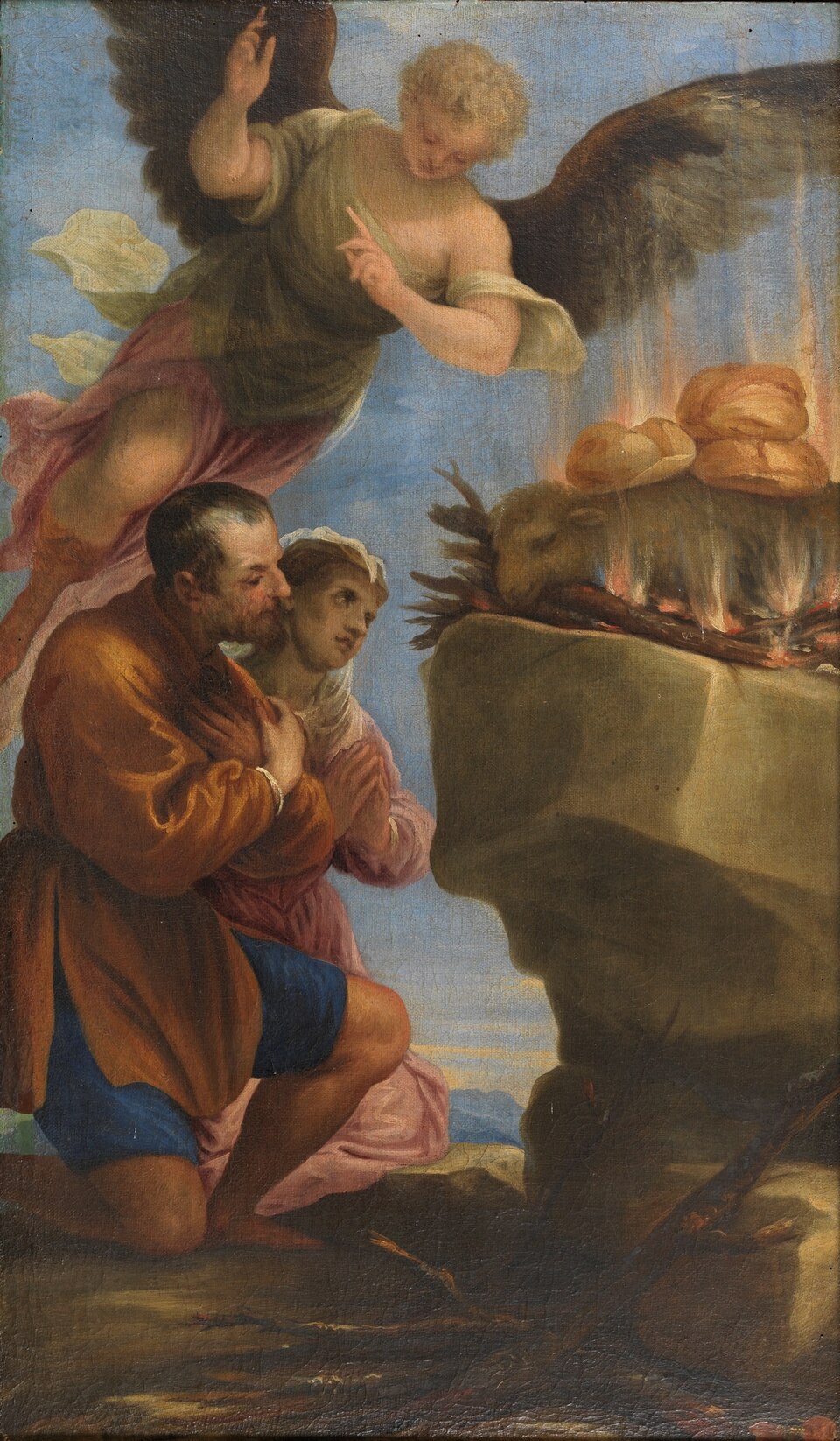
Every word of the phrase comes from the altar. “Present” is the language of bringing an offering to the temple. “Sacrifice” (Greek thusia) is the word the Greek Old Testament uses for the offerings of Leviticus. “Holy” and “acceptable” are the priest’s tests of a fit offering. A first-century reader, Jewish or pagan, knew exactly what happened to a sacrifice: it was slain. Paul takes the whole vocabulary and changes one word. This offering lives.
The paradox is the point. A slain offering is given once; a living one must keep consenting, morning after morning. The body on this altar gets up and goes to work, and the offering continues there. That is why Paul says “bodies” rather than a vaguer word like hearts: the body is where obedience becomes visible, the part of a person the old sacrifices could stand for.
“A body sincerely devoted to God is a living sacrifice. A living sacrifice, by way of allusion--that which was dead of itself might not be eaten, much less sacrificed, Deut. xiv. 21 ; and by ways of opposition--‘The sacrifice was to be slain, but you may be sacrificed, and yet live on’--an unbloody sacrifice.”
Matthew Henry · Commentary on the Whole Bible, 1710Nonconformist
Rom 12:1
“In this view the presentation of ourselves, as living monuments of redeeming mercy, is here called ‘our rational service’; and surely it is the most rational and exalted occupation of God's reasonable creatures.”
Jamieson, Fausset & Brown · Commentary Critical and Explanatory on the Whole Bible, 1871Reformed
Rom 12:1
The earliest reception: a new oblation in the new covenantIrenaeus, 2nd century
The church read this offering language early. Irenaeus, writing in the second century, ties the church’s worship to Malachi 1:11’s promised “pure sacrifice” among the Gentiles and to the incense of Revelation 5:8:
“Those who have become acquainted with the secondary (i.e., under Christ) constitutions of the apostles, are aware that the Lord instituted a new oblation in the new covenant, according to [the declaration of] Malachi the prophet. For, ‘from the rising of the sun even to the setting my name has been glorified among the Gentiles, and in every place incense is offered to my name, and a pure sacrifice;’ as John also declares in the Apocalypse: ‘The incense is the prayers of the saints.’”
Irenaeus of Lyons · Fragments from the Lost Writings of Irenaeus, 202Early Church
Rom 12:1
The New Testament carries the same picture forward in its own words: spiritual sacrifices offered through Christ (1 Peter 2:5), the sacrifice of praise and of doing good (Hebrews 13:15-16). The whole study of the altar itself stands at /featured/the-altar.
The Renewing of the Mind
12:2: two shapes a life can take
Romans 12:2 (BSB)
“Do not be conformed to this world, but be transformed by the renewing of your mind. Then you will be able to test and approve what is the good, pleasing, and perfect will of God.” Romans 12:2
The verse sets two verbs against each other. “Fashioned” (syschematizo) is shaping by an outside mold: the age presses, and the life takes its form. “Transformed” (metamorphoo) is change from within, the verb the Gospels use when Jesus is transfigured before Peter, James, and John (Matthew 17:2). One shape is pressed on; the other grows out. And the instrument of the second is the mind. The renewing starts in how a person thinks, judges, and values, and the life follows the mind.
“The mind is the acting ruling part of us; so that the renewing of the mind is the renewing of the whole man, for out of it are the issues of life, Prov. iv. The progress of sanctification, dying to sin more and more and living to righteousness more and more, is the carrying on of this renewing work, till it be perfected in glory.”
Matthew Henry · Commentary on the Whole Bible, 1710Nonconformist
Rom 12:2
What 'this world' means: the present ageAdam Clarke on aioni touto
The word behind “world” here is aion, age: the present order of things with its customs, values, and pressures. Clarke unpacks it:
“And be not conformed to this world - By this world, αιωνι τουτῳ, may be understood that present state of things both among the Jews and Gentiles; the customs and fashions of the people who then lived, the Gentiles particularly, who had neither the power nor the form of godliness; though some think that the Jewish economy, frequently termed עולם הזה olam hazzeh, this world, this peculiar state of things, is alone intended.”
Adam Clarke · Commentary on the Bible, 1832Methodist
Rom 12:2
Proving the Will of God
the renewed mind's reward: knowing by sure trial
The sentence ends on a purpose: “Then you will be able to test and approve what is the good, pleasing, and perfect will of God.” The word behind “test and approve” (dokimazo) is the assayer’s word, testing metal to find what is genuine. A renewed mind gains a working discernment: it can weigh a course of action and recognize the will of God in it, the way a trained eye recognizes true coin. The three adjectives are the verdict such testing reaches. What God wills turns out, on trial, to be good, and pleasing, and perfect.
“That ye may prove - Know by sure trial; which is easily done by him who has thus presented himself to God. What is that good, and acceptable, and perfect will of God - The will of God is here to be understood of all the preceptive part of Christianity, which is in itself so excellently good, so acceptable to God, and so perfective of our natures.”
John Wesley · Explanatory Notes upon the New Testament, 1755Evangelical
Rom 12:2
Wesley’s aside deserves its own sentence: the proving is “easily done by him who has thus presented himself to God.” The order of the two verses holds. Presentation comes first, discernment follows. The person who has settled the question of ownership finds the question of guidance far smaller.
The Words on the Altar
the Greek underneath the two verses
Four words carry the weight of the passage, and each opens into its own study. One translation fork is worth naming plainly: the phrase the BSB renders “your spiritual service of worship” (logiken latreian) the KJV renders “your reasonable service.” The Greek logikos holds both senses, worship offered by the reasoning self, and the commentators above use both freely.
The words underneath
thysia: sacrifice
Greek · G2378Strong's entry: sacrifice (the act or the victim, literally or figuratively)
Thusia, the sacrifice itself: the word the Greek Old Testament uses for the offerings of Leviticus, asked here of a body that stays alive.
28 times in the New Testament · thysia, in full →
logikos: spiritual
Greek · G3050Strong's entry: rational ("logical")
Logikos, rendered "spiritual" in the BSB and "reasonable" in the KJV: service offered by the reasoning self, the whole person engaged.
2 times in the New Testament · logikos, in full →
syschematizo: to conform to
Greek · G4964Strong's entry: to fashion alike, i.e. conform to the same pattern (figuratively)
Syschematizo, "conformed to": shaped by an outside mold. Its only other New Testament use is 1 Peter 1:14.
2 times in the New Testament · syschematizo, in full →
metamorphoo: to transform
Greek · G3339Strong's entry: to transform (literally or figuratively, "metamorphose")
Metamorphoo, "be ye transformed": the verb of the Transfiguration (Matthew 17:2), used again of beholding-and-becoming at 2 Corinthians 3:18.
4 times in the New Testament · metamorphoo, in full →
Where the Sacrifice Flows
12:3-21: the presented life at work in the body
The rest of the chapter is the living sacrifice in motion, and its first step is telling. The presented life begins with sober self-judgment and takes its place among the members of one body:
“For I say, through the grace that was given me, to every man that is among you, not to think of himself more highly than he ought to think; but so to think as to think soberly, according as God hath dealt to each man a measure of faith.” Romans 12:3
From there the chapter moves through the gifts each member carries (12:4-8), love without hypocrisy (12:9-13), blessing for persecutors (12:14), sympathy and humility (12:15-16), and peace with all men so far as it lies with us (12:17-20), closing on a single sentence that gathers the whole:
“Be not overcome of evil, but overcome evil with good.” Romans 12:21
“Such then is the great general duty of the redeemed--SELF-CONSECRATION, in our whole spirit and soul and body to Him who hath called us into the fellowship of His Son Jesus Christ. Next follow specific duties, chiefly social; beginning with Humility, the chiefest of all the graces--but here with special reference to spiritual gifts.”
Jamieson, Fausset & Brown · Commentary Critical and Explanatory on the Whole Bible, 1871Reformed
Rom 12:2-3
“Prayer has a distinct relationship to all Christian duties and graces. It is not possible for us to carry out the holy commands of our Lord Jesus unless we are abundant in supplication.”
Charles Spurgeon · The Metropolitan Tabernacle Pulpit, Sermon No. 1480: “Constant, Instant, Expectant”, 1879Particular (Reformed) Baptist
Rom 12:12
“Note, (1) The redeeming mercy of God in Christ is, in the souls of believers, the living spring of all holy obedience (Ro 12:1).”
Jamieson, Fausset & Brown · Commentary Critical and Explanatory on the Whole Bible, 1871Reformed
Rom 12:21
JFB’s closing note on the chapter circles back to where this page began: the mercy of 12:1 is the spring the whole chapter flows from. The obedience of verses 3 to 21 runs on the mercies of chapters 1 to 11, and the living sacrifice stands between them, receiving the one and producing the other.
The Voices
with the work named
Notes, Explanatory and Practical, on the Old and New Testaments (1832-1869) · public domain
Marks the turn of the whole letter at 12:1: the argument finished, the apostle closes with its bearing on the duties of life.
Explanatory Notes upon the New Testament (1755) · public domain
Reads "the mercies of God" as the entire gospel gathered behind the therefore, and "prove" as knowing the will of God by sure trial.
Commentary on the Whole Bible (1710) · public domain
Presses the paradox: the old sacrifice was slain, but you may be sacrificed and yet live on. Reads the renewing of the mind as the renewing of the whole man.
Commentary Critical and Explanatory on the Whole Bible (1871) · public domain
Calls the presented life a living monument of redeeming mercy, and names the mercy of 12:1 the living spring of all holy obedience.
Commentary on the Bible (1832) · public domain
Unpacks "this world" (aioni touto, this present age) as the customs and fashions of the people then living.
The Metropolitan Tabernacle Pulpit, Sermon No. 1480, "Constant, Instant, Expectant" (1879) · public domain
Preaches 12:12's continuing in prayer as the strength behind every command in the chapter.
Fragments from the Lost Writings of Irenaeus (2nd century) · public domain
The earliest voice in the pool: reads the church's offering through Malachi's pure sacrifice and the Apocalypse's incense, the prayers of the saints.
Marcus Brown's own commentary leads above all; within a tier, all voices are equal. No modern (living-copyright) roster voice appears in the site's quote pool for this chapter; the relevance gate is honored by carrying none rather than reaching for one.
Word studies
The Hebrew and Greek under this study, each word in its own room.
Keep Studying
Read it1
On this page
Values1