
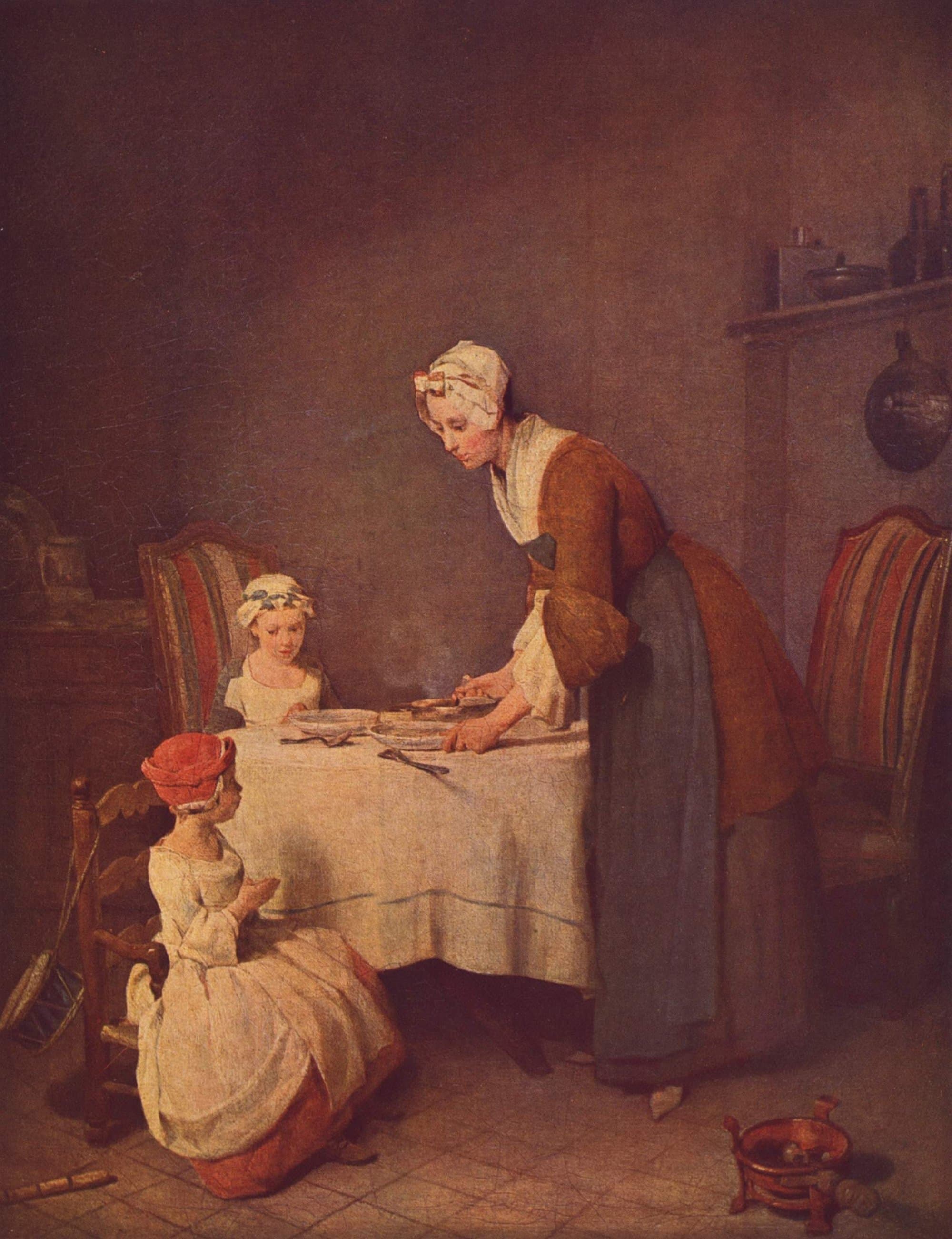
1 Corinthians 10:31 · Doctrine · Purpose and Futility
The Chief End of Man
Philip Schaff records that nearly all the Presbyterian and Congregational churches of the English tongue adopted the Westminster Shorter Catechism.
Thomas Carlyle said in 1876 that the older he grew, the more the first sentence of the catechism he had learned as a child came back to him.
So whether you eat or drink or whatever you do, do it all to the glory of God.
- First taught
- Psalm 16:11 “You have made known to me the path…”
- Fullest statement
- 1 Corinthians 10:31 “So whether you eat or drink or whatever…”
- Confessed by
- Reformed
Summary
The Westminster Shorter Catechism puts the question of man's end before anything it teaches about Scripture or about God. Its one-sentence answer gives God two places in a human life, as the One to be glorified and as the One to be enjoyed forever. The Westminster Assembly finished the catechism in 1647, and the General Assembly of the Church of Scotland adopted it in 1648.
- The proof texts printed beside the answer in the 1978 list run from the Psalms and Isaiah to Luke, Paul's letters and Revelation.
- Paul's command to do all to the glory of God covers eating and drinking (1 Corinthians 10:31).
- John Calvin's Catechism of Geneva had asked the same question a century before Westminster.
The First Question
Philip Schaff printed the question and its answer in The Creeds of Christendom in 1877.
The Chief End of Man studies the opening question and answer of the Westminster Shorter Catechism and the texts of Scripture behind its answer. It belongs to the trial of purpose and futility because the catechism gives a plain answer to why a person exists.
Its question is what the answer means by glorifying God and enjoying Him, where Scripture teaches each, and whether the two make one end. It gives the proof texts of each half in the Berean words, the Assembly that wrote the catechism and the catechism of Calvin before it. It also sets out two questions readers ask of the answer.
Asked “What is the chief end of man?”, the catechism answers “Man's chief end is to glorify God, and to enjoy him forever.”
The Two Halves and Their Texts
An Orthodox Presbyterian Church committee prepared these proof texts in 1978.
Each pair sets a text on God's glory beside a text on joy in Him.
| Pair | To glorify God | To enjoy Him forever |
|---|---|---|
| 1 | “they will glorify Your name” (Psalm 86:9) | “fill me with joy in Your presence” (Psalm 16:5 to 11) |
| 2 | “so that I may be glorified” (Isaiah 60:21) | “whose God is the LORD” (Psalm 144:15) |
| 3 | “To Him be the glory forever” (Romans 11:36) | “my strength and my song” (Isaiah 12:2) |
| 4 | “glorify God with your body” (1 Corinthians 6:20) | “good news of great joy” (Luke 2:10) |
| 5 | “to the glory of God” (1 Corinthians 10:31) | “Rejoice in the Lord always” (Philippians 4:4) |
| 6 | “Worthy are You, our Lord and God” (Revelation 4:11) | “God Himself will be with them” (Revelation 21:3 to 4) |
To Glorify God in All Things
Two verses of Paul carry the glory of God into every part of a day.
Paul's command in 1 Corinthians 10:31 closes his answer to the Corinthians on meat sold in the market and meals with unbelievers (1 Corinthians 10:25 to 30). He tells them to eat “with thankfulness” and to put “the good of many” before their own (1 Corinthians 10:30 and 1 Corinthians 10:33).
And whatever you do, in word or deed, do it all in the name of the Lord Jesus, giving thanks to God the Father through Him.This verse widens Paul's rule from meals to speech and work, the reach the catechism claims for its answer.
The Solas of the Reformation teaches where this rule stood among the Reformers.
To Enjoy Him Forever
The Psalms give the second half of the answer its language.
Whom have I in heaven but You? And on earth I desire no one besides You. My flesh and my heart may fail, but God is the strength of my heart and my portion forever.Asaph's confession shows the second half of the answer as a believer's own prayer.
The Westminster Assembly
Parliament called the Assembly to reform the Church of England in its liturgy, discipline and government.
An ordinance of Parliament of 12 June 1643 called an assembly of divines to meet at Westminster, and Schaff records that it opened on Saturday, 1 July 1643, in Westminster Abbey.
It held 1163 regular sessions until 22 February 1649. Schaff records that it then met as a committee for the examination of ministers until 25 March 1652, before Oliver Cromwell dissolved the Rump Parliament in April 1653.
The Shorter Catechism appeared after 25 November 1647, and an order of Parliament dated 15 September 1648 directed that it be printed and published.
Before Westminster
The Latin of both catechisms shows how closely their opening questions agree.
Geneva answered with the knowledge of God, and Westminster with His glory and the enjoyment of Him.
| Catechism | The question | The answer |
|---|---|---|
| John Calvin, Catechism of Geneva | Quis humanæ vitæ præcipuus est finis? In François Guizot's English, “What is the chief end of human life?” | Ut Deum, a quo conditi sunt homines, ipsi noverint. In Guizot's English, “To know God.” |
| Westminster Shorter Catechism, the Latin version printed at Cambridge in 1656 | Quis hominis finis est præcipuus? | Præcipuus hominis finis est, Deum glorificare, eodemque frui in æternum. |
Calvin's second answer gives the reason, that God created us and placed us in this world to be glorified in us.
Augustine of Hippo had opened his Confessions with the same thought, in a prayer studied in Our Heart Is Restless.
Where Readers Differ
Readers ask whether the answer names one end or two, and whether a life aimed at God's glory has room for ordinary goods.
Two ends, the second reached through the firstThomas Watson
Thomas Watson opened his exposition in A Body of Divinity (1692) with the words “Here are two ends of life specified”, the glorifying of God and the enjoying of God. He joined them in order: “by glorifying God, we come at last to the blessed enjoyment of him.”
Against it, the answer speaks of one chief end in the singular, and its Latin version keeps the singular finis.
One end, the glory of GodPhilip Schaff
Philip Schaff wrote that the Westminster catechism “makes the glory of God ‘the chief end of man’”, so that God's glory stands as its one end.
Against it, the answer gives enjoyment a verb of its own, and the proof texts printed for that half, among them Psalm 16:5 to 11 and Philippians 4:4, speak of joy.
Eating and drinking fall under the ruleAlbert Barnes; Adam Clarke
Albert Barnes, in his Notes, Explanatory and Practical (1832 to 1869), wrote that Paul's whatever you do “is evidently designed by the apostle to make the direction universal”. He added that the direction “is applicable to eating and drinking at all times”. Adam Clarke, in his Commentary on the Bible (1832), called it “a sufficient rule to regulate every man’s conscience and practice in all indifferent things”.
Against reading it too widely, Barnes held that the direction “should be strictly and properly applied to the case in hand”, the eating of food offered to idols.
Glory and Joy
The answer sets meals and worship under one aim.
The catechism sets a whole life, its meals included, toward God, and it holds out God Himself as the joy of that life forever.
Sources
Scripture is the Berean Standard Bible.
- Philip Schaff, The Creeds of Christendom, volume 3 (New York: Harper, 1877), The Westminster Shorter Catechism, A.D. 1647, page 676.
- Philip Schaff, The Creeds of Christendom, volume 1 (1877), section 58, The Catechism of Geneva; The Westminster Assembly; section 96, The Westminster Catechisms.
- The Westminster Shorter Catechism with the proof texts prepared by a committee of the General Assembly of the Orthodox Presbyterian Church in 1978.
- Thomas Watson, A Body of Divinity (London, 1692), 1. Man's Chief End.
- Albert Barnes, Notes, Explanatory and Practical, on the Old and New Testaments (1832 to 1869), on 1 Corinthians 10:31.
- Adam Clarke, Commentary on the Bible (1832), on 1 Corinthians 10:31.