
About AD 111 to 112 · Story · Featured Study
Pliny and Trajan
Letters 96 and 97 of Pliny's tenth book hold the question and the answer.
The Christians of Bithynia, a Roman governor learned, bound themselves by oath to commit no theft, robbery or adultery.
- When
- About AD 111 to 112 (probable)
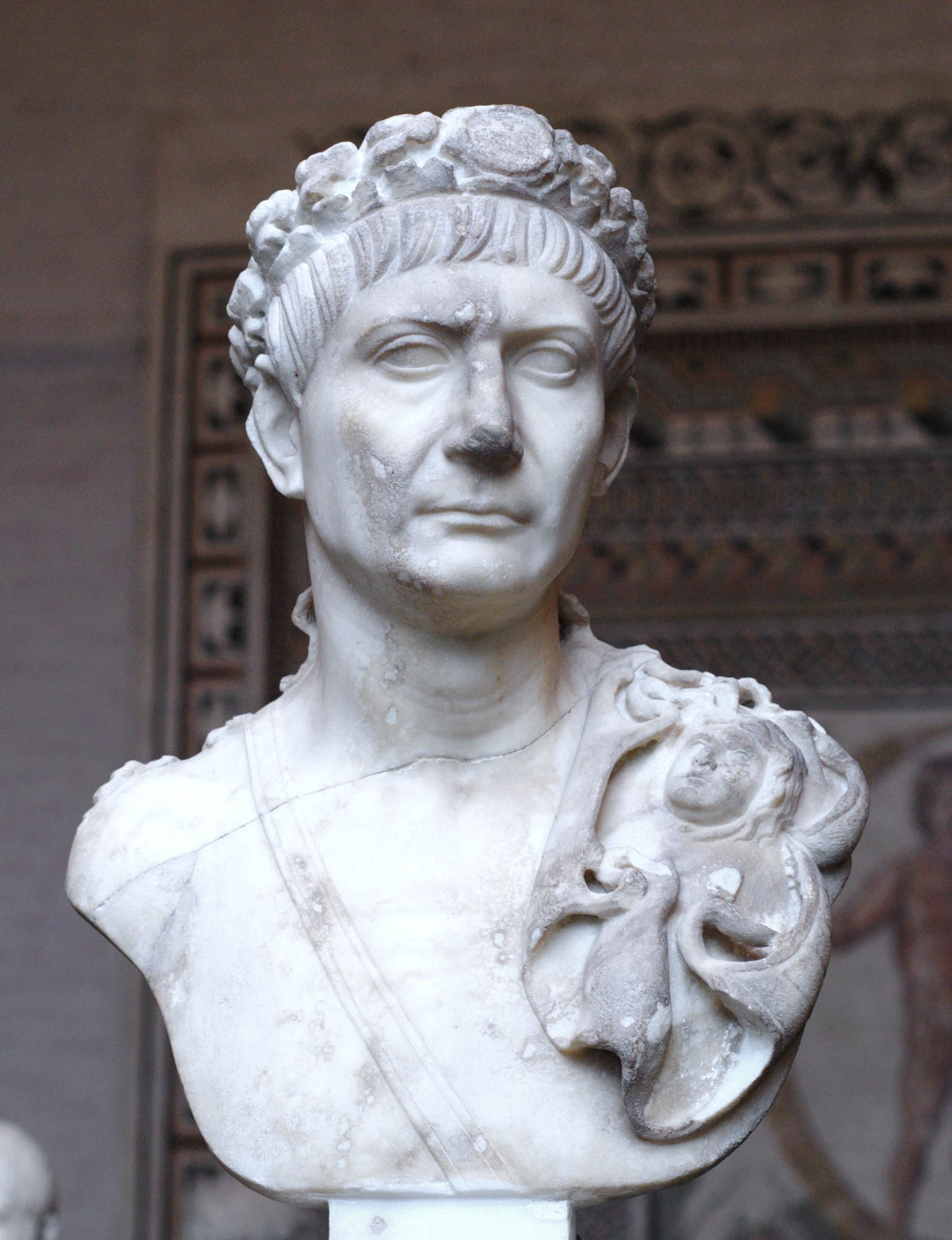
Bust of Trajan, Glyptothek, Munich, 2007. Public domain.
But if you suffer as a Christian, do not be ashamed, but glorify God that you bear that name.
Summary
Pliny the Younger governed Bithynia and Pontus for the emperor Trajan from about AD 111. Christians were accused before him, and he wrote to Trajan to ask how they should be tried. The Loeb editor of 1915 judges that his post lasted about two years, and Bosanquet's edition says he is supposed to have died about 113.
- Tertullian answered that Christians alone were tortured to make them deny.
- The letter names no city, so where Pliny wrote it is not known.
- The two Latin texts and the two English editions differ on the women's office, a number of years, the sacrifices and the letters' numbers.
The Name on Trial in Bithynia
The texts come from 1 Peter 1 and 2.
Pliny's province of Bithynia and Pontus joined two of the regions First Peter names.
Peter, an apostle of Jesus Christ, To the elect who are exiles of the Dispersion throughout Pontus, Galatia, Cappadocia, Asia, and Bithynia, chosenPliny later governed this province.
Conduct yourselves with such honor among the Gentiles that, though they slander you as evildoers, they may see your good deeds and glorify God on the day He visits us.Pliny looked for crimes among the Christians of Bithynia and found none.
Whether the Christians Pliny met had read this letter is not known.
The Record From Pliny to Tertullian
Five dates, from Pliny's consulship to Tertullian's Apology.
Pliny's letter and Trajan's reply were written about 111 to 112, and Tertullian answered them in his Apology.
- AD 100Trajan makes Pliny a consul.The introduction to Bosanquet's edition of the Letters
- Probably 111Pliny goes to Bithynia as Trajan's own legate.Hutchinson's introduction to the Loeb Letters (1915)
- About 111 to 112Pliny writes Letter 10.96, and Trajan answers in 10.97.Pliny, Letters, book 10. The letter gives no year, so the year is reckoned.
- Before 115Pliny has died, since an inscription at Comum does not call Trajan Parthicus.Hutchinson's introduction (1915)
- 198 or 204Tertullian writes his Apology.The note of the Ante-Nicene Fathers, citing Mosheim and Kaye
Each date with the witness that gives it.
The Letter Told Plainly
From the governor's doubt to the emperor's reply.
Pliny wrote that he had never been present at a trial of Christians. He asked whether age made any difference, whether a man who repented should be pardoned, and whether the name itself was punished or only crimes joined to it.
He asked each one brought before him whether he was a Christian. He asked those who said yes a second and a third time, under threat of death, and ordered those who held to it to be led away. Roman citizens he marked to be sent to Rome.
Then a pamphlet with no author's name listed many people. Those who denied that they were or had been Christians called on the gods, offered incense and wine to the emperor's image, which he had brought in for this, and cursed Christ. He let them go, since true Christians, it was said, could not be forced to do any of these things.
Therefore I inform you that no one who is speaking by the Spirit of God says, “Jesus be cursed,” and no one can say, “Jesus is Lord,” except by the Holy Spirit.Pliny's test ended in a curse on Christ.
Some had left the church three years before, some longer, and one many years before.
These former Christians told him what the church did. In the Latin they said they used to meet on a fixed day before light, "carmenque Christo quasi deo dicere", which the Loeb English renders "sang in alternate verses a hymn to Christ, as to a god."
Let the word of Christ richly dwell within you as you teach and admonish one another with all wisdom, and as you sing psalms, hymns, and spiritual songs with gratitude in your hearts to God.Pliny heard of a church that sang to Christ before dawn.
Pliny then put two slave women to the torture, women "quae ministrae dicebantur", who were called ministrae, women who serve. He found nothing but what the Latin calls "superstitionem pravam et immodicam", a depraved and excessive superstition.
He wrote that people of every age and rank and of both sexes were in danger, and that the temples had begun to fill again.
I commend to you our sister Phoebe, a servant of the church in Cenchrea.Pliny questioned two women who served in the church.
Trajan answered that no general rule with a fixed form could be laid down. In the Latin, "Conquirendi non sunt": Christians were not to be sought out.
An accused Christian who was proved one was to be punished, and one who denied it by praying to the gods was to be pardoned.
Therefore everyone who confesses Me before men, I will also confess him before My Father in heaven.Trajan's rule turned on whether the accused would confess Christ or deny Him, the choice Jesus set before His disciples.
Romans 16:1, Matthew 10:32
The First Answer to Trajan's Rule
The first Christian answer to the rule, and the history that copied it.
Tertullian retold Pliny's report in his Apology, which Mosheim dated to 198 and Kaye to 204. He set the rule's two commands against each other.
“It forbids them to be sought after as innocent, and it commands them to be punished as guilty.”
Tertullian · Apology, chapter 2Early Church
Eusebius said he took his account of the letters from Tertullian, so the two writers are one witness to them.
How the Key Verse Was Taught
Three writers of three centuries on 1 Peter 4:16.
Polycarp of Smyrna (died 155)
Epistle to the Philippians 8
Polycarp of Smyrna gave the church at Philippi the same word about 110.
“Let us then continually persevere in our hope, and the earnest of our righteousness, which is Jesus Christ, ‘who bore our sins in His own body on the tree,’ ‘who did no sin, neither was guile found in His mouth,’ but endured all things for us, that we might live in Him. Let us then be imitators of His patience; and if we suffer for His name's sake, let us glorify Him. For He has set us this example in Himself, and we have believed that such is the case.”
on 1 Peter 4:16Patristic
Matthew Henry (1662 to 1714)
Commentary on the Whole Bible
Matthew Henry drew from the verse a rule for telling a martyr from one who suffers for his own fault.
“There is very little comfort in sufferings when we bring them upon ourselves by our own sin and folly. It is not the suffering, but the cause, that makes the martyr.”
on 1 Peter 4:16Puritan
Adam Clarke (1762 to 1832)
Commentary on the Bible
Adam Clarke read the verse as a word to the convert who is persecuted for his faith.
“If he be persecuted because he has embraced the Christian faith, let him not be ashamed, but let him rather glorify God on this very account. Christ suffered by the Jews because he was holy; Christians suffer because they resemble him.”
on 1 Peter 4:16Evangelical
In Their Own Words
The governor and the emperor, in Melmoth's English as Bosanquet revised it.
Pliny the Younger
Letters, book 10, letter 96 (XCVII in this edition)
What the former Christians told Pliny
“They affirmed the whole of their guilt, or their error, was, that they met on a stated day before it was light, and addressed a form of prayer to Christ, as to a divinity, binding themselves by a solemn oath, not for the purposes of any wicked design, but never to commit any fraud, theft, or adultery, never to falsify their word, nor deny a trust when they should be called upon to deliver it up; after which it was their custom to separate, and then reassemble, to eat in common a harmless meal.”
Roman governor
About this saying1 paragraph
About AD 111 to 112 Pliny reported to Trajan what former members of the church told him.
Pliny the Younger
Letters, book 10, letter 96 (XCVII in this edition)
The spread of the faith
“In fact, this contagious superstition is not confined to the cities only, but has spread its infection among the neighbouring villages and country.”
Roman governor
About this saying1 paragraph
After his account of the meetings, Pliny warned Trajan how far the faith had spread.
Trajan
Letters, book 10, letter 97 (XCVIII in this edition)
The emperor's rule
“Do not go out of your way to look for them. If indeed they should be brought before you, and the crime is proved, they must be punished; with the restriction, however, that where the party denies he is a Christian, and shall make it evident that he is not, by invoking our gods, let him (notwithstanding any former suspicion) be pardoned upon his repentance.”
Roman emperor
About this saying1 paragraph
Trajan wrote back after he had read the letter, and gave the rule in his own words.
Trajan
Letters, book 10, letter 97 (XCVIII in this edition)
Unsigned charges refused
“Anonymous informations ought not to be received in any sort of prosecution. It is introducing a very dangerous precedent, and is quite foreign to the spirit of our age.”
Roman emperor
About this saying1 paragraph
After he gave the rule, Trajan turned to the pamphlet Pliny had received.
Trajan, Trajan
Where the Editions Differ
Three questions of the texts and their English.
Who were the ministrae?2 paragraphs
The Loeb English of 1915, Hutchinson's revision of Melmoth, calls the two women deaconesses. Bosanquet's revision says only that they "were said to officiate" in the rites.
The Latin word is ministrae, and Pliny gives no more of their office.
Twenty years or twenty-five?1 paragraph
The Latin Library's text says one had left the church twenty years before. The Loeb text reads twenty-five, a reading its note credits to Rittershusius.
Where the texts read and number differently2 paragraphs
The two Latin texts also differ on the sacrifices. The Latin Library adds the word for meat, and the Loeb text has the victims themselves on sale.
Bosanquet's English numbers the two letters 97 and 98, one above the numbers the Latin editions give them.
Books to Read Next
Both letters and their first answer are free to read online.
Letters of Pliny
Pliny the Younger, translated by William Melmoth, revised by F. C. T. Bosanquet · 1895
It gives the whole tenth book of the letters to Trajan in English, with the editor's notes on the cities.
Free at Project GutenbergThe Ante-Nicene Fathers, volume 3
Tertullian, edited by Alexander Roberts and James Donaldson · 1885
It holds Tertullian's Apology with the editor's note on its date.
Free at the Christian Classics Ethereal LibraryWhat the Letter Left
By about 324 Trajan's rule stood in the church's own history, in Eusebius's account of Trajan's reign.
Sources
Scripture is the Berean Standard Bible.
- The Holy Bible, Berean Standard Bible (read 2026)
- Pliny the Younger, Epistulae, book 10, letters 96 and 97, Latin text.
- Letters of Pliny, translated by William Melmoth, revised by F. C. T. Bosanquet (London, 1895), letters XCVII and XCVIII and the introduction.
- Pliny, Letters, Melmoth's translation revised by W. M. L. Hutchinson, Loeb Classical Library (1915), volumes 1 and 2, the introduction and letters 96 and 97.
- Tertullian, Apology, chapter 2, in The Ante-Nicene Fathers, volume 3 (1885), with the editor's note on its date.
- Eusebius, Church History 3.33, translated by A. C. McGiffert, Nicene and Post-Nicene Fathers, second series, volume 1 (1890), with McGiffert's introduction.
- Polycarp, To the Philippians 8 (ANF 1, 1885)
- Matthew Henry, Commentary on the Whole Bible, on 1 Peter 4:16.
- Adam Clarke, Commentary on the Bible, on 1 Peter 4:16.
Keep Studying
Read it1
Studies4
People and groups7
Show the next 1 title
Church history2
Trials of life1