

Jesus Christ · On Himself
His Authority
Jesus never argued for His own authority the way a philosopher argues for a position. He simply used it, teaching a synagogue full of people used to a different kind of teacher, forgiving a paralyzed man’s sins before He healed his legs, claiming the Father’s own power to judge and to give life, and finally, after the resurrection, stating it without qualification: all authority, in heaven and on earth, His. Each claim landed in front of witnesses who understood exactly what was being said, and said so, out loud.
Rembrandt van Rijn, Christ in the Storm on the Sea of Galilee, 1633. Public domain.
Summary
This page traces four escalating claims Jesus made about his own authority: to teach, to forgive sin, to judge and give life, and finally, after the resurrection, over everything.
- Mark 1:22 shows a synagogue crowd struck by how Jesus taught, not on borrowed authority like the scribes.
- Mark 2 has Jesus forgive a paralyzed man's sins before healing his legs, then prove the invisible claim by the visible one.
- John 5:19-27 has Jesus claim the Father's own power to judge and to give life.
- Matthew 28:18 is read as naming what the first three claims already meant, not adding a fourth.
The Four Claims
one authority, four settings
Read in order, the four claims below do not repeat themselves, they escalate. A teacher who speaks with unusual authority is remarkable. A man who forgives sins is, on the scribes’ own stated logic, claiming to be God. A man who claims the Father’s own power to judge the living and the dead, and to give life to whomever He chooses, is claiming what no creature can claim. And a man who, after rising from the dead, says all authority in heaven and on earth is His, is not making a fourth claim at all. He is naming what the first three already meant.
Over Teaching
Mark 1:22
HE CLAIMED
“The people were astonished at His teaching, because He taught as one who had authority, and not as the scribes.”
Over Sin
Mark 2:10
HE CLAIMED
“But so that you may know that the Son of Man has authority on earth to forgive sins...” He said to the paralytic,”
THE SCRIBES' UNSPOKEN OBJECTION
““Why does this man speak like this? He is blaspheming! Who can forgive sins but God alone?””
Over Judgment and Life
John 5:27
HE CLAIMED
“And He has given Him authority to execute judgment, because He is the Son of Man.”
WHY THEY SOUGHT TO KILL HIM
“Because of this, the Jews tried all the harder to kill Him. Not only was He breaking the Sabbath, but He was even calling God His own Father, making Himself equal with God.”
Over Everything
Matthew 28:18
HE CLAIMED
“Then Jesus came to them and said, “All authority in heaven and on earth has been given to Me.”
I. Over Teaching
Mark 1:21-22, a synagogue in Capernaum
On a Sabbath in Capernaum, Jesus teaches in the synagogue, and the congregation’s reaction is the first recorded response to His public ministry in Mark’s Gospel: astonishment, not at what He said only, but at how He said it. The scribes of the day taught mainly by citing earlier rabbis, chain after chain of quoted authority standing behind their own words. Jesus taught as though the authority were simply His.
The people were astonished at His teaching, because He taught as one who had authority, and not as the scribes.Astonished at his teaching, not as the scribes, but as one who had authority.
As one that had authority - From God, to do what he was doing; and to teach a pure and beneficent system of truth. And not as the scribes - Who had no such authority, and whose teaching was not accompanied by the power of God to the souls of the people: 1. because the matter of the teaching did not come from God; and 2. because the teachers themselves were not commissioned by the Most High. See the note on Mat 7:28.
Adam Clarke · Commentary on the Bible (1832), Mark 1:22
And the Lord taught reprovingly, not with flattery, as the Pharisees did: He urged people to do good, and threatened the disobedient with punishment.
Theophylact of Ohrid · Commentary on Mark (1107), Mark 1:22
II. Over Sin
Mark 2:1-12, a crowded house, a hole in the roof
Four men carry a paralyzed friend to Jesus and, unable to reach Him through the crowd, dig through the roof to lower him down. Jesus’s first word to the man is not about his legs at all: “Son, thy sins be forgiven thee.” Some scribes sitting nearby reason among themselves, the Gospel lets the reader hear the thought they never say aloud: “Who can forgive sins but God only?” They are not wrong about the theology. Jesus does not correct it. He answers it, by doing the one thing that proves an invisible claim: healing, in front of everyone, the visible disease.
When Jesus saw their faith, He said to the paralytic, “Son, your sins are forgiven.”The first word to the paralyzed man is about his sins, not his legs.
But some of the scribes were sitting there and thinking in their hearts, “Why does this man speak like this? He is blaspheming! Who can forgive sins but God alone?”The scribes' silent reasoning, a true theology, aimed at the wrong conclusion.
“Which is easier: to say to a paralytic, ‘Your sins are forgiven,’ or to say, ‘Get up, pick up your mat, and walk’? But so that you may know that the Son of Man has authority on earth to forgive sins...” He said to the paralytic,The argument from the easier miracle to the harder, invisible one.
And immediately the man got up, picked up his mat, and walked out in front of them all. As a result, they were all astounded and glorified God, saying, “We have never seen anything like this!”The crowd's own verdict: we never saw it on this fashion.
Why the scribes' objection is the whole pointMark 2:6-7
The scribes’ reasoning is not fanatical or unreasonable, it is standard, sound Jewish theology, and Mark records it approvingly, without correction. Only God can forgive sins, because sin is ultimately an offense against God, not merely against the person wronged. Given that premise, Jesus has exactly two options: He is speaking empty words that forgive nothing, or He is claiming, in a house full of witnesses, to hold a prerogative that belongs to God alone. He removes the first option Himself, on the spot, by healing the man’s body as visible proof of the invisible claim.
This was the faith for which He was ever on the watch, and which He never saw without marking, and, in those who needed anything from Him, richly rewarding. he said unto the sick of the palsy, Son--"be of good cheer" (Mt 9:2). thy sins be forgiven thee--By the word "be," our translators perhaps meant "are," as in Luke (Lu 5:20).
Jamieson, Fausset & Brown · Commentary Critical and Explanatory on the Whole Bible (1871), Mark 2:5
Why doth this man thus speak blasphemies? who can forgive sins but God only?--In this second question they expressed a great truth. Nor was their first question altogether unnatural, though in our Lord's sole case it was unfounded.
Jamieson, Fausset & Brown · Commentary Critical and Explanatory on the Whole Bible (1871), Mark 2:7
But though their thoughts were laid bare, still they remain insensible, refusing to believe that He who knew their hearts could forgive sins, wherefore the Lord proves to them the cure of the soul by that of the body, showing the invisible by the visible, that which is more difficult by that which is easier, although they did not look upon it as such. For the Pharisees thought it more difficult to heal the body, as being more open to view; but the soul more easy to cure, because the cure is invisible; so that they reasoned thus, Lo, He does not now cure the body, but heals the unseen soul; if He had had more power, He would at once have cured the body, and not have fled for refuge to the unseen world. The Saviour, therefore, showing that He can do both, says, Which is the easier? as if He said, I indeed by the healing of the body, which is in reality more easy, but appears to you more difficult, will prove to you the health of the soul, which is really more difficult.
Theophylact of Ohrid · Catena Aurea by Aquinas (1264), on Mark 2:9-10
But that ye may know that the Son of man hath power on earth to forgive sins--that forgiving power dwells in the Person of this Man, and is exercised by Him while on this earth and going out and in with you. (he saith to the sick of the palsy),
Jamieson, Fausset & Brown · Commentary Critical and Explanatory on the Whole Bible (1871), Mark 2:10
III. Over Judgment and Life
John 5:19-27, a Sabbath healing at Bethesda
Jesus heals a man on the Sabbath, and when confronted, does not defend the healing on its own terms. He answers by describing His own relationship to the Father: “My Father worketh hitherto, and I work.” John records the reaction plainly, this is precisely what pushes the opposition from irritation to a capital charge. Jesus then goes further still, in His own words: the Father has handed the Son all judgment, and given the Son the same authority to give life that the Father has in Himself.
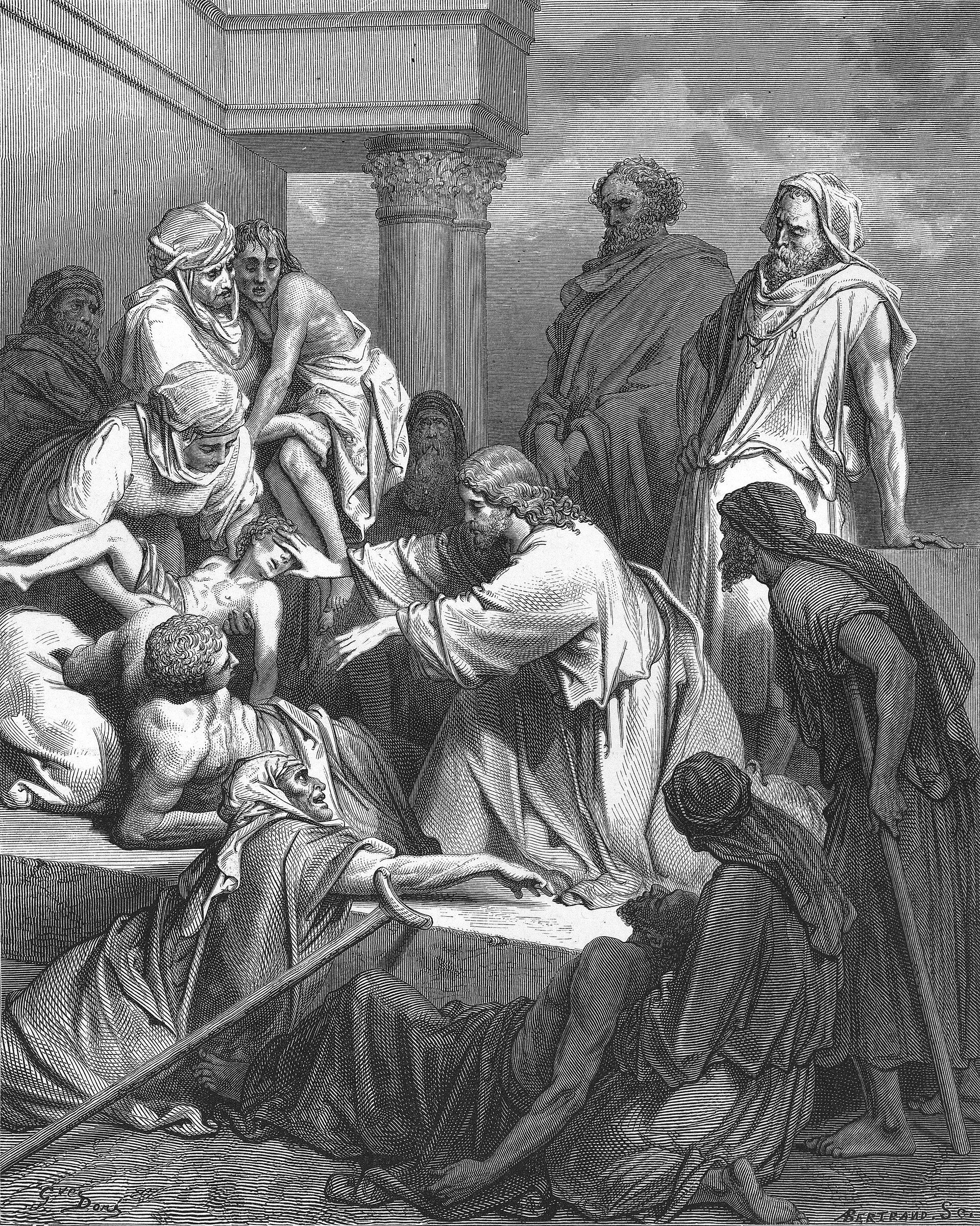
Because of this, the Jews tried all the harder to kill Him. Not only was He breaking the Sabbath, but He was even calling God His own Father, making Himself equal with God.Why they sought all the more to kill him, he was making himself equal with God.
So Jesus replied, “Truly, truly, I tell you, the Son can do nothing by Himself, unless He sees the Father doing it. For whatever the Father does, the Son also does.The Son does nothing of himself but what he sees the Father doing.
For just as the Father raises the dead and gives them life, so also the Son gives life to whom He wishes. Furthermore, the Father judges no one, but has assigned all judgment to the Son, so that all may honor the Son just as they honor the Father. Whoever does not honor the Son does not honor the Father who sent Him.All judgment given to the Son, so that all may honor him as they honor the Father.
For as the Father has life in Himself, so also He has granted the Son to have life in Himself. And He has given Him authority to execute judgment, because He is the Son of Man.Life in himself, and authority to execute judgment, because he is the Son of man.
This statement is of immense importance in relation to the miracles of Christ, distinguishing them from similar miracles of prophets and apostles, who as human instruments were employed to perform supernatural actions, while Christ did all as the Father's commissioned Servant indeed, but in the exercise of His own absolute right of action.
Jamieson, Fausset & Brown · Commentary Critical and Explanatory on the Whole Bible (1871), on John 5:21-23
These two are interwoven, as being nearly connected; and what is said once is repeated and inculcated; put both together, and they will prove that Christ said not amiss when he made himself equal with God. (1.) Observe what is here said concerning the Mediator's power to raise the dead and give life.
Matthew Henry · Commentary on the Whole Bible (1710), on John 5:22-24
But as all that Christ says of His essential relation to the Father is intended to explain and exalt His mediatorial functions, so the one seems in our Lord's own mind and language mainly the starting-point of the other.
Jamieson, Fausset & Brown · Commentary Critical and Explanatory on the Whole Bible (1871), John 5:26
Because he is the Son of man - He is appointed to judge mankind because he was made man.
John Wesley · Explanatory Notes upon the New Testament (1755), John 5:27
IV. Over Everything
Matthew 28:18, a mountain in Galilee, after the resurrection
The Great Commission does not open with a command. It opens with a claim, and the command is built on top of it: “All power is given unto me in heaven and in earth. Go ye therefore…” The wording echoes Daniel 7:14’s vision of the Son of Man receiving “dominion, and glory, and a kingdom” almost word for word, the same authority Jesus had already claimed in the synagogue, in the crowded house, and beside the pool, now stated without a single qualifying phrase.
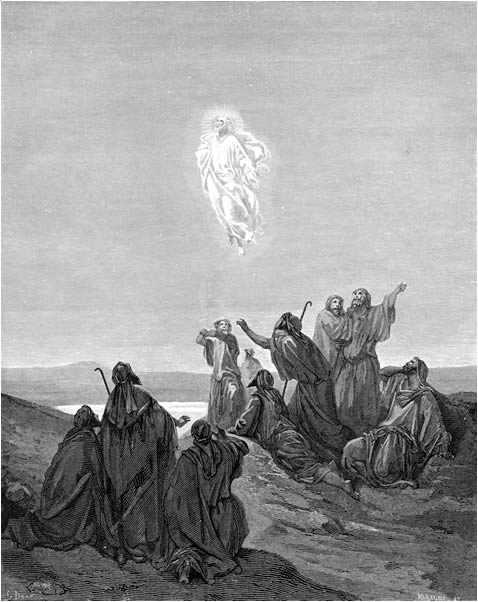
Then Jesus came to them and said, “All authority in heaven and on earth has been given to Me.Not a fourth claim, the naming of what the first three already meant.
(Ver. 18.) And Jesus came to them and spoke, saying: All power has been given to me in heaven and on earth. The power was given to him who was recently crucified, who was buried in a tomb, who had been dead, and who later rose again. Power has been given in heaven and on earth, so that he who previously reigned in heaven may now reign on earth through the faith of believers.
Jerome · Commentary on Matthew (420), Matt 28:18
It is supposed by some that the reason why any doubted was, that when they saw Jesus at first, he was at a distance; but when he came up, drew near to them, they were fully persuaded of the identity of his person. All power is given unto me - Or, All authority in heaven and upon earth is given unto me.
Adam Clarke · Commentary on the Bible (1832), Matt 28:18
Where It Points
an authority He now shares, not surrenders
None of these four claims are museum pieces. The same authority that forgave the paralyzed man stands behind every offer of forgiveness the gospel still makes; the same authority that raises the dead is the authority a believer’s own resurrection depends on; and the commission built on “all authority” is still being carried out, by ordinary people, on His word alone.
Closing
Jesus never asked to be believed on reputation. He taught with authority, forgave with authority, claimed the Father’s own power over judgment and life, and, once the tomb was empty, said plainly what all of it had been pointing to: every authority there is, His.