
Psalms 87:2
in Psalms 87The LORD loves the gates of Zion more than all the dwellings of Jacob.
BSB
The same verse in ASV and KJV ▾
ASV
Jehovah loveth the gates of Zion More than all the dwellings of Jacob.
KJV
The Lord loveth the gates of Zion more than all the dwellings of Jacob.
⋯
This verse in Psalms 87
Commentary
12 notes on this verseAnd because each one builds upon the foundation—one gold, another silver, another precious stones—The Lord loves the gates of Zion above all the tabernacles of Jacob. Does he love those gates which we see have collapsed? Does he love those gates, and does he love that Zion, which has been plowed like a field? And see what he says, The Lord loves the gates of Zion above all the tabernacles of Jacob. See what he says: above all the cities of Jacob, that is of Judea, he loves this city alone.
This site's exposition
on the holy mountains
on Psalms 87:1-3
God founded the city himself, and He founded it on the holy mountains. Verse 2 sets the gates of Zion above every dwelling of Jacob, where the Hebrew is mishkan, the noun used for the tabernacle. Verse 3 says glorious things are ascribed to this city.
This site's exposition
the gates of Zion
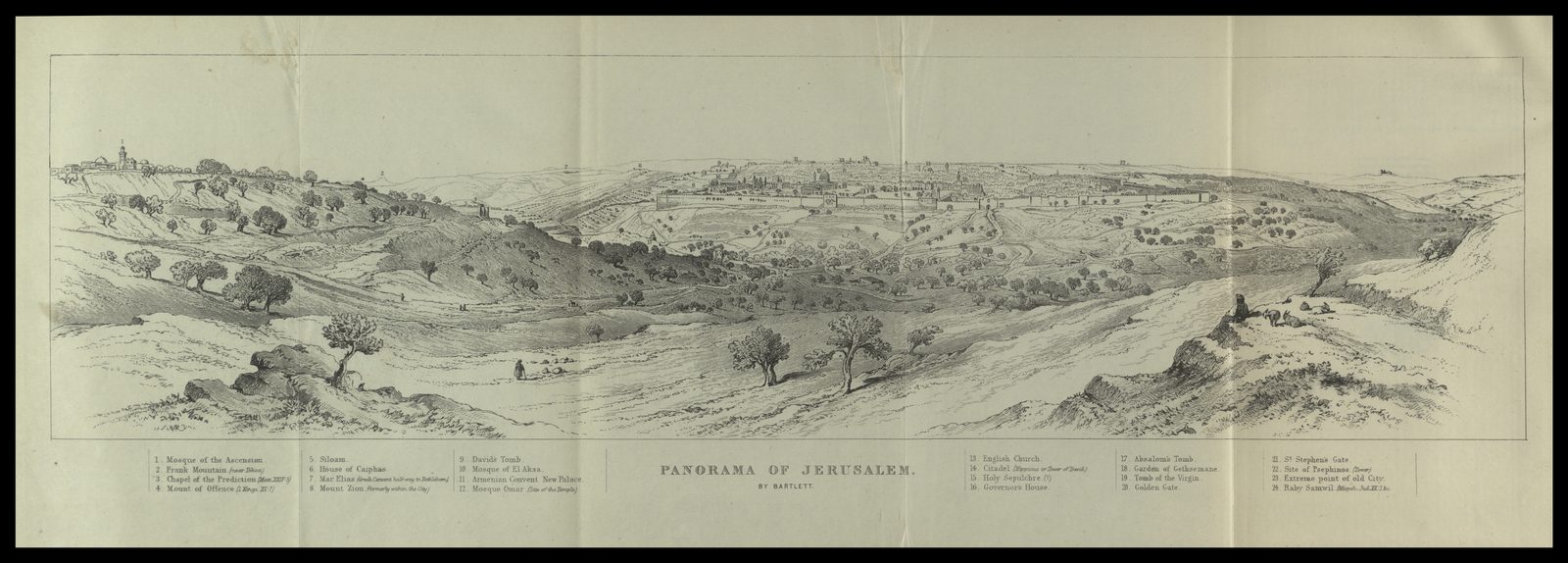
Charles Spurgeon took the gates as standing for the whole city. Albert Barnes pictured the crowds pressing through them at the great feasts to worship. Matthew Henry drew the lesson that God is worshiped in the homes of Jacob, yet He prizes the gathered worship of His people more.
The record, by era
The Church Fathers2 voices
"The Lord loveth the gates of Sion more than all the dwellings of Jacob" (ver. 2). I have made the foregoing remarks, that ye may not imagine the gates are one thing, the foundations another. Why are the Apostles and Prophets foundations? Because their authority is the support of our weakness. Why are they gates? because through them we enter the kingdom of God: for they proclaim it to us: and while we enter by their means, we enter also through Christ, Himself being the Gate. And twelve gates of Jerusalem are spoken of, and the one gate is Christ, and the twelve gates are Christ for Christ dwells in the twelve gates, hence was twelve the number of the Apostles. There is a deep mystery in this number of twelve "Ye shall sit," says our Saviour, "on twelve thrones, judging the twelve tribes of Israel." If there are twelve thrones there, there will be no room for the judgment-seat of Paul, the thirteenth Apostle, though he says that he shall judge not men only, but even Angels; which, but the fallen Angels? "Know ye not, that we shall judge Angels," he writes. The world would answer, Why dost thou boast that thou shalt be a judge? Where will be thy throne? Our Lord spoke of twelve thrones for the twelve Apostles: one, Judas, fell, and his place being supplied by Matthias, the number of twelve thrones was made up: first, then, discover room for thy judgment-seat; then threaten that thou wilt judge. Let us, therefore, reflect upon the meaning of the twelve thrones. The expression is typical of a sort of universality, as the Church was destined to prevail throughout the whole world: whence this edifice is styled a building together into Christ: and because judges come from all quarters, the twelve thrones are spoken of, just as the twelve gates, from the entering in from all sides into that city. […]
We ought to know that what we have interpreted of the Church can be understood also of our soul. For if Zion is interpreted as a watchtower, and our soul in no other way but always considers higher things: the true church, the true temple of Christ is nothing other than the human soul. The Church of Christ is nothing else but the souls of those who believe in Christ. 'You,' he says, 'are the temple of God, and the Spirit of God dwells in you.' Its foundations are in the holy mountains: that is, the foundations of God are nowhere but in the holy mountains, in the doctrines of the believing soul. The Lord loves the gates of Zion. Our Zion has very many gates: which, if we open them, the bridegroom enters in to us, and sleeps with us. Then he himself says: 'Behold, I stand before the door and knock: if anyone opens to me, I will enter and dine with him.' Glorious things are spoken of you, O city of God. A city is not one building, but consists of many buildings: so the Church and our Zion, unless it has many virtues, will not be the city of God. I will be mindful of Rahab and Babylon among those who know me. She who once was in the breadth of sins, afterward ascended into the remembrance of God. Will a man say to Zion, and a man is born in her? I speak to you a wondrous thing, but a true one. Our Zion, in which at times there are foreigners, and Tyre, and the Ethiopian: that watchtower, that harlot, that Rahab, that Babylon, she who spread apart her feet to everyone passing by, according to Ezekiel: that harlot, if she wills, suddenly becomes a virgin. She becomes a virgin, and conceives the Son of God, and gives birth. 'From the fear of you, O Lord, we conceived and were in labor; we brought forth the spirit of your salvation upon the earth.' See, then, that the harlot conceives from God and gives birth, and brings forth the Savior. […]
The Puritans and the Awakening3 voices
Zion - That is, Zion itself, or Jerusalem, which was built upon and near Mount Zion. He saith Zion rather than Jerusalem, to intimate that he loved Jerusalem for Zion's sake, or for the temple, which he chose for his peculiar dwelling place.
(2.) Yet he loves the gates of Zion better, not only better than any, but better than all, of the dwellings of Jacob. God was worshipped in the dwellings of Jacob, and family-worship is family-duty, which must by no means be neglected; yet, when they come in competition, public worship ( cæteris paribus--other things being equal ) is to be preferred before private.
The Lord loveth the gates of Zion,....
4 more voices on this verse
The Nineteenth Century4 voices
The Lord loveth the gates of Zion more than all the dwellings of Jacob. The gates are put for the city itself. The love of God is greatest to his own elect nation, descended from his servant Jacob, yet the central seat of his worship is dearer still; no other supposable comparison could have so fully displayed the favour which Jehovah bore to Jerusalem, —he loves Jacob best and Zion better than the best.
The Lord loveth the gates of Zion more than all the dwellings of Jacob. The gates are put for the city itself. The love of God is greatest to his own elect nation, descended from his servant Jacob, yet the central seat of his worship is dearer still; no other supposable comparison could have so fully displayed the favour which Jehovah bore to Jerusalem, —he loves Jacob best and Zion better than the best. At this hour the mystical teaching of these words is plain, God delights in the prayers and praises of Christian families and individuals, but he has a special eye to the assemblies of the faithful, and he has a special delight in their devotions in their church capacity. The great festivals, when the crowds surrounded the temple gates, were fair in the Lord's eyes, and even such is the general assembly and church of the first born, whose names are written in heaven. This should lead each separate believer to identify himself with the church of God; where the Lord reveals his love the most, there should each believer most delight to be found. Our own dwellings are very dear to us, but we must not prefer them to the assemblies of the saints; we must say of the church—
The Lord loveth the gates of Zion more than all the dwellings of Jacob - That is, he preferred Zion for his habitation, to be the place of his temple and sanctuary, before any other place in the promised land. Mystically, the Lord prefers the Christian Church to the Jewish: the latter was only a type of the former; and had no glory by reason of the glory that excelleth. To this position no exception can be made.
A commentator
Albert Barnes1798–1870
Notes, Explanatory and Practical, on the Old and New Testaments (1832-1869)
proposed
The Lord loveth the gates of Zion - Compare Psa 78:68. The gates of a city were the places of concourse; where business was transacted; where courts were held. The particular allusion here seems to be to the thronging multitudes pressing into the city for public worship - the numbers that gathered together at the great feasts and festivals of the nation; and the meaning is, that he looked with more pleasure on such multitudes as they thronged the gates, pressing in that they might worship him, than on any other scene in the land. More than all the dwellings of Jacob - Than any of the places where the descendants of Jacob, or where his people dwell. Much as he might be pleased with their quiet abodes, with their peace, prosperity, and order, and with the fact that his worship was daily celebrated in those happy families, yet he had superior pleasure in the multitudes that crowded the ways to the place where they would publicly acknowledge him as their God.
How the passage was read
What the Jewish commentators add
On the verses either side of this one
whose foundation is on the mountains of the Sanctuary The foundation of this psalm; the Psalmist founded it on the mountains of Zion and Jerusalem.
1 more on this passage, in their own words ▾
Glorious things are said about you You, Jerusalemwords of glory were spoken about you from the mouth of the Holy One, blessed be He. Now what are the words of glory? That you are the city of God forever.
This section is reception history: how the passage was read and kept in the Jewish tradition. Where a reading parts from an essential of the Christian faith, the section says so at that point.
Texts and citation data: Sefaria; each excerpt follows its version’s licence. 4 further sources are cited on this chapter that carry no English text this site may quote or only restate the verse.
The words behind it
7 Hebrew wordsEvery Hebrew word of this verse in the order it stands, with what it means and the door to its own study. The last column counts the times a word stands in the whole Bible: the rarer the word, the more the places it appears belong together.
| Hebrew | Sound | Meaning | Word study | In the Bible |
|---|---|---|---|---|
| אֹהֵ֣ב | ʾohev | [is] loving | H157 → | 211 times |
| יְ֭הוָה | yahweh | Yahweh | H3068 → | 6520 times |
| שַׁעֲרֵ֣י | shaarei | [the] gates of | H8179 → | 374 times |
| צִיּ֑וֹן | tziyon | Zion | H6726 → | 154 times |
| מִ֝כֹּ֗ל | mikol | more than all | H3605 → | 5413 times |
| מִשְׁכְּנ֥וֹת | mishkenot | [the] dwelling places of | H4908 → | 139 times |
| יַעֲקֹֽב׃ | yaako | Jacob | H3290 → | 350 times |
אֹהֵ֣ב[is] loving
ʾohevH157 →211 times
יְ֭הוָהYahweh
yahwehH3068 →6520 times
שַׁעֲרֵ֣י[the] gates of
shaareiH8179 →374 times
צִיּ֑וֹןZion
tziyonH6726 →154 times
מִ֝כֹּ֗לmore than all
mikolH3605 →5413 times
מִשְׁכְּנ֥וֹת[the] dwelling places of
mishkenotH4908 →139 times
יַעֲקֹֽב׃Jacob
yaakoH3290 →350 times
A shaded row is a word that stands 400 times or fewer in the Bible.
The walk
8 stopsEach card is a verse this one points to, and under it the verses that one points to in turn. Where several paths arrive at the same place, that place is listed first: the text keeps returning to it.
Through
Joel 2:32And everyone who calls on the name of the LORD will be saved; for on Mount Zion and in Jerusalem there will be deliverance, as the LORD has promised, among the remnant called by…
it leads to
- Romans 10:11–14
It is just as the Scripture says: “Anyone who believes in Him will never be put to shame.”
- Acts 2:20–21
The sun will be turned to darkness, and the moon to blood, before the coming of the great and glorious Day of the Lord.
- Romans 10:11–14
Through
Deuteronomy 12:5Instead, you must seek the place the LORD your God will choose from among all your tribes to establish as a dwelling for His Name, and there you must go.
it leads to
- Deuteronomy 12:11
then the LORD your God will choose a dwelling for His Name. And there you are to bring everything I command you: your burnt offerings and sacrifices, your tithes and special gifts, and all…
- 2 Chronicles 7:12
the LORD appeared to him at night and said to him: “I have heard your prayer and have chosen this place for Myself as a house of sacrifice.
- Deuteronomy 26:2
you are to take some of the firstfruits of all your produce from the soil of the land that the LORD your God is giving you and put them in a basket. Then go…
- Deuteronomy 16:2
You are to offer to the LORD your God the Passover sacrifice from the herd or flock in the place the LORD will choose as a dwelling for His Name.
- Deuteronomy 12:11
Through
2 Chronicles 6:6But now I have chosen Jerusalem for My Name to be there, and I have chosen David to be over My people Israel.’
it leads to
- Psalms 132:13
For the LORD has chosen Zion; He has desired it for His home:
- 1 Chronicles 28:4
Yet the LORD, the God of Israel, chose me out of all my father’s house to be king over Israel forever. For He chose Judah as leader, and from the house of Judah He…
- Psalms 132:13
Where this verse is studied
On this page
About Psalms
Who and where
2 names in this verse with a page on the site.
This page draws on 10 works. Open the list of works
This page draws on Adam Clarke, Commentary on the Bible; Albert Barnes, Notes on the Book of Psalms; Albert Barnes, Notes, Explanatory and Practical, on the Old and New Testaments (1832-1869); Augustine of Hippo, Exposition on Psalm 87; Charles Spurgeon, The Treasury of David; Charles Spurgeon, The Treasury of David, Vol. 4; Jerome, Homily 18, on Psalm 86; John Gill, Exposition of the Old Testament (1748-1763); John Wesley, Explanatory Notes upon the Old Testament and Matthew Henry, Commentary on the Whole Bible.