
Psalms 48:3
in Psalms 48God is in her citadels; He has shown Himself to be a fortress.
BSB
The same verse in ASV and KJV ▾
ASV
God hath made himself known in her palaces for a refuge.
KJV
God is known in her palaces for a refuge.
⋯
This verse in Psalms 48
Commentary
11 notes on this verseGod is known in her palaces for a refuge. We worship no unknown God. We know him as our refuge in distress, we delight in him as such, and run to him in every time of need. We know nothing else as our refuge. Though we are made kings, and our houses are palaces, yet we have no confidence in ourselves, but trust in the Lord Protector, whose well known power is our bulwark.
This site's exposition
Great is the LORD
on Psalms 48:1-3
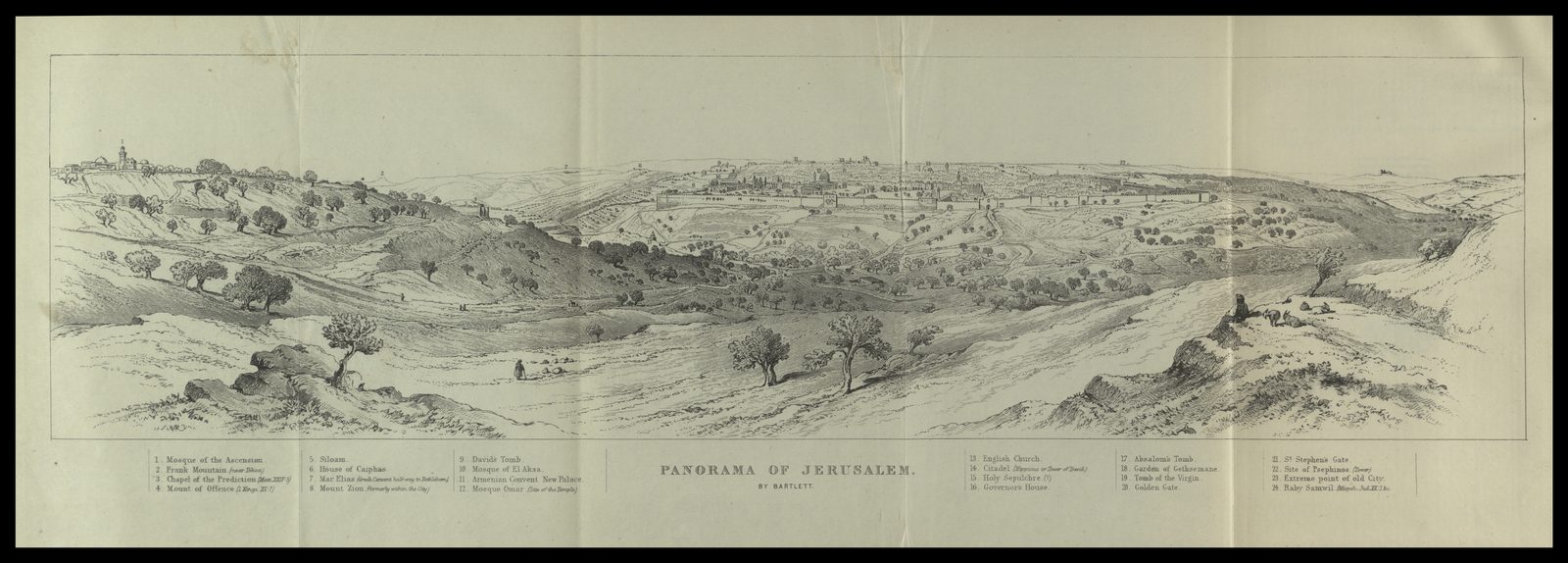
Great is the LORD, and the praise belongs to the city where He dwells, His holy mountain. Mount Zion is the city of the great King, the joy of all the earth. God is in her citadels, shown to be a fortress.
This site's exposition
God is in her citadels
Barnes traced citadels to a verb for lifting up. Wesley held that God, known there by long experience, guarded the king's palace and the temple, and so the whole city. Clarke tied the fortress to the kings who fled in the verses after it.
The record, by era
The Church Fathers1 voice
On the one hand, there is one church throughout all land and sea; thus we say in prayer, For the holy, single, universal and apostolic church, from one end of the world to the other. On the other hand, it is also divided into cities, …
The Medieval Church1 voice
"God will be known in its houses." Here he commends the city for the wisdom of its citizens; for true wisdom consists in the knowledge of God. Jer. 9: "Let the one who glories, glory in this: to know and understand me." And therefore he …
The Puritans and the Awakening3 voices
Known - By long experience. Palaces - Possibly he may point at the king's palace and the temple, which was the palace of the king of heaven; which two palaces God did in a singular manner protect, and by protecting them, protected the whole city and people.
It is therefore called the mountain of his holiness, for holiness to the Lord is written upon it and all the furniture of it, Zech. xiv. This is the privilege of the church of Christ, that it is a holy nation, a peculiar people; Jerusalem, the type of it, is called the holy city, bad as it was ( Matt. xxvii.
quarantine:debris (2026-07-29) — unbalanced-parens
): He is known for a refuge; that is, he has approved himself such a one, and as such a one he is there applied to by his worshippers. Those that know him will trust in him, and seek to him, Ps. ix.
quarantine:debris (2026-07-29) — leading-punctuation+unbalanced-parens
3 more voices on this verse
The Puritans and the Awakening1 voice
God is known in her palaces for a refuge.
The Nineteenth Century2 voices
God is known in her palaces for a refuge - All those who worship there in spirit and truth, find God for their refuge. But the words may be understood: God is known for the defense of her palaces; and with this view of the subject agree the three following verses.
A commentator
Albert Barnes1798–1870
Notes, Explanatory and Practical, on the Old and New Testaments (1832-1869)
proposed
God is known in her palaces - The word rendered “palaces” here means properly a fortress, castle, or palace, so called from its height, from a verb, ארם 'âram, meaning to elevate, to lift up. It may be applied to any fortified place, and would be particularly applicable to a royal residence, as a castle or stronghold. The word “known” here means that it was well understood, or that the point had been fully tested and determined that God had chosen those abodes as his special residence - as the place where he might be found. For a refuge - See the notes at Psa 46:1. That is, there was safety or security in the God who had chosen Jerusalem as his special abode.
The words behind it
4 Hebrew wordsEvery Hebrew word of this verse in the order it stands, with what it means and the door to its own study. The last column counts the times a word stands in the whole Bible: the rarer the word, the more the places it appears belong together.
| Hebrew | Sound | Meaning | Word study | In the Bible |
|---|---|---|---|---|
| אֱלֹהִ֥ים | ʾelohim | God | H430 → | 2601 times |
| בְּאַרְמְנוֹתֶ֗יהָ | bearmenoteiha | [is] in fortresses its | H759 → | 32 times |
| נוֹדַ֥ע | noda' | he has made himself known | H3045 → | 945 times |
| לְמִשְׂגָּֽב׃ | lemisgav | to a refuge | H4869 → | 17 times |
אֱלֹהִ֥יםGod
ʾelohimH430 →2601 times
בְּאַרְמְנוֹתֶ֗יהָ[is] in fortresses its
bearmenoteihaH759 →32 times
נוֹדַ֥עhe has made himself known
noda'H3045 →945 times
לְמִשְׂגָּֽב׃to a refuge
lemisgavH4869 →17 times
A shaded row is a word that stands 400 times or fewer in the Bible.
The walk
8 stopsEach card is a verse this one points to, and under it the verses that one points to in turn. Where several paths arrive at the same place, that place is listed first: the text keeps returning to it.
Through
Psalms 125:1Those who trust in the LORD are like Mount Zion. It cannot be moved; it abides forever.
it leads to
- Jeremiah 17:7–8
But blessed is the man who trusts in the LORD, whose confidence is in Him.
- Psalms 62:2
He alone is my rock and my salvation. He is my fortress; I will never be shaken.
- Proverbs 3:5–6
Trust in the LORD with all your heart, and lean not on your own understanding;
- Psalms 118:8–9
It is better to take refuge in the LORD than to trust in man.
- Psalms 120:1
In my distress I cried to the LORD, and He answered me.
- Jeremiah 17:7–8
Through
Psalms 46:7The LORD of Hosts is with us; the God of Jacob is our fortress. Selah
it leads to
- Romans 8:31
What then shall we say in response to these things? If God is for us, who can be against us?
- Psalms 9:9
The LORD is a refuge for the oppressed, a stronghold in times of trouble.
- Numbers 14:9
Only do not rebel against the LORD, and do not be afraid of the people of the land, for they will be like bread for us. Their protection has been removed, and the LORD…
- Romans 8:31
Where this verse is studied
On this page
Studies1
About Psalms
This page draws on 11 works. Open the list of works
This page draws on Adam Clarke, Commentary on the Bible; Albert Barnes, Notes, Explanatory and Practical, on the Old and New Testaments; Albert Barnes, Notes, Explanatory and Practical, on the Old and New Testaments (1832-1869); Charles Spurgeon, The Treasury of David, Vol. 2; Charles Spurgeon, The Treasury of David; Franz Delitzsch, Biblical Commentary on the Psalms; John Gill, Exposition of the Old Testament (1748-1763); John Wesley, Explanatory Notes upon the Old Testament; Matthew Henry, Commentary on the Whole Bible; Theodoret of Cyrus, COMMENTARY ON THE PSALMS 48:3 and Thomas Aquinas, Exposition on the Psalms of David.