
Psalms 48:13
in Psalms 48consider her ramparts, tour her citadels, that you may tell the next generation.
BSB
The same verse in ASV and KJV ▾
ASV
Mark ye well her bulwarks; Consider her palaces: That ye may tell it to the generation following.
KJV
Mark ye well her bulwarks, consider her palaces; that ye may tell it to the generation following.
⋯
This verse in Psalms 48
Commentary
15 notes on this verseEach generation has to pass on to the next what we have received from the former so that the saving message may pass to all generations, and all people know that he is our God and Lord, good shepherd, everlasting. Since he said, "take its …
This site's exposition
March around Zion, encircle her
on Psalms 48:12-14
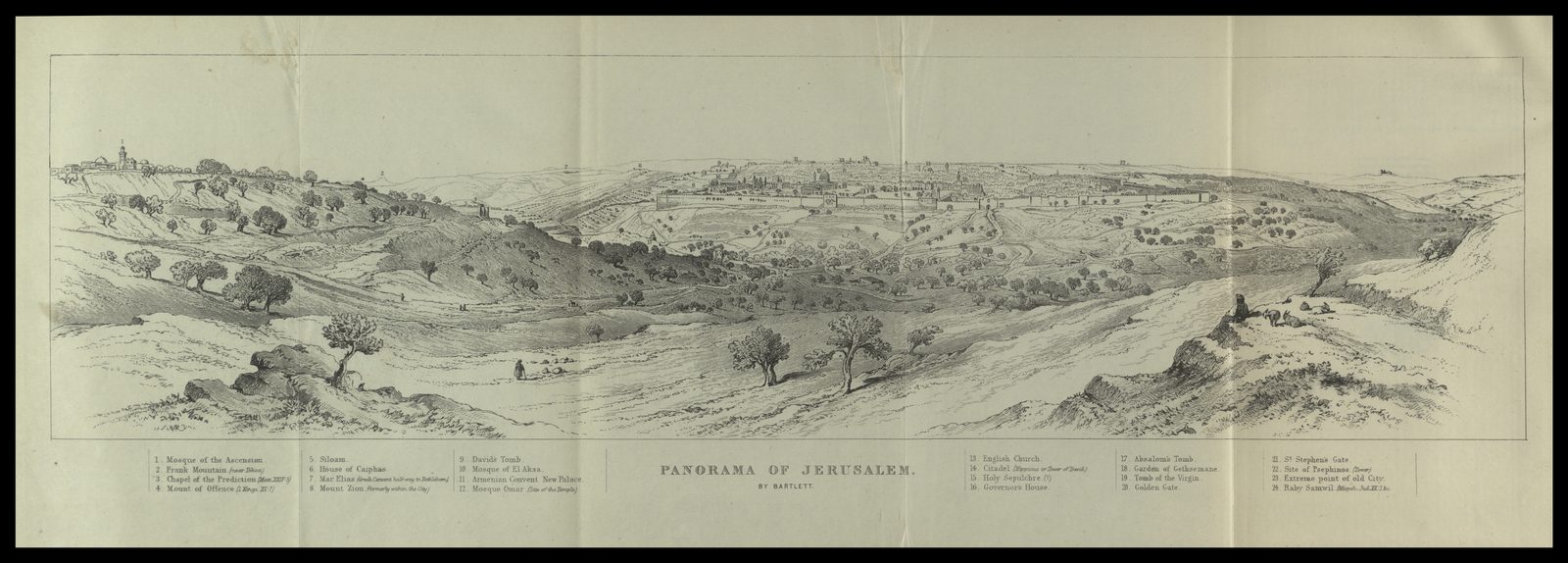
March around Zion and count her towers and ramparts. The circuit is ordered so that you may tell the next generation, and verse 13 adds her citadels. Even till death He will be our guide, and this God is our God forever.
This site's exposition
consider her ramparts
Barnes gave the Hebrew behind consider as set your heart, and the word for ramparts first meant an army, then a trench and its wall. Henry recalled the march around the walls, singing praise to God, in Nehemiah 12:31. Theodoret held that each generation must tell the next.
The record, by era
The Church Fathers2 voices
"Set your hearts upon her might." Not that ye may have the form of godliness, deny the power thereof, but, "upon her might set your hearts. Speak ye in her towers." What is the might of this city? Whoso would understand the might of this city, let him understand the force of love. That is a virtue which none conquereth. Love's flame no waves of the world, no streams of temptation, extinguish. Of this it is said, "Love is strong as death." For as when death cometh, it cannot be resisted; by whatever arts, whatever medicines, you meet it; the violence of death can none avoid who is born mortal; so against the violence of love can the world do nothing. For from the contrary the similitude is made of death; for as death is most violent to take away, so love is most violent to save. Through love many have died to the world, to live to God; by this love inflamed, the martyrs, not pretenders, not puffed up by vain-glory, not such as they of whom it is written, "Though I give my body to be burned, and have not charity, it profiteth me nothing," but men whom truly a love of Christ and of the truth led on to this passion; what to them were the temptations of the tormentors? Greater violence had the eyes of their weeping friends, than the persecutions of enemies. For how many were held by their children, that they might not suffer? to how many did their wives fall upon their knees, that they might not be left widows? How many have their parents forbidden to die; as we know and read in the Passion of the Blessed Perpetua! All this was done; but tears, however great, and with whatever force flowing, when did they extinguish the ardour of love? This is the might of Sion, to whom elsewhere it is said, "Peace be within thy walls, and prosperity within thy palaces."
The psalmist exhorts the people, "Behold this city." … Understand something from … its structure, its beauty, its fame, so as to learn from this God's power, how he made the lost city more mighty, and recount to your progeny God's power and the enduring course of his providence; his care of us, his leadership and shepherding last forever. Stories of this to those who come after will, in fact, prove an occasion for great advance in wisdom, a basis for more precise knowledge of God and a study of virtue.
The Medieval Church1 voice
As to the second, he says, "Set your hearts upon its strength." Jerome has, "Set your heart upon its ramparts." And this is the power of the Holy Spirit, who protects this city: Lk. 24: "Stay in the city until you are clothed with power." …
The Puritans and the Awakening2 voices
Some think this refers to the ceremony of the triumph; let those who are employed in that solemnity walk round the walls (as they did, Neh. xii. 31 ), singing and praising God.
Mark ye well her bulwarks,.... Such as the free favour of God in Christ; which is not only as a shield, but as a bulwark to the church; his everlasting love, electing grace, the covenant of grace, with its blessings and promises, all which are more immovable than rocks and mountains; and especially the power of God, which surrounds his church, as the mountains did Jerusalem; and by which they are kept and preserved as in a garrison, Psa 125:
7 more voices on this verse
The Nineteenth Century7 voices
Mark ye well her bulwarks. Consider most attentively how strong are her ramparts, how safely her inhabitants are entrenched behind successive lines of defence. The security of the people of God is not a doctrine to be kept in the background, it may be safely taught, and frequently pondered; only to base hearts will that glorious truth prove harmful; the sons of perdition make a stumbling stone even of the Lord Jesus himself, it is little wonder that they pervert the truth of God concerning the final perseverance of the saints.
A commentator
Jamieson, Fausset & Brown1802–1910
Commentary Critical and Explanatory on the Whole Bible (1871)
The call to survey Zion, or the Church, as a fortified city, is designed to suggest "how well our God secures His fold." This security is perpetual, and its pledge is His guidance through this life.
Mark ye well her bulwarks. Consider most attentively how strong are her ramparts, how safely her inhabitants are entrenched behind successive lines of defence. The security of the people of God is not a doctrine to be kept in the background, it may be safely taught, and frequently pondered; only to base hearts will that glorious truth prove harmful; the sons of perdition make a stumbling stone even of the Lord Jesus himself, it is little wonder that they pervert the truth of God concerning the final perseverance of the saints. We are not to turn away from inspecting Zion's ramparts, because idlers skulk behind them. Consider her palaces. Examine with care the fair dwellings of the city. Let the royal promises which afford quiet resting places for believers be attentively inspected. See how sound are the defences, and how fair are the pleasaunces of "that ancient citie, "of which you are citizens. A man should be best acquainted with his own home; and the church is our dear and blest abode. Would to God professors were more considerate of the condition of the church; so far from telling the towers, some of them scarcely know what or where they are; they are too busy counting their money, and considering their ledgers. Freehold and copyhold, and leasehold, men measure to an inch, but heaven hold and grace hold are too often taken at peradventure, and neglected in sheer heedlessness. That ye may tell it to the generation following. An excellent reason for studious observation. We have received and we must transmit. We must be students that we may be teachers. The debt we owe to the past we must endeavour to repay by handing down the truth to the future.
A commentator
Charles Spurgeon1834–1892
The Metropolitan Tabernacle Pulpit, Sermon No. 3423: “Beholding God's Church” (lightly modernized text, CCEL edition) · Written before 1892.
proposed
THE proper study of the Christian is Christ. Next to that subject is the Church. And though I would by no means ever urge you to think of the Church as, for a moment, to put her in comparison with her Lord, yet think of her in relation to Him. You will not dishonor the sun by remembering that there is a moon! You will not lessen the glory of "the King in His beauty" by remembering that the Queen, His Spouse, is "all glorious within." You will not think any less of Christ for thinking much of His Church.
A commentator
Charles Spurgeon1834–1892
The Metropolitan Tabernacle Pulpit, Sermon No. 3423: “Beholding God's Church” (lightly modernized text, CCEL edition) · Written before 1892.
proposed
THE proper study of the Christian is Christ. Next to that subject is the Church. And though I would by no means ever urge you to think of the Church as, for a moment, to put her in comparison with her Lord, yet think of her in relation to Him. You will not dishonor the sun by remembering that there is a moon! You will not lessen the glory of "the King in His beauty" by remembering that the Queen, His Spouse, is "all glorious within." You will not think any less of Christ for thinking much of His Church. So tonight I shall invite you to a consideration of the honor, and glory, and dignity of the Church of God as set forth in these verses. And our first point will be the survey which should be taken of the Church—"Walk about Zion, and go round about her: count the towers thereof. Mark you well her bulwarks, consider well her palaces." Secondly, here is the objective of this survey—"That you may tell it to the generation following." And here is, thirdly, a very excellent reason given for our seeking to accomplish this objective—"For this God is our God forever and ever: He will be our guide even unto death." So, then, let us think awhile of— I. THE SURVEY WHICH WE SHOULD TAKE if we would become practically useful to coming generations—the survey we ought to take of the Church of God. And let us begin by saying it should be complete. "Walk about Zion, and go round about her"—go completely round the wall. The Church is set forth as a walled city. The description calls to my mind the city of Chester. There you have the old wall standing, with here and there a most picturesque tower or turret. Now Jerusalem stood in that way, and the Church of God is likened to Jerusalem.
Mark ye well her bulwarks - See the redoubts by which she is defended. Consider her palaces - See her courts, chambers, altars, etc., etc.; make an exact register of the whole, that ye may have to tell to your children how Jerusalem was built in troublesome times; how God restored you; and how he put it into the hearts of the heathen to assist to build, beautify, and adorn the temple of our God.
A commentator
Albert Barnes1798–1870
Notes, Explanatory and Practical, on the Old and New Testaments (1832-1869)
proposed
Mark ye well her bulwarks - Margin, as in Hebrew, “Set your heart to her bulwarks.” That is, Pay close attention to them; make the investigation with care, not as one does whose heart is not in the thing, and who does it negligently. The word rendered “bulwarks” - חיל chêyl - means, properly, a host or army, and then a fortification or entrenchment, especially the “ditch” or “trench,” with the low wall or breastwork which surrounds it: 2Sa 20:15; Isa 26:1. (Gesenius, Lexicon) The Septuagint translates it here: δύναμις dunamis, power; the Vulgate, “virtus,” courage; Luther, “Mauern” - walls. Consider her palaces - The word “palaces” here refers to the royal residences; and, as these were usually fortified and guarded, the expression here is equivalent to this: “Consider the “strength” of the city; its power to defend itself; its safety from the danger of being taken.” The word rendered “consider” - פסגוּ pasegû - is rendered in the margin “raise up.” The word occurs nowhere else in the Bible. According to Gesenius (Lexicon), it means to “divide up;” that is, to walk through and survey them; or, to consider them accurately, or in detail, one by one. The Vulgate renders it “distribute;” the Septuagint, “take a distinct view of (Thompson);” Luther, “lift up.” The idea is, “examine attentively” or “carefully.” That ye may tell it to the generation following - That you may be able to give a correct account of it to the next age. The “object” of this is to inspire the next generation with a belief that God is the protector of the city; that it is so strong that it cannot be vanquished; that there is safety in such a city as that. […]
How the passage was read
What the Jewish commentators add
On the verses either side of this one
the daughters of Judah shall exult All the other cities of Judah are as daughters to Zion, as (Num.:42): “and he captured Kenath and its daughters.”
This section is reception history: how the passage was read and kept in the Jewish tradition. Where a reading parts from an essential of the Christian faith, the section says so at that point.
Texts and citation data: Sefaria; each excerpt follows its version’s licence. 5 further sources are cited on this chapter that carry no English text this site may quote or only restate the verse.
The words behind it
9 Hebrew wordsEvery Hebrew word of this verse in the order it stands, with what it means and the door to its own study. The last column counts the times a word stands in the whole Bible: the rarer the word, the more the places it appears belong together.
| Hebrew | Sound | Meaning | Word study | In the Bible |
|---|---|---|---|---|
| שִׁ֤יתוּ | shitu | set | H7896 → | 83 times |
| לִבְּכֶ֨ם׀ | libekhem | heart your | H3820 → | 595 times |
| לְֽחֵילָ֗ה | lecheilah | to rampart its | H2430 → | |
| פַּסְּג֥וּ | pasegu | walk through | H6448 → | |
| אַרְמְנוֹתֶ֑יהָ | ʾarmenoteiha | fortresses its | H759 → | 32 times |
| לְמַ֥עַן | lemaan | so that | H4616 → | 272 times |
| תְּ֝סַפְּר֗וּ | tesaperu | you may recount [it] | H5608 → | 159 times |
| לְד֣וֹר | ledor | to a generation | H1755 → | 167 times |
| אַחֲרֽוֹן׃ | ʾacharon | later | H314 → | 51 times |
שִׁ֤יתוּset
shituH7896 →83 times
לִבְּכֶ֨ם׀heart your
libekhemH3820 →595 times
לְֽחֵילָ֗הto rampart its
lecheilahH2430 →
פַּסְּג֥וּwalk through
paseguH6448 →
אַרְמְנוֹתֶ֑יהָfortresses its
ʾarmenoteihaH759 →32 times
לְמַ֥עַןso that
lemaanH4616 →272 times
תְּ֝סַפְּר֗וּyou may recount [it]
tesaperuH5608 →159 times
לְד֣וֹרto a generation
ledorH1755 →167 times
אַחֲרֽוֹן׃later
ʾacharonH314 →51 times
A shaded row is a word that stands 400 times or fewer in the Bible.
The walk
8 stopsEach card is a verse this one points to, and under it the verses that one points to in turn. Where several paths arrive at the same place, that place is listed first: the text keeps returning to it.
Through
Deuteronomy 11:19Teach them to your children, speaking about them when you sit at home and when you walk along the road, when you lie down and when you get up.
it leads to
- Deuteronomy 6:7
And you shall teach them diligently to your children and speak of them when you sit at home and when you walk along the road, when you lie down and when you get up.
Reached by 2 separate paths from here.
- Deuteronomy 6:7
Through
Psalms 71:18Even when I am old and gray, do not forsake me, O God, until I proclaim Your power to the next generation, Your might to all who are to come.
it leads to
- Isaiah 46:4
Even to your old age, I will be the same, and I will bear you up when you turn gray. I have made you, and I will carry you; I will sustain you and…
- Psalms 71:9
Do not discard me in my old age; do not forsake me when my strength fails.
- Psalms 78:4
We will not hide them from their children, but will declare to the next generation the praises of the LORD and His might, and the wonders He has performed.
- Psalms 145:4–5
One generation will commend Your works to the next, and will proclaim Your mighty acts—
- Psalms 78:6
that the coming generation would know them— even children yet to be born— to arise and tell their own children
- Isaiah 46:4
Through
Joel 1:3Tell it to your children; let your children tell it to their children, and their children to the next generation.
it leads to
- Psalms 71:18
Even when I am old and gray, do not forsake me, O God, until I proclaim Your power to the next generation, Your might to all who are to come.
- Psalms 145:4
One generation will commend Your works to the next, and will proclaim Your mighty acts—
- Psalms 71:18
Where this verse is studied
On this page
Studies1
About Psalms
This page draws on 15 works. Open the list of works
This page draws on Adam Clarke, Commentary on the Bible; Albert Barnes, Notes on the Book of Psalms; Albert Barnes, Notes, Explanatory and Practical, on the Old and New Testaments; Albert Barnes, Notes, Explanatory and Practical, on the Old and New Testaments (1832-1869); Augustine of Hippo, ON THE PSALMS - Psalm 48; Charles Spurgeon, The Treasury of David, Vol. 2; Charles Spurgeon, The Metropolitan Tabernacle Pulpit, Sermon No. 3423: “Beholding God's Church” (lightly modernized text, CCEL edition); Franz Delitzsch, Biblical Commentary on the Psalms; Jamieson, Fausset & Brown, Commentary Critical and Explanatory on the Whole Bible; John Chrysostom, COMMENTARY ON THE PSALMS 48:3; John Gill, Exposition of the Old Testament (1748-1763); Matthew Henry, Commentary on the Whole Bible; Theodoret of Cyrus, COMMENTARY ON THE PSALMS 48:7; Theodoret of Cyrus, Commentary on the Psalms and Thomas Aquinas, Exposition on the Psalms of David.