
Psalms 48:2
in Psalms 48Beautiful in loftiness, the joy of all the earth, like the peaks of Zaphon is Mount Zion, the city of the great King.
BSB
The same verse in ASV and KJV ▾
ASV
Beautiful in elevation, the joy of the whole earth, Is mount Zion, on the sides of the north, The city of the great King.
KJV
Beautiful for situation, the joy of the whole earth, is mount Zion, on the sides of the north, the city of the great King.
⋯
This verse in Psalms 48
Commentary
16 notes on this verseA commentator
Ambrose of MilanCommentaries on the Twelve Davidic Psalms, On Psalm 48 · Written before 397.
Truly the Lord is called great. For consider, he has poured exaltation and joy over all the orb of this earth where previously the land produced the most dreadful growth of sin; he has made joyful the earth that once abounded in sorrow, tears and groans. Now our conscience is set free from sin and can rejoice. Before this it was unhappy, it was drowned in the whirlpool of its own sin; but now, through the goodness and kindness of Christ, it is absolved from all error.
This site's exposition
Great is the LORD
on Psalms 48:1-3
Great is the LORD, and the praise belongs to the city where He dwells, His holy mountain. Mount Zion is the city of the great King, the joy of all the earth. God is in her citadels, shown to be a fortress.
This site's exposition
the city of the great King
Jesus quoted the city of the great King at Matthew 5:35, where swearing by Jerusalem is swearing by God, as Henry noted. Barnes gave the Hebrew behind loftiness as height, the mountain rising in the sight of the kings. Clarke took all the earth as the whole land.
The record, by era
The Church Fathers3 voices
Joy is rooted in Christ.… His root is God the Word, which is in himself.
For what reason, tell me, does he now mention the north and describe to us the location of the place? Because from that quarter war generally broke out with the invasion of savages, and generally the inspired authors mention it, calling it "from the north," and speak in terms of a cauldron boiling from that direction.… This city generally vulnerable from that quarter you made impregnable. In other words, just as if someone were to say about the body, "That weak part I made stronger," he too is suggesting the same in this verse in the words, "The quarters from which come wailing and weeping," the basis of disasters, these parts run over with satisfaction, with tranquility; [the place from which] come threats and fears and dangers, [from them come] delight and happiness. No one any longer fears that northern part of creation, no one is anguished, no one is suspicious. All enjoy happiness, for you root it in satisfaction.
Further, ...when he had said, "in the city of our God, in His holy mountain," what added he? "Spreading abroad the joys of the whole earth, the mountains of Sion" (ver. 2). Sion is one mountain, why then "mountains"? Is it that to Sion belonged also those which came from the other side, so as to meet together on the Corner Stone, and become two walls, as it were two mountains, one of the circumcision, the other of the uncircumcision; one of the Jews, the other of the Gentiles: no longer adverse, although diverse, because from different sides, now in the corner not even diverse. "For He is our peace, who hath made both one." The same Corner Stone "which the builders rejected, is become the Head Stone of the corner." The mountain hath joined in itself two mountains; one house there is, and two houses; two, because coming from different sides; one, because of the Corner Stone, wherein both are joined together. Hear also this, "the mountains of Sion: the sides of the North are the city of the great King." ...See the Gentiles; "the sides of the North:" the sides of the North are joined to the city of the great King. The North is wont to be contrary to Sion: Sion forsooth is in the South, the North over against the South. Who is the North, but He who said, "I will sit in the sides of the North, I will be like the Most High"? The devil had held dominion over the ungodly, and possessed the nations serving images, adoring demons; and all whatsoever there was of human kind anywhere throughout the world, by cleaving to Him, had become North. […]
The Medieval Church1 voice
"It is founded." Here he commends the city in three ways. First, from its extent or joyfulness. Second, from its arrangement. Third, from the wisdom of its citizens. He says, therefore, "It is founded with the exultation of the whole earth." As if to say: …
The Reformation1 voice
Beautiful for situation, the joy of the whole earth, is mount Zion For the confirmation of the statement made in the preceding sentence, the prophet celebrates the excellencies for which mount Zion was at that time renowned; and in them was to be seen the glory of God, of which I have just now spoken.
8 more voices on this verse
The Puritans and the Awakening4 voices
The joy - This is spoken prophetically, because the joyful doctrine of the gospel was to go from thence to all nations. The city - Of God, who justly calls himself a great king.
The situation must needs be every way agreeable, when Infinite Wisdom chose it for the place of the sanctuary; and that which made it beautiful was that it was the mountain of holiness, for there is a beauty in holiness.
), the King of all the earth, who is pleased to declare himself in a special manner present there. This our Saviour quotes to prove that to swear by Jerusalem is profanely to swear by God himself ( Matt. v. 35 ), for it is the city of the great King, who has chosen it for the special residence of his grace, as heaven is of his glory.
quarantine:debris (2026-07-29) — leading-punctuation+unbalanced-parens
Beautiful for situation,....
The Nineteenth Century4 voices
Beautiful for situation. Jerusalem was so naturally, she was styled the Queen of the East; the church is so spiritually, being placed near God's heart, within the mountain of his power, upon the hills of his faithfulness, in the centre of providential operations. The elevation of the church is her beauty. The more she is above the world the fairer she is. The joy of the whole earth is Mount Zion. Jerusalem was the world's star; whatever light lingered on earth was borrowed from the oracles preserved by Israel.
Beautiful for situation. Jerusalem was so naturally, she was styled the Queen of the East; the church is so spiritually, being placed near God's heart, within the mountain of his power, upon the hills of his faithfulness, in the centre of providential operations. The elevation of the church is her beauty. The more she is above the world the fairer she is. The joy of the whole earth is Mount Zion. Jerusalem was the world's star; whatever light lingered on earth was borrowed from the oracles preserved by Israel. An ardent Israelite would esteem the holy city as the eye of the nations, the most precious pearl of all lands. Certainly the church of God, though despised of men, is the true joy and hope of the world. On the sides of the north, the city of the great King. Either meaning that Jerusalem was in the northern extremity of Judah, or it may denote that part of the city that lay to the north of Mount Zion. It was the glory of Jerusalem to be God's city, the place of his regal dwelling, and it is the joy of the church that God is in her midst. The great God is the great King of the church, and for her sake he rules all the nations. The people among whom the Lord deigns to dwell are privileged above all others; the lines have fallen unto them in pleasant places, and they have a goodly heritage. We who dwell in Great Britain in the sides of the north, have this for our chief glory, that the Lord is known in our land, and the abode of his love is among us.
The joy of the whole earth - Commentators have been greatly puzzled to show in what sense Zion, or the temple, could be said to be the joy of the whole earth. If we take the earth here for the habitable globe, there is no sense in which it ever was the joy of the whole earth; but If we take כל הארץ col haarets, as signifying the whole of this land, (and it has no other meaning), the assertion is plain and easy to be understood, for the temple was considered the ornament and glory of the whole land of Judea.
A commentator
Albert Barnes1798–1870
Notes, Explanatory and Practical, on the Old and New Testaments (1832-1869)
proposed
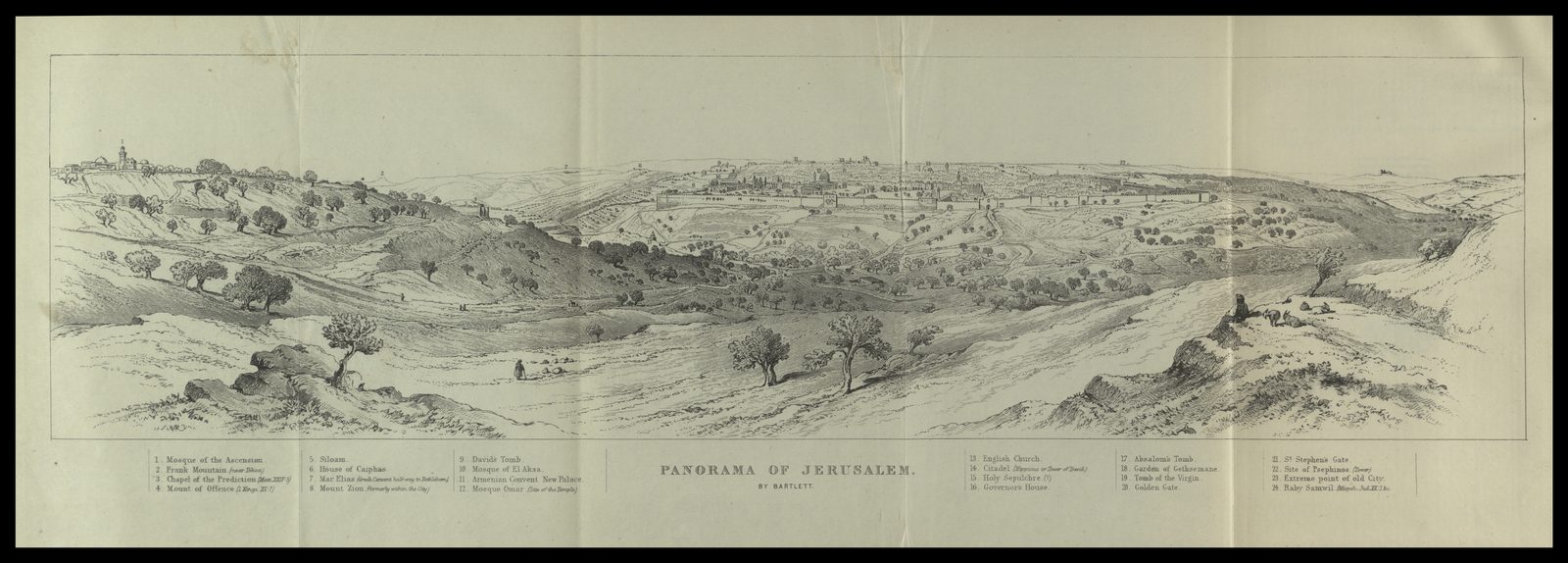
Beautiful for situation - The word rendered “situation” - נוף nôph - means properly “elevation, height,” (Ges. Lexicon); and the idea here is, that the mountain referred to is “beautiful for elevation;” that is, it rises gracefully. The allusion here is to Jerusalem as it would appear to one approaching it, and especially as it appeared to the “kings” Psa 48:4 who came to invest it, and who were so impressed with its marvelous beauty and strength, that they were afraid to attack it, and turned away Psa 48:5. The joy of the whole earth - Either the whole “land” of Palestine, or the whole world. Most probably the former is the meaning; and the idea is that, as a place of beauty and strength, and as a place where the worship of God was celebrated, and where the people of the land were accustomed to assemble, it was a source of national joy. Is Mount Zion - The term used here would seem to denote the whole city, Jerusalem, as it often does. Mount Zion was the most conspicuous object in the city, the residence of the king, and for a long time, until the temple was built, the place where the ark reposed, and where the worship of God was celebrated, and hence, the term came to be used to denote the whole city. On the sides of the north - That is, probably, the houses, the palaces, on the north sides of the Mount Zion. These were eminently beautiful; they struck one in approaching the city from that quarter, as impressive and grand. The natural and usual approach to the city was from the north, or the northwest. On the west was the valley of Gihon, on the south the valley of Hinnom; and on the east the valley of Jehoshaphat and of the brook Kidron; and it was only as the city was approached from the north that there would be a complete view of it; or, that was the only quarter from which it could be assailed. […]
The words behind it
12 Hebrew wordsEvery Hebrew word of this verse in the order it stands, with what it means and the door to its own study. The last column counts the times a word stands in the whole Bible: the rarer the word, the more the places it appears belong together.
| Hebrew | Sound | Meaning | Word study | In the Bible |
|---|---|---|---|---|
| יְפֵ֥ה | yepeh | [it is] beautiful of | H3303 → | |
| נוֹף֮ | nof | height | H5131 → | |
| מְשׂ֪וֹשׂ | mesos | [the] joy of | H4885 → | |
| כָּל־ | kol- | all | H3605 → | 5413 times |
| הָ֫אָ֥רֶץ | haaretz | the earth | H776 → | 2504 times |
| הַר־ | har- | [the] mountain of | H2022 → | 546 times |
| צִ֭יּוֹן | tziyon | Zion | H6726 → | 154 times |
| יַרְכְּתֵ֣י | yarketei | [the] remotest parts of | H3411 → | |
| צָפ֑וֹן | tzafon | Zaphon | H6828 → | 153 times |
| קִ֝רְיַ֗ת | kiryat | [the] town of | H7151 → | |
| מֶ֣לֶךְ | melekh | [the] king | H4428 → | 2525 times |
| רָֽב׃ | rav | great | H7227 → | 454 times |
יְפֵ֥ה[it is] beautiful of
yepehH3303 →
נוֹף֮height
nofH5131 →
מְשׂ֪וֹשׂ[the] joy of
mesosH4885 →
כָּל־all
kol-H3605 →5413 times
הָ֫אָ֥רֶץthe earth
haaretzH776 →2504 times
הַר־[the] mountain of
har-H2022 →546 times
צִ֭יּוֹןZion
tziyonH6726 →154 times
יַרְכְּתֵ֣י[the] remotest parts of
yarketeiH3411 →
צָפ֑וֹןZaphon
tzafonH6828 →153 times
קִ֝רְיַ֗ת[the] town of
kiryatH7151 →
מֶ֣לֶךְ[the] king
melekhH4428 →2525 times
רָֽב׃great
ravH7227 →454 times
A shaded row is a word that stands 400 times or fewer in the Bible.
The walk
8 stopsEach card is a verse this one points to, and under it the verses that one points to in turn. Where several paths arrive at the same place, that place is listed first: the text keeps returning to it.
Through
Hebrews 12:22Instead, you have come to Mount Zion, to the city of the living God, the heavenly Jerusalem. You have come to myriads of angels
it leads to
- Philippians 3:20
But our citizenship is in heaven, and we eagerly await a Savior from there, the Lord Jesus Christ,
- Galatians 4:26
But the Jerusalem above is free, and she is our mother.
- Revelation 14:1
Then I looked and saw the Lamb standing on Mount Zion, and with Him 144,000 who had His name and His Father’s name written on their foreheads.
- Philippians 3:20
Through
Isaiah 14:13You said in your heart: “I will ascend to the heavens; I will raise my throne above the stars of God. I will sit on the mount of assembly, in the far reaches of…
it leads to
- Daniel 8:10–12
It grew as high as the host of heaven, and it cast down some of the host and some of the stars to the earth, and trampled them.
- Ezekiel 28:2
“Son of man, tell the ruler of Tyre that this is what the Lord GOD says: Your heart is proud, and you have said, ‘I am a god; I sit in the seat of…
- Daniel 8:10–12
Through
Psalms 50:2From Zion, perfect in beauty, God shines forth.
it leads to
- Revelation 21:23
And the city has no need of sun or moon to shine on it, because the glory of God illuminates the city, and the Lamb is its lamp.
- Psalms 80:1
Hear us, O Shepherd of Israel, who leads Joseph like a flock; You who sit enthroned between the cherubim, shine forth
- Revelation 1:16
He held in His right hand seven stars, and a sharp double-edged sword came from His mouth. His face was like the sun shining at its brightest.
- Revelation 21:23
Where this verse is studied
On this page
Studies1
About Psalms
Who and where
1 name in this verse with a page on the site.
This page draws on 15 works. Open the list of works
This page draws on Adam Clarke, Commentary on the Bible; Albert Barnes, Notes, Explanatory and Practical, on the Old and New Testaments; Albert Barnes, Notes, Explanatory and Practical, on the Old and New Testaments (1832-1869); Ambrose of Milan, Commentaries on the Twelve Davidic Psalms, On Psalm 48; Augustine of Hippo, On the Psalms, Psalm 48; Charles Spurgeon, The Treasury of David; Charles Spurgeon, The Treasury of David, Vol. 2; Evagrius Ponticus, NOTES ON THE PSALMS 47[48].3; Franz Delitzsch, Biblical Commentary on the Psalms; John Calvin, Commentaries; John Chrysostom, COMMENTARY ON THE PSALMS 48:1; John Gill, Exposition of the Old Testament (1748-1763); John Wesley, Explanatory Notes upon the Old Testament; Matthew Henry, Commentary on the Whole Bible and Thomas Aquinas, Exposition on the Psalms of David.