
Psalms 29:11
in Psalms 29The LORD gives His people strength; the LORD blesses His people with peace.
BSB
The same verse in ASV and KJV ▾
ASV
Jehovah will give strength unto his people; Jehovah will bless his people with peace.
KJV
The Lord will give strength unto his people; the Lord will bless his people with peace.
⋯
This verse in Psalms 29
Commentary
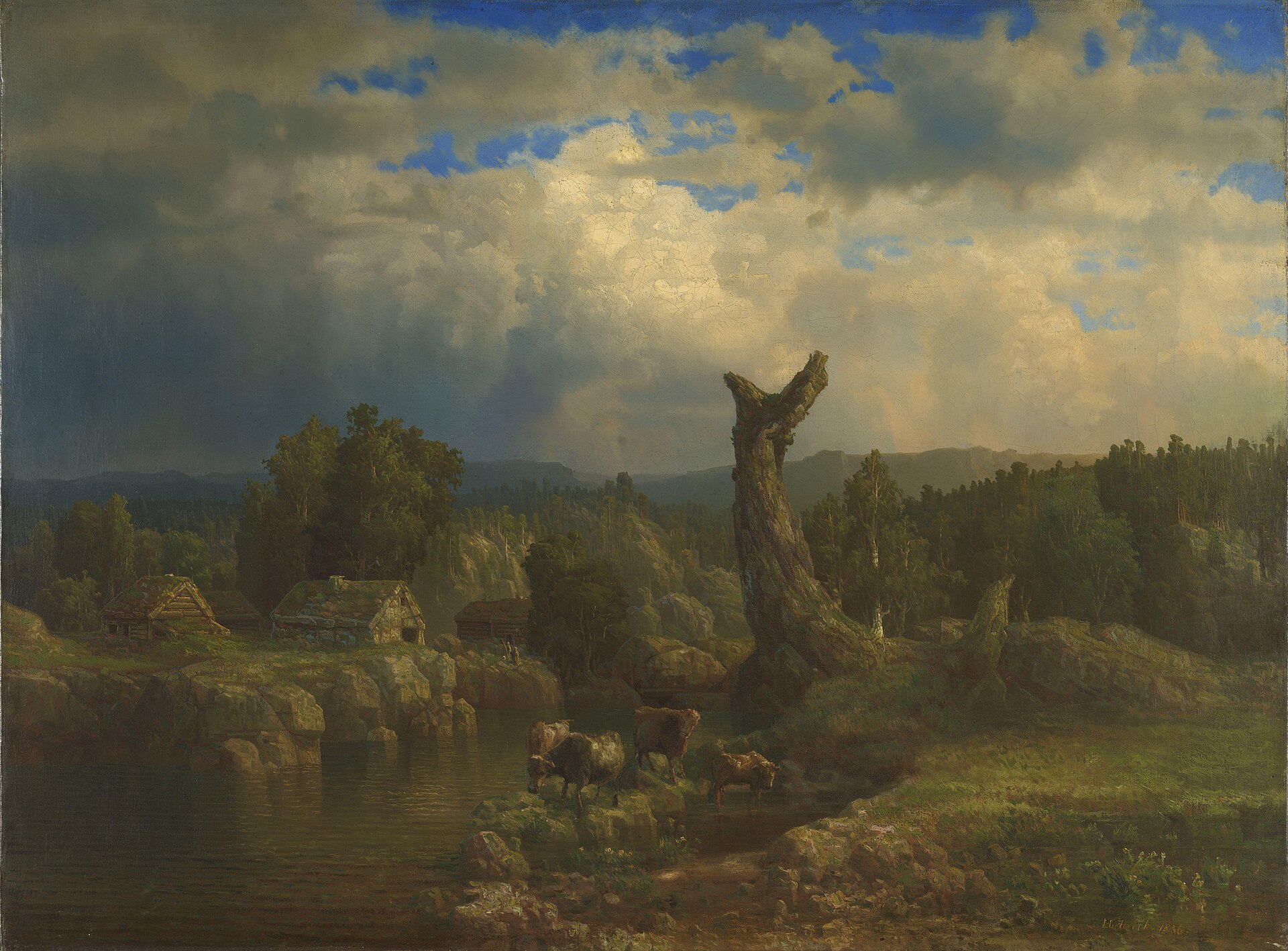
12 notes on this versePower was displayed in the hurricane whose course this Psalm so grandly pictures; and now, in the cool calm after the storm, that power is promised to be the strength of the chosen. He who wings the unerring bolt, will give to his redeemed the wings of eagles; he who shakes the earth with his voice, will terrify the enemies of his saints, and give his children peace. Why are we weak when we have divine strength to flee to? Why are we troubled when the Lord's own peace is ours?
This site's exposition
sits enthroned over the flood
on Psalms 29:10-11
The word for flood here is mabbul, used elsewhere only of Noah's flood in Genesis. The LORD sits enthroned over that water as King forever. The voice that breaks cedars gives His people strength and peace.
The record, by era
The Church Fathers1 voice
"The Lord will give strength to His people" [Psalm 29:11]. For the Lord will give strength to His people fighting against the storms and whirlwinds of this world, for peace in this world He hath not promised them. "The Lord will bless His people in peace." And the same Lord will bless His people, affording them peace in Himself; for, saith He, "My peace I give unto you, My peace I leave with you."
The Medieval Church1 voice
"The Lord." Here he treats of the hoped-for benefits. And first he recalls the power of the benefactor. Second, he sets forth the hoped-for benefits, at "The Lord will give strength to his people." In the Hebrew it reads, "The Lord sat enthroned at the …
The Puritans and the Awakening3 voices
Peace is a blessing of inestimable value, which God designs for all his people. The work of righteousness is peace (great peace have those that love thy law ); but much more the crown of righteousness: the end of righteousness is peace; it is endless peace. When the thunder of God's wrath shall make sinners tremble the saints shall lift up their heads with joy.
2 Give unto the L ORD the glory due unto his name; worship the L ORD in the beauty of holiness. 3 The voice of the L ORD is upon the waters: the God of glory thundereth: the L ORD is upon many waters. 4 The voice of the L ORD is powerful; the voice of the L ORD is full of majesty.
quarantine:scripture (2026-07-29) — scripture-overlap:80%@v2-4
The Lord will give strength unto his people,....
5 more voices on this verse
The Puritans and the Awakening1 voice
Peace is a blessing of inestimable value, which God designs for all his people. The work of righteousness is peace (great peace have those that love thy law ); but much more the crown of righteousness: the end of righteousness is peace; it is endless peace. When the thunder of God's wrath shall make sinners tremble the saints shall lift up their heads with joy.
The Nineteenth Century4 voices
Power was displayed in the hurricane whose course this Psalm so grandly pictures; and now, in the cool calm after the storm, that power is promised to be the strength of the chosen. He who wings the unerring bolt, will give to his redeemed the wings of eagles; he who shakes the earth with his voice, will terrify the enemies of his saints, and give his children peace. Why are we weak when we have divine strength to flee to? Why are we troubled when the Lord's own peace is ours? Jesus the mighty God is our peace—what a blessing is this today! What a blessing it will be to us in that day of the Lord which will be in darkness and not light to the ungodly! Dear reader, is not this a noble Psalm to be sung in stormy weather? Can you sing amid the thunder? Will you be able to sing when the last thunders are let loose, and Jesus judges quick and dead? If you are a believer, the last verse is your heritage, and surely that will set you singing.
Power was displayed in the hurricane whose course this Psalm so grandly pictures; and now, in the cool calm after the storm, that power is promised to be the strength of the chosen. He who wings the unerring bolt, will give to his redeemed the wings of eagles; he who shakes the earth with his voice, will terrify the enemies of his saints, and give his children peace. Why are we weak when we have divine strength to flee to? Why are we troubled when the Lord's own peace is ours?
The Lord will give strength - Prosperity in our secular affairs; success in our enterprises; and his blessing upon our fields and cattle. The Lord will bless his people with peace - Give them victory over their enemies, and cause the nations to be at peace with them; so that they shall enjoy uninterrupted prosperity. The plentiful rain which God has now sent is a foretaste of his future blessings and abundant mercies. In the note on Psa 29:10 I have referred to the following description taken from Virgil. Did he borrow some of the chief ideas in it from the 29th Psalm? The reader will observe several coincidences. Interea magno misceri murmure pontum, Emissamque hyemem sensit Neptunus, et imis Stagna refusa vadis: graviter commotus, et alto Prospiciens, summa placidum caput extulit unda. Disjectam Aeneae toto videt aequore classem, Fluctibus oppressos Troas, coelique ruina. Eurum ad se zephyrumque vocat: dehinc talia fatur Sic ait: et dicto citius tumida aequora placat, Collectasque fugat nubes, solemque reducit. Cymothoe simul, et Triton adnixus acuto Detrudunt naves scopulo; levat ipse tridenti; Et vastas aperit syrtes, et temperat aequor, Atque rotis summas levibus perlabitur undas. Sic cunctus pelagi cecidit fragor, aequora postquam Prospiciens genitor, caeloque invectus aperto, Flectit equos, curruque volans dat lora secundo. Aen. lib. i., ver. […]
A commentator
Albert Barnes1798–1870
Notes, Explanatory and Practical, on the Old and New Testaments (1832-1869)
proposed
The Lord will give strength unto his people - This is a practical application of the sentiments of the psalm, or a conclusion which is fairly to be derived from the main thought in the psalm. The idea is, that the God who presides over the tempest and the storm, the God who has such power, and can produce such effects, is abundantly able to uphold His people, and to defend them. In other words, the application of such amazing power will be to protect His people, and to save them from danger. When we look on the rolling clouds in the tempest, when we hear the roaring of the thunder, and see the flashing of the lightning, when we hear the oak crash on the hills, and see the waves piled mountains high, if we feel that God presides over all, and that He controls all this with infinite ease, assuredly we have no occasion to doubt that He can protect us; no reason to fear that His strength cannot support us. The Lord will bless his people with peace - They have nothing to fear in the tempest and storm; nothing to fear from anything. He will bless them with peace in the tempest; He will bless them with peace through that power by which He controls the tempest. Let them, therefore, not fear in the storm, however fiercely it may rage; let them not be afraid in any of the troubles and trials of life. in the storm, and in those troubles and trials, he can make the mind calm; beyond those storms and those troubles he can give them eternal peace in a world where no “angry tempest blows.”
How the passage was read
What the Jewish commentators add
On the verses either side of this one
The Lord sat [enthroned] at the flood alone in His greatness, and now also, the Lord sits alone forever, “but the idols will completely pass away,” (as in Isa.:18), yet to His people He will give strength and a blessing of peace.
This section is reception history: how the passage was read and kept in the Jewish tradition. Where a reading parts from an essential of the Christian faith, the section says so at that point.
Texts and citation data: Sefaria; each excerpt follows its version’s licence. 3 further sources are cited on this chapter that carry no English text this site may quote or only restate the verse.
The words behind it
9 Hebrew wordsEvery Hebrew word of this verse in the order it stands, with what it means and the door to its own study. The last column counts the times a word stands in the whole Bible: the rarer the word, the more the places it appears belong together.
| Hebrew | Sound | Meaning | Word study | In the Bible |
|---|---|---|---|---|
| יְֽהוָ֗ה | yahweh | Yahweh | H3068 → | 6520 times |
| עֹ֭ז | ʾoz | strength | H5797 → | 92 times |
| לְעַמּ֣וֹ | leamo | to people his | H5971 → | 1873 times |
| יִתֵּ֑ן | yiten | he will give | H5414 → | 2011 times |
| יְהוָ֓ה׀ | yahweh | Yahweh | H3068 → | 6520 times |
| יְבָרֵ֖ךְ | yevarekh | he will bless | H1288 → | 330 times |
| אֶת־ | ʾet- | <obj.> | H853 → | 10935 times |
| עַמּ֣וֹ | amo | people his | H5971 → | 1873 times |
| בַשָּׁלֽוֹם׃ | vashalom | with <the> peace | H7965 → | 236 times |
יְֽהוָ֗הYahweh
yahwehH3068 →6520 times
עֹ֭זstrength
ʾozH5797 →92 times
לְעַמּ֣וֹto people his
leamoH5971 →1873 times
יִתֵּ֑ןhe will give
yitenH5414 →2011 times
יְהוָ֓ה׀Yahweh
yahwehH3068 →6520 times
יְבָרֵ֖ךְhe will bless
yevarekhH1288 →330 times
אֶת־<obj.>
ʾet-H853 →10935 times
עַמּ֣וֹpeople his
amoH5971 →1873 times
בַשָּׁלֽוֹם׃with <the> peace
vashalomH7965 →236 times
A shaded row is a word that stands 400 times or fewer in the Bible.
The walk
8 stopsEach card is a verse this one points to, and under it the verses that one points to in turn. Where several paths arrive at the same place, that place is listed first: the text keeps returning to it.
Through
Isaiah 41:10Do not fear, for I am with you; do not be afraid, for I am your God. I will strengthen you; I will surely help you; I will uphold you with My right hand…
it leads to
- Joshua 1:9
Have I not commanded you to be strong and courageous? Do not be afraid; do not be discouraged, for the LORD your God is with you wherever you go.”
- Isaiah 43:1–2
Now this is what the LORD says— He who created you, O Jacob, and He who formed you, O Israel: “Do not fear, for I have redeemed you; I have called you by your…
- Romans 8:31
What then shall we say in response to these things? If God is for us, who can be against us?
- Deuteronomy 31:6–8
Be strong and courageous; do not be afraid or terrified of them, for it is the LORD your God who goes with you; He will never leave you nor forsake you.”
- Philippians 4:13
I can do all things through Christ who gives me strength.
- Joshua 1:9
Through
Isaiah 40:31But those who wait upon the LORD will renew their strength; they will mount up with wings like eagles; they will run and not grow weary, they will walk and not faint.
it leads to
- Lamentations 3:25–26
The LORD is good to those who wait for Him, to the soul who seeks Him.
- 2 Corinthians 4:16
Therefore we do not lose heart. Though our outer self is wasting away, yet our inner self is being renewed day by day.
- Psalms 27:13–14
Still I am certain to see the goodness of the LORD in the land of the living.
- Lamentations 3:25–26
Where this verse is studied
About Psalms
This page draws on Adam Clarke, Commentary on the Bible; Albert Barnes, Notes, Explanatory and Practical, on the Old and New Testaments (1832-1869); Augustine of Hippo, On the Psalms, Psalm 29; Charles Spurgeon, The Treasury of David, Vol. 2; Franz Delitzsch, Biblical Commentary on the Psalms; John Gill, Exposition of the Old Testament (1748-1763); Matthew Henry, Commentary on the Whole Bible and Thomas Aquinas, Exposition on the Psalms of David.