
Psalms 100:5
in Psalms 100For the LORD is good, and His loving devotion endures forever; His faithfulness continues to all generations.
BSB
The same verse in ASV and KJV ▾
ASV
For Jehovah is good; his lovingkindness endureth for ever, And his faithfulness unto all generations.
KJV
For the Lord is good; his mercy is everlasting; and his truth endureth to all generations.
⋯
This verse in Psalms 100
Commentary
15 notes on this verseFor the Lord is good. This sums up his character and contains a mass of reasons for praise. He is good, gracious, kind, bountiful, loving; yea, God is love. He who does not praise the good is not good himself. The kind of praise inculcated in the Psalm, viz., that of joy and gladness, is most fitly urged upon us by an argument from the goodness of God. His mercy is everlasting. God is not mere justice, stern and cold; he has bowels of compassion, and wills not the sinner's death.
This site's exposition
Enter His gates with thanksgiving
on Psalms 100:4-5
Gates first, then courts, so the verse walks the worshiper in from the outside, thanksgiving at the gate and praise further in. Verse 5 gives the reason in three clauses: the LORD is good, He keeps His loving devotion forever, and His faithfulness holds for every generation.
This site's exposition
His loving devotion endures forever
Goodness comes first, and from it the LORD's loving devotion, hesed in Hebrew, which lasts forever. His faithfulness continues to all generations, those not yet born. Israel sang this line again at Psalm 106:1 and 107:1.
The record, by era
The Church Fathers1 voice
"His mercy is everlasting." For He will not cease to be merciful, after He has freed you: it belongs to His mercy to protect you even unto eternal life. "His mercy," therefore, "is to everlasting: and His Truth from generation to generation" [Psalm 100:5]. Understand by "from generation to generation," either every generation, or in two generations, the one earthly, the other heavenly. Here there is one generation which produces mortals; another which makes such as are everlasting. His Truth is both here, and there. Imagine not that His truth is not here, if His truth were not here, he would not say in another Psalm: "Truth is risen out of the earth;" nor would Truth Itself say, Lo, I am with you always, even unto the end of the world. [Matthew 28:20]
The Puritans and the Awakening4 voices
1 Make a joyful noise unto the L ORD , all ye lands. 2 Serve the L ORD with gladness: come before his presence with singing. 3 Know ye that the L ORD he is God: it is he that hath made us, and not we ourselves; we are his people, and the sheep of his pasture.
quarantine:scripture (2026-07-29) — scripture-overlap:89%@v1-3
): The Lord is good, and therefore does good; his mercy is everlasting; it is a fountain that can never be drawn dry. The saints, who are now the sanctified vessels of mercy, will be, to eternity, the glorified monuments of mercy.
quarantine:debris (2026-07-29) — leading-punctuation+unbalanced-parens
For the Lord is good,....
Note, Knowledge is the mother of devotion and of all obedience: blind sacrifices will never please a seeing God. "Know it; consider and apply it, and then you will be more close and constant, more inward and serious, in the worship of him." Let us know then these seven things concerning the Lord Jehovah, with whom we have to do in all the acts of religious worship:-- 1.
7 more voices on this verse
The Nineteenth Century7 voices
For the Lord is good. This sums up his character and contains a mass of reasons for praise. He is good, gracious, kind, bountiful, loving; yea, God is love. He who does not praise the good is not good himself. The kind of praise inculcated in the Psalm, viz., that of joy and gladness, is most fitly urged upon us by an argument from the goodness of God. His mercy is everlasting. God is not mere justice, stern and cold; he has bowels of compassion, and wills not the sinner's death. Towards his own people mercy is still more conspicuously displayed; it has been theirs from all eternity, and shall be theirs world without end. Everlasting mercy is a glorious theme for sacred song. And his truth endureth to all generations. No fickle being is he, promising and forgetting. He has entered into covenant with his people, and he will never revoke it, nor alter the thing that has gone out of his lips. As our fathers found him faithful, so will our sons, and their seed for ever. A changeable God would be a terror to the righteous, they would have no sure anchorage, and amid a changing world they would be driven to and fro in perpetual fear of shipwreck. It were well if the truth of divine faithfulness were more fully remembered by some theologians; it would overturn their belief in the final fall of believers, and teach them a more consolatory system. Our heart leaps for joy as we bow before One who has never broken his word or changed his purpose. Resting on his sure word, we feel that joy which is here commanded, and in the strength of it we come into his presence even now, and speak good of his name.
BRETHREN, it is a trick of Satan to distract us from the most important and vital matters by the suggestion of trivial considerations. When the best blessings are asking for our acceptance, he will bring the most trivial things into our minds. He will fill our eyes with dust to prevent our looking to the bronze serpent for healing. From the preaching of Jesus he endeavored to distract human attention by debates upon the tithing of mint and anise and cumin—the making broad of the borders of one's garments, the wearing of phylacteries—the straining out of gnats, and I know not what else. He followed this method at Jacob's Well. When our Lord spoke to the woman about Living Water and the salvation of her soul, the evil spirit prompted her to ask concerning Gerizim and Zion—"Our fathers worshipped in this mountain, and You say that in Jerusalem men ought to worship." With this same art Satan still works. It should be our business, not being ignorant of the devices of the enemy, to be more than a match for him by breaking away from all vain jangling and trivial questions. We need to go to the foundational Truths of God, the cornerstones of faith, the realities of life everlasting, the vitalities of godliness. These lie all Godward and Christward, away from the shadow land of ceremonies and vain speculations. We must go to the eternal rock and everlasting hills whose golden tops are, to the eyes of faith, bright with the blessed daybreak. Let us get there, this morning, from the vanities of earth—and may the breath of the Spirit speed us toward the realities of Heaven—so to things essential we may give the attention which is essential to them.
BRETHREN, it is a trick of Satan to distract us from the most important and vital matters by the suggestion of trivial considerations. When the best blessings are asking for our acceptance, he will bring the most trivial things into our minds. He will fill our eyes with dust to prevent our looking to the bronze serpent for healing.
IT was very solemn work, this morning, to lay bare the sin of unbelief. [Sermon #1238, Beware of Unbelief] It was the burden of the Lord to him who had to speak and it could have been but very small pleasure to those who had to listen. Nevertheless, I trust it was something better than pleasure to many and it drove their souls to pray to God for others. By His Grace sinners were moved, as we already know, to yield up their hearts to the Lord Jesus Christ. After meditating upon the heinousness of this sin—the sin of making God a liar—after even thinking of it, horror took hold upon my soul and it seemed to me that we ought to have a supplementary sermon, tonight, in honor of the Truth of God. As we have, as it were, cleansed the temple and swept out the dreadful filthiness of giving the Lord the lie, it is now our part to offer a sweet smelling offering by declaring the faithfulness of the Lord. It is my earnest desire that each one of us may join in the devout exercise and bear our witness that, as far as we have known the Lord, He has been a God of truth to us. We will also rehearse the Scriptural Testimony to this great and certain fact that God cannot lie—and meditate upon the evidence that in Him and in all His actions, faithfulness shines in the highest possible perfection. I desire in the courts of the Lord's House and in the midst of His people, to extol Him whose counsels of old are faithfulness and truth. We will consider only two points, though those will subdivide into many others, and the first is, that, according to the text and according to fact, God is true. And, secondly, that God is true in all generations. I. First, then, GOD IS TRUE. He is true in His very Nature. There is no deceit, falsehood, or error in the essential Nature of God. It could not be. We, from our very birth, have deceitful hearts, deceitful above all things.
IT was very solemn work, this morning, to lay bare the sin of unbelief. [Sermon #1238, Beware of Unbelief] It was the burden of the Lord to him who had to speak and it could have been but very small pleasure to those who had to listen. Nevertheless, I trust it was something better than pleasure to many and it drove their souls to pray to God for others. By His Grace sinners were moved, as we already know, to yield up their hearts to the Lord Jesus Christ.
For the Lord is good - Goodness the perfect, eternal opposition to all badness and evil, is essential to God. Mercy and compassion are modifications of his goodness; and as his nature is eternal, so his mercy, springing from his goodness, must be everlasting. And as Truth is an essential characteristic of an infinitely intelligent and perfect nature; therefore God’s truth must endure from generation to generation. Whatsoever he has promised must be fulfilled, through all the successive generations of men, as long as sun and moon shall last. As this is a very important Psalm, and has long made a part of our public worship, I shall lay it before the reader in the oldest vernacular Versions I have hitherto met with, - the Anglo-Saxon and the Anglo-Scottish, with a literal interlineary translation of the former. The Anglo-Saxon Hundredth Psalm Rhyme ye the Lord all earth, serve the Lord in bliss; Infare in sight his in blithness; Wit ye, for that Lord he is God, he did us & not self we; Folk his & sheep leeseway his; fare into gates his in confession, into courts is in hymns confess him. Praise name his, for that winsom is; Lord thro’ eternity mildheartedness his, & unto on kindred & kindred sothfastnes his The reader will see that, in order to make this translation as literal as possible, I have preserved some old English words which we had from the Anglo-Saxon, and which have nearly become obsolete: e.g., Infare, “to go in;” blithness, “joy, exultation;” twit ye, “know ye;” did, the preterite of to do, “made, created,” the literal translation of the Hebrew, עשה asah, he made; leeseway, “pasturage on a common;” winsom, “cheerful, merry;” mildheartedness, “tenderness of heart, compassion;” sothfastness, “steady to the sooth or truth, fast to truth.” I might have noticed some various readings in Anglo-Saxon MSS.; e.g., Psa 100:1 for idrymeth, “rhyme ye;” winsumiath, “be wi […]
A commentator
Albert Barnes1798–1870
Notes, Explanatory and Practical, on the Old and New Testaments (1832-1869)
proposed
For the Lord is good - For good is Yahweh. That is, He is not a being of mere “power;” he is not merely the Creator; but he is benevolent, and is, therefore, worthy of universal praise. In the former verses, his claim to adoration is founded on the fact that he is the “Creator,” and has, as such, a right to our service; in this verse, the claim is asserted on account of his moral character: (1) his benevolence; (2) his mercy; (3) his truth; (a) the fact that he is a God of truth; and (b) the fact that his truth endures, or that in all generations he shows himself to be faithful to his promises. The first of these is his “benevolence:” “The Lord is good.” As such, assuredly, God is worthy of praise and honor. A being of “mere” power we could not love or praise; a being whose power was united with malignity or malevolence, could only be the object of hatred and terror; but a being whose power is united with goodness or benevolence ought to he loved. His mercy is everlasting - This is the “second” reason, drawn from his moral character, why he should be praised and adored. A being of mere “justice” may be feared and respected; but a character of “mere” justice would be to man an object of dread - and may be so anywhere. There are other attributes than the one of “justice,” high and valuable as that may be, which are necessary to constitute a perfect character; and man, in order to find happiness and security, must find some other attribute in God than mere “justice,” for man is a sinner, and needs pardon; he is a sufferer, and needs compassion; he is to die, and needs support and consolation. Besides, mere “justice” may drive its decisions over some of the kindest and tenderest feelings of human nature, for there are cases, under all administrations, where pardon is desirable and mercy is proper. […]
How the passage was read
What the Jewish commentators add
and until generation after generation His faith will endure. Every expression of truth (אמת) and faith (אמונה) means the realization of a promise, that He makes true and assures His promise.
This section is reception history: how the passage was read and kept in the Jewish tradition. Where a reading parts from an essential of the Christian faith, the section says so at that point.
Texts and citation data: Sefaria; each excerpt follows its version’s licence. 4 further sources are cited on this chapter that carry no English text this site may quote or only restate the verse.
The words behind it
9 Hebrew wordsEvery Hebrew word of this verse in the order it stands, with what it means and the door to its own study. The last column counts the times a word stands in the whole Bible: the rarer the word, the more the places it appears belong together.
| Hebrew | Sound | Meaning | Word study | In the Bible |
|---|---|---|---|---|
| כִּי־ | ki- | for | H3588 → | 4482 times |
| ט֣וֹב | tov | [is] good | H2896 → | 538 times |
| יְ֭הֹוָה | yahweh | Yahweh | H3068 → | 6520 times |
| לְעוֹלָ֣ם | leolam | [is] for ever | H5769 → | 438 times |
| חַסְדּ֑וֹ | chasdo | covenant loyalty his | H2617 → | 247 times |
| וְעַד־ | vead- | and [is] to | H5704 → | 1261 times |
| דֹּ֥ר | dor | a generation | H1755 → | 167 times |
| וָ֝דֹ֗ר | vador | and a generation | H1755 → | 167 times |
| אֱמוּנָתֽוֹ׃ | ʾemunato | faithfulness his | H530 → | 49 times |
כִּי־for
ki-H3588 →4482 times
ט֣וֹב[is] good
tovH2896 →538 times
יְ֭הֹוָהYahweh
yahwehH3068 →6520 times
לְעוֹלָ֣ם[is] for ever
leolamH5769 →438 times
חַסְדּ֑וֹcovenant loyalty his
chasdoH2617 →247 times
וְעַד־and [is] to
vead-H5704 →1261 times
דֹּ֥רa generation
dorH1755 →167 times
וָ֝דֹ֗רand a generation
vadorH1755 →167 times
אֱמוּנָתֽוֹ׃faithfulness his
ʾemunatoH530 →49 times
A shaded row is a word that stands 400 times or fewer in the Bible.
The walk
8 stopsEach card is a verse this one points to, and under it the verses that one points to in turn. Where several paths arrive at the same place, that place is listed first: the text keeps returning to it.
Through
1 Chronicles 16:34Give thanks to the LORD, for He is good; His loving devotion endures forever.
it leads to
- Psalms 106:1
Hallelujah! Give thanks to the LORD, for He is good; His loving devotion endures forever.
Reached by 2 separate paths from here.
- 2 Chronicles 7:3
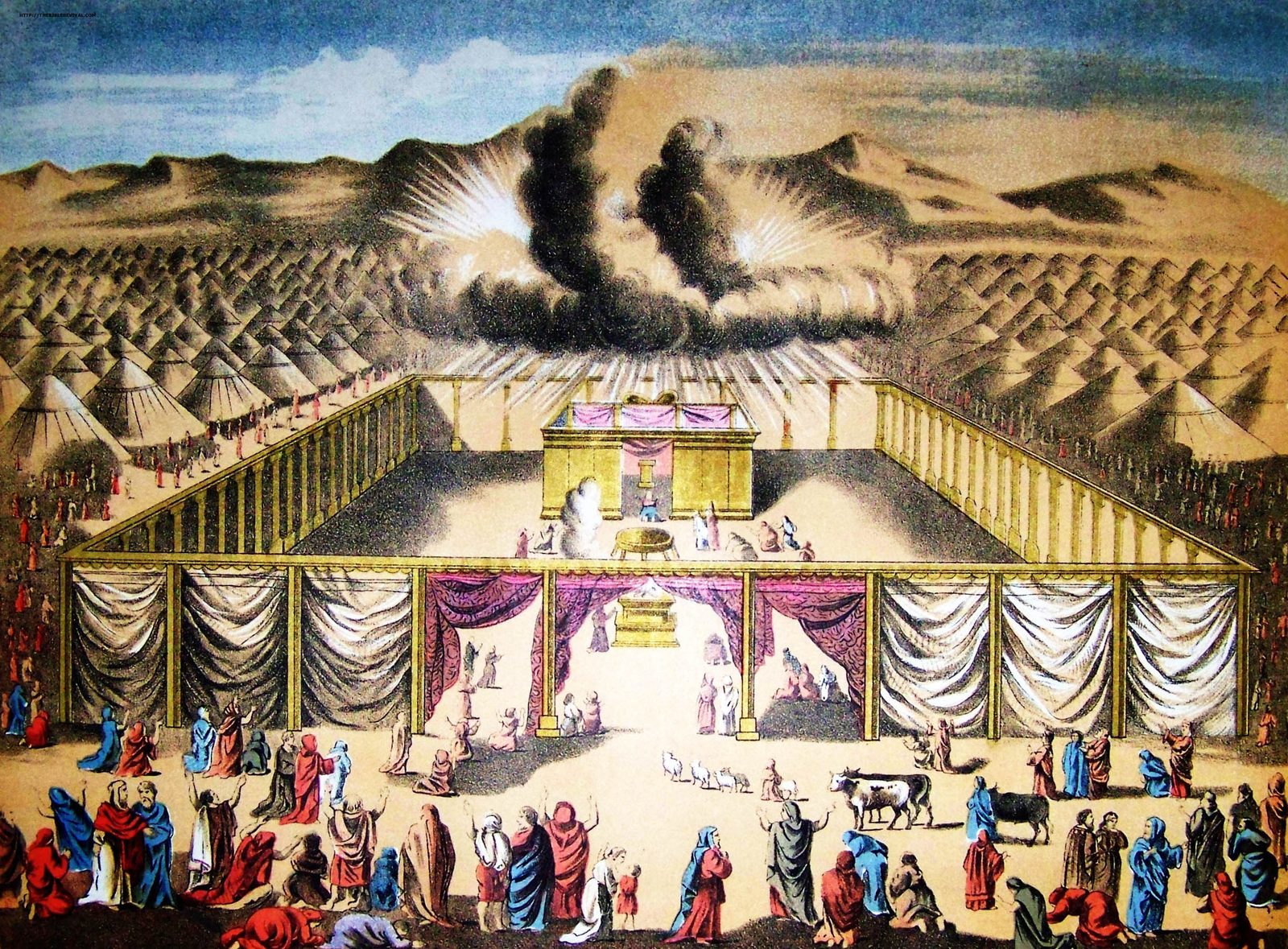
When all the Israelites saw the fire coming down and the glory of the LORD above the temple, they bowed down on the pavement with their faces to the ground, and they worshiped and…
Reached by 2 separate paths from here.
- Ezra 3:11
And they sang responsively with praise and thanksgiving to the LORD: “For He is good; for His loving devotion to Israel endures forever.” Then all the people gave a great shout of praise to…
- Psalms 107:1
Give thanks to the LORD, for He is good; His loving devotion endures forever.
- Psalms 136:1–26
Give thanks to the LORD, for He is good. His loving devotion endures forever.
- Psalms 106:1
Through
Psalms 107:1Give thanks to the LORD, for He is good; His loving devotion endures forever.
it leads to
- 1 Chronicles 16:34
Give thanks to the LORD, for He is good; His loving devotion endures forever.
Reached by 2 separate paths from here.
- Psalms 105:1
Give thanks to the LORD, call upon His name; make known His deeds among the nations.
Reached by 2 separate paths from here.
- 1 Chronicles 16:34
Through
Psalms 106:1Hallelujah! Give thanks to the LORD, for He is good; His loving devotion endures forever.
it leads to
- 1 Thessalonians 5:18
Give thanks in every circumstance, for this is God’s will for you in Christ Jesus.
- 1 Thessalonians 5:18
Where this verse is studied
On this page
About Psalms
This page draws on 11 works. Open the list of works
This page draws on Adam Clarke, Commentary on the Bible; Albert Barnes, Notes, Explanatory and Practical, on the Old and New Testaments (1832-1869); Augustine of Hippo, Exposition on Psalm 100; Charles Spurgeon, The Treasury of David, Vol. 4; Charles Spurgeon, The Treasury of David; Charles Spurgeon, The Metropolitan Tabernacle Pulpit, Sermon No. 1197: “The Claims of God” (lightly modernized text, CCEL edition); Charles Spurgeon, The Metropolitan Tabernacle Pulpit, Sermon No. 1265: “The Eternal Truth of God” (lightly modernized text, CCEL edition); John Gill, Exposition of the Old Testament; John Gill, Exposition of the Old Testament (1748-1763); John Wesley, Explanatory Notes upon the Old Testament and Matthew Henry, Commentary on the Whole Bible.