
Psalms 100:4
in Psalms 100Enter His gates with thanksgiving and His courts with praise; give thanks to Him and bless His name.
BSB
The same verse in ASV and KJV ▾
ASV
Enter into his gates with thanksgiving, And into his courts with praise: Give thanks unto him, and bless his name.
KJV
Enter into his gates with thanksgiving, and into his courts with praise: be thankful unto him, and bless his name.
⋯
This verse in Psalms 100
Commentary
14 notes on this verseEnter into his gates with thanksgiving. To the occurrence of the word thanksgiving in this place the Psalm probably owes its Title — In all our public service the rendering of thanks must abound; it is like the incense of the temple, which filled the whole house with smoke. Expiatory sacrifices are ended, but those of gratitude will never be out of date. So long as we are receivers of mercy we must be givers of thanks. Mercy permits us to enter his gates; let us praise that mercy.
This site's exposition
Enter His gates with thanksgiving
on Psalms 100:4-5
Gates first, then courts, so the verse walks the worshiper in from the outside, thanksgiving at the gate and praise further in. Verse 5 gives the reason in three clauses: the LORD is good, He keeps His loving devotion forever, and His faithfulness holds for every generation.
The record, by era
The Church Fathers2 voices
"For the Lord is pleasant" [Psalm 100:4]. Think not that you faint in praising Him. Your praise of Him is like food: the more ye praise Him, the more ye acquire strength, and He whom you praise becomes the more sweet.
"For the Lord is pleasant" [Psalm 100:4]. Think not that you faint in praising Him. Your praise of Him is like food: the more ye praise Him, the more ye acquire strength, and He whom you praise becomes the more sweet.
The Puritans and the Awakening3 voices
), that we should attend upon him among his servants, and keep there where he keeps court. In all acts of religious worship, whether in secret or in our families, we come into God's presence, and serve him; but it is in public worship especially that we enter into his gates and into his courts.
quarantine:debris (2026-07-29) — leading-punctuation+unbalanced-parens
15 ), for it is the work of angels. In every thing give thanks, in every ordinance, as well as in every providence. The matter of praise, and motives to it, are very important,
quarantine:debris (2026-07-29) — leading-citation-number+unbalanced-parens
Enter into his gates with thanksgiving,....
7 more voices on this verse
The Puritans and the Awakening1 voice
Note, Knowledge is the mother of devotion and of all obedience: blind sacrifices will never please a seeing God. "Know it; consider and apply it, and then you will be more close and constant, more inward and serious, in the worship of him." Let us know then these seven things concerning the Lord Jehovah, with whom we have to do in all the acts of religious worship:-- 1.
The Nineteenth Century6 voices
A commentator
Jamieson, Fausset & Brown1802–1910
Commentary Critical and Explanatory on the Whole Bible (1871)
proposed
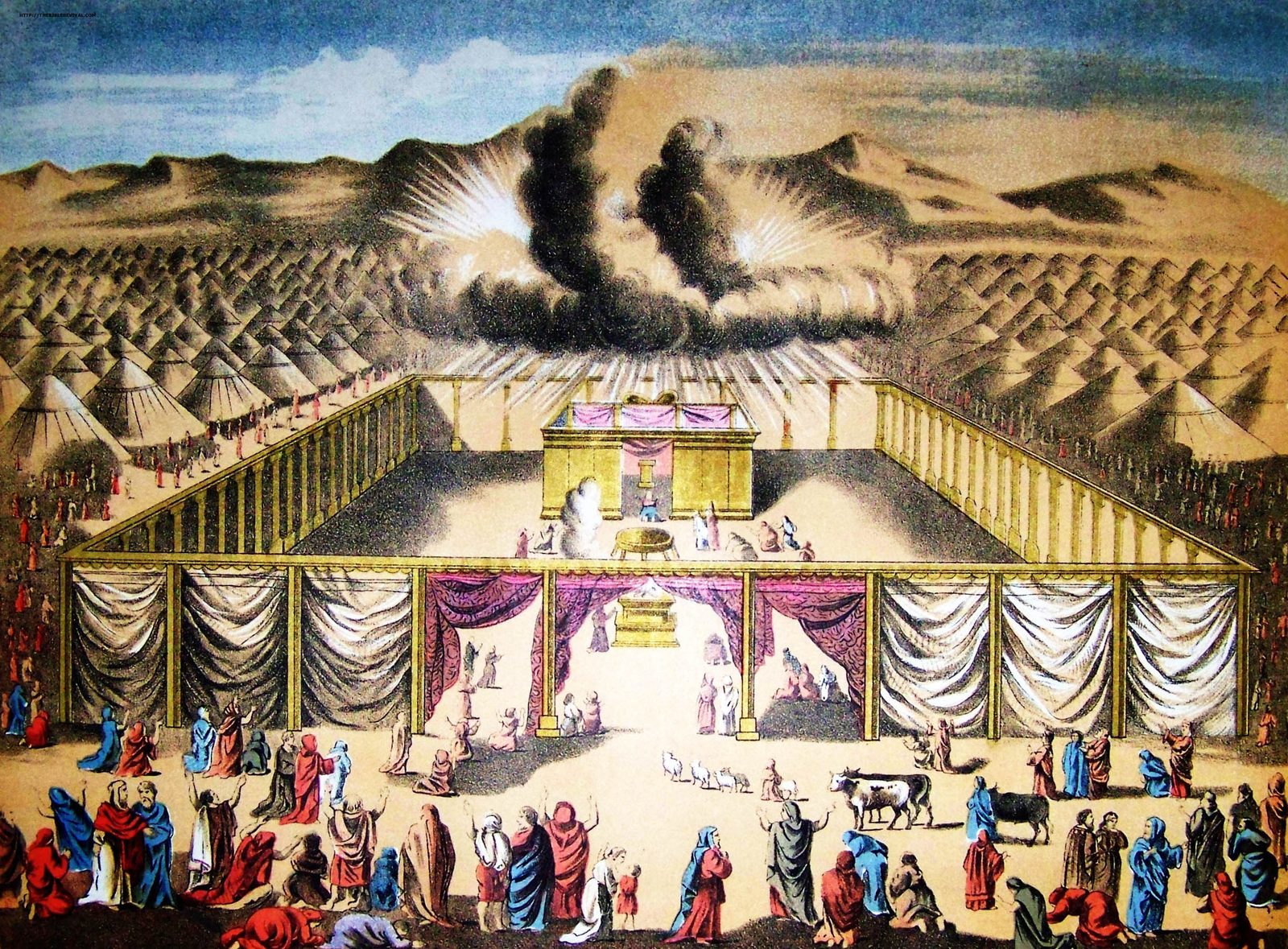
Join joyfully in His public worship. The terms are, of course, figurative (compare Ps 84:2; Enter--or, "Come with solemnity" (Ps 95:6).
quarantine:debris (2026-07-29) — unbalanced-parens
Enter into his gates with thanksgiving. To the occurrence of the word thanksgiving in this place the Psalm probably owes its Title — In all our public service the rendering of thanks must abound; it is like the incense of the temple, which filled the whole house with smoke. Expiatory sacrifices are ended, but those of gratitude will never be out of date. So long as we are receivers of mercy we must be givers of thanks. Mercy permits us to enter his gates; let us praise that mercy. What better subjcct for our thoughts in God's own house than the Lord of the house. And into his courts with praise. Into whatever court of the Lord you may enter, let your admission be the subject of praise: thanks be to God, the innermost court is now open to believers, and we enter into that which is within the veil; it is incumbent upon us that we acknowledge the high privilege by our songs. Be thankful unto him. Let the praise be in your heart as well as on your tongue, and let it all be for him to whom it all belongs. And bless his name. He blessed you, bless him in return; bless his name, his character, his person. Whatever he does, be sure that you bless him for it; bless him when he takes away as well as when he gives; bless him as long as you live, under all circumstances; bless him in all his attributes, from whatever point of view you consider him.
BRETHREN, it is a trick of Satan to distract us from the most important and vital matters by the suggestion of trivial considerations. When the best blessings are asking for our acceptance, he will bring the most trivial things into our minds. He will fill our eyes with dust to prevent our looking to the bronze serpent for healing. From the preaching of Jesus he endeavored to distract human attention by debates upon the tithing of mint and anise and cumin—the making broad of the borders of one's garments, the wearing of phylacteries—the straining out of gnats, and I know not what else. He followed this method at Jacob's Well. When our Lord spoke to the woman about Living Water and the salvation of her soul, the evil spirit prompted her to ask concerning Gerizim and Zion—"Our fathers worshipped in this mountain, and You say that in Jerusalem men ought to worship." With this same art Satan still works. It should be our business, not being ignorant of the devices of the enemy, to be more than a match for him by breaking away from all vain jangling and trivial questions. We need to go to the foundational Truths of God, the cornerstones of faith, the realities of life everlasting, the vitalities of godliness. These lie all Godward and Christward, away from the shadow land of ceremonies and vain speculations. We must go to the eternal rock and everlasting hills whose golden tops are, to the eyes of faith, bright with the blessed daybreak. Let us get there, this morning, from the vanities of earth—and may the breath of the Spirit speed us toward the realities of Heaven—so to things essential we may give the attention which is essential to them.
BRETHREN, it is a trick of Satan to distract us from the most important and vital matters by the suggestion of trivial considerations. When the best blessings are asking for our acceptance, he will bring the most trivial things into our minds. He will fill our eyes with dust to prevent our looking to the bronze serpent for healing.
Enter into his gates with thanksgiving - Publicly worship God; and when ye come to the house of prayer, be thankful that you have such a privilege; and when you enter his courts, praise him for the permission. The word בתודה bethodah, which we render with thanksgiving, is properly with the confession-offering or sacrifice. See on Psa 100:1-5 (note). Bless his name - Bless Jehovah, that he is your Elohim; see Psa 100:3. In our liturgic service we say, “Speak good of his name;” we cannot do otherwise; we have nothing but good to speak of our God.
A commentator
Albert Barnes1798–1870
Notes, Explanatory and Practical, on the Old and New Testaments (1832-1869)
proposed
Enter into his gates ... - The gates which lead to his temple, or to the place of public worship. Into his courts ... - The “courts” were literally the open spaces which surrounded the tabernacle or temple. It was in these that worship was celebrated, and not in the tabernacle or temple. See Psa 65:4, note; Psa 84:2, note; Psa 92:13, note. Be thankful unto him - That is, Offer thanksgiving and praise. Come before him with a grateful heart. See the notes at Psa 50:14. Bless his name - Bless him; praise him; ascribe honor to him; acknowledge him as God.
How the passage was read
What the Jewish commentators add
On the verses either side of this one
and until generation after generation His faith will endure. Every expression of truth (אמת) and faith (אמונה) means the realization of a promise, that He makes true and assures His promise.
This section is reception history: how the passage was read and kept in the Jewish tradition. Where a reading parts from an essential of the Christian faith, the section says so at that point.
Texts and citation data: Sefaria; each excerpt follows its version’s licence. 4 further sources are cited on this chapter that carry no English text this site may quote or only restate the verse.
The words behind it
9 Hebrew wordsEvery Hebrew word of this verse in the order it stands, with what it means and the door to its own study. The last column counts the times a word stands in the whole Bible: the rarer the word, the more the places it appears belong together.
| Hebrew | Sound | Meaning | Word study | In the Bible |
|---|---|---|---|---|
| בֹּ֤אוּ | bou | go | H935 → | 2568 times |
| שְׁעָרָ֨יו׀ | shearav | gates his | H8179 → | 374 times |
| בְּתוֹדָ֗ה | betodah | with thanksgiving | H8426 → | 31 times |
| חֲצֵרֹתָ֥יו | chatzerotav | courts his | H2691 → | 191 times |
| בִּתְהִלָּ֑ה | bithilah | with praise | H8416 → | 56 times |
| הֽוֹדוּ־ | hodu- | give thanks | H3034 → | 114 times |
| ל֝֗וֹ | lo | to him | ||
| בָּרֲכ֥וּ | barakhu | bless | H1288 → | 330 times |
| שְׁמֽוֹ׃ | shemo | name his | H8034 → | 864 times |
בֹּ֤אוּgo
bouH935 →2568 times
שְׁעָרָ֨יו׀gates his
shearavH8179 →374 times
בְּתוֹדָ֗הwith thanksgiving
betodahH8426 →31 times
חֲצֵרֹתָ֥יוcourts his
chatzerotavH2691 →191 times
בִּתְהִלָּ֑הwith praise
bithilahH8416 →56 times
הֽוֹדוּ־give thanks
hodu-H3034 →114 times
ל֝֗וֹto him
lo
בָּרֲכ֥וּbless
barakhuH1288 →330 times
שְׁמֽוֹ׃name his
shemoH8034 →864 times
A shaded row is a word that stands 400 times or fewer in the Bible.
The walk
8 stopsEach card is a verse this one points to, and under it the verses that one points to in turn. Where several paths arrive at the same place, that place is listed first: the text keeps returning to it.
Through
Hebrews 13:15Through Jesus, therefore, let us continually offer to God a sacrifice of praise, the fruit of lips that confess His name.
it leads to
- Psalms 107:21–22
Let them give thanks to the LORD for His loving devotion and His wonders to the sons of men.
- Psalms 50:14
Sacrifice a thank offering to God, and fulfill your vows to the Most High.
- Romans 12:1
Therefore I urge you, brothers, on account of God’s mercy, to offer your bodies as living sacrifices, holy and pleasing to God, which is your spiritual service of worship.
- Psalms 145:1–21
I will exalt You, my God and King; I will bless Your name forever and ever.
- 1 Peter 2:5
you also, like living stones, are being built into a spiritual house to be a holy priesthood, offering spiritual sacrifices acceptable to God through Jesus Christ.
- Psalms 107:21–22
Through
1 Chronicles 29:13Now therefore, our God, we give You thanks, and we praise Your glorious name.
it leads to
- 2 Corinthians 9:15
Thanks be to God for His indescribable gift!
- Psalms 106:1
Hallelujah! Give thanks to the LORD, for He is good; His loving devotion endures forever.
- 2 Corinthians 8:16
But thanks be to God, who put into the heart of Titus the same devotion I have for you.
- 2 Corinthians 9:15
Where this verse is studied
On this page
About Psalms
This page draws on 9 works. Open the list of works
This page draws on Adam Clarke, Commentary on the Bible; Albert Barnes, Notes, Explanatory and Practical, on the Old and New Testaments (1832-1869); Augustine of Hippo, Exposition on Psalm 100; Charles Spurgeon, The Treasury of David, Vol. 4; Charles Spurgeon, The Metropolitan Tabernacle Pulpit, Sermon No. 1197: “The Claims of God” (lightly modernized text, CCEL edition); Jamieson, Fausset & Brown, Commentary Critical and Explanatory on the Whole Bible; John Gill, Exposition of the Old Testament (1748-1763); John Wesley, Explanatory Notes upon the Old Testament and Matthew Henry, Commentary on the Whole Bible.