
Psalms 92:14
in Psalms 92In old age they will still bear fruit; healthy and green they will remain,
BSB
The same verse in ASV and KJV ▾
ASV
They shall still bring forth fruit in old age; They shall be full of sap and green:
KJV
They shall still bring forth fruit in old age; they shall be fat and flourishing;
⋯
This verse in Psalms 92
Commentary
11 notes on this verseThey shall still bring forth fruit in old age. Nature decays but grace thrives. Fruit, as far as nature is concerned, belongs to days of vigour; but in the garden of grace, when plants are weak in themselves, they become strong in the Lord, and abound in fruit acceptable with God.
This site's exposition
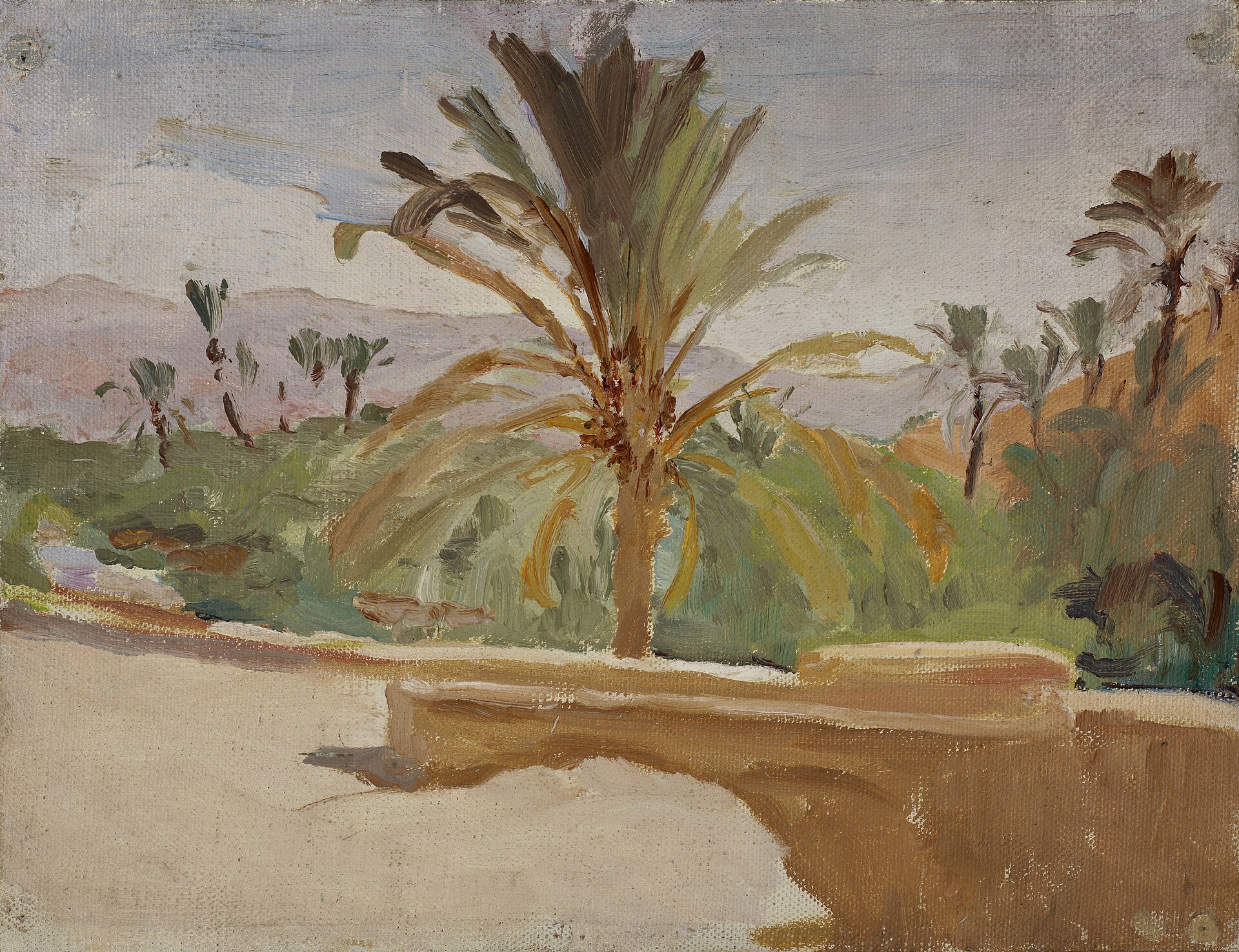
flourish like a palm tree
on Psalms 92:12-15
Two trees answer the grass of verse 7, a palm and a cedar of Lebanon. Verse 13 has them planted in the house of the LORD, and verse 14 keeps them fruitful in old age, healthy and green. The last words call the LORD upright, and a Rock.
The record, by era
The Church Fathers1 voice
They shall still be multiplied in a plentiful old age. Happy is he who grows daily, who grows old in age, and grows old also in virtues.
The Puritans and the Awakening3 voices
The proper work of the sabbath is praising God; every sabbath day must be a thanksgiving-day; and the other services of the day must be in order to this, and therefore must by no means thrust this into a corner. One of the Jewish writers refers it to the kingdom of the Messiah, and calls it, A psalm or song for the age to come, which shall be all sabbath.
The comforts of God's Spirit, and the joys of his salvation, shall be a refreshing oil to the hoary heads that are found in the way of righteousness. They are here represented as trees of righteousness, Isa. lxi. Observe, [1.] The good place they are fixed in; they are planted in the house of the Lord,
They shall still bring forth fruit in old age,....
The Nineteenth Century1 voice
They shall still bring forth fruit in old age. Nature decays but grace thrives. Fruit, as far as nature is concerned, belongs to days of vigour; but in the garden of grace, when plants are weak in themselves, they become strong in the Lord, and abound in fruit acceptable with God. Happy they who can sing this Sabbath Psalm, enjoying the rest which breathes through every verse of it; no fear as to the future can distress them, for their evil days, when the strong man faileth, are the subject of a gracious promise, and therefore they await them with quiet expectancy. Aged believers possess a ripe experience, and by their mellow tempers and sweet testimonies they feed many. Even if bedridden, they bear the fruit of patience; if poor and obscure, their lowly and contented spirit becomes the admiration of those who know how to appreciate modest worth. Grace does not leave the saint when the keepers of the house do tremble; the promise is still sure though the eyes can no longer read it; the bread of heaven is fed upon when the grinders fail; and the voice of the Spirit in the soul is still melodious when the daughters of music are brought low. Blessed be the Lord for this! Because even to hoar hairs he is the I AM, who made his people, he therefore bears and carries them. They shall be fat and flourishing. They do not drag out a wretched, starveling existence, but are like trees full of sap, which bear luxuriant foliage. God does not pinch his poor servants, and diminish their consolations when their infirmities grow upon them; rather does he see to it that they shall renew their strength, for their mouths shall be satisfied with his own good things. Such an one as Paul the aged would not ask our pity, but invite our sympathetic gratitude; however feeble his outward man may be, his inner man is so renewed day by day that we may well envy his perennial peace.
4 more voices on this verse
The Nineteenth Century4 voices
THESE verses occur at the close of a Psalm for the Sabbath over which there rests a Sabbatic glory of perfect calm, of hallowed peace. Amidst the business and bustle of daily life the great trouble of the Psalmist was the prosperity of the wicked, but it does not trouble him at all when he enters the sanctuary to keep the holy day. He then looks upon the ungodly who prosper in the world as so much flowering grass in their beauty and he beholds them cut down and utterly destroyed. And it is meet that a Psalm for the Sabbath should be calm and peaceful, cloudless and far-seeing. If on any day we see things in their right light and our views extend farther than at other times, surely it should be on the day of sacred rest. I know a friend who wished to take a house in Newcastle. It stood on an elevated position and the landlord, who wished to have him for a tenant, took him to the attic of the house and said, "What a view there is from this window! Do you know," he asked, "that on Sundays you can see Durham Cathedral?" "On Sundays!" said my friend, with a look of surprise, "And why not on other days?" "Well," said the landlord, "on Sundays there is less smoke and so you can see farther." And, as it is in the natural world, so it should always be in the spiritual—less of the smoke of this world—less of the dust and the care of life and, therefore, a clearer vision of the things which are beyond—things which God reveals to spiritual eyes! Read and sing this Psalm often and may your heart constantly be in that sweet restful state.
THESE verses occur at the close of a Psalm for the Sabbath over which there rests a Sabbatic glory of perfect calm, of hallowed peace. Amidst the business and bustle of daily life the great trouble of the Psalmist was the prosperity of the wicked, but it does not trouble him at all when he enters the sanctuary to keep the holy day. He then looks upon the ungodly who prosper in the world as so much flowering grass in their beauty and he beholds them cut down and utterly destroyed.
They shall still bring forth fruit in old age - They shall continue to grow in grace, and be fruitful to the end of their lives. It is a rare case to find a man in old age full of faith, love, and spiritual activity.
A commentator
Albert Barnes1798–1870
Notes, Explanatory and Practical, on the Old and New Testaments (1832-1869)
proposed
They shall still bring forth fruit in old age - As a tree that is carefully planted and cultivated may be expected to live long, and to bear fruit even when it is old. It is true that such a tree may be cut down; or that it may be blown down by winds and tempests; or that it may be unproductive, but as a general rule, and as laying the foundation of a reasonable hope, such a tree may be expected to live long, and to produce fruit even when it is old. So of one devoted early to God, and trained up under the influences of religion. The care, the culture, the habits of temperance, of industry, of moderation, and of sobriety so formed, are favorable to length of days, and lay the foundation for usefulness when old age comes. An aged man should be useful. He should feel that whatever wisdom he may possess as the result of long study and experience, belongs to God and to truth; that one great reason for sparing him is that he may be useful; that the world needs the benefit of his counsel and his prayers; that his life is lengthened out not for his own ease or enjoyment, but that virtue and piety may be extended in the world by all the influence which he can bring to bear upon it in advanced years. It may be added that, as a matter of fact, those who are thus trained and are thus preserved, are useful in old age. No one thus spared need be useless; perhaps almost none are. There is something appropriate for old men to do, as there is for the young and the middle-aged; and it should be the object of an aged Christian to find out what that is, and to do it. The word rendered “old age means literally grey or hoary hair.” They shall be fat - The meaning is, that they shall be vigorous, or have the appearance of vigor and health. And flourishing - Margin, as in Hebrew, “green.” This image is taken from a tree, as if it were still green in old age, or gave no indications of decay.
How the passage was read
What the Jewish commentators add
Planted The righteous will be [planted] in the house of the Lord.
1 more on this passage, in their own words ▾
The righteous one flourishes like the palm, etc. Like the palm that produces fruit, and like the cedar insofar as its trunk renews itself.
This section is reception history: how the passage was read and kept in the Jewish tradition. Where a reading parts from an essential of the Christian faith, the section says so at that point.
Texts and citation data: Sefaria; each excerpt follows its version’s licence. 6 further sources are cited on this chapter that carry no English text this site may quote or only restate the verse.
The words behind it
6 Hebrew wordsEvery Hebrew word of this verse in the order it stands, with what it means and the door to its own study. The last column counts the times a word stands in the whole Bible: the rarer the word, the more the places it appears belong together.
| Hebrew | Sound | Meaning | Word study | In the Bible |
|---|---|---|---|---|
| ע֭וֹד | od | still | H5750 → | 490 times |
| יְנוּב֣וּן | yenuvun | they will bear fruit ! | H5107 → | |
| בְּשֵׂיבָ֑ה | beseivah | in old age | H7872 → | |
| דְּשֵׁנִ֖ים | deshenim | fat | H1879 → | |
| וְרַֽעֲנַנִּ֣ים | veraananim | and fresh | H7488 → | 20 times |
| יִהְיֽוּ׃ | yihyu | they will be | H1961 → | 3559 times |
ע֭וֹדstill
odH5750 →490 times
יְנוּב֣וּןthey will bear fruit !
yenuvunH5107 →
בְּשֵׂיבָ֑הin old age
beseivahH7872 →
דְּשֵׁנִ֖יםfat
deshenimH1879 →
וְרַֽעֲנַנִּ֣יםand fresh
veraananimH7488 →20 times
יִהְיֽוּ׃they will be
yihyuH1961 →3559 times
A shaded row is a word that stands 400 times or fewer in the Bible.
The walk
8 stopsEach card is a verse this one points to, and under it the verses that one points to in turn. Where several paths arrive at the same place, that place is listed first: the text keeps returning to it.
Through
Isaiah 46:4Even to your old age, I will be the same, and I will bear you up when you turn gray. I have made you, and I will carry you; I will sustain you and…
it leads to
- Psalms 71:18
Even when I am old and gray, do not forsake me, O God, until I proclaim Your power to the next generation, Your might to all who are to come.
- Psalms 48:14
For this God is our God forever and ever; He will be our guide even till death.
- Hebrews 13:8
Jesus Christ is the same yesterday and today and forever.
- James 1:17
Every good and perfect gift is from above, coming down from the Father of the heavenly lights, with whom there is no change or shifting shadow.
- Psalms 71:18
Through
Jeremiah 17:8He is like a tree planted by the waters that sends out its roots toward the stream. It does not fear when the heat comes, and its leaves are always green. It does not…
it leads to
- Psalms 1:3
He is like a tree planted by streams of water, yielding its fruit in season, whose leaf does not wither, and who prospers in all he does.
- Isaiah 58:11
The LORD will always guide you; He will satisfy you in a sun-scorched land and strengthen your frame. You will be like a well-watered garden, like a spring whose waters never fail.
- Ezekiel 47:12
Along both banks of the river, fruit trees of all kinds will grow. Their leaves will not wither, and their fruit will not fail. Each month they will bear fruit, because the water from…
- Ezekiel 31:4–10
The waters made it grow; the deep springs made it tall, directing their streams all around its base and sending their channels to all the trees of the field.
- Psalms 1:3
Where this verse is studied
On this page
About Psalms
This page draws on Adam Clarke, Commentary on the Bible; Albert Barnes, Notes, Explanatory and Practical, on the Old and New Testaments (1832-1869); Charles Spurgeon, The Treasury of David, Vol. 4; Charles Spurgeon, The Treasury of David; Charles Spurgeon, The Metropolitan Tabernacle Pulpit, Sermon No. 1365: “The Trees in God's Courts” (lightly modernized text, CCEL edition); Jerome, Homily 21, on Psalm 91; John Gill, Exposition of the Old Testament (1748-1763) and Matthew Henry, Commentary on the Whole Bible.