
Psalms 92:13
in Psalms 92Planted in the house of the LORD, they will flourish in the courts of our God.
BSB
The same verse in ASV and KJV ▾
ASV
They are planted in the house of Jehovah; They shall flourish in the courts of our God.
KJV
Those that be planted in the house of the Lord shall flourish in the courts of our God.
⋯
This verse in Psalms 92
Commentary
15 notes on this versePlanted in the house of the Lord, in the courts of our God they shall flourish. In one place we are planted, in another we flourish: here we are planted, in the kingdom of heaven we shall flourish. "I," he says, "planted, Apollos watered, but the Lord gave the increase."
This site's exposition
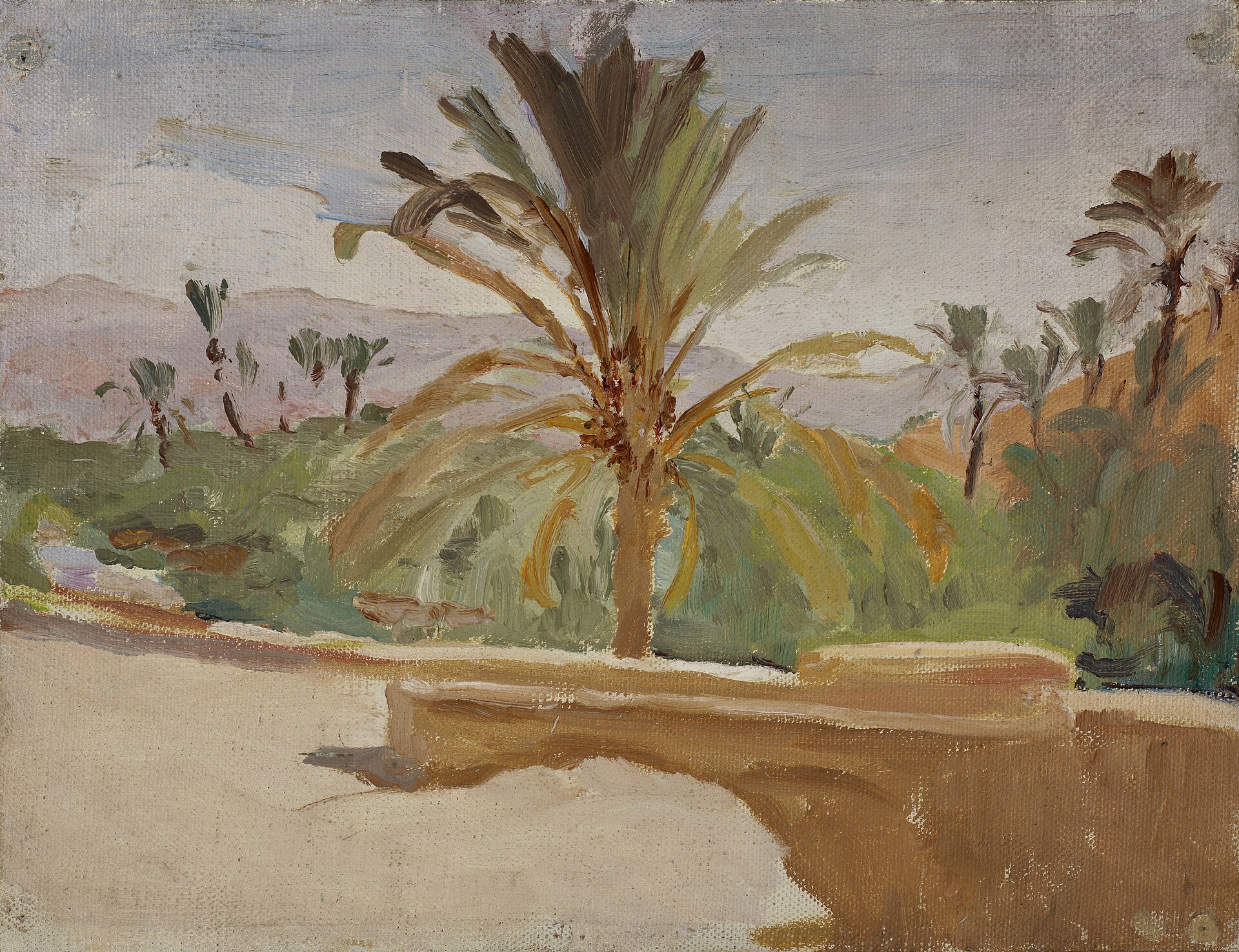
flourish like a palm tree
on Psalms 92:12-15
Two trees answer the grass of verse 7, a palm and a cedar of Lebanon. Verse 13 has them planted in the house of the LORD, and verse 14 keeps them fruitful in old age, healthy and green. The last words call the LORD upright, and a Rock.
The record, by era
The Church Fathers3 voices
An old man used to say, "It is written, 'The righteous one shall blossom like the palm tree.' " Now these words make known that the soul acquires height, and straightness of stature and sweetness from beautiful deeds. But there is another quality that is …
"Such as are planted in the house of the Lord, shall flourish in the courts of the house of our God" [Psalm 92:12]. "They shall be yet more increased in fruitful old age, and shall be quiet, that they may show it forth" [Psalm 92:13]. Such is the Sabbath, which but a little while ago I commended unto you, whence the Psalm hath its title. "They shall be quiet, that they may show it forth." Wherefore are they quiet that show it forth? The grass of sinners moveth them not: the cedar and palm-tree not even in tempests are bent. They are therefore quiet, that they may show it forth: and with reason, since at present they must show it forth even unto men who mock at it. O wretched men, who are lovers of the world! Those who are planted in the house of the Lord, show it to you: those who praise the Lord with song and lute, in word and deed, show it forth to you, and tell you. Be not seduced by the prosperity of the wicked, admire not the flower of grass: admire not those who are happy only for a season, but miserable unto eternity. ...If ye wish to flourish like a palm-tree, and to spread abroad like a cedar in Libanus, and not to wither like grass when the sun is hot; as those who appear to flourish when the sun is absent. If then ye wish not to be as grass, but as the palm-tree and the cedar, what will ye show forth? "How true the Lord my strength is: and that there is no unrighteousness in Him." How is it there is no unrighteousness? A man committeth so great crimes; he is well, he hath sons, a plentiful house, he is full of pride, is exalted by his honours, is revenged on his enemies, and doeth every evil deed; another man, innocent, attending to his own affairs, not robbing another's goods, doing nothing against any one, suffereth in chains, in prison, tosseth and sigheth in poverty. How is it that there is no unrighteousness in Him? […]
Accordingly, it is not proper to adore God outside of this holy court, but only within it, lest anyone who is outside of it and is attracted by those outside of it might lose the right to be in the court of the Lord. Many assume an attitude of prayer, but they are not in the court because of the wandering of their mind and the distraction of their thoughts coming from vain solicitude. It is possible to consider the court in a still loftier sense as the heavenly way of life.
The Puritans and the Awakening2 voices
The proper work of the sabbath is praising God; every sabbath day must be a thanksgiving-day; and the other services of the day must be in order to this, and therefore must by no means thrust this into a corner. One of the Jewish writers refers it to the kingdom of the Messiah, and calls it, A psalm or song for the age to come, which shall be all sabbath.
The trees of righteousness do not grow of themselves; they are planted, not in common soil, but in paradise, in the house of the Lord. Trees are not usually planted in a house; but God's trees are said to be planted in his house because it is from his grace, by his word and Spirit, that they receive all the sap and virtue that keep them alive and make them fruitful.
8 more voices on this verse
The Puritans and the Awakening2 voices
Planted - Whom God by his gracious providence has fixed there. The house - In its courts; he means in the church of God, whereof all good men are living members.
Those that be planted in the house of the Lord,....
The Nineteenth Century6 voices
Those that be planted in the house of the Lord shall flourish in the courts of our God. In the courtyards of Oriental houses trees were planted, and being thoroughly screened, they would be likely to bring forth their fruit to perfection in trying seasons; even so, those who by grace are brought into communion with the Lord, shall be likened to trees planted in the Lord's house, and shall find it good to their souls. No heart has so much joy as that which abides in the Lord Jesus. Fellowship with the stem begets fertility in the branches.
Those that be planted in the house of the Lord shall flourish in the courts of our God. In the courtyards of Oriental houses trees were planted, and being thoroughly screened, they would be likely to bring forth their fruit to perfection in trying seasons; even so, those who by grace are brought into communion with the Lord, shall be likened to trees planted in the Lord's house, and shall find it good to their souls. No heart has so much joy as that which abides in the Lord Jesus. Fellowship with the stem begets fertility in the branches. If a man abide in Christ he brings forth much fruit. Those professors who are rooted to the world do not flourish; those who send forth their roots into the marshes of frivolous pleasure cannot be in a vigorous condition; but those who dwell in habitual fellowship with God shall become men of full growth, rich in grace, happy in experience, mighty in influence, honoured and honourable. Much depends upon the soil in which a tree is planted; everything, in our case, depends upon our abiding in the Lord Jesus, and deriving all our supplies from him. If we ever really grow in the courts of the Lord's house we must be planted there, for no tree grows in God's garden self sown; once planted of the Lord, we shall never be rooted up, but in his courts we shall take root downward, and bring forth fruit upward to his glory for ever.
THESE verses occur at the close of a Psalm for the Sabbath over which there rests a Sabbatic glory of perfect calm, of hallowed peace. Amidst the business and bustle of daily life the great trouble of the Psalmist was the prosperity of the wicked, but it does not trouble him at all when he enters the sanctuary to keep the holy day. He then looks upon the ungodly who prosper in the world as so much flowering grass in their beauty and he beholds them cut down and utterly destroyed. And it is meet that a Psalm for the Sabbath should be calm and peaceful, cloudless and far-seeing. If on any day we see things in their right light and our views extend farther than at other times, surely it should be on the day of sacred rest. I know a friend who wished to take a house in Newcastle. It stood on an elevated position and the landlord, who wished to have him for a tenant, took him to the attic of the house and said, "What a view there is from this window! Do you know," he asked, "that on Sundays you can see Durham Cathedral?" "On Sundays!" said my friend, with a look of surprise, "And why not on other days?" "Well," said the landlord, "on Sundays there is less smoke and so you can see farther." And, as it is in the natural world, so it should always be in the spiritual—less of the smoke of this world—less of the dust and the care of life and, therefore, a clearer vision of the things which are beyond—things which God reveals to spiritual eyes! Read and sing this Psalm often and may your heart constantly be in that sweet restful state.
THESE verses occur at the close of a Psalm for the Sabbath over which there rests a Sabbatic glory of perfect calm, of hallowed peace. Amidst the business and bustle of daily life the great trouble of the Psalmist was the prosperity of the wicked, but it does not trouble him at all when he enters the sanctuary to keep the holy day. He then looks upon the ungodly who prosper in the world as so much flowering grass in their beauty and he beholds them cut down and utterly destroyed.
Those that be planted in the house of the Lord - I believe the Chaldee has the true meaning here: “His children shall be planted in the house of the sanctuary of the Lord, and shall flourish in the courts of our God.” As these trees flourish in their respective soils and climates, so shall the righteous in the ordinances of God. I do not think there is any allusion to either palm-trees or cedars, planted near the tabernacle or temple.
A commentator
Albert Barnes1798–1870
Notes, Explanatory and Practical, on the Old and New Testaments (1832-1869)
proposed
Those that be planted in the house of the Lord - As if plants were reared up in the house of God. The same image, under the idea of the olive tree, occurs in Psa 52:8. See the notes at that verse. The passage here may refer particularly to those who have been trained up in connection with the church; young plants set out in the sanctuary, and cultivated until they have reached their growth. Shall flourish in the courts of our God - That is, Having been planted there, they will grow there; they will send out their boughs there; they will produce fruit there. The “courts” of the house of God were properly the areas or open spaces around the tabernacle or the temple (see the notes at Mat 21:12); but the word came also to denote the tabernacle or the temple itself, or to designate a place where God was worshipped. It has this meaning here. The passage affords an encouragement to parents to train up their children in attendance on the ordinances of public worship; and it shows the advantage of having been born in the church, and of having been trained up in it - an advantage which no one can fully appreciate. The passage may also be regarded as furnishing a proof of what will be the result of being thus “planted” and nurtured in connection with the church, inasmuch as trees carefully planted and cultivated are expected to produce more and better fruit than those which grow wild.
How the passage was read
What the Jewish commentators add
The righteous one flourishes like the palm, etc. Like the palm that produces fruit, and like the cedar insofar as its trunk renews itself.
1 more on this passage, in their own words ▾
Planted The righteous will be [planted] in the house of the Lord.
This section is reception history: how the passage was read and kept in the Jewish tradition. Where a reading parts from an essential of the Christian faith, the section says so at that point.
Texts and citation data: Sefaria; each excerpt follows its version’s licence. 6 further sources are cited on this chapter that carry no English text this site may quote or only restate the verse.
The words behind it
6 Hebrew wordsEvery Hebrew word of this verse in the order it stands, with what it means and the door to its own study. The last column counts the times a word stands in the whole Bible: the rarer the word, the more the places it appears belong together.
| Hebrew | Sound | Meaning | Word study | In the Bible |
|---|---|---|---|---|
| שְׁ֭תוּלִים | shetulim | [they are] planted | H8362 → | |
| בְּבֵ֣ית | beveit | in [the] house of | H1004 → | 2046 times |
| יְהוָ֑ה | yahweh | Yahweh | H3068 → | 6520 times |
| בְּחַצְר֖וֹת | bechatzrot | in [the] courts of | H2691 → | 191 times |
| אֱלֹהֵ֣ינוּ | ʾeloheinu | God our | H430 → | 2601 times |
| יַפְרִֽיחוּ׃ | yafrichu | they will flourish | H6524 → | 36 times |
שְׁ֭תוּלִים[they are] planted
shetulimH8362 →
בְּבֵ֣יתin [the] house of
beveitH1004 →2046 times
יְהוָ֑הYahweh
yahwehH3068 →6520 times
בְּחַצְר֖וֹתin [the] courts of
bechatzrotH2691 →191 times
אֱלֹהֵ֣ינוּGod our
ʾeloheinuH430 →2601 times
יַפְרִֽיחוּ׃they will flourish
yafrichuH6524 →36 times
A shaded row is a word that stands 400 times or fewer in the Bible.
The walk
8 stopsEach card is a verse this one points to, and under it the verses that one points to in turn. Where several paths arrive at the same place, that place is listed first: the text keeps returning to it.
Through
2 Peter 3:18But grow in the grace and knowledge of our Lord and Savior Jesus Christ. To Him be the glory both now and to the day of eternity. Amen.
it leads to
- Colossians 1:10
so that you may walk in a manner worthy of the Lord and may please Him in every way: bearing fruit in every good work, growing in the knowledge of God,
- Ephesians 4:15
Instead, speaking the truth in love, we will in all things grow up into Christ Himself, who is the head.
- Colossians 1:10
Through
Isaiah 61:3to console the mourners in Zion—to give them a crown of beauty for ashes, the oil of joy for mourning, and a garment of praise for a spirit of despair. So they will be…
it leads to
- Psalms 30:11
You turned my mourning into dancing; You peeled off my sackcloth and clothed me with joy,
- Jeremiah 17:7–8
But blessed is the man who trusts in the LORD, whose confidence is in Him.
- John 16:20
Truly, truly, I tell you, you will weep and wail while the world rejoices. You will grieve, but your grief will turn to joy.
- Psalms 30:11
Through
Ephesians 3:17so that Christ may dwell in your hearts through faith. Then you, being rooted and grounded in love,
it leads to
- Colossians 2:7
rooted and built up in Him, established in the faith as you were taught, and overflowing with thankfulness.
- John 14:23
Jesus replied, “If anyone loves Me, he will keep My word. My Father will love him, and We will come to him and make Our home with him.
- 1 John 4:16
And we have come to know and believe the love that God has for us. God is love; whoever abides in love abides in God, and God in him.
- Colossians 2:7
Where this verse is studied
On this page
About Psalms
This page draws on 12 works. Open the list of works
This page draws on Adam Clarke, Commentary on the Bible; Albert Barnes, Notes, Explanatory and Practical, on the Old and New Testaments (1832-1869); Augustine of Hippo, Exposition on Psalm 92; Basil of Caesarea, HOMILIES ON THE PSALMS 13:3; Charles Spurgeon, The Treasury of David; Charles Spurgeon, The Treasury of David, Vol. 4; Charles Spurgeon, The Metropolitan Tabernacle Pulpit, Sermon No. 1365: “The Trees in God's Courts” (lightly modernized text, CCEL edition); Desert Fathers, SAYINGS OF THE FATHERS 186; Jerome, Homily 21, on Psalm 91; John Gill, Exposition of the Old Testament (1748-1763); John Wesley, Explanatory Notes upon the Old Testament and Matthew Henry, Commentary on the Whole Bible.