
Psalms 84:7
in Psalms 84They go from strength to strength, until each appears before God in Zion.
BSB
The same verse in ASV and KJV ▾
ASV
They go from strength to strength; Every one of them appeareth before God in Zion.
KJV
They go from strength to strength, every one of them in Zion appeareth before God.
⋯
This verse in Psalms 84
Commentary
17 notes on this verseIn the valley of tears, in the place which he has set. We read in the book of Judges, when the angel came and preached repentance to the people, saying, You have forsaken the Lord, and the Lord will forsake you; and when the people heard this they wept, and that place was called the Valley of Tears. We have recalled the old history, so that we might flee heresy. But by the valley of tears we can understand, spiritually, this present age.
This site's exposition
whose strength is in You
on Psalms 84:5-7
The blessing falls on the man already on the road, his strength in God and his heart set on the pilgrimage. Baca is a valley, and those who pass through it leave springs behind them, with the autumn rain filling the pools. They arrive stronger than they set out.
The record, by era
The Church Fathers3 voices
What then does God supply by His grace to him whom He taketh hold of to lead him on? He goes on to say: "He hath placed steps in his heart." ...Where does it place steps? "In his heart, in the valley of weeping" (ver. 6). So here thou hast for a winepress the valley of weeping, the very pious tears in tribulation are the new wine of those that love. ...They went forth "weeping," he says, "casting their seed." Therefore, by the grace of God may upward steps be placed in thy heart. Rise by loving. Hence the Psalm "of degrees" is called. ..."He hath placed steps of ascent to the place which He hath appointed" (ver. 7). Now we lament; whence proceed our lamentations, but from that place where the steps of our ascent are placed? Whence comes our lamentation, but from that cause wherefore the Apostle exclaimed that he was a wretched man, because he saw another law in his members, warring against the law in his mind? And whence does this proceed? From the penalty of sin. And we thought that we could easily be righteous as it were by our own strength, before we received the command; "but when the command came, sin revived; but I died," saith the Apostle. For a law was given to men, not such as could save them at once, but it was to show them in what severe sickness they were lying. ...But when sin was made manifest by the law given, sin was but increased, for it is both sin, and against the Law; "Sin," saith he, "taking occasion by the command, wrought in me all manner of concupiscence." What does he mean by "taking occasion by the law"? Having received the command, men tried as by their own strength to obey it; conquered by lust, they became guilty of transgression of this very command also. But what saith the Apostle? "Where sin abounded, grace hath much more abounded;" that is, the disease increased, the medicine became of more avail. […]
In the valley of tears, in the place which he has set. Where "in the valley" is said, it is necessary that we understand, by contrast, also the mountain. Therefore whoever arranges ascents in his heart, where has he been placed? In the valley of tears. Let us consider that we are in the valley: we are not on the mountain, we are not in paradise, in the height of paradise; but in the lowliness of the earth, the accursed earth, which brings forth for us thistles and thorns, which is the serpent's food, of which it is said to Adam, "You are earth, and to earth you shall go." As long, therefore, as we are in the valley of tears, we ought not to laugh, but to weep. For this reason the Lord also says: "Blessed are they who weep, for they themselves shall laugh." For the time being, therefore, we are in the valley of tears, and this world is a world of tears, not of joy. We ought not to laugh, since this world and this time is of tears, that other is of joy. In the valley of tears, in the place which he has set. What is it that he says, In the place which he has set? In the place, that is, in the valley of tears. In the place which he has set: God has set us for the contest, that we may always fight in this. This place, therefore, that is, the valley of tears, is not of peace, is not of security, but of contest and of wars. For indeed he who gave the law will give blessings. Someone may say: In the valley of tears, in the place which he has set for the struggle, that is, for the contest. Why has he set us for the struggle? Why has he willed us to fight? The psalmist himself has answered himself, and says: For this reason in this place he has willed us to fight, that he may be able to bestow crowns. For indeed the lawgiver will give blessings. […]
A commentator
Gregory of NazianzusON THE HOLY SPIRIT, THEOLOGICAL ORATION 5[31]. 26 · Written before 390.
proposed
The Old Testament proclaimed the Father openly and the Son more obscurely. The New [Testament] manifested the Son and suggested the deity of the Spirit. Now the Spirit dwells among us and supplies us with a clearer demonstration of himself.
The Medieval Church2 voices
A commentator
BonaventureCollations on the Hexaemeron, Collation 1 · Written in the 13th century.
proposed
Christ was such a Center in His ascension. Likewise the Christian must rise "from strength to strength," and not stand still at the terminal point of virtue, for by so doing he would cease to be virtuous.
A commentator
BonaventureItinerarium Mentis in Deum, Chapter 1 · Written in the 13th century.
proposed
Whoever therefore wishes to ascend to God must, having avoided the fault that deforms nature, exercise the aforementioned natural powers toward reforming grace, and this through prayer; toward purifying justice, and this in conduct of life; toward illuminating knowledge, and this in meditation; toward perfecting …
10 more voices on this verse
The Medieval Church1 voice
It was fitting for the perfect Leader to show himself when there was opportunity to run toward the prize: and this is in the end of times, yet before the terminus, and in the approach to the final judgment, so that, spurred by the fear …
The Puritans and the Awakening4 voices
They go from virtue to virtue (so some); it is the same word that is used for the virtuous woman. Those that press forward in their Christian course shall find God adding grace to their graces, John i. They shall be changed from glory to glory ( 2 Cor. iii.
quarantine:debris (2026-07-29) — unbalanced-parens
A commentator
David Brainerd1718–1747
The Life and Diary of David Brainerd (ed. Jonathan Edwards), diary entry April 25, 1742 · Written before 1747.
proposed
O the near access that God sometimes gives us in our addresses to him!
They go from strength to strength,....
Happy is the man whose hope is in the Lord his God, Ps. xl. Those are truly happy who go forth, and go on, in the exercises of religion, not in their own strength (for then the work is sure to miscarry), but in the strength of the grace of Jesus Christ, from whom all our sufficiency is.
The Nineteenth Century5 voices
They go from strength to strength. So far from being wearied they gather strength as they proceed. Each individual becomes happier, each company becomes more numerous, each holy song more sweet and full. We grow as we advance if heaven be our goal. If we spend our strength in God's ways we shall find it increase. Every one of them in Zion appeareth before God. This was the end of the pilgrim's march, the centre where all met, the delight of all hearts.
A commentator
Jamieson, Fausset & Brown1802–1910
Commentary Critical and Explanatory on the Whole Bible (1871)
The figure of the pilgrim is carried out. As such daily refit their bodily strength till they reach Jerusalem, so the spiritual worshipper is daily supplied with spiritual strength by God's grace till he appears before God in heaven. appeareth . . .
They go from strength to strength. So far from being wearied they gather strength as they proceed. Each individual becomes happier, each company becomes more numerous, each holy song more sweet and full. We grow as we advance if heaven be our goal. If we spend our strength in God's ways we shall find it increase. Every one of them in Zion appeareth before God. This was the end of the pilgrim's march, the centre where all met, the delight of all hearts. Not merely to be in the assembly, but to appear before God was the object of each devout Israelite. Would to God it were the sincere desire of all who in these days mingle in our religious gatherings. Unless we realise the presence of God we have done nothing; the mere gathering together is nothing worth.
They go from strength to strength - They proceed from one degree of grace to another, gaining Divine virtue through all the steps of their probation. Every one of them in Zion appeareth before God - This is a paraphrase, and a bad one, but no translation. They shall proceed from strength to strength, יראה אל אלהים בציון yeraeh el Elohim betsiyon, “The God of gods shall be seen in Zion.” God shall appear in their behalf, as often as they shall seek him; in consequence of which they shall increase in spiritual strength. Some think there is a reference here to companies of people going up to Jerusalem from different parts of the land, bending together as they go on, so that the crowd is continually increasing. This meaning our translators have put in the margin.
A commentator
Albert Barnes1798–1870
Notes, Explanatory and Practical, on the Old and New Testaments (1832-1869)
proposed
They go from strength to strength ... - Margin,” company to company.” The Septuagint and Vulgate, “They go from strength to strength; the God of gods is seen in Zion.” Luther, “They obtain one victory after another, that one must see that there is a righteous God in Zion.” DeWette, “Going they increase in strength, until they appear before God in Zion.” This last is doubtless the true idea. As they pass along, as they come nearer and nearer to the end of their journey, their strength, their ardor, their firmness of purpose increases. By their conversation; by their songs; by encouraging one another; by seeing one difficulty overcome after another; by the fact kept before their minds, and increasingly apparent, that they are constantly approaching the end of their journey - that the distance to be traveled is constantly diminishing - that the difficulties become less and less, and that they will soon see the towers and walls of the desired city - they are invigorated, cheered, comforted. What a beautiful illustration of the life of Christian pilgrims - of the bands of the redeemed - as they journey on toward the end of their course - the Mount Zion above! […]
The words behind it
8 Hebrew wordsEvery Hebrew word of this verse in the order it stands, with what it means and the door to its own study. The last column counts the times a word stands in the whole Bible: the rarer the word, the more the places it appears belong together.
| Hebrew | Sound | Meaning | Word study | In the Bible |
|---|---|---|---|---|
| יֵ֭לְכוּ | yelekhu | they go | H1980 → | 1546 times |
| מֵחַ֣יִל | mechayil | from strength | H2428 → | 246 times |
| אֶל־ | ʾel- | to | H413 → | 5510 times |
| חָ֑יִל | chayil | strength | H2428 → | 246 times |
| יֵרָאֶ֖ה | yeraeh | he presents himself | H7200 → | 1300 times |
| אֶל־ | ʾel- | to | H413 → | 5510 times |
| אֱלֹהִ֣ים | ʾelohim | God | H430 → | 2601 times |
| בְּצִיּֽוֹן׃ | betziyon | in Zion | H6726 → | 154 times |
יֵ֭לְכוּthey go
yelekhuH1980 →1546 times
מֵחַ֣יִלfrom strength
mechayilH2428 →246 times
אֶל־to
ʾel-H413 →5510 times
חָ֑יִלstrength
chayilH2428 →246 times
יֵרָאֶ֖הhe presents himself
yeraehH7200 →1300 times
אֶל־to
ʾel-H413 →5510 times
אֱלֹהִ֣יםGod
ʾelohimH430 →2601 times
בְּצִיּֽוֹן׃in Zion
betziyonH6726 →154 times
A shaded row is a word that stands 400 times or fewer in the Bible.
The walk
8 stopsEach card is a verse this one points to, and under it the verses that one points to in turn. Where several paths arrive at the same place, that place is listed first: the text keeps returning to it.
Through
Isaiah 40:31But those who wait upon the LORD will renew their strength; they will mount up with wings like eagles; they will run and not grow weary, they will walk and not faint.
it leads to
- Lamentations 3:25–26
The LORD is good to those who wait for Him, to the soul who seeks Him.
- 2 Corinthians 4:16
Therefore we do not lose heart. Though our outer self is wasting away, yet our inner self is being renewed day by day.
- Psalms 27:13–14
Still I am certain to see the goodness of the LORD in the land of the living.
- Psalms 103:5
who satisfies you with good things, so that your youth is renewed like the eagle’s.
- 2 Corinthians 12:9–10
But He said to me, “My grace is sufficient for you, for My power is perfected in weakness.” Therefore I will boast all the more gladly in my weaknesses, so that the power of…
- Lamentations 3:25–26
Through
2 Corinthians 3:18And we, who with unveiled faces all reflect the glory of the Lord, are being transformed into His image with intensifying glory, which comes from the Lord, who is the Spirit.
it leads to
- 2 Corinthians 4:6
For God, who said, “Let light shine out of darkness,” made His light shine in our hearts to give us the light of the knowledge of the glory of God in the face of…
- Ephesians 4:22–24
to put off your former way of life, your old self, which is being corrupted by its deceitful desires;
- Romans 12:2
Do not be conformed to this world, but be transformed by the renewing of your mind. Then you will be able to test and approve what is the good, pleasing, and perfect will of…
- 2 Corinthians 4:6
About Psalms
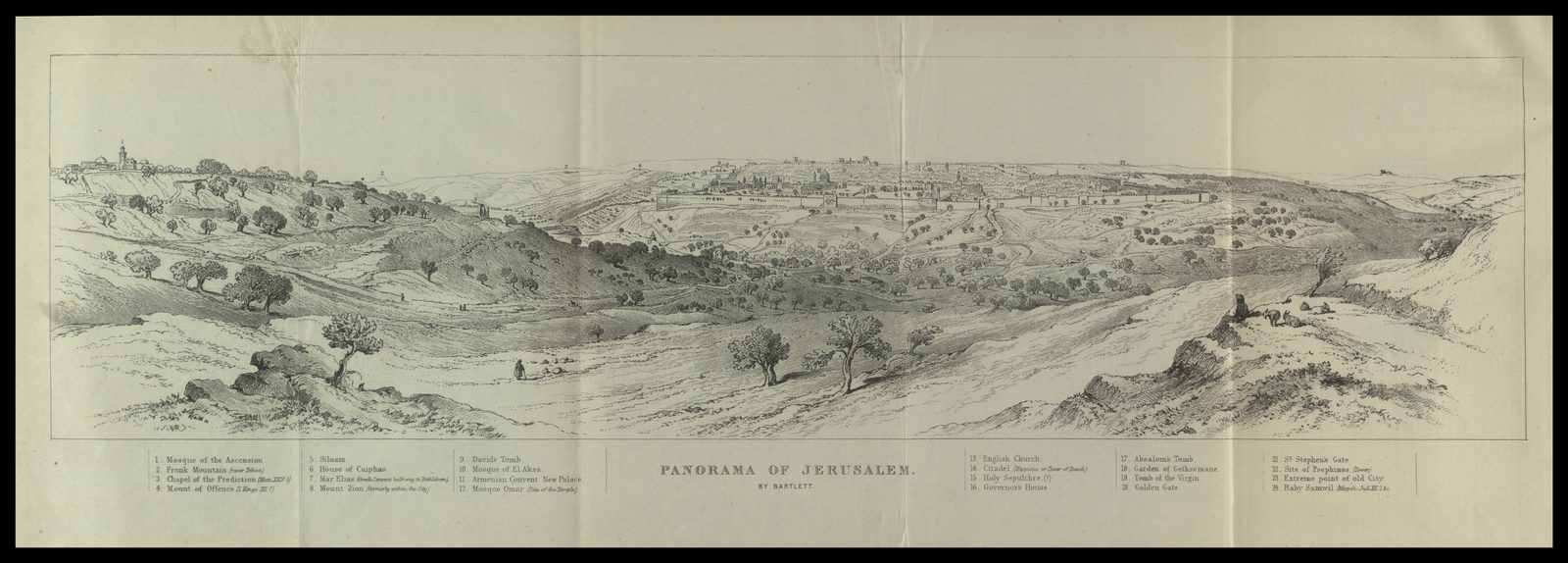
Who and where
1 name in this verse with a page on the site.
This page draws on 15 works. Open the list of works
This page draws on Adam Clarke, Commentary on the Bible; Albert Barnes, Notes, Explanatory and Practical, on the Old and New Testaments (1832-1869); Augustine of Hippo, On the Psalms, Psalm 84; Bonaventure, Collations on the Hexaemeron, Collation 1; Bonaventure, Itinerarium Mentis in Deum, Chapter 1; Bonaventure, Breviloquium; Charles Spurgeon, The Treasury of David, Vol. 4; David Brainerd, The Life and Diary of David Brainerd (ed. Jonathan Edwards), diary entry April 25, 1742; Gregory of Nazianzus, ON THE HOLY SPIRIT, THEOLOGICAL ORATION 5[31]. 26; Jamieson, Fausset & Brown, Commentary Critical and Explanatory on the Whole Bible; Jerome, Homily 63, on Psalm 83 (Alternate Series); Jerome, Homily 16, on Psalm 83; John Gill, Exposition of the Old Testament; John Gill, Exposition of the Old Testament (1748-1763) and Matthew Henry, Commentary on the Whole Bible.