
Psalms 29:5
in Psalms 29The voice of the LORD breaks the cedars; the LORD shatters the cedars of Lebanon.
BSB
The same verse in ASV and KJV ▾
ASV
The voice of Jehovah breaketh the cedars; Yea, Jehovah breaketh in pieces the cedars of Lebanon.
KJV
The voice of the Lord breaketh the cedars; yea, the Lord breaketh the cedars of Lebanon.
⋯
This verse in Psalms 29
Commentary
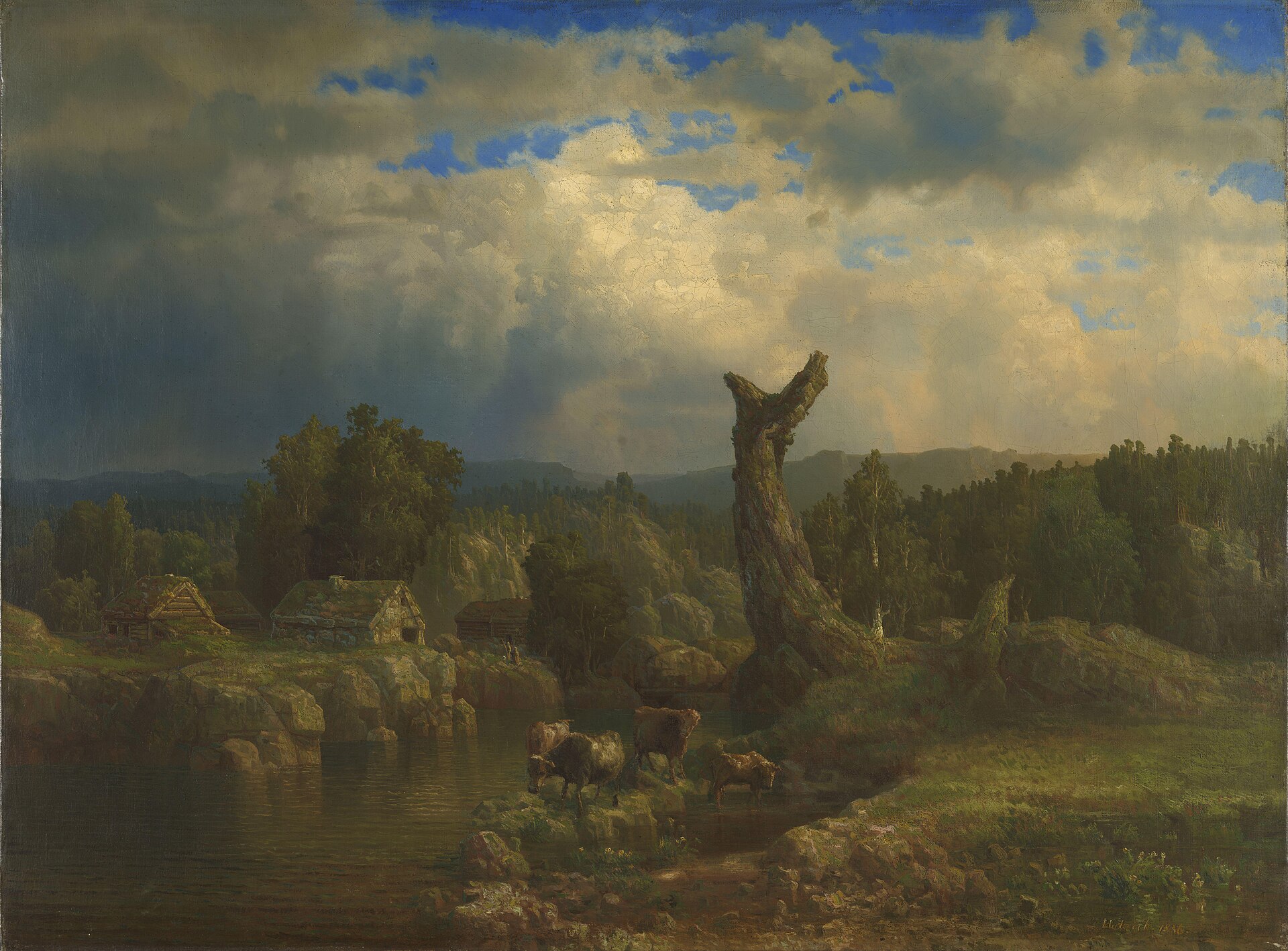
14 notes on this verseThe voice of the Lord breaketh the cedars. "Black from the stroke above, the smouldering pine Stands a sad shattered trunk." Noble trees fall prostrate beneath the mysterious bolt, or stand in desolation as mementoes of its power. Lebanon itself is not secure, high as it stands, and ancient as are its venerable woods: Yea, the Lord breaketh the cedars of Lebanon. The greatest and most venerable of trees or men, may not reckon upon immunity when the Lord is abroad in his wrath.
This site's exposition
breaks the cedars
on Psalms 29:5-6
Cedars of Lebanon were the strongest timber the ancient world knew, and the voice breaks them. Sirion is the Sidonian name for Mount Hermon, given at Deuteronomy 3:9. Both mountains skip under the thunder, one like a calf and one like a young wild ox.
The record, by era
The Church Fathers4 voices
The cedar is at times praised by Scripture as a stable tree, free from decay, fragrant, and adequate for supplying shelter, but at times it is attacked as unfruitful and hard to bend, so that it offers a representation of impiety.… The Lord is said to break those vainly puffed up and magnifying themselves in the things of this world that are considered exalting, wealth, glory, power, beauty of body, influence or strength.… Just as the cedars, which are lofty in themselves, because they are produced on a high mountain become more conspicuous through the added height of the mountain, so also those leaning on the perishable things of the world are cedars indeed through their false glory and vanity of mind; and they are called cedars of Libanus because they are glorying in the elevation that belongs to another and are raised up to their false glory by the earth and earthly circumstance, as if by the summit of Libanus.
"The Voice of the Lord breaking the cedars" [Psalm 29:5]. The Voice of the Lord humbling the proud in brokenness of heart. "The Lord shall break the cedars of Libanus." The Lord by repentance shall break them that are lifted on high by the splendour of earthly nobility, when to confound them He shall have "chosen the base things of this world," [1 Corinthians 1:28] in the which to display His Divinity.
He signals through these words the overthrow of the idols: since the idols' precincts in ancient times were on high places, providing no fruit to their worshipers, he likened them to "the cedars of Lebanon," which though lofty do not naturally bear edible fruit.
He signals through these words the overthrow of the idols: since the idols' precincts in ancient times were on high places, providing no fruit to their worshipers, he likened them to "the cedars of Lebanon," which though lofty do not naturally bear edible fruit.
The Medieval Church1 voice
"The voice of the Lord breaking." Here he treats the exclusion of vices, and he touches first on the vice of pride. Second, of concupiscence, at "The voice of the Lord dividing the flame of fire." Third, the vice of unbelief or contempt, at "The …
7 more voices on this verse
The Medieval Church1 voice
Next he recalls the benefits bestowed after the crossing. And this can be understood in two ways. First, through the removal of evil. Second, through the conferring of goods, at "The voice of the Lord shaking." Concerning the first, he does two things. First, he …
The Puritans and the Awakening2 voices
Some understand it of the violent winds which shook the cedars, and sometimes tore off their aspiring tops. Earthquakes also shook the ground itself on which the trees grew, and made Lebanon and Sirion to dance; the wilderness of Kadesh also was in like manner shaken (
quarantine:debris (2026-07-29) — unbalanced-parens
The voice of the Lord breaketh the cedars,....
The Nineteenth Century4 voices
The voice of the Lord breaketh the cedars. "Black from the stroke above, the smouldering pine Stands a sad shattered trunk." Noble trees fall prostrate beneath the mysterious bolt, or stand in desolation as mementoes of its power. Lebanon itself is not secure, high as it stands, and ancient as are its venerable woods: Yea, the Lord breaketh the cedars of Lebanon. The greatest and most venerable of trees or men, may not reckon upon immunity when the Lord is abroad in his wrath. The gospel of Jesus has a like dominion over the most inaccessible of mortals; and when the Lord sends the word, it breaks hearts far stouter than the cedars.
The voice of the Lord breaketh the cedars. "Black from the stroke above, the smouldering pine Stands a sad shattered trunk." Noble trees fall prostrate beneath the mysterious bolt, or stand in desolation as mementoes of its power. Lebanon itself is not secure, high as it stands, and ancient as are its venerable woods: Yea, the Lord breaketh the cedars of Lebanon. The greatest and most venerable of trees or men, may not reckon upon immunity when the Lord is abroad in his wrath.
Breaketh the cedars - Very tall trees attract the lightning from the clouds, by which they are often torn to pieces. Woods and forests give dreadful proof of this after a thunderstorm.
A commentator
Albert Barnes1798–1870
Notes, Explanatory and Practical, on the Old and New Testaments (1832-1869)
proposed
Breaketh the cedars - The thunder prostrates the lofty trees of the forest. The psalmist speaks as things appeared, attributing, as was natural, and as was commonly done, that to the thunder which was really produced by the lightning. It, is now fully known that the effect here referred to is not produced by thunder, but by the rapid passage of the electric fluid as it passes from the cloud to the earth. that power is so great as to rive the oak or the cedar; to twist off their limbs; to prostrate their lofty trunks to the ground. The psalmist speaks of thunder as accomplishing this, in the same way that the sacred writers and all men, even scientific men, commonly speak, as when we say, the sun rises and sets - the stars rise and set, etc. People who would undertake in all cases to speak with scientific accuracy, or in the strict language of science, would be unintelligible to the mass of mankind; perhaps on most subjects they would soon cease to speak at all - since they themselves would be in utter doubt as to what is scientific accuracy. People who require that a revelation from God should always use language of strict scientific precision, really require that a revelation should anticipate by hundreds or thousands of years the discoveries of science, and use language which, when the revelation was given, would be unintelligible to the mass of mankind; nay, which would be always unintelligible to a large portion of the race - since people ordinarily, however much the exact truths of science may be diffused, do not learn to use such exactness of speech. As long as men have occasion to speak on the subject at all they will probably continue to say that the sun rises and sets; that the grass grows; and that water runs. Breaketh the cedars of Lebanon - “Cedars are mentioned as the loftiest forest trees, and those of Lebanon as the loftiest of their species.” - “Prof. […]
How the passage was read
What the Jewish commentators add
On the verses either side of this one
The voice of the Lord is in strength At the time of the giving of the Torah, He moderated His voice according to the strength of Israel, as it is said (Exod.:19): “and God would answer him with a voice,” with Moses’ voice.
This section is reception history: how the passage was read and kept in the Jewish tradition. Where a reading parts from an essential of the Christian faith, the section says so at that point.
Texts and citation data: Sefaria; each excerpt follows its version’s licence. 3 further sources are cited on this chapter that carry no English text this site may quote or only restate the verse.
The words behind it
9 Hebrew wordsEvery Hebrew word of this verse in the order it stands, with what it means and the door to its own study. The last column counts the times a word stands in the whole Bible: the rarer the word, the more the places it appears belong together.
| Hebrew | Sound | Meaning | Word study | In the Bible |
|---|---|---|---|---|
| ק֣וֹל | kol | [the] voice of | H6963 → | 506 times |
| יְ֭הוָה | yahweh | Yahweh | H3068 → | 6520 times |
| שֹׁבֵ֣ר | shover | [is] breaking | H7665 → | 147 times |
| אֲרָזִ֑ים | ʾarazim | cedars | H730 → | 73 times |
| וַיְשַׁבֵּ֥ר | vayshaber | and he broke in pieces | H7665 → | 147 times |
| יְ֝הוָ֗ה | yahweh | Yahweh | H3068 → | 6520 times |
| אֶת־ | ʾet- | <obj.> | H853 → | 10935 times |
| אַרְזֵ֥י | ʾarzei | [the] cedars of | H730 → | 73 times |
| הַלְּבָנֽוֹן׃ | halevanon | <the> Lebanon | H3844 → | 71 times |
ק֣וֹל[the] voice of
kolH6963 →506 times
יְ֭הוָהYahweh
yahwehH3068 →6520 times
שֹׁבֵ֣ר[is] breaking
shoverH7665 →147 times
אֲרָזִ֑יםcedars
ʾarazimH730 →73 times
וַיְשַׁבֵּ֥רand he broke in pieces
vayshaberH7665 →147 times
יְ֝הוָ֗הYahweh
yahwehH3068 →6520 times
אֶת־<obj.>
ʾet-H853 →10935 times
אַרְזֵ֥י[the] cedars of
ʾarzeiH730 →73 times
הַלְּבָנֽוֹן׃<the> Lebanon
halevanonH3844 →71 times
A shaded row is a word that stands 400 times or fewer in the Bible.
The walk
8 stopsEach card is a verse this one points to, and under it the verses that one points to in turn. Where several paths arrive at the same place, that place is listed first: the text keeps returning to it.
Through
Psalms 104:16The trees of the LORD have their fill, the cedars of Lebanon that He planted,
it leads to
- Numbers 24:6
They spread out like palm groves, like gardens beside a stream, like aloes the LORD has planted, like cedars beside the waters.
- Psalms 92:2
to proclaim Your loving devotion in the morning and Your faithfulness at night
- Ezekiel 17:23
I will plant it on the mountain heights of Israel so that it will bear branches; it will yield fruit and become a majestic cedar. Birds of every kind will nest under it, taking…
- Numbers 24:6
Through
Judges 9:15But the thornbush replied, ‘If you really are anointing me as king over you, come and find refuge in my shade. But if not, may fire come out of the thornbush and consume the…
it leads to
- Isaiah 30:2
They set out to go down to Egypt without asking My advice, to seek shelter under Pharaoh’s protection and take refuge in Egypt’s shade.
- Judges 9:20
But if not, may fire come from Abimelech and consume the leaders of Shechem and Beth-millo, and may fire come from the leaders of Shechem and Beth-millo and consume Abimelech.”
- Hosea 14:7
They will return and dwell in his shade; they will grow grain and blossom like the vine. His renown will be like the wine of Lebanon.
- Isaiah 2:13
against all the cedars of Lebanon, lofty and lifted up, against all the oaks of Bashan,
- Numbers 21:28
For a fire went out from Heshbon, a blaze from the city of Sihon. It consumed Ar of Moab, the rulers of Arnon’s heights.
- Isaiah 30:2
Where this verse is studied
On this page
About Psalms
This page draws on 10 works. Open the list of works
This page draws on Adam Clarke, Commentary on the Bible; Albert Barnes, Notes, Explanatory and Practical, on the Old and New Testaments (1832-1869); Augustine of Hippo, Exposition on Psalm 29; Basil of Caesarea, HOMILIES ON THE PSALMS 13:5 (PS 29); Charles Spurgeon, The Treasury of David, Vol. 2; John Gill, Exposition of the Old Testament; John Gill, Exposition of the Old Testament (1748-1763); Matthew Henry, Commentary on the Whole Bible; Theodoret of Cyrus, COMMENTARY ON THE PSALMS 29:5 and Thomas Aquinas, Exposition on the Psalms of David.