
Proverbs 1:4
in Proverbs 1To impart prudence to the simple and knowledge and discretion to the young,
BSB
The same verse in ASV and KJV ▾
ASV
To give prudence to the simple, To the young man knowledge and discretion:
KJV
To give subtilty to the simple, to the young man knowledge and discretion.
⋯
This verse in Proverbs 1
Commentary
13 notes on this verseTo give subtilty to the simple - The word simple, from simplex, compounded of sine, without, and plica, a fold, properly signifies plain and honest, one that has no by-ends in view, who is what he appears to be; and is opposed to complex, from complico, to fold together, to make one rope or cord out of many strands; but because honesty and plaindealing are so rare in the world, and none but the truly religious man will practice them, farther than the fear of the law obliges him, hence simple has sunk into a state of progressive deterioration.
This site's exposition
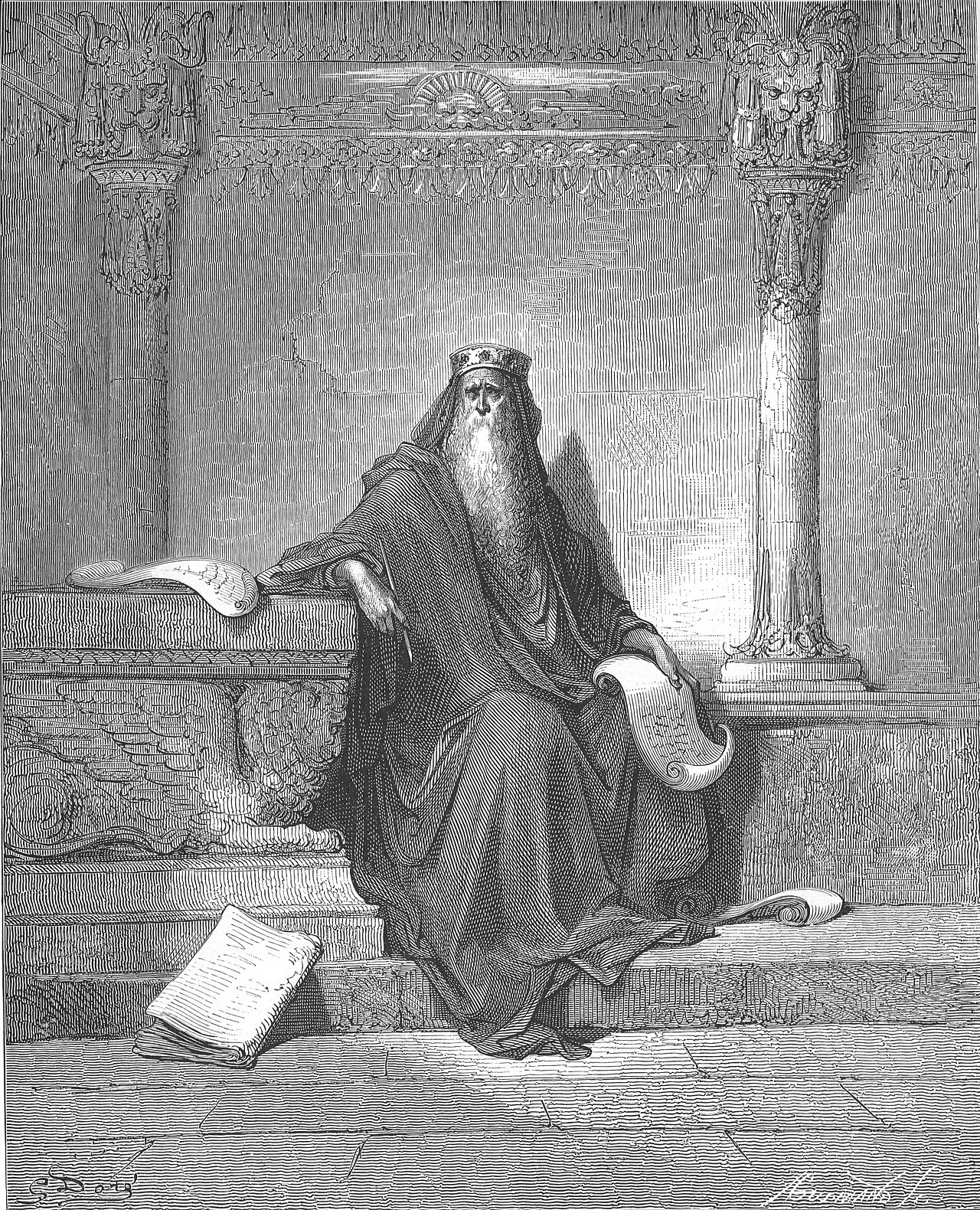
The proverbs of Solomon the son of David
on Proverbs 1:1-4
The book opens with a header before it opens with a thought, naming its author, his sonship to David, and his office as king of Israel. The same formula returns at 10:1, 22:17, 24:23, 25:1, 30:1 and 31:1, the book's own record of how the whole collection was gathered under one name across generations. The purpose clauses that follow set the aim high at once: not information but wisdom, instruction, and understanding, and for the untaught a subtilty they do not yet have.
The record, by era
The Church Fathers5 voices
There are, as you know, certain vices forming contraries to the virtues by a clear distinction, as imprudence to prudence. There are also some which are only contrary because they are vices but which have a sort of deceptive resemblance to virtues, as when we set against prudence, not imprudence, but craftiness. I am now speaking of that craftiness which is more commonly understood and expressed in an evil sense, not as our Scripture ordinarily uses it, which often gives it a good meaning; hence we have "wise as serpents" and "to give subtlety to little ones." …In the same way, injustice is contrary to justice by an evident antithesis, whereas the craving for vengeance puts on a show of justice but is a vice.
A commentator
JeromeHOMILIES ON THE PSALMS, ALTERNATE SERIES 61 (PSALM 15) · Written before 420.
proposed
But "panourgia," that is, cleverness, may be taken either in a good or in a bad sense: in a good sense, according to Proverbs, "That he may give," it says, "shrewdness to the innocent, and to the younger boy sense and understanding"; in a bad sense, as in the apostle, "But I fear lest, as the serpent seduced Eve by his shrewdness, your minds may be corrupted from the simplicity that is in Christ." What he says, then, is this: my instruction and deep thought and the inner affection of the heart was not only with me in the heavenly places, but even while I dwelt in the night of this world and in darkness, it was engaged with me in the man, and instructed me, and was never absent from me, so that whatever the weakness of the flesh could not do, divine thought and power might accomplish.
A commentator
JeromeHOMILIES ON THE PSALMS, ALTERNATE SERIES 60 (PSALM 10) · Written before 420.
proposed
And because he rains snares upon sinners, and gives them to drink the goblet of torments which they deserve, God himself, being just, loves justices. For just as there is one true God, even if there are many gods who are so called by participation in him, and there is one only-begotten Son of God, while others are called so by adoption; so also there is one true justice, as is written in the beginning of the Proverbs, but from communication of it the Lord loves many things called justices.
A commentator
John ChrysostomCOMMENTARY ON THE PROVERBS OF SOLOMON, FRAGMENT 1:3 · Written in the 5th century.
proposed
Those concepts which are expressed by the Holy Spirit in parables through their counterpart of speech become quite clear when one brings them before God with a faithful heart. For they understand the true righteousness which was announced by Christ.
To confess that we are imperfect, and have not yet apprehended, nor yet obtained, this is true wisdom in man: know thyself to be imperfect; and, if I may so speak, the perfection of all who are righteous, so long as they are in the flesh, is imperfect. Hence we read in Proverbs: "To understand true righteousness." For if there were not also a false righteousness, the righteousness of God would never be called true.
6 more voices on this verse
The Medieval Church1 voice
To give prudence to the simple, etc. He calls simple those who have recently begun to listen to wisdom; the youth, who has already made some progress in listening to it. And perhaps he calls the simple in the plural number and youth in the …
The Puritans and the Awakening3 voices
To give subtlety to the simple,....
This book will help us, 1. To form right notions of things, and to possess our minds with clear and distinct ideas of them, that we may know wisdom and instruction, that wisdom which is got by instruction, by divine revelation, may know both how to speak and act wisely ourselves and to give instruction to others.
For young people, to give them knowledge and discretion. Youth is the learning age, catches at instructions, receives impressions, and retains what is then received; it is therefore of great consequence that the mind be then seasoned well, nor can it receive a better tincture than from Solomon's proverbs.
The Nineteenth Century2 voices
A commentator
Jamieson, Fausset & Brown1802–1910
Commentary Critical and Explanatory on the Whole Bible (1871)
proposed
5:21). discretion--literally, "device," both qualities, either good or bad, according to their use. Here good, as they imply wariness by which to escape evil and find good. Such writings the wise, who pursue right ends by right means, will value. learning--not the act, but matter of it. wise counsels--or the art and principles of governing.
quarantine:debris (2026-07-29) — unbalanced-parens
A commentator
Albert Barnes1798–1870
Notes, Explanatory and Practical, on the Old and New Testaments (1832-1869)
proposed
This verse points out the two classes for which the book will be useful: (1) the “simple,” literally the “open,” the open-hearted, the minds ready to receive impressions for good or evil Pro 1:22; and (2) the “young,” who need both knowledge and discipline. To these the teacher offers the “subtilty,” which may turn to evil Exo 21:14 and become as the wisdom of the serpent Gen 3:1, but which also takes its place, as that wisdom does, among the highest moral gifts Mat 10:16; the “knowledge” of good and evil; and the “discretion,” or discernment, which sets a man on his guard, and keeps him from being duped by false advisers. The Septuagint renderings, πανουργία panourgia for “subtilty,” αἴσθησις aisthēsis for “knowledge,” ἔννοια ennoia for “discretion,” are interesting as showing the endeavor to find exact parallels for the Hebrew in the terminology of Greek ethics.
The words behind it
6 Hebrew wordsEvery Hebrew word of this verse in the order it stands, with what it means and the door to its own study. The last column counts the times a word stands in the whole Bible: the rarer the word, the more the places it appears belong together.
| Hebrew | Sound | Meaning | Word study | In the Bible |
|---|---|---|---|---|
| לָתֵ֣ת | latet | to give | H5414 → | 2011 times |
| לִפְתָאיִ֣ם | liftayim | to naive people | H6612 → | 19 times |
| עָרְמָ֑ה | ʾaremah | prudence | H6195 → | 5 times |
| לְ֝נַ֗עַר | lenaar | to a youth | H5288 → | 239 times |
| דַּ֣עַת | daat | knowledge | H1847 → | 92 times |
| וּמְזִמָּֽה׃ | umezimah | and discretion | H4209 → | 19 times |
לָתֵ֣תto give
latetH5414 →2011 times
לִפְתָאיִ֣םto naive people
liftayimH6612 →19 times
עָרְמָ֑הprudence
ʾaremahH6195 →5 times
לְ֝נַ֗עַרto a youth
lenaarH5288 →239 times
דַּ֣עַתknowledge
daatH1847 →92 times
וּמְזִמָּֽה׃and discretion
umezimahH4209 →19 times
A shaded row is a word that stands 400 times or fewer in the Bible.
The walk
8 stopsEach card is a verse this one points to, and under it the verses that one points to in turn. Where several paths arrive at the same place, that place is listed first: the text keeps returning to it.
Through
Psalms 119:9How can a young man keep his way pure? By guarding it according to Your word.
it leads to
- 2 Timothy 2:22
Flee from youthful passions and pursue righteousness, faith, love, and peace, together with those who call on the Lord out of a pure heart.
- James 1:21–25
Therefore, get rid of all moral filth and every expression of evil, and humbly accept the word planted in you, which can save your souls.
- 2 Timothy 3:15–17
From infancy you have known the Holy Scriptures, which are able to make you wise for salvation through faith in Christ Jesus.
- Joshua 1:7
Above all, be strong and very courageous. Be careful to observe all the law that My servant Moses commanded you. Do not turn from it to the right or to the left, so that…
- 2 Timothy 2:22
Through
Proverbs 8:17I love those who love me, and those who seek me early shall find me.
it leads to
- John 14:23
Jesus replied, “If anyone loves Me, he will keep My word. My Father will love him, and We will come to him and make Our home with him.
- John 14:21
Whoever has My commandments and keeps them is the one who loves Me. The one who loves Me will be loved by My Father, and I will love him and reveal Myself to him.”
- John 14:23
Through
Psalms 119:130The unfolding of Your words gives light; it informs the simple.
it leads to
- Psalms 119:105
Your word is a lamp to my feet and a light to my path.
- Proverbs 6:23
For this commandment is a lamp, this teaching is a light, and the reproofs of discipline are the way to life,
- Psalms 119:105
Where this verse is studied
On this page
Studies2
On this verse
On this chapter
About Proverbs
This page draws on 11 works. Open the list of works
This page draws on Adam Clarke, Commentary on the Bible; Albert Barnes, Notes, Explanatory and Practical, on the Old and New Testaments (1832-1869); Augustine of Hippo, LETTER 167:6; Bede, Commentary on Proverbs; Jamieson, Fausset & Brown, Commentary Critical and Explanatory on the Whole Bible; Jerome, HOMILIES ON THE PSALMS, ALTERNATE SERIES 61 (PSALM 15); Jerome, HOMILIES ON THE PSALMS, ALTERNATE SERIES 60 (PSALM 10); Jerome, Against the Pelagians 1.14; John Chrysostom, COMMENTARY ON THE PROVERBS OF SOLOMON, FRAGMENT 1:3; John Gill, Exposition of the Old Testament (1748-1763) and Matthew Henry, Commentary on the Whole Bible.