
Micah 7:16
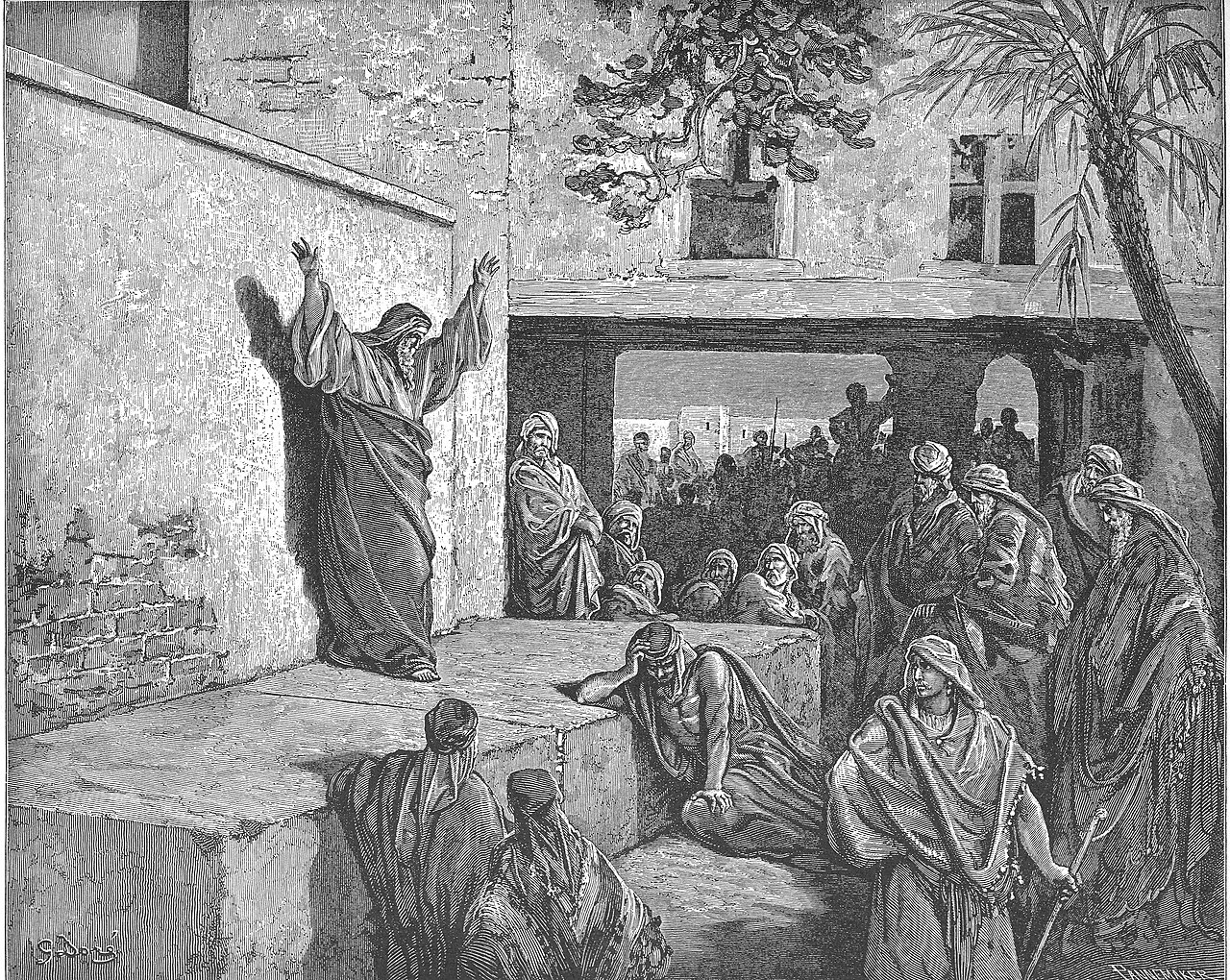
in Micah 7Nations will see and be ashamed, deprived of all their might. They will put their hands over their mouths, and their ears will become deaf.
BSB
The same verse in ASV and KJV ▾
ASV
The nations shall see and be ashamed of all their might; they shall lay their hand upon their mouth; their ears shall be deaf.
KJV
The nations shall see and be confounded at all their might: they shall lay their hand upon their mouth, their ears shall be deaf.
⋯
This verse in Micah 7
Commentary
6 notes on this verseThe nations shall see and be confounded - Whether the words in these verses (Mic 7:15-17) be applied to the return from the Babylonish captivity, or to the prosperity of the Jews under the Maccabees, they may be understood as ultimately applicable to the final restoration of this people, and their lasting prosperity under the Gospel.
This site's exposition
The nations shall see and be confounded at all their might
on Micah 7:16-17
The marvellous things done for Israel become a spectacle the nations cannot answer, their own might now a source of shame rather than pride, hand over mouth and ears made deaf, the posture of men with nothing left to say. Verse 17 pictures those same nations reduced to the serpent's own curse from Eden, licking dust and creeping from their holes like worms, Henry reading the image as total reversal, the proud emptied into the lowest crawling posture Genesis itself names. The fear that follows is aimed higher than Israel's own standing, they shall be afraid of the Lord our God, the point of the whole spectacle being reverence for the God who acted. Pusey reads the sequence as the pattern the exodus itself set, Egypt's plagues teaching Pharaoh's own household to know the Lord, replayed now on a wider stage.
The record, by era
The Church Fathers1 voice
(Verse 14 and following) Feed your people with your staff, the flock of your inheritance, dwelling alone in the forest of Carmel. They will graze in Bashan and Gilead as in ancient times, as in the days when you came out of the land of Egypt, I will show (or have shown) them wonders. The nations will see and be ashamed of all their might. They will lay their hands over their mouths; their ears will become deaf. They will lick the dust like serpents; they will tremble from their hiding places.
The Puritans and the Awakening1 voice
The nations shall see and be confounded at all their might,....
The Nineteenth Century2 voices
A commentator
Jamieson, Fausset & Brown1802–1910
Commentary Critical and Explanatory on the Whole Bible (1871)
proposed
shall see--the "marvellous things" (Mic 7:15; Isa 26:11). confounded at all their might--having so suddenly proved unavailing: that might wherewith they had thought that there is nothing which they could not effect against God's people. lay . . . hand upon . . . mouth--the gesture of silence (Job 21:5;
quarantine:debris (2026-07-29) — starts-lowercase+unbalanced-parens
A commentator
Albert Barnes1798–1870
Notes, Explanatory and Practical, on the Old and New Testaments (1832-1869)
proposed
The nations shall see - God had answered, what He would give to His own people, to see. Micah takes up the word, and says, what effect this sight should have upon the enemies of God and of His people. The world should still continue to be divided between the people of God and their adversaries. Those who are converted pass from the one to the other; but the contrast remains. Assyria, Babylon, Egypt, pass away or become subject to other powers; but the antagonism continues. The nations are they, who, at each time, waste, oppress, are arrayed against, the people of God. When the Gospel came into the world, the whole world was arrayed against it. These then, he says, “shall see”, that is, the marvelous works of God, which God should shew His people, and be ashamed at, that is, “because of all their might”, their own might. They put forth their whole might, and it failed them against the marvelous might of God. They should array might against might, and be ashamed at the failure of “all their might”. The word all is very emphatic; it implies that they had put forth all, and that all had failed them, and proved to be weakness. So the pagan might was often put to shame and gnashed its teeth, when it could avail nothing against the strength to endure which God gave to His martyrs. Its strength to inflict and to crush was baffled before the hidden might of God’s Spirit. “They shall lay their hand upon their mouth”, in token that they were reduced to silence, having no more to say ; for He promised, “I will give you a mouth and wisdom, which all your adversaries shall not be able to gainsay nor resist” (Luk 21:15, compare Act 5:29); and they had to own, “indeed a notable miracle hath been done by them, and we cannot deny it. […]
The words behind it
11 Hebrew wordsEvery Hebrew word of this verse in the order it stands, with what it means and the door to its own study. The last column counts the times a word stands in the whole Bible: the rarer the word, the more the places it appears belong together.
| Hebrew | Sound | Meaning | Word study | In the Bible |
|---|---|---|---|---|
| יִרְא֤וּ | yiru | they will see | H7200 → | 1300 times |
| גוֹיִם֙ | goyim | nations | H1471 → | 561 times |
| וְיֵבֹ֔שׁוּ | veyevoshu | so they may be ashamed | H954 → | |
| מִכֹּ֖ל | mikol | from all | H3605 → | 5413 times |
| גְּבֽוּרָתָ֑ם | gevuratam | strength their | H1369 → | |
| יָשִׂ֤ימוּ | yasimu | they will put | H7760 → | 584 times |
| יָד֙ | yad | a hand | H3027 → | 1618 times |
| עַל־ | ʾal- | on | H5921 → | 5755 times |
| פֶּ֔ה | peh | a mouth | H6310 → | 498 times |
| אָזְנֵיהֶ֖ם | ʾazeneihem | ears their | H241 → | |
| תֶּחֱרַֽשְׁנָה׃ | techerashnah | they will be deaf | H2790 → |
יִרְא֤וּthey will see
yiruH7200 →1300 times
גוֹיִם֙nations
goyimH1471 →561 times
וְיֵבֹ֔שׁוּso they may be ashamed
veyevoshuH954 →
מִכֹּ֖לfrom all
mikolH3605 →5413 times
גְּבֽוּרָתָ֑םstrength their
gevuratamH1369 →
יָשִׂ֤ימוּthey will put
yasimuH7760 →584 times
יָד֙a hand
yadH3027 →1618 times
עַל־on
ʾal-H5921 →5755 times
פֶּ֔הa mouth
pehH6310 →498 times
אָזְנֵיהֶ֖םears their
ʾazeneihemH241 →
תֶּחֱרַֽשְׁנָה׃they will be deaf
techerashnahH2790 →
A shaded row is a word that stands 400 times or fewer in the Bible.
The walk
8 stopsEach card is a verse this one points to, and under it the verses that one points to in turn. Where several paths arrive at the same place, that place is listed first: the text keeps returning to it.
Through
Job 40:4“Behold, I am insignificant. How can I reply to You? I place my hand over my mouth.
it leads to
- Proverbs 30:32
If you have foolishly exalted yourself or if you have plotted evil, put your hand over your mouth.
- Job 29:9
The princes refrained from speaking and covered their mouths with their hands.
- Job 21:5
Look at me and be appalled; put your hand over your mouth.
- Job 42:6
Therefore I retract my words, and I repent in dust and ashes.”
- Proverbs 30:32
Through
Isaiah 52:15so He will sprinkle many nations. Kings will shut their mouths because of Him. For they will see what they have not been told, and they will understand what they have not heard.
it leads to
- Romans 15:20–21
In this way I have aspired to preach the gospel where Christ was not known, so that I would not be building on someone else’s foundation.
- Isaiah 49:7
Thus says the LORD, the Redeemer and Holy One of Israel, to Him who was despised and abhorred by the nation, to the Servant of rulers: “Kings will see You and rise, and princes…
- Romans 15:20–21
Through
Isaiah 66:18“And I, knowing their deeds and thoughts, am coming to gather all nations and tongues, and they will come and see My glory.
it leads to
- Psalms 86:9
All the nations You have made will come and bow before You, O Lord, and they will glorify Your name.
- Revelation 11:15
Then the seventh angel sounded his trumpet, and loud voices called out in heaven: “The kingdom of the world has become the kingdom of our Lord and of His Christ, and He will reign…
- Psalms 86:9
Where this verse is studied
On this page
Studies1
About Micah
This page draws on Adam Clarke, Commentary on the Bible; Albert Barnes, Notes, Explanatory and Practical, on the Old and New Testaments (1832-1869); Edward Bouverie Pusey, The Minor Prophets: A Commentary; Jamieson, Fausset & Brown, Commentary Critical and Explanatory on the Whole Bible; Jerome, Commentary on Micah; John Gill, Exposition of the Old Testament (1748-1763) and Matthew Henry, Commentary on the Whole Bible.