
Job 14:21
in Job 14If his sons receive honor, he does not know it; if they are brought low, he is unaware.
BSB
The same verse in ASV and KJV ▾
ASV
His sons come to honor, and he knoweth it not; And they are brought low, but he perceiveth it not of them.
KJV
His sons come to honour, and he knoweth it not; and they are brought low, but he perceiveth it not of them.
⋯
This verse in Job 14
Commentary
3 notes on this verseA commentator
Jamieson, Fausset & Brown1802–1910
Commentary Critical and Explanatory on the Whole Bible (1871)
One striking trait is selected from the sad picture of the severance of the dead from all that passes in the world (Ec 9:5), namely, the utter separation of parents and children.
This site's exposition
Thou prevailest for ever against him
on Job 14:20-22
Thou prevailest for ever against him, and he passeth states defeat as final and total, thou changest his countenance, and sendest him away describing death as a dismissal from the world's presence. His sons come to honour, and he knoweth it not extends the loss past death itself, the dead man in Job's picture having no more awareness of his household's fortune than of his own affliction, a state Henry contrasts with the fuller hope voiced only verses earlier. The chapter that opened with a man of few days and full of trouble closes with the same trouble following him past the grave, his flesh in pain and his soul in mourning, and the meditation ends without resolving its own question.
The record, by era
The Puritans and the Awakening1 voice
He is going to that world where he will be a perfect stranger to all those things which here filled and affected him. The consideration of this should moderate our cares concerning our children and families. God will know what comes of them when we are gone.
The words behind it
8 Hebrew wordsEvery Hebrew word of this verse in the order it stands, with what it means and the door to its own study. The last column counts the times a word stands in the whole Bible: the rarer the word, the more the places it appears belong together.
| Hebrew | Sound | Meaning | Word study | In the Bible |
|---|---|---|---|---|
| יִכְבְּד֣וּ | yikhbedu | they are honored | H3513 → | 113 times |
| בָ֭נָיו | vanav | sons his | H1121 → | 4930 times |
| וְלֹ֣א | velo' | and not | H3808 → | 5168 times |
| יֵדָ֑ע | yeda' | he knows | H3045 → | 945 times |
| וְ֝יִצְעֲר֗וּ | veyitzaru | and they may be insignificant | H6819 → | |
| וְֽלֹא־ | velo'- | and not | H3808 → | 5168 times |
| יָבִ֥ין | yavin | he perceives | H995 → | 170 times |
| לָֽמוֹ׃ | lamo | <to> it |
יִכְבְּד֣וּthey are honored
yikhbeduH3513 →113 times
בָ֭נָיוsons his
vanavH1121 →4930 times
וְלֹ֣אand not
velo'H3808 →5168 times
יֵדָ֑עhe knows
yeda'H3045 →945 times
וְ֝יִצְעֲר֗וּand they may be insignificant
veyitzaruH6819 →
וְֽלֹא־and not
velo'-H3808 →5168 times
יָבִ֥יןhe perceives
yavinH995 →170 times
לָֽמוֹ׃<to> it
lamo
A shaded row is a word that stands 400 times or fewer in the Bible.
The walk
8 stopsEach card is a verse this one points to, and under it the verses that one points to in turn. Where several paths arrive at the same place, that place is listed first: the text keeps returning to it.
Through
Ecclesiastes 9:5For the living know that they will die, but the dead know nothing. They have no further reward, because the memory of them is forgotten.
it leads to
- Isaiah 26:14
The dead will not live; the departed spirits will not rise. Therefore You have punished and destroyed them; You have wiped out all memory of them.
- Ecclesiastes 1:11
There is no remembrance of those who came before, and those yet to come will not be remembered by those who follow after.
- Psalms 6:5
For there is no mention of You in death; who can praise You from Sheol?
- Psalms 88:10–12
Do You work wonders for the dead? Do departed spirits rise up to praise You? Selah
- Hebrews 9:27
Just as man is appointed to die once, and after that to face judgment,
- Isaiah 26:14
Through
Isaiah 63:16Yet You are our Father, though Abraham does not know us and Israel does not acknowledge us. You, O LORD, are our Father; our Redeemer from Everlasting is Your name.
it leads to
- Isaiah 64:8
But now, O LORD, You are our Father; we are the clay, and You are the potter; we are all the work of Your hand.
- Malachi 2:10
Do we not all have one Father? Did not one God create us? Why then do we break faith with one another so as to profane the covenant of our fathers?
- Deuteronomy 32:6
Is this how you repay the LORD, O foolish and senseless people? Is He not your Father and Creator? Has He not made you and established you?
- Isaiah 64:8
About Job
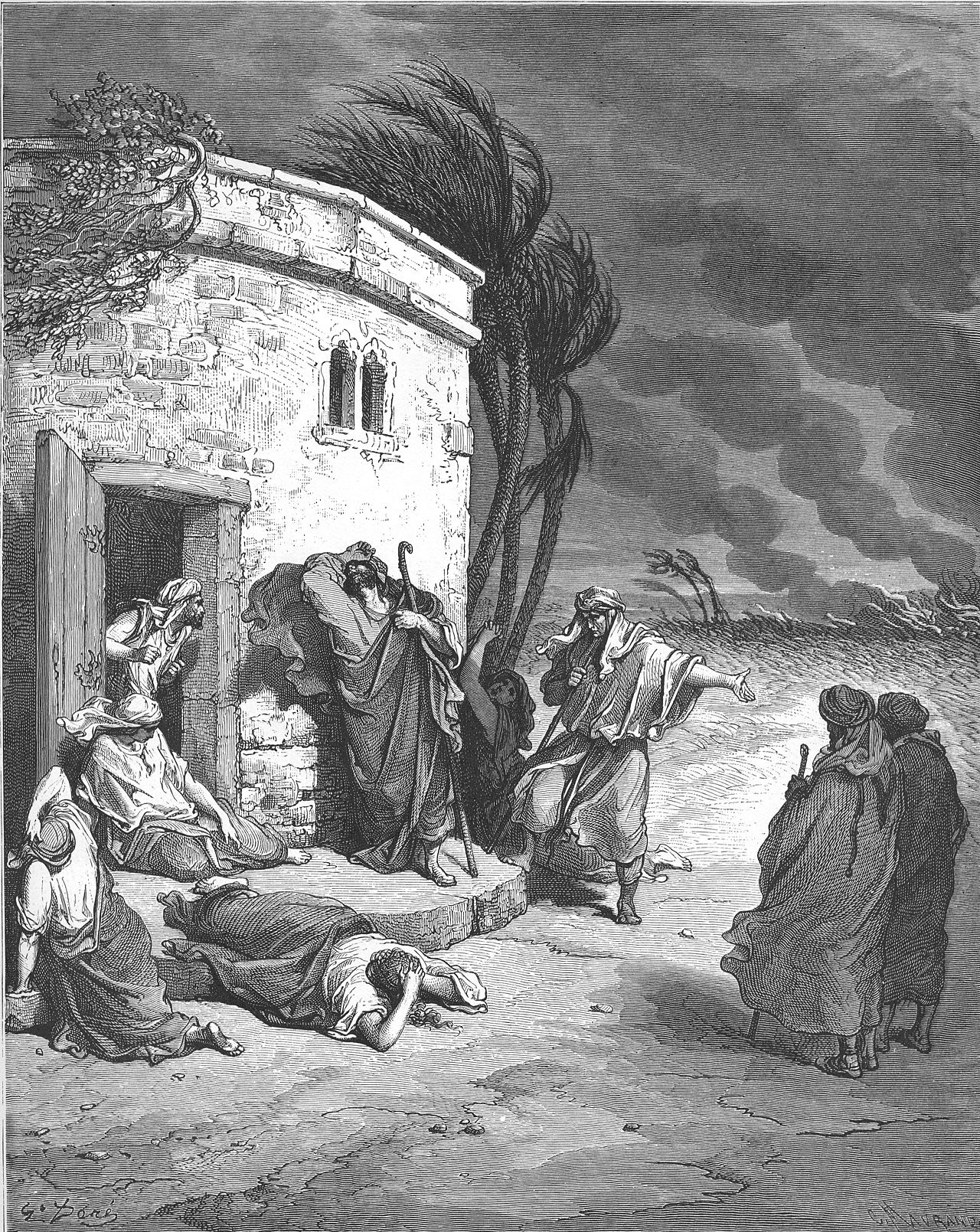
This page draws on Albert Barnes, Notes on the Book of Job; Jamieson, Fausset & Brown, Commentary Critical and Explanatory on the Whole Bible and Matthew Henry, Commentary on the Whole Bible.