
Genesis 33:12
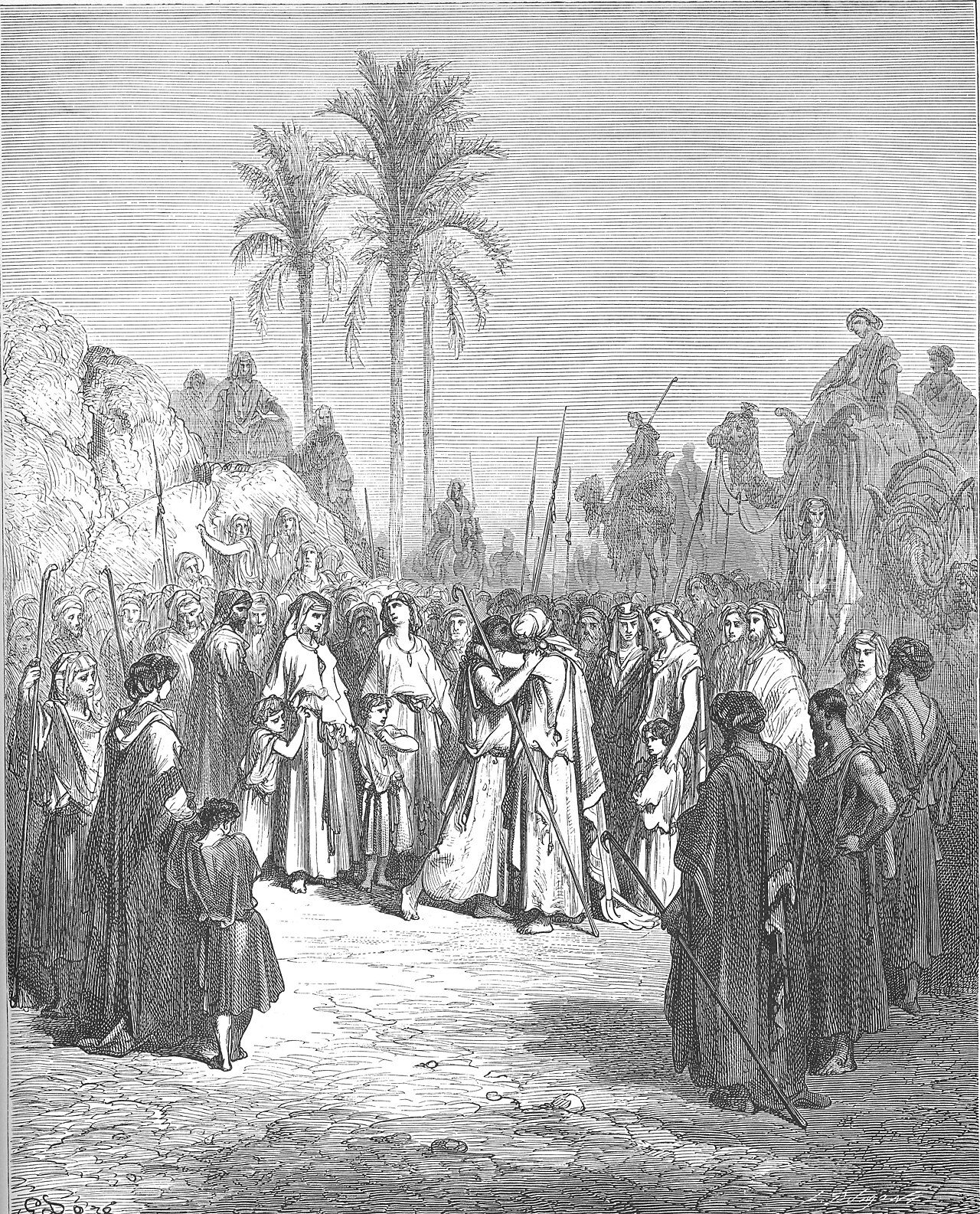
in Genesis 33Then Esau said, “Let us be on our way, and I will go ahead of you.”
BSB
The same verse in ASV and KJV ▾
ASV
And he said, Let us take our journey, and let us go, and I will go before thee.
KJV
And he said, Let us take our journey, and let us go, and I will go before thee.
⋯
This verse in Genesis 33
Commentary
4 notes on this verseA commentator
Jamieson, Fausset & Brown1802–1910
Commentary Critical and Explanatory on the Whole Bible (1871)
But the proposal was prudently declined. Jacob did not need any worldly state or equipage. Notwithstanding the present cordiality, the brothers were so different in spirit, character, and habits--the one so much a man of the world, and the other a man of God, that there was great risk of something occurring to disturb the harmony.
This site's exposition
I will go ahead of you
on Genesis 33:12-14
Esau offers to travel with him, and Jacob gives the pace of the frail children and the nursing flocks. He then says he will come on to his lord at Seir, and Genesis never records the visit. Clarke takes the promise as sincere and undone later, and Jamieson, Fausset and Brown read the refusal as prudence between brothers now unlike each other. The text gives the words and leaves the motive out.
The record, by era
The Puritans and the Awakening2 voices
And he said, let us take our journey, and let us go,....
We never find that Jacob and Esau were so sociable with one another, and so affectionate, as they were now. Note, As for God his work is perfect. He made Esau, not only not an enemy, but a friend.
How the passage was read
What the Jewish commentators add
Some say that nisah (let us take our journey) is an imperative.
2 more on this passage, in their own words ▾
I.e., the gift. Likewise, Make your blessing with me. II Kings:31. means “bring me a gift” or “make your peace with me.” So also, Take a blessing of thy servant. Ibid.,:15. means “take a present from thy servant.
Jacob said this in a compassionate manner for he should have said, “And they will all die,” but he would not express himself this way about the children.
This section is reception history: how the passage was read and kept in the Jewish tradition. Where a reading parts from an essential of the Christian faith, the section says so at that point.
Texts and citation data: Sefaria; each excerpt follows its version’s licence. 4 further sources are cited on this chapter that carry no English text this site may quote or only restate the verse.
The words behind it
5 Hebrew wordsEvery Hebrew word of this verse in the order it stands, with what it means and the door to its own study. The last column counts the times a word stands in the whole Bible: the rarer the word, the more the places it appears belong together.
| Hebrew | Sound | Meaning | Word study | In the Bible |
|---|---|---|---|---|
| וַיֹּ֖אמֶר | vaiyomer | and he said | H559 → | 5305 times |
| נִסְעָ֣ה | nisah | let us set out | H5265 → | 146 times |
| וְנֵלֵ֑כָה | venelekhah | and let us go | H1980 → | 1546 times |
| וְאֵלְכָ֖ה | veelekhah | and I will go | H1980 → | 1546 times |
| לְנֶגְדֶּֽךָ׃ | lenegdekha | to before you | H5048 → | 151 times |
וַיֹּ֖אמֶרand he said
vaiyomerH559 →5305 times
נִסְעָ֣הlet us set out
nisahH5265 →146 times
וְנֵלֵ֑כָהand let us go
venelekhahH1980 →1546 times
וְאֵלְכָ֖הand I will go
veelekhahH1980 →1546 times
לְנֶגְדֶּֽךָ׃to before you
lenegdekhaH5048 →151 times
A shaded row is a word that stands 400 times or fewer in the Bible.
Where this verse is studied
On this page
Studies1
About Genesis
Who and where
1 name in this verse with a page on the site.
This page draws on Adam Clarke, Commentary on the Bible; Jamieson, Fausset & Brown, Commentary Critical and Explanatory on the Whole Bible; John Gill, Exposition of the Old Testament (1748-1763) and Matthew Henry, Commentary on the Whole Bible.