
Ezekiel 46:12
in Ezekiel 46When the prince makes a freewill offering to the LORD, whether a burnt offering or a peace offering, the gate facing east must be opened for him. He is to offer his burnt offering or peace offering just as he does on the Sabbath day. Then he shall go out, and the gate must be closed after he goes out.
BSB
The same verse in ASV and KJV ▾
ASV
And when the prince shall prepare a freewill-offering, a burnt-offering or peace-offerings as a freewill-offering unto Jehovah, one shall open for him the gate that looketh toward the east; and he shall prepare his burnt-offering and his peace-offerings, as he doth on the sabbath day: then he shall go forth; and after his going forth one shall shut the gate.
KJV
Now when the prince shall prepare a voluntary burnt offering or peace offerings voluntarily unto the Lord, one shall then open him the gate that looketh toward the east, and he shall prepare his burnt offering and his peace offerings, as he did on the sabbath day: then he shall go forth; and after his going forth one shall shut the gate.
⋯
This verse in Ezekiel 46
Commentary
4 notes on this verse(Verse 12) When the prince offers a voluntary burnt offering or a voluntary peace offering to the Lord, the gate facing east shall be opened for him, and he shall offer his burnt offering and his peace offering as is customary on the Sabbath day. Then he shall go out, and after he has gone out, the gate shall be closed. Where we read immaculate, in Hebrew it is written Thamim (), which the Aquila perfectum. And where LXX Manaa (): Theodotion, sacrifice; Aquila and Symmachus, they translate as gift.
This site's exposition
in the feasts and in the solemnities
on Ezekiel 46:11-12
The feast-day meat offering repeats the same fixed ratio, an ephah for a bullock and for a ram, oil to match, while a voluntary offering the prince brings on his own gets its own gate opened for it and shut again after he goes out. The voluntary offering stands apart from the fixed calendar entirely, brought when the prince chooses rather than when the month requires it. Keil reads the separate gate procedure as marking the difference between required worship and free devotion, both given a place.
The record, by era
The Puritans and the Awakening1 voice
Of the keeping of this gate ordinarily shut we read before ( ch. xliv. 2 ); whereas the other gates of the court were opened every day, this was opened only on high days and on special occasions, when it was opened for the prince, who was to go in by the way of the porch of that gate,
The Nineteenth Century1 voice
A commentator
Jamieson, Fausset & Brown1802–1910
Commentary Critical and Explanatory on the Whole Bible (1871)
on Ezekiel 46:12-15
Not only is he to perform official acts of worship on holy days and feasts, but in "voluntary" offerings daily he is to show his individual zeal, surpassing all his people in liberality, and so setting them a princely example.
How the passage was read
What the Jewish commentators add
And when the prince brings a freewill offering on the six working days.
This section is reception history: how the passage was read and kept in the Jewish tradition. Where a reading parts from an essential of the Christian faith, the section says so at that point.
Texts and citation data: Sefaria; each excerpt follows its version’s licence. 4 further sources are cited on this chapter that carry no English text this site may quote or only restate the verse.
The words behind it
30 Hebrew wordsEvery Hebrew word of this verse in the order it stands, with what it means and the door to its own study. The last column counts the times a word stands in the whole Bible: the rarer the word, the more the places it appears belong together.
| Hebrew | Sound | Meaning | Word study | In the Bible |
|---|---|---|---|---|
| וְכִֽי־ | vekhi- | and if | H3588 → | 4482 times |
| יַעֲשֶׂה֩ | yaaseh | he will provide | H6213 → | 2628 times |
| הַנָּשִׂ֨יא | hanasi' | the prince | H5387 → | 134 times |
| נְדָבָ֜ה | nedavah | a freewill offering | H5071 → | |
| עוֹלָ֣ה | olah | a burnt offering | H5930 → | 287 times |
| אֽוֹ־ | ʾov- | or | H176 → | 321 times |
| שְׁלָמִים֮ | shelamim | peace offerings | H8002 → | 87 times |
| נְדָבָ֣ה | nedavah | a freewill offering | H5071 → | |
| לַֽיהוָה֒ | layahweh | to Yahweh | H3068 → | 6520 times |
| וּפָ֣תַֽח | ufatach | and someone will open | H6605 → | 144 times |
| ל֗וֹ | lo | for him | ||
| אֶת | ʾet | <obj.> | H853 → | 10935 times |
| הַשַּׁ֙עַר֙ | hashaar | the gate | H8179 → | 374 times |
| הַפֹּנֶ֣ה | haponeh | which faces | H6437 → | 135 times |
| קָדִ֔ים | kadim | east | H6921 → | 69 times |
| וְעָשָׂ֤ה | veasah | and he will offer | H6213 → | 2628 times |
| אֶת־ | ʾet- | <obj.> | H853 → | 10935 times |
| עֹֽלָתוֹ֙ | olato | burnt offering his | H5930 → | 287 times |
| וְאֶת־ | veet | and <obj.> | H853 → | 10935 times |
| שְׁלָמָ֔יו | shelamav | peace offerings his | H8002 → | 87 times |
| כַּאֲשֶׁ֥ר | kaasher | just as | H834 → | 5497 times |
| יַעֲשֶׂ֖ה | yaaseh | he will offer | H6213 → | 2628 times |
| בְּי֣וֹם | beyom | on [the] day of | H3117 → | 2304 times |
| הַשַּׁבָּ֑ת | hashabat | the sabbath | H7676 → | 110 times |
| וְיָצָ֛א | veyatza' | and he will go out | H3318 → | 1067 times |
| וְסָגַ֥ר | vesagar | and someone will shut | H5462 → | 91 times |
| אֶת־ | ʾet- | <obj.> | H853 → | 10935 times |
| הַשַּׁ֖עַר | hashaar | the gate | H8179 → | 374 times |
| אַחֲרֵ֥י | ʾacharei | after | H310 → | 715 times |
| צֵאתֽוֹ׃ | tzeto | has gone out he | H3318 → | 1067 times |
וְכִֽי־and if
vekhi-H3588 →4482 times
יַעֲשֶׂה֩he will provide
yaasehH6213 →2628 times
הַנָּשִׂ֨יאthe prince
hanasi'H5387 →134 times
נְדָבָ֜הa freewill offering
nedavahH5071 →
עוֹלָ֣הa burnt offering
olahH5930 →287 times
אֽוֹ־or
ʾov-H176 →321 times
שְׁלָמִים֮peace offerings
shelamimH8002 →87 times
נְדָבָ֣הa freewill offering
nedavahH5071 →
לַֽיהוָה֒to Yahweh
layahwehH3068 →6520 times
וּפָ֣תַֽחand someone will open
ufatachH6605 →144 times
ל֗וֹfor him
lo
אֶת<obj.>
ʾetH853 →10935 times
הַשַּׁ֙עַר֙the gate
hashaarH8179 →374 times
הַפֹּנֶ֣הwhich faces
haponehH6437 →135 times
קָדִ֔יםeast
kadimH6921 →69 times
וְעָשָׂ֤הand he will offer
veasahH6213 →2628 times
אֶת־<obj.>
ʾet-H853 →10935 times
עֹֽלָתוֹ֙burnt offering his
olatoH5930 →287 times
וְאֶת־and <obj.>
veetH853 →10935 times
שְׁלָמָ֔יוpeace offerings his
shelamavH8002 →87 times
כַּאֲשֶׁ֥רjust as
kaasherH834 →5497 times
יַעֲשֶׂ֖הhe will offer
yaasehH6213 →2628 times
בְּי֣וֹםon [the] day of
beyomH3117 →2304 times
הַשַּׁבָּ֑תthe sabbath
hashabatH7676 →110 times
וְיָצָ֛אand he will go out
veyatza'H3318 →1067 times
וְסָגַ֥רand someone will shut
vesagarH5462 →91 times
אֶת־<obj.>
ʾet-H853 →10935 times
הַשַּׁ֖עַרthe gate
hashaarH8179 →374 times
אַחֲרֵ֥יafter
ʾachareiH310 →715 times
צֵאתֽוֹ׃has gone out he
tzetoH3318 →1067 times
A shaded row is a word that stands 400 times or fewer in the Bible.
The walk
8 stopsEach card is a verse this one points to, and under it the verses that one points to in turn. Where several paths arrive at the same place, that place is listed first: the text keeps returning to it.
Through
Ezekiel 44:3Only the prince himself may sit inside the gateway to eat in the presence of the LORD. He must enter by way of the portico of the gateway and go out the same way.”
it leads to
- Ezekiel 46:2
The prince is to enter from the outside through the portico of the gateway and stand by the gatepost, while the priests sacrifice his burnt offerings and peace offerings. He is to bow in…
- Ezekiel 37:25
They will live in the land that I gave to My servant Jacob, where your fathers lived. They will live there forever with their children and grandchildren, and My servant David will be their…
- Ezekiel 34:24
I, the LORD, will be their God, and My servant David will be a prince among them. I, the LORD, have spoken.
- 1 Corinthians 10:18–33
Consider the people of Israel: Are not those who eat the sacrifices fellow partakers in the altar?
- Genesis 31:54
Then Jacob offered a sacrifice on the mountain and invited his relatives to eat a meal. And after they had eaten, they spent the night on the mountain.
- Ezekiel 46:2
Through
Ezekiel 45:17And it shall be the prince’s part to provide the burnt offerings, grain offerings, and drink offerings for the feasts, New Moons, and Sabbaths—for all the appointed feasts of the house of Israel. He…
it leads to
- Ezekiel 46:4–12
The burnt offering that the prince presents to the LORD on the Sabbath day shall be six unblemished male lambs and an unblemished ram.
- 2 Chronicles 31:3
The king contributed from his own possessions for the regular morning and evening burnt offerings and for the burnt offerings on the Sabbaths, New Moons, and appointed feasts, as written in the Law of…
- Isaiah 66:23
From one New Moon to another and from one Sabbath to another, all mankind will come to worship before Me,” says the LORD.
- Ezekiel 46:4–12
About Ezekiel
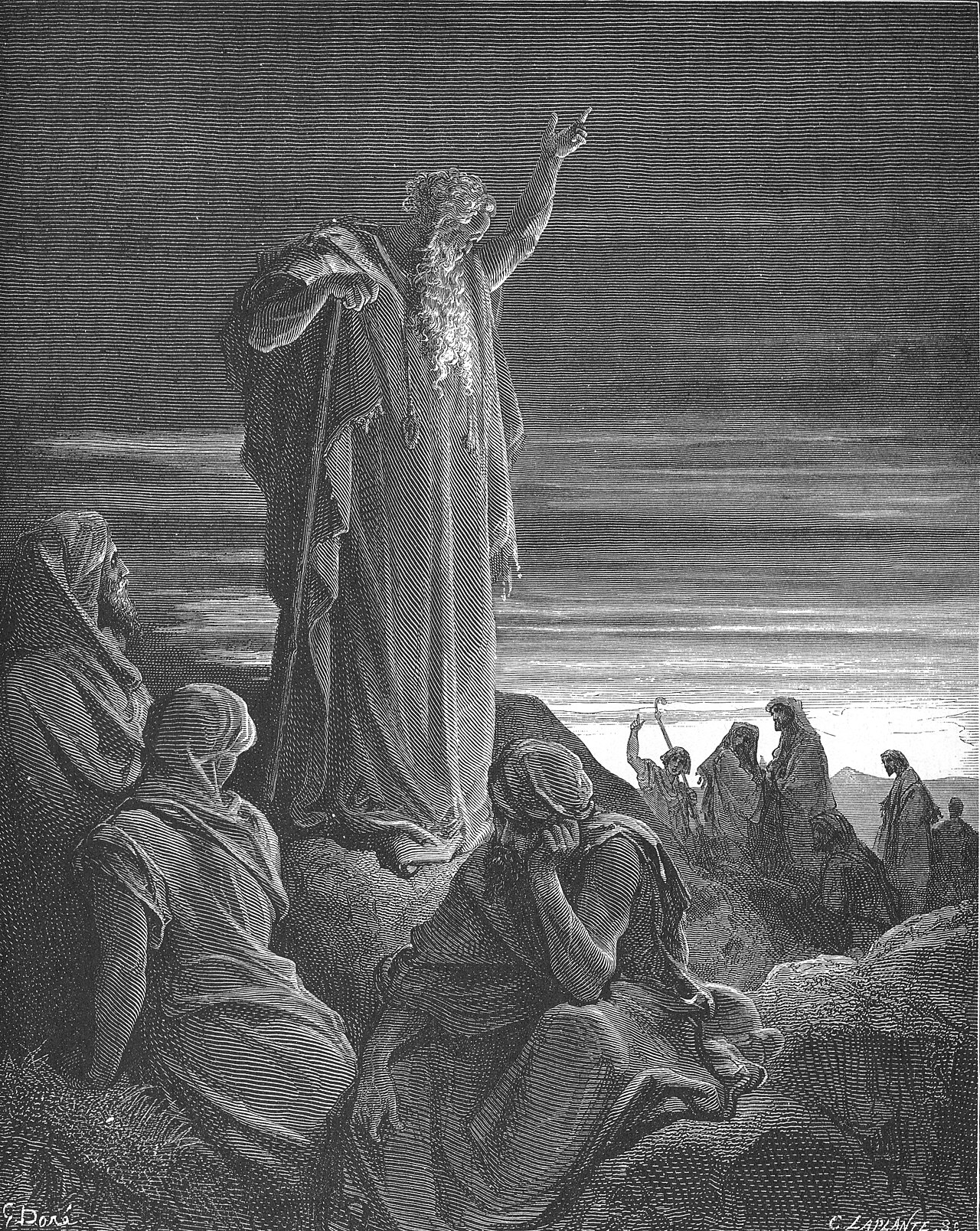
This page draws on Carl Friedrich Keil, Biblical Commentary on the Prophecies of Ezekiel; Jamieson, Fausset & Brown, Commentary Critical and Explanatory on the Whole Bible; Jerome, Commentary on Ezekiel; John Gill, Exposition of the Old Testament and Matthew Henry, Commentary on the Whole Bible.