
Esther 8:4
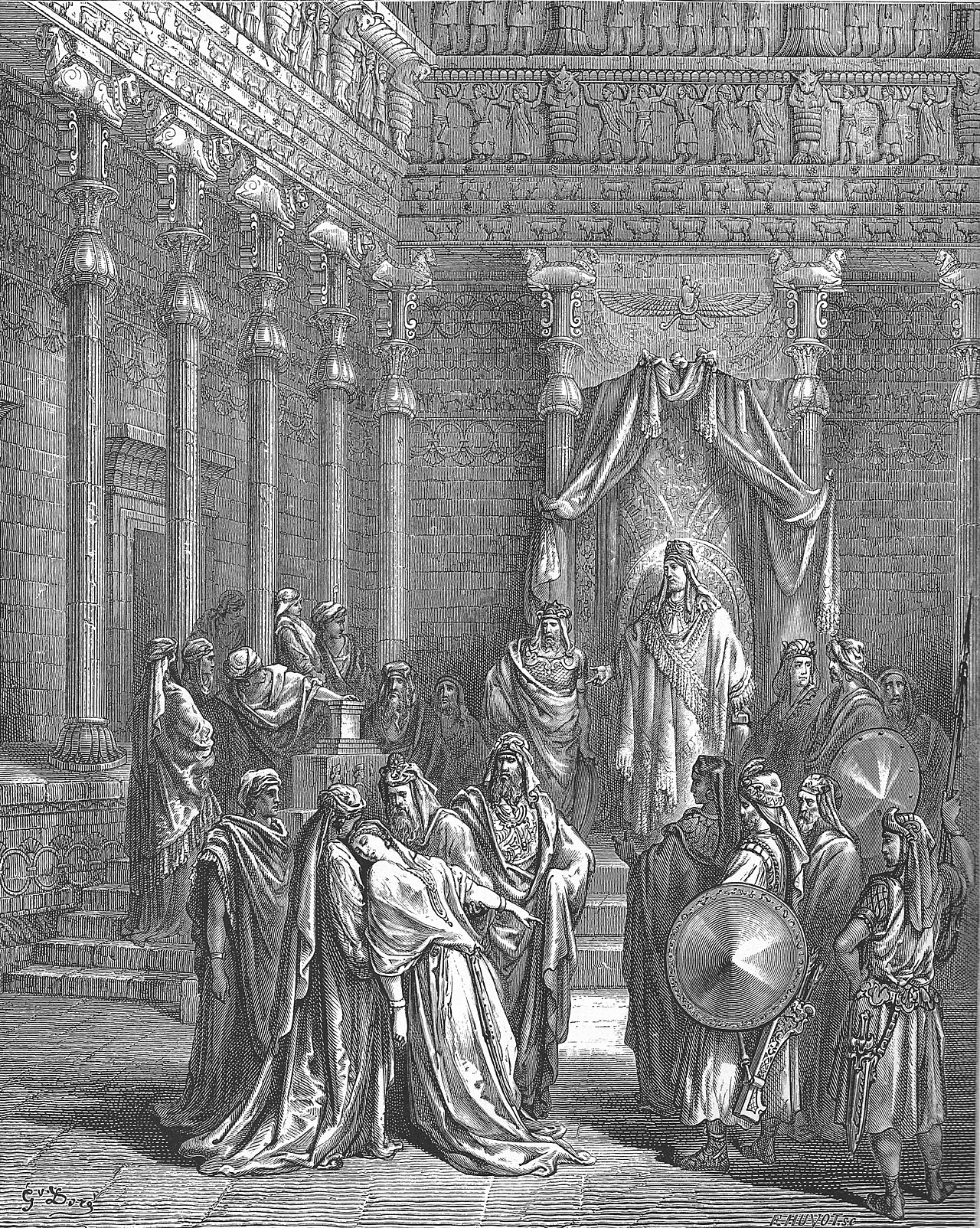
in Esther 8The king extended the gold scepter toward Esther, and she arose and stood before the king.
BSB
The same verse in ASV and KJV ▾
ASV
Then the king held out to Esther the golden sceptre. So Esther arose, and stood before the king.
KJV
Then the king held out the golden sceptre toward Esther. So Esther arose, and stood before the king,
⋯
This verse in Esther 8
Commentary
7 notes on this verseThe supreme king holds out his golden scepter toward the queen as she pleads with him, because he is lavishing on her the mercy of his righteousness.
This site's exposition
And once again, Esther addressed
on Esther 8:3-6
At 5:1-2 Esther stood composed before the king. Now "She fell at his feet weeping," because Haman's death removed the man and left his scheme standing. She asks the king "to revoke the letters" Haman wrote, since the gallows of 7:10 answered the plotter and left the plot in force.
This site's exposition
The king extended the gold scepter
The scepter is extended to Esther a second time, as it was when she first came unbidden in chapter 5. Gill reads it as pardon for coming without leave. Esther arose from the king's feet and stood to plead for the Jews.
The record, by era
The Medieval Church1 voice
The heavenly king holds out his golden scepter to the pleading queen because he abundantly bestows the clemency of his mercy upon her.
The Puritans and the Awakening2 voices
Then the king held out the golden sceptre towards Esther,.... As a token that she had not incurred his displeasure by coming into his presence without leave, and that she was admitted to speak and make her request; see Est 5:3 so Esther arose and stood before the king; she rose from the ground on which she lay prostrate, and stood upon her feet, in an humble manner, to make her speech, and present her petition to the king.
Her petition is that the king, having put away Haman, would put away the mischief of Haman and his device against the Jews, that that might not take place now that he was taken off. Many a man's mischief survives him, and the wickedness he devised operates when he is gone.
The Nineteenth Century1 voice
A commentator
Jamieson, Fausset & Brown1802–1910
Commentary Critical and Explanatory on the Whole Bible (1871)
proposed
Then the king held out the golden sceptre toward Esther--in token that her request was accepted, and that she needed no longer to maintain the humble attitude of a suppliant.
The words behind it
11 Hebrew wordsEvery Hebrew word of this verse in the order it stands, with what it means and the door to its own study. The last column counts the times a word stands in the whole Bible: the rarer the word, the more the places it appears belong together.
| Hebrew | Sound | Meaning | Word study | In the Bible |
|---|---|---|---|---|
| וַיּ֤וֹשֶׁט | vaiyooshet | and he extended | H3447 → | 3 times |
| הַמֶּ֙לֶךְ֙ | hamelekh | the king | H4428 → | 2525 times |
| לְאֶסְתֵּ֔ר | leester | to Esther | H635 → | 55 times |
| אֵ֖ת | ʾet | <obj.> | H853 → | 10935 times |
| שַׁרְבִ֣ט | sharvit | [the] scepter of | H8275 → | 4 times |
| הַזָּהָ֑ב | hazahav | <the> gold | H2091 → | 389 times |
| וַתָּ֣קָם | vatakom | and she arose | H6965 → | 628 times |
| אֶסְתֵּ֔ר | ʾester | Esther | H635 → | 55 times |
| וַֽתַּעֲמֹ֖ד | vataamod | and she stood | H5975 → | 521 times |
| לִפְנֵ֥י | lifnei | <to> before | H6440 → | 2123 times |
| הַמֶּֽלֶךְ׃ | hamelekh | the king | H4428 → | 2525 times |
וַיּ֤וֹשֶׁטand he extended
vaiyooshetH3447 →3 times
הַמֶּ֙לֶךְ֙the king
hamelekhH4428 →2525 times
לְאֶסְתֵּ֔רto Esther
leesterH635 →55 times
אֵ֖ת<obj.>
ʾetH853 →10935 times
שַׁרְבִ֣ט[the] scepter of
sharvitH8275 →4 times
הַזָּהָ֑ב<the> gold
hazahavH2091 →389 times
וַתָּ֣קָםand she arose
vatakomH6965 →628 times
אֶסְתֵּ֔רEsther
ʾesterH635 →55 times
וַֽתַּעֲמֹ֖דand she stood
vataamodH5975 →521 times
לִפְנֵ֥י<to> before
lifneiH6440 →2123 times
הַמֶּֽלֶךְ׃the king
hamelekhH4428 →2525 times
A shaded row is a word that stands 400 times or fewer in the Bible.
The walk
8 stopsEach card is a verse this one points to, and under it the verses that one points to in turn. Where several paths arrive at the same place, that place is listed first: the text keeps returning to it.
Through
Esther 4:11“All the royal officials and the people of the king’s provinces know that one law applies to every man or woman who approaches the king in the inner court without being summoned—that he be…
it leads to
- Esther 5:1–2
On the third day, Esther put on her royal attire and stood in the inner court of the palace across from the king’s quarters. The king was sitting on his royal throne in the…
- Daniel 2:9
If you do not tell me the dream, there is only one decree for you. You have conspired to speak before me false and fraudulent words, hoping the situation will change. Therefore tell me…
- Esther 2:14
She would go there in the evening, and in the morning she would return to a second harem under the care of Shaashgaz, the king’s eunuch in charge of the concubines. She would not…
- Esther 5:1–2
Through
Esther 5:2As soon as the king saw Queen Esther standing in the court, she found favor in his sight. The king extended the gold scepter in his hand toward Esther, and she approached and touched…
it leads to
- Esther 4:11
“All the royal officials and the people of the king’s provinces know that one law applies to every man or woman who approaches the king in the inner court without being summoned—that he be…
- Proverbs 21:1
The king’s heart is a waterway in the hand of the LORD; He directs it where He pleases.
- Acts 10:4
Cornelius stared at him in fear and asked, “What is it, Lord?” The angel answered, “Your prayers and gifts to the poor have ascended as a memorial offering before God.
- Acts 7:10
and rescued him from all his troubles. He granted Joseph favor and wisdom in the sight of Pharaoh king of Egypt, who appointed him ruler over Egypt and all his household.
- Genesis 32:28
Then the man said, “Your name will no longer be Jacob, but Israel, because you have struggled with God and with men, and you have prevailed.”
- Esther 4:11
Where this verse is studied
On this page
About Esther
Who and where
1 name in this verse with a page on the site.
This page draws on Jamieson, Fausset & Brown, Commentary Critical and Explanatory on the Whole Bible; John Gill, Exposition of the Old Testament (1748-1763); Matthew Henry, Commentary on the Whole Bible; Rabanus Maurus, Commentary on Esther; Rabanus Maurus, EXPLANATION ON THE BOOK OF ESTHER 11 and W. F. Adeney, Ezra, Nehemiah and Esther (Expositor's Bible).