
Amos 1:15
in Amos 1Their king will go into exile—he and his princes together,” says the LORD.
BSB
The same verse in ASV and KJV ▾
ASV
and their king shall go into captivity, he and his princes together, saith Jehovah.
KJV
And their king shall go into captivity, he and his princes together, saith the Lord.
⋯
This verse in Amos 1
Commentary
9 notes on this verseAnd their king shall go into captivity,.... Not only the common people that are left of the sword shall be carried captive, but their king also. This was, Baalis their last king, who was accessary to the murder of Gedaliah, Jer 40:14; whom the king of Babylon had set over the remnant of the Jews left in Judea; which might provoke him to send Nebuzaradan his general against him, who put his country to fire and sword, destroyed his chief city Rabbah, and carried him and his nobles into captivity.
This site's exposition
For three transgressions of the Ammonites
on Amos 1:13-15
Ammon "ripped open the pregnant women of Gilead in order to enlarge their territory," an atrocity. Fire falls on Rabbah "amid war cries on the day of battle," and the king goes into exile, "he and his princes together." With Ammon the oracles have circled Israel's borders.
This site's exposition
Their king will go into exile
Albert Barnes explains why the king and his princes are taken together: in these nations the king was the center of their strength. John Gill names the king as Baalis, who had a hand in the murder of Gedaliah, and reads his captivity as Babylon's answer.
The record, by era
The Church Fathers1 voice
(Verse 14, 15) Thus says the Lord: For three transgressions of the Ammonites, and for four, I will not revoke the punishment, because they have ripped open pregnant women in Gilead, that they might enlarge their border. So I will kindle a fire in the wall of Rabbah, and it shall devour her strongholds, with shouting on the day of battle, with a tempest in the day of the whirlwind; and their king shall go into exile, he and his princes together, says the Lord.
The Puritans and the Awakening2 voices
That which was foretold by them was to him as certain as if he had seen it with his bodily eyes. It intimates how strong he was in that faith which is the evidence of things not seen. The person by whom this prophecy was sent-- Amos, who was among the herdmen of Tekoa, and was one of them.
It is particularly threatened that their king and his princes shall go together into captivity, carried away by the king of Babylon, not long after Judah was. See what changes God's providence often makes with men, or rather their own sin; kings become captives, and princes prisoners.
The Nineteenth Century2 voices
A commentator
Albert Barnes1798–1870
Notes, Explanatory and Practical, on the Old and New Testaments (1832-1869)
And their king - The king was commonly, in those nations, the center of their energy. When “he and his princes” were “gone into captivity,” there was no one to make head against the conqueror, and renew revolts. Hence, as a first step in the subdual, the reigning head and those who shared his counsels were removed. Ammon then, savage as it was in act, was no ill-organized horde. On the contrary, barren and waste as all that country now is, it must once have been highly cultivated by a settled and laborious people.
A commentator
Jamieson, Fausset & Brown1802–1910
Commentary Critical and Explanatory on the Whole Bible (1871)
proposed
their king . . . princes--or else, "their Molech (the idol of Ammon) and his priests" [GROTIUS and Septuagint]. Isa 43:28 so uses "princes" for "priests." So Am 5:26, "your Molech"; and Jer 49:3, Margin. English Version, however, is perhaps preferable both here and in Jer 49:3; see on Jer 49:3.
quarantine:debris (2026-07-29) — starts-lowercase
1 more voice on this verse
The Nineteenth Century1 voice
Their king shall go into captivity - Probably מלכם malcham should be Milcom, who was a chief god of the Ammonites; and the following words, he and his princes, may refer to the body of his priesthood. See 1Ki 11:33 (note). All these countries were subdued by Nebuchadnezzar.
The words behind it
8 Hebrew wordsEvery Hebrew word of this verse in the order it stands, with what it means and the door to its own study. The last column counts the times a word stands in the whole Bible: the rarer the word, the more the places it appears belong together.
| Hebrew | Sound | Meaning | Word study | In the Bible |
|---|---|---|---|---|
| וְהָלַ֥ךְ | vehalakh | and he will go | H1980 → | 1546 times |
| מַלְכָּ֖ם | malkam | king their | H4428 → | 2525 times |
| בַּגּוֹלָ֑ה | bagolah | in <the> exile | H1473 → | |
| ה֧וּא | hu' | he | H1931 → | 1879 times |
| וְשָׂרָ֛יו | vesarav | and officials his | H8269 → | |
| יַחְדָּ֖ו | yachdav | together | H3162 → | |
| אָמַ֥ר | ʾamar | he says | H559 → | 5305 times |
| יְהוָֽה׃ פ | yahweh | Yahweh | H3068 → | 6520 times |
וְהָלַ֥ךְand he will go
vehalakhH1980 →1546 times
מַלְכָּ֖םking their
malkamH4428 →2525 times
בַּגּוֹלָ֑הin <the> exile
bagolahH1473 →
ה֧וּאhe
hu'H1931 →1879 times
וְשָׂרָ֛יוand officials his
vesaravH8269 →
יַחְדָּ֖וtogether
yachdavH3162 →
אָמַ֥רhe says
ʾamarH559 →5305 times
יְהוָֽה׃ פYahweh
yahwehH3068 →6520 times
A shaded row is a word that stands 400 times or fewer in the Bible.
The walk
5 stopsEach card is a verse this one points to, and under it the verses that one points to in turn. Where several paths arrive at the same place, that place is listed first: the text keeps returning to it.
Through
Jeremiah 49:3Wail, O Heshbon, for Ai has been destroyed; cry out, O daughters of Rabbah! Put on sackcloth and mourn; run back and forth within your walls, for Milcom will go into exile together with…
it leads to
- Jeremiah 48:7
Because you trust in your works and treasures, you too will be captured, and Chemosh will go into exile with his priests and officials.
- Jeremiah 48:37
For every head is shaved and every beard is clipped; on every hand is a gash, and around every waist is sackcloth.
- Isaiah 15:2
Dibon goes up to its temple to weep at its high places. Moab wails over Nebo, as well as over Medeba. Every head is shaved, every beard is cut off.
- Jeremiah 46:25
The LORD of Hosts, the God of Israel, says: “Behold, I am about to punish Amon god of Thebes, along with Pharaoh, Egypt with her gods and kings, and those who trust in Pharaoh.
- 2 Kings 23:13
The king also desecrated the high places east of Jerusalem, to the south of the Mount of Corruption, which King Solomon of Israel had built for Ashtoreth the abomination of the Sidonians, for Chemosh…
- Jeremiah 48:7
Where this verse is studied
On this page
Studies4
On this verse
About Amos
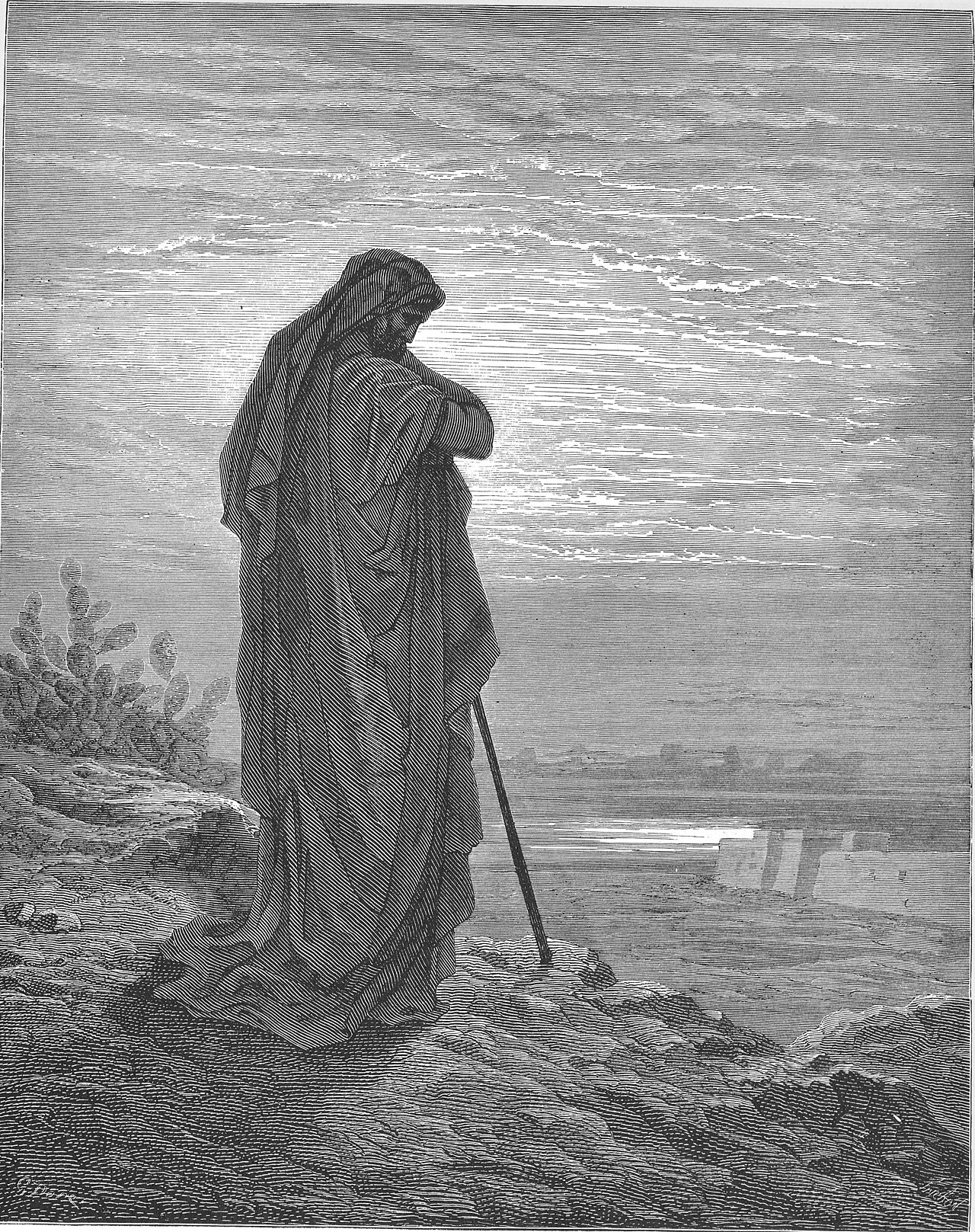
This page draws on Adam Clarke, Commentary on the Bible; Albert Barnes, Notes, Explanatory and Practical, on the Old and New Testaments (1832-1869); Carl Friedrich Keil, The Twelve Minor Prophets; Jamieson, Fausset & Brown, Commentary Critical and Explanatory on the Whole Bible; Jamieson, Fausset and Brown, Commentary Critical and Explanatory on the Whole Bible; Jerome, Commentary on Amos; John Gill, Exposition of the Old Testament (1748-1763) and Matthew Henry, Commentary on the Whole Bible.