
Amos 5:21
in Amos 5“I hate, I despise your feasts! I cannot stand the stench of your solemn assemblies.
BSB
The same verse in ASV and KJV ▾
ASV
I hate, I despise your feasts, and I will take no delight in your solemn assemblies.
KJV
I hate, I despise your feast days, and I will not smell in your solemn assemblies.
⋯
This verse in Amos 5
Commentary
8 notes on this verseA commentator
Albert Barnes1798–1870
Notes, Explanatory and Practical, on the Old and New Testaments (1832-1869)
I hate, I despise your feasts - Israel clave to its heart’s sin, the worship of the true God, under the idol-form of the calf; else, it would fain be conscientious and scrupulous. It had its “feasts” of solemn “joy” and the “restraint” of its “solemn assemblies” , which all were constrained to keep, abstaining from all servile work. They offered “whole burnt offerings,” the token of self-sacrifice, in which the sacrificer retained nothing to himself, but gave the whole freely to God. They offered also “peace offerings,” as tokens of the willing thankfulness of souls at peace with God.
This site's exposition
I hate, I despise your feast days
on Amos 5:21-24
The Lord rejects the entire festival calendar in his own voice, I hate, I despise your feast days, and I will not smell in your solemn assemblies, the sacrificial smoke that was meant to rise as a pleasing odor now refused outright, burnt offerings, meat offerings and peace offerings all named and all turned away. Take thou away from me the noise of thy songs makes the same point of temple music once meant for praise. Verse 24 is the chapter's verified center, let judgment run down as waters, and righteousness as a mighty stream, read by the bench as the standard every offering in verses 21 to 23 failed to meet, worship without justice named as noise the Lord will not hear.
The record, by era
The Church Fathers3 voices
The word would be especially fitting for those from Judah and Benjamin. For the tribes in Samaria to the worship of idols being wholly attached, they were found to be very slothful and greatly negligent of the laws given through Moses; but those in Jerusalem sacrificed on the high places to Baal and offered libations to the host of heaven, yet in addition to this they pretended to take care to show reverence for the law, and to be eager to fulfill both sacrifices and feasts. But that the Creator of all things has hated these things, he also made clear through the voice of Isaiah, saying, "Hear the word of the Lord, you rulers of Sodom; attend to the law of God, you people of Gomorrah. What is the multitude of your sacrifices to me, says the Lord? I am full of the burnt offerings of rams, and the fat of lambs and the blood of bulls and goats I do not desire, not even should you come to appear before me. For who has sought these things from your hands? You shall not continue to tread my court. If you bring fine flour, it is in vain; incense is an abomination to me. Your new moons and your Sabbaths and the great day I do not tolerate; fasting and idleness and your feasts my soul hates; you have become to me a surfeit." We say that the preceding words depend on this thought. For he says, I have hated and cast off your feasts, and I would not praise your sacrifices, nor would I ever reckon as a fragrant aroma the whole burnt offerings and the offerings for salvation.
A commentator
John ChrysostomDISCOURSES AGAINST JUDAIZING CHRISTIANS 4:6 · Written in the 5th century.
proposed
This brings us to a conclusion on another matter of great importance. The observances regarding sacrifices, sabbaths, new moons, and all such things prescribed by the Jewish way of life of that day—they are not essential. Even when they were observed they could make no great contribution to virtue; nor when neglected could they make the excellent person worthless or degrade in any way the sanctity of his soul. People of old, while still on earth, manifested by their piety a way of life that rivals the way the angels live. Yet they followed none of these observances, they slew no beasts in sacrifice, they kept no fast, they made no display of fasting. They were so pleasing to God that they surpassed this fallen human nature of ours and, by the lives they lived, drew the whole world to a knowledge of God.
(Verses 21, 22.) I hated and rejected your feasts, and I will not take the smell of your heavens. But if you bring me burnt offerings and your gifts, I will not accept them, and I will not look at the fat of your animals. LXX: I have hated and rejected your feasts, and I will not be pleased with your assemblies.
The Puritans and the Awakening1 voice
I hate, I despise your feast days,....
The Nineteenth Century1 voice
A commentator
Jamieson, Fausset & Brown1802–1910
Commentary Critical and Explanatory on the Whole Bible (1871)
I do not acknowledge them: unlike those in Judah, yours are of human, not divine institution. I will not smell--that is, I will take no delight in the sacrifices offered (Ge 8:21; Le 26:31). in your solemn assemblies--literally, "days of restraint." Isa 1:10-15 is parallel.
1 more voice on this verse
The Nineteenth Century1 voice
I hate, I despise your feast days - I abominate those sacrificial festivals where there is no piety, and I despise them because they pretend to be what they are not. This may refer to the three annual festivals which were still observed in a certain way among the Israelites.
The words behind it
6 Hebrew wordsEvery Hebrew word of this verse in the order it stands, with what it means and the door to its own study. The last column counts the times a word stands in the whole Bible: the rarer the word, the more the places it appears belong together.
| Hebrew | Sound | Meaning | Word study | In the Bible |
|---|---|---|---|---|
| שָׂנֵ֥אתִי | saneti | I hate | H8130 → | 146 times |
| מָאַ֖סְתִּי | maasti | I reject | H3988 → | |
| חַגֵּיכֶ֑ם | chageikhem | feasts your | H2282 → | |
| וְלֹ֥א | velo' | and not | H3808 → | 5168 times |
| אָרִ֖יחַ | ʾariach | I delight | H7306 → | |
| בְּעַצְּרֹֽתֵיכֶֽם׃ | beatzeroteikhem | in assemblies your | H6116 → |
שָׂנֵ֥אתִיI hate
sanetiH8130 →146 times
מָאַ֖סְתִּיI reject
maastiH3988 →
חַגֵּיכֶ֑םfeasts your
chageikhemH2282 →
וְלֹ֥אand not
velo'H3808 →5168 times
אָרִ֖יחַI delight
ʾariachH7306 →
בְּעַצְּרֹֽתֵיכֶֽם׃in assemblies your
beatzeroteikhemH6116 →
A shaded row is a word that stands 400 times or fewer in the Bible.
The walk
8 stopsEach card is a verse this one points to, and under it the verses that one points to in turn. Where several paths arrive at the same place, that place is listed first: the text keeps returning to it.
Through
Proverbs 28:9Whoever turns his ear away from hearing the law, even his prayer is detestable.
it leads to
- Proverbs 15:8
The sacrifice of the wicked is detestable to the LORD, but the prayer of the upright is His delight.
Reached by 2 separate paths from here.
- Psalms 66:18
If I had cherished iniquity in my heart, the Lord would not have listened.
- 2 Timothy 4:3–4
For the time will come when men will not tolerate sound doctrine, but with itching ears they will gather around themselves teachers to suit their own desires.
- Zechariah 7:11–13
But they refused to pay attention and turned a stubborn shoulder; they stopped up their ears from hearing.
- Psalms 109:7
When he is tried, let him be found guilty, and may his prayer be regarded as sin.
- Proverbs 15:8
Through
Isaiah 66:3Whoever slaughters an ox is like one who slays a man; whoever sacrifices a lamb is like one who breaks a dog’s neck; whoever presents a grain offering is like one who offers pig’s…
it leads to
- Amos 5:21–22
“I hate, I despise your feasts! I cannot stand the stench of your solemn assemblies.
Reached by 2 separate paths from here.
- Isaiah 1:11–15
“What good to Me is your multitude of sacrifices?” says the LORD. “I am full from the burnt offerings of rams and the fat of well-fed cattle; I take no delight in the blood…
- Amos 5:21–22
Through
Jeremiah 6:20What use to Me is frankincense from Sheba or sweet cane from a distant land? Your burnt offerings are not acceptable; your sacrifices do not please Me.”
it leads to
- Isaiah 1:11
“What good to Me is your multitude of sacrifices?” says the LORD. “I am full from the burnt offerings of rams and the fat of well-fed cattle; I take no delight in the blood…
- Isaiah 1:11
Where this verse is studied
About Amos
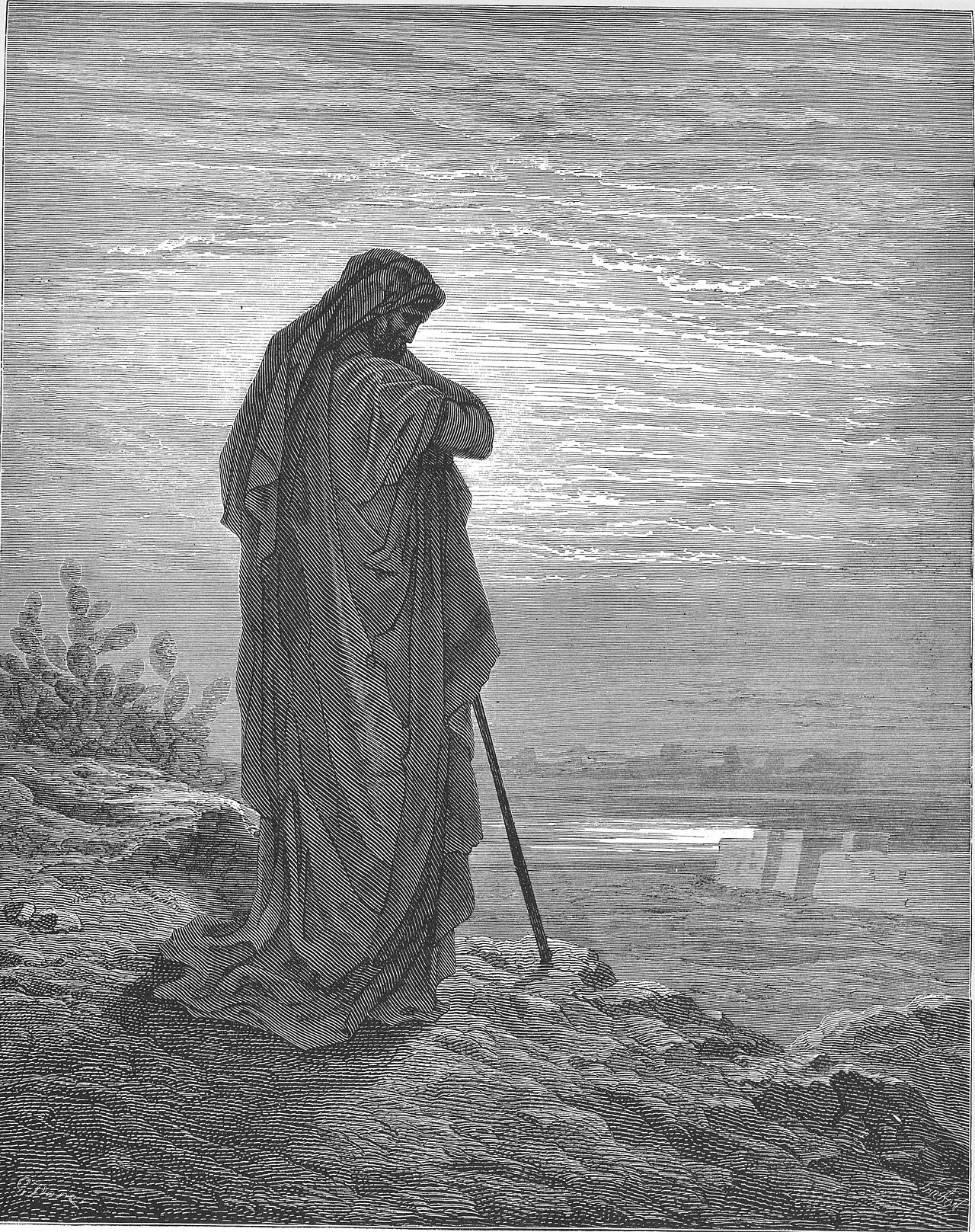
This page draws on 9 works. Open the list of works
This page draws on Adam Clarke, Commentary on the Bible; Albert Barnes, Notes, Explanatory and Practical, on the Old and New Testaments (1832-1869); Albert Barnes, Notes on the Old Testament; Carl Friedrich Keil, The Twelve Minor Prophets; Cyril of Alexandria, Commentary on Amos; Jamieson, Fausset & Brown, Commentary Critical and Explanatory on the Whole Bible; Jerome, Commentary on Amos; John Chrysostom, DISCOURSES AGAINST JUDAIZING CHRISTIANS 4:6 and John Gill, Exposition of the Old Testament (1748-1763).