
2 Chronicles 8:11
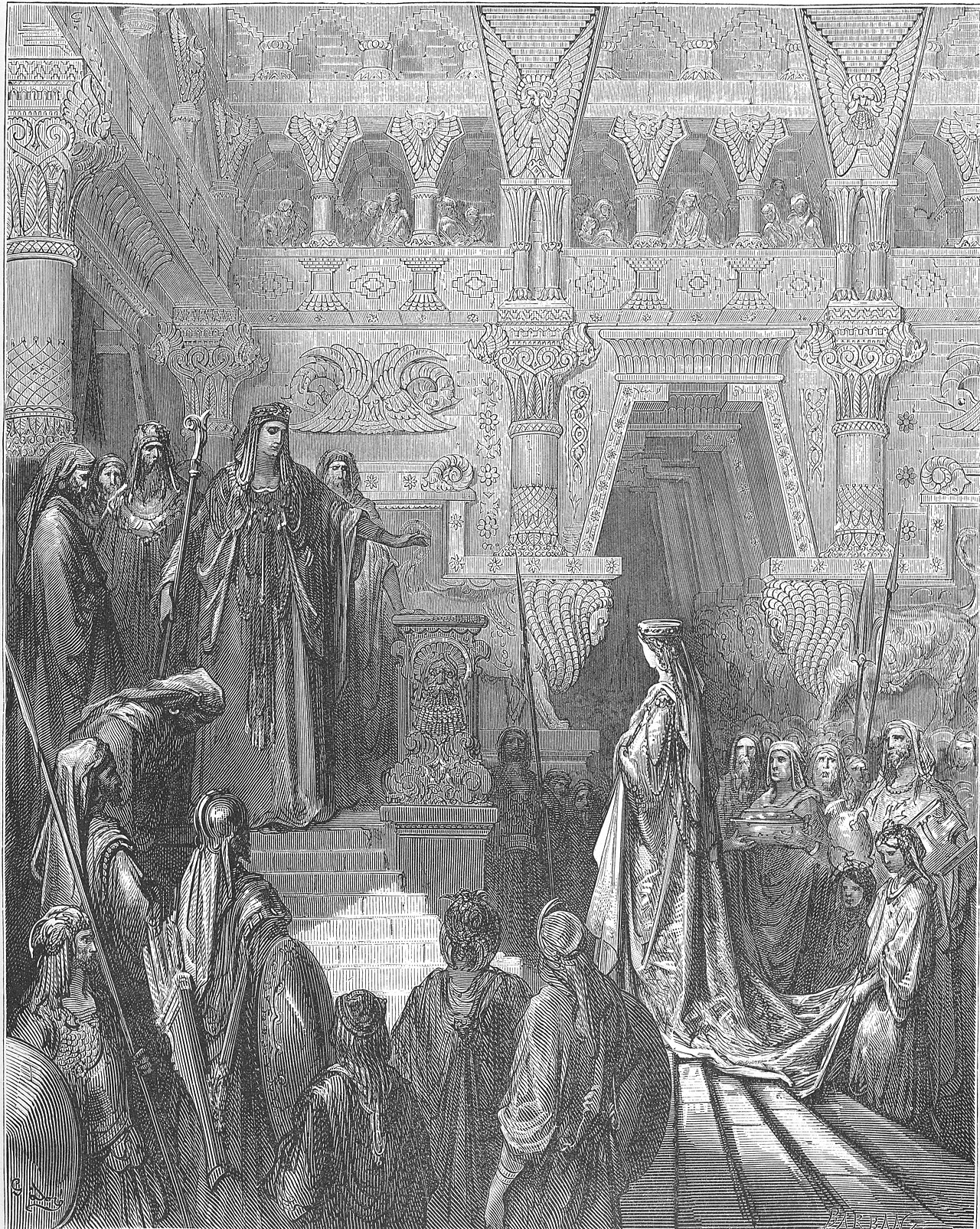
in 2 Chronicles 8Solomon brought the daughter of Pharaoh up from the City of David to the palace he had built for her. For he said, “My wife must not live in the house of David king of Israel, because the places the ark of the LORD has entered are holy.”
BSB
The same verse in ASV and KJV ▾
ASV
And Solomon brought up the daughter of Pharaoh out of the city of David unto the house that he had built for her; for he said, My wife shall not dwell in the house of David king of Israel, because the places are holy, whereunto the ark of Jehovah hath come.
KJV
And Solomon brought up the daughter of Pharaoh out of the city of David unto the house that he had built for her: for he said, My wife shall not dwell in the house of David king of Israel, because the places are holy, whereunto the ark of the Lord hath come.
⋯
This verse in 2 Chronicles 8
Commentary
6 notes on this verseThe house - He built this house for her; because the ark was now in the house of David, which therefore ought to be kept pure and free from the very danger and appearance of pollution.
This site's exposition
the daughter of Pharaoh out of the city of David
Solomon moves Pharaoh's daughter out of the city of David into a house built for her, and Chronicles alone records the reason he gives: the places are holy, whereunto the ark of the LORD hath come. The ark had stood in the city of David since David's own procession in 1 Chronicles 15, and even after its move to the temple, Solomon judges no foreign wife fit to dwell there. Wesley reads the concern as guarding against the very appearance of pollution rather than any specific fault charged against her. 1 Kings 9:24 records the same move without stating the reason; the motive here is the Chronicler's own addition.
The record, by era
The Puritans and the Awakening1 voice
The building of the temple was in order to the service of the temple. Whatever cost he was at in rearing the structure, if he had neglected the worship that was to be performed there, it would all have been to no purpose.
The Nineteenth Century3 voices
A commentator
Jamieson, Fausset & Brown1802–1910
Commentary Critical and Explanatory on the Whole Bible (1871)
proposed
Solomon brought up the daughter of Pharaoh out of the city of David unto the house that he had built for her--On his marriage with the Egyptian princess at the beginning of his reign, he assigned her a temporary abode in the city of David, that is, Jerusalem, until a suitable palace for his wife had been erected.
The daughter of Pharaoh - “And Bithiah, the daughter of Pharaoh, Solomon brought up from the city of David to the palace which he had built for her.” - T. Because the places are holy - Is not this a proof that he considered his wife to be a heathen, and not proper to dwell in a place which had been sanctified? Solomon had not yet departed from the true God.
A commentator
Albert Barnes1798–1870
Notes, Explanatory and Practical, on the Old and New Testaments (1832-1869)
proposed
Of Pharaoh - Here again the writer of Chronicles assumes in his reader a knowledge of the facts recorded in the marginal references
How the passage was read
What the Jewish commentators add
Solomon brought up from the City of David That is Zion, for he let her dwell in the City of David when he married her, and she was there until he completed building his palace.
1 more on this passage, in their own words ▾
on the altar of the Lord This was the copper altar that Solomon built.
This section is reception history: how the passage was read and kept in the Jewish tradition. Where a reading parts from an essential of the Christian faith, the section says so at that point.
Texts and citation data: Sefaria; each excerpt follows its version’s licence. 4 further sources are cited on this chapter that carry no English text this site may quote or only restate the verse.
The words behind it
29 Hebrew wordsEvery Hebrew word of this verse in the order it stands, with what it means and the door to its own study. The last column counts the times a word stands in the whole Bible: the rarer the word, the more the places it appears belong together.
| Hebrew | Sound | Meaning | Word study | In the Bible |
|---|---|---|---|---|
| וְאֶת־ | veet | and <obj.> | H853 → | 10935 times |
| בַּת־ | bat- | [the] daughter of | H1323 → | 588 times |
| פַּרְעֹ֗ה | paroh | Pharaoh | H6547 → | |
| הֶעֱלָ֤ה | heelah | he brought up | H5927 → | 890 times |
| שְׁלֹמֹה֙ | shelomoh | Solomon | H8010 → | 291 times |
| מֵעִ֣יר | meir | from [the] city of | H5892 → | 1090 times |
| דָּוִ֔יד | david | David | H1732 → | 999 times |
| לַבַּ֖יִת | labayit | to the house | H1004 → | 2046 times |
| אֲשֶׁ֣ר | ʾasher | which | H834 → | 5497 times |
| בָּֽנָה־ | banah- | he had built | H1129 → | 376 times |
| לָ֑הּ | lah | for her | ||
| כִּ֣י | ki | for | H3588 → | 4482 times |
| אָמַ֗ר | ʾamar | he said | H559 → | 5305 times |
| לֹא־ | lo'- | not | H3808 → | 5168 times |
| תֵשֵׁ֨ב | teshev | she will dwell | H3427 → | 1079 times |
| אִשָּׁ֥ה | ʾishah | a wife | H802 → | 781 times |
| לִי֙ | li | of me | ||
| בְּבֵית֙ | beveit | in [the] house of | H1004 → | 2046 times |
| דָּוִ֣יד | david | David | H1732 → | 999 times |
| מֶֽלֶךְ־ | melekh- | [the] king of | H4428 → | 2525 times |
| יִשְׂרָאֵ֔ל | yisrael | Israel | H3478 → | 2507 times |
| כִּי־ | ki- | for | H3588 → | 4482 times |
| קֹ֣דֶשׁ | kodesh | [are] holiness | H6944 → | 469 times |
| הֵ֔מָּה | hemah | they | H1992 → | 553 times |
| אֲשֶׁר־ | ʾasher- | [places] where | H834 → | 5497 times |
| בָּֽאָ֥ה | baah | it has come | H935 → | 2568 times |
| אֲלֵיהֶ֖ם | ʾaleihem | to them | H413 → | 5510 times |
| אֲר֥וֹן | ʾaron | [the] ark of | H727 → | 202 times |
| יְהוָֽה׃ פ | yahweh | Yahweh | H3068 → | 6520 times |
וְאֶת־and <obj.>
veetH853 →10935 times
בַּת־[the] daughter of
bat-H1323 →588 times
פַּרְעֹ֗הPharaoh
parohH6547 →
הֶעֱלָ֤הhe brought up
heelahH5927 →890 times
שְׁלֹמֹה֙Solomon
shelomohH8010 →291 times
מֵעִ֣ירfrom [the] city of
meirH5892 →1090 times
דָּוִ֔ידDavid
davidH1732 →999 times
לַבַּ֖יִתto the house
labayitH1004 →2046 times
אֲשֶׁ֣רwhich
ʾasherH834 →5497 times
בָּֽנָה־he had built
banah-H1129 →376 times
לָ֑הּfor her
lah
כִּ֣יfor
kiH3588 →4482 times
אָמַ֗רhe said
ʾamarH559 →5305 times
לֹא־not
lo'-H3808 →5168 times
תֵשֵׁ֨בshe will dwell
teshevH3427 →1079 times
אִשָּׁ֥הa wife
ʾishahH802 →781 times
לִי֙of me
li
בְּבֵית֙in [the] house of
beveitH1004 →2046 times
דָּוִ֣ידDavid
davidH1732 →999 times
מֶֽלֶךְ־[the] king of
melekh-H4428 →2525 times
יִשְׂרָאֵ֔לIsrael
yisraelH3478 →2507 times
כִּי־for
ki-H3588 →4482 times
קֹ֣דֶשׁ[are] holiness
kodeshH6944 →469 times
הֵ֔מָּהthey
hemahH1992 →553 times
אֲשֶׁר־[places] where
ʾasher-H834 →5497 times
בָּֽאָ֥הit has come
baahH935 →2568 times
אֲלֵיהֶ֖םto them
ʾaleihemH413 →5510 times
אֲר֥וֹן[the] ark of
ʾaronH727 →202 times
יְהוָֽה׃ פYahweh
yahwehH3068 →6520 times
A shaded row is a word that stands 400 times or fewer in the Bible.
The walk
8 stopsEach card is a verse this one points to, and under it the verses that one points to in turn. Where several paths arrive at the same place, that place is listed first: the text keeps returning to it.
Through
1 Kings 3:1Later, Solomon formed an alliance with Pharaoh king of Egypt by marrying his daughter. Solomon brought her to the City of David until he had finished building his palace and the house of the…
it leads to
- 1 Kings 9:24
As soon as Pharaoh’s daughter had come up from the City of David to the palace that Solomon had built for her, he built the supporting terraces.
Reached by 2 separate paths from here.
- 1 Kings 9:24
Through
1 Kings 7:8And the palace where Solomon would live, set further back, was of similar construction. He also made a palace like this hall for Pharaoh’s daughter, whom he had married.
it leads to
- 1 Kings 3:1
Later, Solomon formed an alliance with Pharaoh king of Egypt by marrying his daughter. Solomon brought her to the City of David until he had finished building his palace and the house of the…
Reached by 2 separate paths from here.
- 1 Kings 3:1
Through
2 Peter 1:18And we ourselves heard this voice from heaven when we were with Him on the holy mountain.
it leads to
- Matthew 17:6
When the disciples heard this, they fell facedown in terror.
- Matthew 17:6
Through
Ezekiel 21:2“Son of man, set your face against Jerusalem and preach against the sanctuaries. Prophesy against the land of Israel
it leads to
- Ezekiel 20:46
“Son of man, set your face toward the south, preach against it, and prophesy against the forest of the Negev.
- Ezekiel 20:46
Through
1 Kings 9:24As soon as Pharaoh’s daughter had come up from the City of David to the palace that Solomon had built for her, he built the supporting terraces.
it leads to
- 1 Kings 7:8
And the palace where Solomon would live, set further back, was of similar construction. He also made a palace like this hall for Pharaoh’s daughter, whom he had married.
- 2 Samuel 5:9
So David took up residence in the fortress and called it the City of David. He built it up all the way around, from the supporting terraces inward.
- 1 Kings 11:27
and this is the account of his rebellion against the king. Solomon had built the supporting terraces and repaired the gap in the wall of the city of his father David.
- 2 Chronicles 32:5
Then Hezekiah worked resolutely to rebuild all the broken sections of the wall and to raise up towers on it. He also built an outer wall and reinforced the supporting terraces of the City…
- 1 Kings 7:8
About 2 Chronicles
Who and where
2 names in this verse with a page on the site.
This page draws on Adam Clarke, Commentary on the Bible; Albert Barnes, Notes, Explanatory and Practical, on the Old and New Testaments (1832-1869); Jamieson Fausset and Brown, Commentary Critical and Explanatory on the Whole Bible; Jamieson, Fausset & Brown, Commentary Critical and Explanatory on the Whole Bible; John Wesley, Explanatory Notes upon the Old Testament and Matthew Henry, Commentary on the Whole Bible.