
2 Chronicles 13:21
in 2 Chronicles 13But Abijah grew strong, married fourteen wives, and became the father of twenty-two sons and sixteen daughters.
BSB
The same verse in ASV and KJV ▾
ASV
But Abijah waxed mighty, and took unto himself fourteen wives, and begat twenty and two sons, and sixteen daughters.
KJV
But Abijah waxed mighty, and married fourteen wives, and begat twenty and two sons, and sixteen daughters.
⋯
This verse in 2 Chronicles 13
Commentary
5 notes on this verseBut Abijah waxed mighty,.... In his kingdom, increasing in riches and numbers, power and authority, and in his family: and married fourteen wives, and begat twenty and two sons and sixteen daughters; not after the above battle, nor since he began to reign; for he reigned but three years; but he, no doubt, married wives and had children before he came to the throne, as he might have others after.
This site's exposition
married fourteen wives, and begat twenty and two sons
on 2 Chronicles 13:21-22
Abijah's fourteen wives and thirty-eight children, Clarke suggests, likely sealed alliances with neighboring powers the way royal marriages regularly did; Gill notes most were had before his three-year reign even began. The source citation, the story of the prophet Iddo, gives Clarke what he calls the first biblical mention of the word that becomes midrash, a lost commentary this very chapter appears to draw from. Kings closes Abijam's three verses with the verdict that his heart was not perfect with the Lord his God; Chronicles closes its fuller chapter without repeating that line, and the two accounts are read alongside each other rather than resolved into one.
The record, by era
The Puritans and the Awakening2 voices
4 And Abijah stood up upon mount Zemaraim, which is in mount Ephraim, and said, Hear me, thou Jeroboam, and all Israel; 5 Ought ye not to know that the L ORD God of Israel gave the kingdom over Israel to David for ever, even to him and to his sons by a covenant of salt?
quarantine:scripture (2026-07-29) — scripture-overlap:96%@v4-5
Happy is the man that hath his quiver full of those arrows. It seems, he had ways peculiar to himself, and sayings of his own, which were recorded with his acts in the history of those times,
The Nineteenth Century1 voice
Married fourteen wives - Probably he made alliances with the neighboring powers, by taking their daughters to him for wives.
How the passage was read
What the Jewish commentators add
On the verses either side of this one
And Jeroboam could muster no more strength, etc., and the Lord smote him i.e., Jeroboam.
This section is reception history: how the passage was read and kept in the Jewish tradition. Where a reading parts from an essential of the Christian faith, the section says so at that point.
Texts and citation data: Sefaria; each excerpt follows its version’s licence. 4 further sources are cited on this chapter that carry no English text this site may quote or only restate the verse.
The words behind it
14 Hebrew wordsEvery Hebrew word of this verse in the order it stands, with what it means and the door to its own study. The last column counts the times a word stands in the whole Bible: the rarer the word, the more the places it appears belong together.
| Hebrew | Sound | Meaning | Word study | In the Bible |
|---|---|---|---|---|
| וַיִּתְחַזֵּ֣ק | vaiyitchazek | and he strengthened himself | H2388 → | 291 times |
| אֲבִיָּ֔הוּ | ʾaviyahu | Abijah | H29 → | 25 times |
| וַיִּ֨שָּׂא־ | vaiyisa'- | and he took | H5375 → | 656 times |
| ל֔וֹ | lo | for himself | ||
| נָשִׁ֖ים | nashim | wives | H802 → | 781 times |
| אַרְבַּ֣ע | ʾarba' | four- | H702 → | 318 times |
| עֶשְׂרֵ֑ה | ʾesreh | teen | H6240 → | 338 times |
| וַיּ֗וֹלֶד | vaiyoled | and he fathered | H3205 → | 496 times |
| עֶשְׂרִ֤ים | ʾesrim | twenty | H6242 → | 315 times |
| וּשְׁנַ֙יִם֙ | ushenayim | and two | H8147 → | 768 times |
| בָּנִ֔ים | banim | sons | H1121 → | 4930 times |
| וְשֵׁ֥שׁ | veshesh | and six- | H8337 → | 216 times |
| עֶשְׂרֵ֖ה | ʾesreh | teen | H6240 → | 338 times |
| בָּנֽוֹת׃ ס | banot | daughters | H1323 → | 588 times |
וַיִּתְחַזֵּ֣קand he strengthened himself
vaiyitchazekH2388 →291 times
אֲבִיָּ֔הוּAbijah
ʾaviyahuH29 →25 times
וַיִּ֨שָּׂא־and he took
vaiyisa'-H5375 →656 times
ל֔וֹfor himself
lo
נָשִׁ֖יםwives
nashimH802 →781 times
אַרְבַּ֣עfour-
ʾarba'H702 →318 times
עֶשְׂרֵ֑הteen
ʾesrehH6240 →338 times
וַיּ֗וֹלֶדand he fathered
vaiyoledH3205 →496 times
עֶשְׂרִ֤יםtwenty
ʾesrimH6242 →315 times
וּשְׁנַ֙יִם֙and two
ushenayimH8147 →768 times
בָּנִ֔יםsons
banimH1121 →4930 times
וְשֵׁ֥שׁand six-
vesheshH8337 →216 times
עֶשְׂרֵ֖הteen
ʾesrehH6240 →338 times
בָּנֽוֹת׃ סdaughters
banotH1323 →588 times
A shaded row is a word that stands 400 times or fewer in the Bible.
The walk
8 stopsEach card is a verse this one points to, and under it the verses that one points to in turn. Where several paths arrive at the same place, that place is listed first: the text keeps returning to it.
Through
2 Chronicles 11:21Rehoboam loved Maacah daughter of Absalom more than all his wives and concubines. In all, he had eighteen wives and sixty concubines, and he was the father of twenty-eight sons and sixty daughters.
it leads to
- Deuteronomy 17:17
He must not take many wives for himself, lest his heart go astray. He must not accumulate for himself large amounts of silver and gold.
- 1 Kings 11:3
He had seven hundred wives of royal birth and three hundred concubines—and his wives turned his heart away.
- Judges 8:30
Gideon had seventy sons of his own, since he had many wives.
- 2 Samuel 3:2–5
And sons were born to David in Hebron: His firstborn was Amnon, by Ahinoam of Jezreel;
- 2 Samuel 5:13
After he had arrived from Hebron, David took more concubines and wives from Jerusalem, and more sons and daughters were born to him.
- Deuteronomy 17:17
Through
Judges 9:5He went to his father’s house in Ophrah, and on one stone murdered his seventy brothers, the sons of Jerubbaal. But Jotham, the youngest son of Jerubbaal, survived, because he hid himself.
it leads to
- 2 Kings 11:1–2
When Athaliah the mother of Ahaziah saw that her son was dead, she proceeded to annihilate all the royal heirs.
- Judges 6:24
So Gideon built an altar to the LORD there and called it The LORD Is Peace. To this day it stands in Ophrah of the Abiezrites.
- 2 Kings 11:1–2
Through
Judges 10:4He had thirty sons who rode on thirty donkeys. And they had thirty towns in the land of Gilead, which to this day are called Havvoth-jair.
it leads to
- Numbers 32:41
Jair, a descendant of Manasseh, went and captured their villages and called them Havvoth-jair.
- Numbers 32:41
About 2 Chronicles
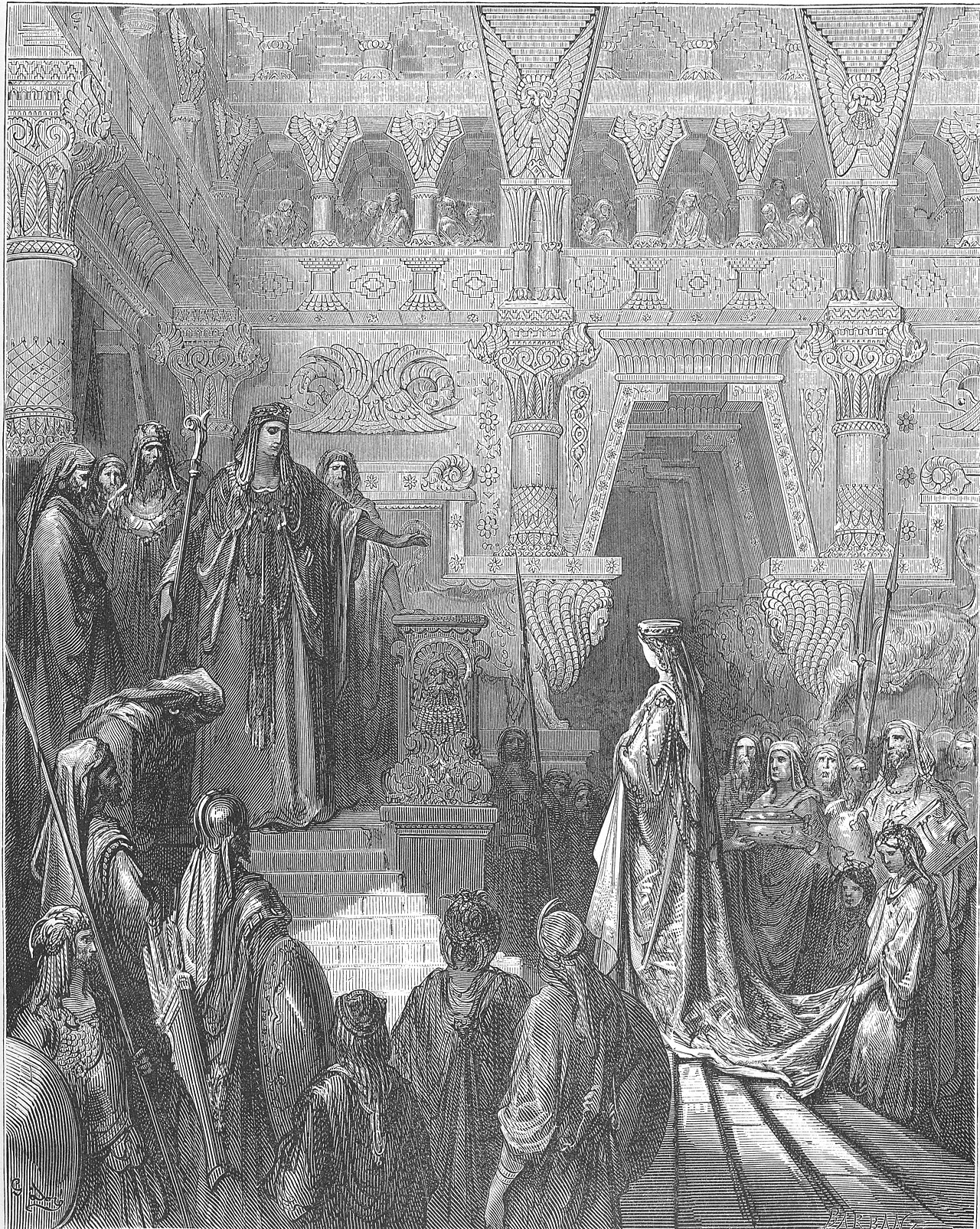
This page draws on Adam Clarke, Commentary on the Bible; John Gill, Exposition of the Old Testament (1748-1763); John Gill, Exposition of the Old Testament and Matthew Henry, Commentary on the Whole Bible.