
1 Samuel 8:16
in 1 Samuel 8And he will take your menservants and maidservants and your best cattle and donkeys and put them to his own use.
BSB
The same verse in ASV and KJV ▾
ASV
And he will take your men-servants, and your maid-servants, and your goodliest young men, and your asses, and put them to his work.
KJV
And he will take your menservants, and your maidservants, and your goodliest young men, and your asses, and put them to his work.
⋯
This verse in 1 Samuel 8
Commentary
8 notes on this verseThis site's exposition
your best cattle and donkeys
on 1 Samuel 8:16-18
Menservants, maidservants and the best cattle and donkeys go to the king's use, and “a tenth of your flocks” follows the tenth of the grain. The list ends with the people themselves: “you yourselves will become his slaves”. Verse 18, “the LORD will not answer you on that day”, states the moral: a king got by rejecting God's reign brings a burden his own request cannot undo.
The record, by era
The Church Fathers2 voices
A commentator
Apostolic ConstitutionsConstitutions of the Holy Apostles Book 2 · Written before 380.
proposed
Account these worthy to be esteemed your rulers and your kings, and bring them tribute as to kings; for by you they and their families ought to be maintained. As Samuel made constitutions for the people concerning a king, in the first book of Kings, and Moses did so concerning priests in Leviticus, so do we also make constitutions for you concerning bishops. For if there the multitude distributed the inferior services in proportion to so great a king, ought not therefore the bishop much more now to receive of you those things which are determined by God for the sustenance of himself and of the rest of the clergy belonging to him? But if we may add somewhat further, let the bishop receive more than the other received of old: for he only managed the affairs of the soldiery, being entrusted with war and peace for the preservation of men's bodies; but the other is entrusted with the exercise of the priestly office in relation to God, in order to preserve both body and soul from dangers. By how much, therefore, the soul is more valuable than the body, so much the priestly office is beyond the kingly. For it binds and looses those that are worthy of punishment or of remission. Wherefore you ought to love the bishop as your father, and fear him as your king, and honour him as your lord, bringing to him your fruits and the works of your hands, for a blessing upon you, giving to him your first-fruits, and your tithes, and your oblations, and your gifts, as to the priest of God; the first-fruits of your wheat, and wine, and oil, and autumnal fruits, and wool, and all things which the Lord God gives thee. And thy offering shall be accepted as a savour of a sweet smell to the Lord thy God; and the Lord will bless the works of thy hands, and will multiply the good things of the land. "For a blessing is upon the head of him that giveth."
And observe the wisdom of the prophet, or rather the loving kindness of God. For because he wished to turn them from [their design,] bringing together a number of grievous things he asserted them of their future king, as, for instance, that he would make their wives grind at the mill, the men shepherds and muleteers; for he went through all the service appertaining to the kingdom with minuteness. But when he saw that they would not be hindered by any of these things, but were incurably distempered; he thus both spareth them and composeth their king to gentleness.
The Medieval Church3 voices
A commentator
Gregory the DialogistCommentary on 1 Kings, Book 4, Chapter 4 · Written before 604.
proposed
After all these things, the servants and maidservants of the Israelites, the best young men, are declared to be taken away and put to the king's work. Who are the servants of the carnal, except those who, by the example of the wicked, have been so corrupted by long habit that they seem to have perpetually subjected the necks of their minds under the yoke of most wicked imitation? Their servants, therefore, are taken away when, by the zeal of chosen preachers, even those abandon their sins who seemed to be vehemently subjected to the reprobate imitation of the carnal. They are also called the best young men. They are young, indeed, because they are strong in evil; they are also called the best because they are more wicked than the rest of sinners. To whom, of course, it is said through the prophet: "Woe to you who are mighty at drinking wine, and men of strength at mixing drunkenness" (Isaiah 5:22). They drink wine, indeed, who by deliberation of mind recklessly take in the heat of concupiscence, and they mix drunkenness, because while they are inflamed by the fires of their lusts, they know not how to return to the ways of righteousness, their reason being lost. They are mighty and strong both at drinking and at mixing drunkenness, so that on account of their fervent devotion to evil they are shown to be, as it were, the best servants. These best young men the divine word likewise points out when it describes the greed of the devil, saying: "His food is choice" (Habakkuk 1:16). For the ancient enemy is greatly refreshed by the wickedness of those who are more wicked than the most wicked. By the name of maidservants, that most wicked condition of sinners is designated—those who through iniquity are exceedingly depraved and furnish examples of wickedness to others. […]
A commentator
Gregory the DialogistCommentary on 1 Kings, Book 4, Chapter 2 · Written before 604.
proposed
There follows: "He will also take your male servants and female servants, and your best young men, and your donkeys, and put them to his work." The male and female servants of the saints are those who supply them with temporal necessities. They are male and female servants because, while they provide them with bodily necessities, in this same work of mercy some are stronger than others.
A commentator
Gregory the DialogistCommentary on 1 Kings, Book 4, Chapter 1 · Written before 604.
proposed
9. When subjection is sought by carnal men, assuredly whatever is commanded them is burdensome, even if it is not difficult: because since they have it from the swelling of pride that they follow the judgment of their own will, whatever opposes their deliberation they consider most grievous. But indeed when harsh and contrary things are commanded, what a weight of burden is that! What swelling of heart! When they could scarcely bear even pleasant and light things unwillingly—things which, if they had been willing, they would have borne most easily.
2 more voices on this verse
The Puritans and the Awakening2 voices
This would be a great change. (2.) He must keep a great table; he will not be content to dine with his neighbours upon a sacrifice, as Samuel used to do ( ch. ix.
quarantine:debris (2026-07-29) — unbalanced-parens
And he will take your manservants, and your maidservants,....
The words behind it
12 Hebrew wordsEvery Hebrew word of this verse in the order it stands, with what it means and the door to its own study. The last column counts the times a word stands in the whole Bible: the rarer the word, the more the places it appears belong together.
| Hebrew | Sound | Meaning | Word study | In the Bible |
|---|---|---|---|---|
| וְאֶת־ | veet | and <obj.> | H853 → | 10935 times |
| עַבְדֵיכֶם֩ | ʾavdeikhem | [male] servants your | H5650 → | 799 times |
| וְֽאֶת־ | veet | and <obj.> | H853 → | 10935 times |
| שִׁפְח֨וֹתֵיכֶ֜ם | shifchoteikhem | female servants your | H8198 → | 63 times |
| וְאֶת־ | veet | and <obj.> | H853 → | 10935 times |
| בַּחוּרֵיכֶ֧ם | bachureikhem | young men your | H970 → | |
| הַטּוֹבִ֛ים | hatovim | <the> good | H2896 → | 538 times |
| וְאֶת־ | veet | and <obj.> | H853 → | 10935 times |
| חֲמוֹרֵיכֶ֖ם | chamoreikhem | donkeys your | H2543 → | 96 times |
| יִקָּ֑ח | yikach | he will take | H3947 → | 966 times |
| וְעָשָׂ֖ה | veasah | and he will use [them] | H6213 → | 2628 times |
| לִמְלַאכְתּֽוֹ׃ | limlakhto | for work his | H4399 → |
וְאֶת־and <obj.>
veetH853 →10935 times
עַבְדֵיכֶם֩[male] servants your
ʾavdeikhemH5650 →799 times
וְֽאֶת־and <obj.>
veetH853 →10935 times
שִׁפְח֨וֹתֵיכֶ֜םfemale servants your
shifchoteikhemH8198 →63 times
וְאֶת־and <obj.>
veetH853 →10935 times
בַּחוּרֵיכֶ֧םyoung men your
bachureikhemH970 →
הַטּוֹבִ֛ים<the> good
hatovimH2896 →538 times
וְאֶת־and <obj.>
veetH853 →10935 times
חֲמוֹרֵיכֶ֖םdonkeys your
chamoreikhemH2543 →96 times
יִקָּ֑חhe will take
yikachH3947 →966 times
וְעָשָׂ֖הand he will use [them]
veasahH6213 →2628 times
לִמְלַאכְתּֽוֹ׃for work his
limlakhtoH4399 →
A shaded row is a word that stands 400 times or fewer in the Bible.
Where this verse is studied
On this page
Studies1
About 1 Samuel
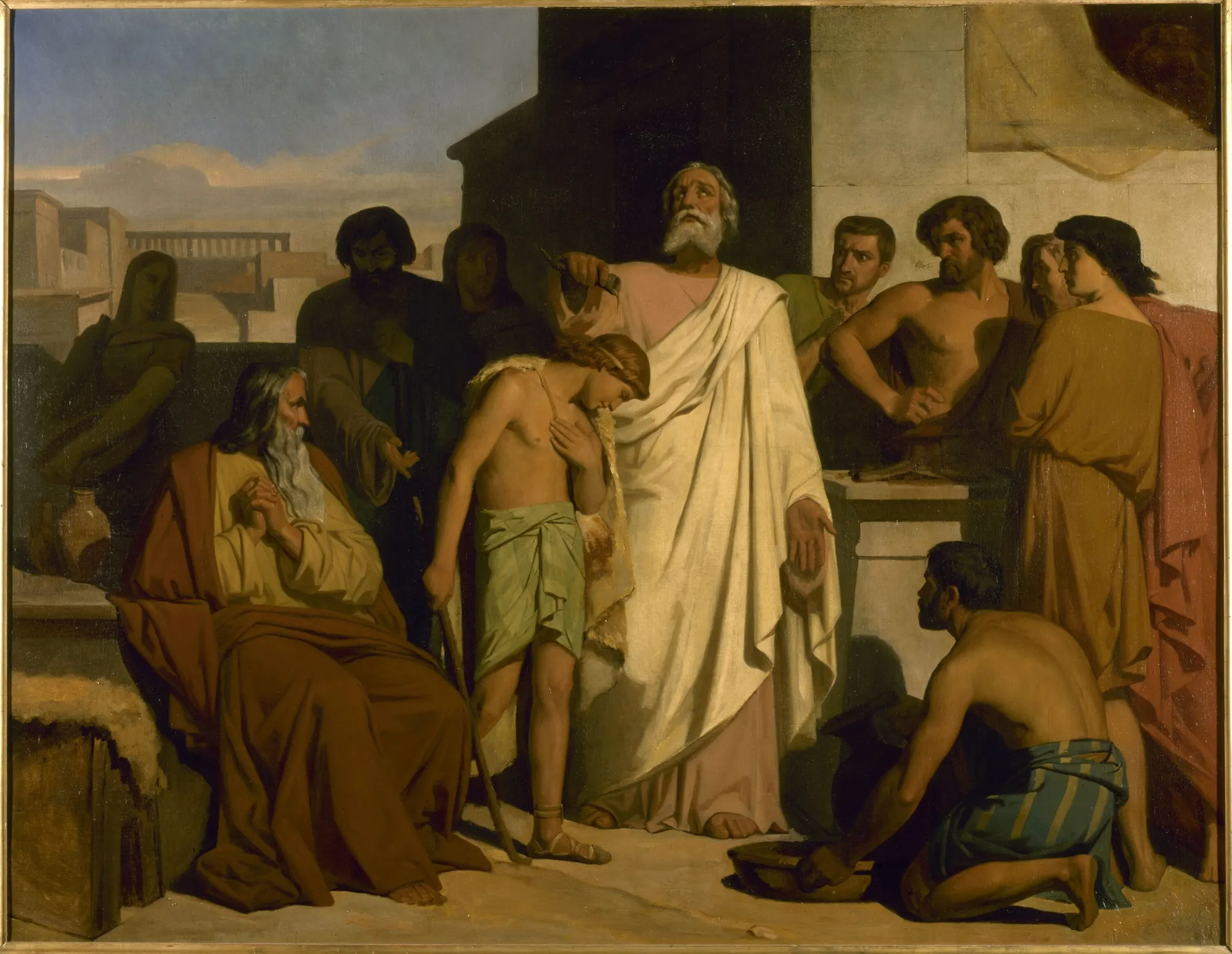
This page draws on Apostolic Constitutions, Constitutions of the Holy Apostles Book 2; Gregory the Dialogist, Commentary on 1 Kings, Book 4, Chapter 4; Gregory the Dialogist, Commentary on 1 Kings, Book 4, Chapter 2; Gregory the Dialogist, Commentary on 1 Kings, Book 4, Chapter 1; John Chrysostom, Homily on 2 Corinthians 24; John Gill, Exposition of the Old Testament; John Gill, Exposition of the Old Testament (1748-1763) and Matthew Henry, Commentary on the Whole Bible.