
Psalm 94
23 verses · Lament for justice
When anxiety overwhelms me, Your consolation delights my soul.
Introduction
Author unstated, the Judge of the Earth, Book 4: The LORD reigns, Poetry, Psalms Overview.
This psalm names no writer and gives no date. It was written by someone who watched the courts of his own land serve the powerful, while the widow, the orphan and the stranger had no one to speak for them. He brings that wrong to God as Judge and asks Him to act. Partway through, the psalm turns from argument to the writer's own story of being held up when he was about to fall. Listen for the questions he puts to the proud, and for the change from anger to comfort.
Context
- Who
- People watching legal wickedness prosper and hearing the wicked say God takes no notice
- What
- A lament that asks God as Judge to act against rulers who crush the weak through the courts.
- Where
- Judah, where the widow, the fatherless and the resident foreigner had no family to defend them in court
- When
- Undated and untitled in the Hebrew, from a time when the courts served the powerful.
- Why
- To teach the wronged to hand vengeance to God and to find comfort while they wait for Him.
Historical context
The three victims of verse 6 are the three the law of Israel singled out. Deuteronomy 10:18 names the fatherless, the widow and the foreigner as the ones God Himself defends, because each of them lacked the male relatives who would otherwise have argued a case for them. Verse 20 asks about a corrupt throne that devises mischief by decree, which describes wrongdoing carried out through legal process. The argument at verses 9 and 10 answers the claim quoted in verse 7, that the LORD does not see, from the body: the ear was affixed and the eye was formed. The abode of silence at verse 17 translates a Hebrew word, dumah, which means silence and stands for death.
Significance
The psalm let a wronged person say how long twice over and still hand the vengeance to God, which is what Deuteronomy 32:35 had already claimed for Him. Its blessing at verse 12 would have been the hardest line for a first hearer, because it calls a man blessed who is being disciplined. Set beside the exulting wicked of verse 3, it says which of the two is in a better position.
This chapter in Jewish lifeWhat this chapter is in Jewish life and reading.
What is done
The Jewish traditions preserved in the Mishnah record this as the psalm the Levites sang in the temple on the fourth day of every week (Mishnah Tamid 7:4, Danby translation, as this site records it at scripts/data/historical-context/ch3-psalms-b.mjs). A complaint about crooked courts stood in the ordinary midweek service and was sung in the temple.
How it is read
Rashi reads the psalm as Israel under a foreign power asking to be heard. On verse 9 he puts the argument as a question: is it possible that the Holy One, blessed be He, "Who implanted the ear, should not hear the cry of His people and their affliction?" (Rashi on Psalms 94:9:1, Rashi on Psalms, The Judaica Press complete Tanach with Rashi, translated by A. J. Rosenberg, CC-BY).
The boasting of verse 4 he takes for men who praise themselves, and the thoughts of verse 11 for the thoughts of men who plan to be haughty with the crown of the kingdom (Rashi on Psalms 94:4:1 and 94:11:1, same edition).
The chastening of verse 12 is read as a mercy on a condition. Rashi writes that fortunate are the righteous who are afflicted under God's hands, "provided that they engage in Torah and mitzvoth", and that the chastisements bring a man peace from the days of the judgment of Gehinnom (Rashi on Psalms 94:12:1 and 94:13:1, same edition). Verse 15 is read to the same end, with the judgment lasting until those under it become righteous through it (Rashi on Psalms 94:15:1).
The gathering of verse 21 Rashi reads as troops gathering upon a Jewish soul to kill him, which is how the psalm's danger was heard in the medieval community that received this commentary (Rashi on Psalms 94:21:1, same edition). Ibn Ezra comments on ten verses for which Sefaria holds no English version, and they are cited by reference (Ibn Ezra on Psalms 94:1:1 and the nine references beside it).
What the rabbis say
The corpus records forty places where the Midrash and the Talmud cite this psalm, twenty six under Midrash and fourteen under Talmud, and it carries the locator for each one with no text. The Babylonian Talmud reads the first verse at Berakhot 33a:22, 33a:23 and 58b:1, and it takes up verse 12 three times over one page at Berakhot 5a:10, 5a:14 and 5a:17. It cites verse 8 at Sukkah 55a:5, verse 9 at Sanhedrin 39a:8, verse 17 at Berakhot 18b:13 and verse 23 three times at Arakhin 11b:17, 12a:2 and 12a:4.
Midrash Tehillim treats the psalm at 94:2 and cites its verses from four other psalms at 7:8, 13:7, 92:6 and 119:26. Ruth Rabbah reads verse 14 at 2:11, and Devarim Rabbah reads verse 16 at 11:10. The site reports where the rabbis cite the verse and reports no saying, because the locator carries none.
Sources: The Mishnah, Tamid 7:4, Danby translation, as recorded at scripts/data/historical-context/ch3-psalms-b.mjs, about AD 200; Rashi, Rashi on Psalms 94, in The Judaica Press complete Tanach with Rashi, translated by A. J. Rosenberg, CC-BY; Ibn Ezra, Ibn Ezra on Psalms 94, cited by reference; Sefaria holds no English version; The Midrash and the Talmud, the forty locators on Psalms 94 in scripts/data/sources/sefaria/psalms/94.json.
Psalms 94:1-3
God of vengeance, shine forth: The psalm hands the vengeance to God and asks the Judge of the earth to rise up. Deuteronomy 32:35 claims the vengeance for God Himself, and Paul quotes that verse at Romans 12:19 against private revenge. Verse 3 asks how long, twice over.
Psalms 94:1
“O Lord God, to whom vengeance belongeth; 0 God, to whom vengeance belongeth, shew thyself: or, God of retribution, Jehovah, God of retribution, shine forth! A very natural prayer when innocence is trampled down, and wickedness exalted on high. If the execution of justice be a right thing, —and who can deny the fact?”
Charles Spurgeon · The Treasury of David, Vol. 4 (1874)Particular Baptist
1 more voice on this verseWhat preachers and commentators have said about this verse, in their own words.
Psalms 94:1
“We are always discussing the title, so that from the title the psalm too may be understood. "A psalm of David, on the fourth day of the week." The fourth day of the week is in the middle of the week, as if in the heart of the week — that is, in the middle of the seven days. For it is the fourth day, and the fourth day has an equal number of days on either side.”
Jerome · written before 420 · Homily 22, on Psalm 93patristic
Rise up, O Judge of the earth: Rise up is the language of a judge standing from his seat to give sentence. Abraham gives God the same title at Genesis 18:25. The reward asked for the proud is their due, paid back in kind.
Psalms 94:2
“Lift up thyself, thou judge of the earth. Ascend thy judgment seat and be acknowledged as the ruler of men: and, moreover, raise thyself as men do who are about to strike with all their might; for the abounding sin of mankind requires a heavy blow from thy hand. Render a reward to the proud, give them measure for measure, a fair retaliation, blow for blow.”
Charles Spurgeon · The Treasury of David, Vol. 4 (1874)Particular Baptist
1 more voice on this verse
Psalms 94:2
"Be exalted, you who judge the earth." You judge the earth, because heaven does not deserve to be judged. Listen, heretic, to how the Lord judges the earth. If there is a fall in heaven, why is there not also a judgment in heaven? If souls sinned in heaven, why is the earth alone judged? "Render their recompense to the proud." All sins indeed must be guarded against, because all are contrary to God; but they are so in various ways: proud sins are enemies to God. For "the Lord resists the proud, but to the humble he gives grace."
Jerome · written before 420 · Homily 71, on Psalm 93 (Alternate Series)patristic
How long will the wicked: How long is asked twice, the cry of a man who has watched wrong go on. Exult is the word for a victor's boasting, the wicked celebrating as if they had won. The question assumes an end and asks only when.
Psalms 94:3
Lord, how long shall the wicked, how long shall the wicked triumph? Shall wrong for ever rule? Are slavery, robbery, tyranny, never to cease? Since there is certainly a just God in heaven, armed with almighty power, surely there must be sooner or later an end to the ascendancy of evil, innocence must one day find a defender. This "how long?" of the text is the bitter complaint of all the righteous in all ages, and expresses wonder caused by that great enigma of providence, the existence and predominance of evil. The sound "how long?"
Charles Spurgeon · The Treasury of David, Vol. 4 (1874)Particular Baptist
1 more voice on this verse
Psalms 94:3
“The character of the enemies they complain against. They are wicked; they are workers of iniquity; they are bad, very bad, themselves, and therefore they hate and persecute those whose goodness shames and condemns them. Those are wicked indeed, and workers of the worst iniquity, lost to all honour and virtue, who are cruel to the innocent and hate the righteous.”
Matthew Henry · Commentary on the Whole Bible (1707-1721)puritan
Psalms 94:4-7
They pour out arrogant words: The crimes are named one by one, crushing God's people, killing the widow and the foreigner, murdering the fatherless. Deuteronomy 10:18 names the same three as the ones God Himself defends. Verse 7 gives the wicked's reason, that the LORD does not see.
Psalms 94:4
“Utter - Or pour forth freely, constantly, abundantly, as a fountain doth waters (so this Hebrew word signifies.) Hard things - Insolent, and intolerable words against thee and thy people.”
John Wesley · Explanatory Notes upon the Old Testament (1765)evangelical
2 more voices on this verse
Psalms 94:4
"They will utter and speak iniquity." He speaks of this properly concerning the heretics. "All who work iniquity shall speak." See the sign: he who speaks evil must necessarily do evil. "For out of the abundance of the heart the mouth speaks." Wherever the conscience is wounded, there sin is easily committed in the mouth.
Jerome · written before 420 · Homily 22, on Psalm 93patristic
Psalms 94:4
“How long shall they utter and speak hard things? The ungodly are not content with deeds of injustice, but they add hard speeches, boasting, threatening, and insulting over the saints. Will the Lord for ever endure this? Will he leave his own children much longer to be the prey of their enemies? Will not the insolent speeches of his adversaries and theirs at last provoke his justice to interfere?”
Charles Spurgeon · The Treasury of David, Vol. 4 (1874)Particular Baptist
they oppress Your heritage: The singer calls the victims Your people and Your heritage, so the crime is against what belongs to God. Heritage is the word for an inheritance, land passed down in a family. To crush them is to damage His own.
Psalms 94:5
“They break in pieces thy people, O Lord, grinding them with oppression, crushing them with contempt. Yet the men they break in pieces are God's own people, and they are persecuted because they are so; this is a strong plea for the divine interposition. And afflict thine heritage, causing them sorrowful humiliation and deep depression of heart. The term, "thine heritage, "marks out the election of the saints, God's peculiar interest and delight in them, his covenant relation, of long standing, to them and their fathers; this also is a storehouse of arguments with their faithful God.”
Charles Spurgeon · The Treasury of David, Vol. 4 (1874)Particular Baptist
1 more voice on this verse
Psalms 94:5
"They have humbled your people, O Lord." Always the people of God are humbled, the people of God are oppressed. "They have humbled your people, O Lord." The people of God are humbled, and imitate God who was humbled and meek of heart.
Jerome · written before 420 · Homily 22, on Psalm 93patristic
the widow and the foreigner: They kill the widow and the foreigner, and the fatherless are murdered, the three who had no one to plead for them. The wicked choose the weakest. Exodus 22:22 to 24 says the LORD hears them.
Psalms 94:6
“They slay the widow and the stranger, and murder the fatherless. They deal most arrogantly with those who are the most evident objects of compassion. The law of God especially commends these poor ones to the kindness of good men, and it is peculiar wickedness which singles them out to be the victims not only of fraud but of murder. Must not such inhuman conduct as this provoke the Lord? Shall the tears of widows, the groans of strangers, and the blood of orphans be poured forth in vain?”
Charles Spurgeon · The Treasury of David, Vol. 4 (1874)Particular Baptist
The wicked put their denial into words. They call Him the God of Jacob, the name tied to the nation's own history, and say He pays that nation no heed. The next four verses answer the claim.
Psalms 94:7
“Yet they say, the Lord shall not see. This was the reason of their arrogance, and the climax of their wickedness: they were blindly wicked because they dreamed of a blind God. When men believe that the eyes of God are dim, there is no reason to wonder that they give full license to their brutal passions. The persons mentioned above not only cherished an infidel unbelief, but dared to avow it, uttering the monstrous doctrine that God is too far away to take notice of the actions of men. Neither shall the God of Jacob regard it.”
Charles Spurgeon · The Treasury of David, Vol. 4 (1874)Particular Baptist
1 more voice on this verse
Psalms 94:7
"The God of Jacob, though his people pretend to have such an interest in him, does not regard it either as against justice or as against his own people; he will never call us to an account for it." Thus they deny God's government of the world, banter his covenant with his people, and set the judgment to come at defiance. They are here convicted of folly and absurdity.
Matthew Henry · Commentary on the Whole Bible (1707-1721)puritan
Psalms 94:8-11
O senseless among the people!: The answer is an argument from the body. The ear was fixed and the eye moulded like a potter's work, so the Maker hears and sees, and the One who teaches man knows. Verse 11 turns that scrutiny on the wicked, whose thoughts the LORD calls futile.
Psalms 94:8
"Understand, you who are foolish among the people, and be wise at last, you fools. He who planted the ear, shall he not hear?" He who is a potter, is he ignorant of his own vessel? He who makes another hear, shall he then himself not hear? He who gave me eyes, shall he then himself not see? He who is the author of my understanding, shall he himself not understand? This passage tells especially against those who are Anthropomorphites, who say that God has the members that we too have.
Jerome · written before 420 · Homily 22, on Psalm 93patristic
1 more voice on this verse
Psalms 94:8
“Understand, ye brutish among the people. They said that God did not note, and now, using the same word in the original, the psalmist calls on the wicked to note, and have regard to the truth. He designates them as boors, boarish, swinish men, and well was the term deserved; and he bids them understand or consider, if they can. They thought themselves to be wise, and indeed the only men of wit in the world, but he calls them "boars among the people": wicked men are fools, and the more they know, the more foolish they become.”
Charles Spurgeon · The Treasury of David, Vol. 4 (1874)Particular Baptist
He who affixed the ear: The ear was affixed, planted in the head as a tree in the ground, and the eye was formed. He who made them can hear and see. The wicked of verse 7 said the LORD does not see.
Psalms 94:9
“He that planted the ear, shall he not hear? He fashioned that marvellous organ, and fixed it in the most convenient place near to the brain, and is he deaf himself? Is he capable of such design and invention, and yet can he not discern what is done in the world which he made? He made you hear, can he not himself hear? Unanswerable question! It overwhelms the sceptic, and covers him with confusion. He that formed the eye, shall he not see? He gives us vision; is it conceivable that he has no sight himself?”
Charles Spurgeon · The Treasury of David, Vol. 4 (1874)Particular Baptist
2 more voices on this verse
Psalms 94:9
“Planted - The word is emphatical, signifying the excellent structure of the ear, or the several organs belonging to the sense of hearing. Formed - By which word he intimates the accurate and curious workmanship of the eye.”
John Wesley · Explanatory Notes upon the Old Testament (1765)evangelical
Psalms 94:9
“The evidence of God's providential government is found in His creative power and omniscience, which also assure us that He can punish the wicked in regard to all their vain purposes. On the other hand He favors though He chastens, the pious, and will teach and preserve them till the prosperous wicked are overthrown.”
Jamieson, Fausset & Brown · Commentary Critical and Explanatory on the Whole Bible (1871)reformed
He who admonishes the nations: The argument moves from the body to history. God disciplines whole nations, so He can correct the men of verse 4. The One who taught man all he knows is not short of knowledge Himself.
Psalms 94:10
“He that chastiseth the heathen, shall not he correct? He reproves whole nations, can he not reprove individuals? All history shows that he visits national sin with national judgment, and can he not deal with single persons? The question which follows is equally full of force, and is asked with a degree of warmth which checks the speaker, and causes the inquiry to remain incomplete. It begins, He that teacheth man knowledge, and then it comes to a pause, which the translators have supplied with the words, shall not he know?”
Charles Spurgeon · The Treasury of David, Vol. 4 (1874)Particular Baptist
1 more voice on this verse
Psalms 94:10
“He that chastiseth the Heathen,.... As he did the old world, by bringing a flood upon it, and sweeping away its inhabitants at once; and Sodom and Gomorrah, by raining fire and brimstone upon them, and consuming them from off the earth; and the old inhabitants of Canaan, by ejecting them out of their land for their abominations, with other similar instances: shall he not correct? such audacious wretches, guilty of such atrocious crimes, such horrid murders, and gross atheism? certainly he will, as he has both a right and power to do it.”
The LORD knows the thoughts of man: Futile is the Hebrew word for breath or vapor, the word Ecclesiastes uses for vanity. The wicked said God does not see, and the psalm answers that He sees even their thoughts. Paul quotes it at 1 Corinthians 3:20.
Psalms 94:11
“Whether men admit or deny that God knows, one thing is here declared, namely, that The Lord knoweth the thoughts of man, that they are vanity. Not their words alone are heard, and their works seen, but he reads the secret motions of their minds, for men themselves are not hard to be discerned of him, before his glance they themselves are but vanity. It is in the Lord's esteem no great matter to know the thoughts of such transparent pieces of vanity as mankind are, he sums them up in a moment as poor vain things.”
Charles Spurgeon · The Treasury of David, Vol. 4 (1874)Particular Baptist
1 more voice on this verse
Psalms 94:11
"The Lord knows the thoughts of men, that they are vain." We read in a secular poet: "O the cares of men, O how much emptiness there is in things!" Both the Gentiles and the philosophers lift this little verse to heaven. And what do they say? Nothing could be said more prudently. Behold, our rustic Hebrew, so many ages before, spoke this. And what did he say? "The Lord knows the thoughts of men, that they are vain." Do you want to know that the thoughts of men are vain?
Jerome · written before 420 · Homily 22, on Psalm 93patristic
Cross references
Psalms 94:11
- Quoted in1 Corinthians 3:20And again, “The Lord knows that the thoughts of the wise are futile.”
'The Lord knoweth the thoughts of the wise, that they are vain'
Psalms 94:12-15
Blessed is the man You discipline: The discipline of verse 12 comes with teaching from God's law. Verse 13 gives its purpose, relief from days of trouble while a pit is being dug for the wicked. The LORD keeps His people, and judgment will be righteous again.
Psalms 94:12
"Blessed is the man whom you shall instruct, O Lord." Happy is he who has God as his teacher. "And whom you shall teach out of your law: that you may soften for him the evil days." See what he says. "Blessed is the man whom you shall instruct, O Lord, and whom you shall teach out of your law" — that is, out of your Scriptures. But of what use is this, that he should be taught out of your law? "That you may soften for him the evil days."
Jerome · written before 420 · Homily 22, on Psalm 93patristic
1 more voice on this verse
Psalms 94:12
“Blessed is the man whom thou chastenest, O Lord. The psalmist's mind is growing quiet. He no longer complains to God or argues with men, but tunes his harp to softer melodies, for his faith perceives that with the most afflicted believer all is well. Though he may not feel blessed while smarting under the rod of chastisement, yet blessed he is; he is precious in God's sight, or the Lord would not take the trouble to correct him, and right happy will the results of his correction be.”
Charles Spurgeon · The Treasury of David, Vol. 4 (1874)Particular Baptist
until a pit is dug for the wicked: The discipline gives the righteous man quiet while he waits. In the same season a pit is being dug for the wicked, the hunter's trap prepared for them. Both are under way, and neither is finished yet.
Psalms 94:13
“That thou mayest give him rest from the days of adversity, until the pit be digged for the wicked. The chastening hand and instructive book are sanctified to us, so that we learn to rest in the Lord. We see that his end is our everlasting benefit, and therefore abide quiet under all trying providences and bitter persecutions, waiting our time.”
Charles Spurgeon · The Treasury of David, Vol. 4 (1874)Particular Baptist
1 more voice on this verse
Psalms 94:13
“That they shall see the ruin of those that are the instruments of their sufferings, which is the matter of a promise, not as gratifying any passion of theirs, but as redounding to the glory of God: Until the pit is digged (or rather while the pit is digging) for the wicked, God is ordering peace for them at the same time that he is ordaining his arrows against the persecutors.”
Matthew Henry · Commentary on the Whole Bible (1707-1721)puritan
the LORD will not forsake His people: His people and His heritage are the words of verse 5, where the wicked crushed them. What they tried to destroy, the LORD keeps. Samuel gives Israel the same assurance at 1 Samuel 12:22.
Psalms 94:14
“For the Lord will not cast off his people. He may cast them down, but he never can cast them off. During fierce persecutions the saints have been apt to think that the Lord had left his own sheep, and given them over to the wolf; but it has never been so, nor shall it ever be, for the Lord will not withdraw his love, neither will he forsake his inheritance. For a time he may leave his own with the design of benefiting them thereby, yet never can he utterly desert them.”
Charles Spurgeon · The Treasury of David, Vol. 4 (1874)Particular Baptist
1 more voice on this verse
Psalms 94:14
“Let God's suffering people assure themselves of this, that, whatever their friends do, God will not cast them off, nor throw them out of his covenant or out of his care; he will not forsake them, because they are his inheritance, which he will not quit his title to nor suffer himself to be disseised of.”
Matthew Henry · Commentary on the Whole Bible (1707-1721)puritan
judgment will again be righteous: Judgment has been bent in the courts, and the verse says it will return to righteousness. The upright in heart follow it, as a people follow a leader. The psalm expects justice restored in the place where it failed.
Psalms 94:15
“But judgment shall return unto righteousness. The great Judge will come, the reign of righteousness will commence, the course of affairs will yet be turned into the right channel, and then all the godly will rejoice. The chariot of right will be drawn in triumph through our streets, and all the upright in heart shall follow it, as in happy procession. A delightful hope is here expressed in poetic imagery of much beauty.”
Charles Spurgeon · The Treasury of David, Vol. 4 (1874)Particular Baptist
2 more voices on this verse
Psalms 94:15
“But - God will declare himself to be a righteous judge, and will again establish justice in the earth. Follow - They will all approve of it, and imitate this justice of God in all their actions.”
John Wesley · Explanatory Notes upon the Old Testament (1765)evangelical
Psalms 94:15
“God's judgment, that is, his government, looks sometimes as if it were at a distance from righteousness, while the wicked prosper, and the best men meet with the worst usage; but it shall return to righteousness again, either in this world or at the furthest in the judgment of the great day, which will set all to-rights.”
Matthew Henry · Commentary on the Whole Bible (1707-1721)puritan
Psalms 94:16-19
Who will rise up for me: The question of verse 16 gets its answer in verse 17, that without the LORD the singer would already be in the abode of silence. The Hebrew word there is dumah, silence, and it means death. Verse 18 sets the slipping foot against the loving devotion that holds him.
Psalms 94:16
"Who will rise up for me against the evildoers?" The psalms are obscure, and they are always changing the speakers; and for this reason they are obscure, and it is of exceeding difficulty to know in each verse who is speaking. "Who will rise up for me against the evildoers? or who will stand with me against those who work iniquity?" These verses the Savior speaks. "I am holy, I was lifted up on the cross, I died, I rose again, and I ascended a victor to the heavens.
Jerome · written before 420 · Homily 22, on Psalm 93patristic
1 more voice on this verse
Psalms 94:16
“Notwithstanding the psalmist's persuasion that all would be well eventually, he could not at the time perceive any one who would stand side by side with him in opposing evil; no champion of the right was forthcoming, the faithful failed from among men. This also is a bitter trial, and a sore evil under the sun; yet it has its purpose, for it drives the heart still more completely to the Lord, compelling it to rest alone in him.”
Charles Spurgeon · The Treasury of David, Vol. 4 (1874)Particular Baptist
Unless the LORD had been my helper: The LORD had been his helper before, and without that help he would soon have dwelt in silence, which is death. He answers verse 16 from memory. A past rescue is his evidence now.
Psalms 94:17
“Unless the Lord had been my help, my soul had almost dwelt in silence. Without Jehovah's help, the psalmist declares that he should have died outright, and gone into the silent land, where no more testimonies can be borne for the living God. Or he may mean that he would not have had a word to speak against his enemies, but would have been wrapped in speechless shame. Blessed be God, we are not left to that condition yet, for the Almighty Lord is still the helper of all those who look to him.”
Charles Spurgeon · The Treasury of David, Vol. 4 (1874)Particular Baptist
1 more voice on this verse
Psalms 94:17
"Unless the Lord had helped me, my soul had almost dwelt in hell." For this reason, O Lord, I rise again, because you were among the dead and rose again. My soul would have been held fast among the dead, if your soul had not risen again from the dead.
Jerome · written before 420 · Homily 22, on Psalm 93patristic
The help comes at the moment he admits his weakness. As soon as he says his foot is slipping, God's loving devotion holds him up. The word of need and the answer arrive together.
Psalms 94:18
"If I said, My foot has slipped: your mercy, O Lord, was helping me." The confession of weakness quickly earns God's help, and by however much pride gives offense, by that much is he appeased by humility. "If I said, My foot has slipped": if I confess my sins, if I say that my foot has stood on slippery ground, if I do not trust in my own strength, if I acknowledge that I am not, though fallen, strong, at once "your mercy helps me."
Jerome · written before 420 · Homily 71, on Psalm 93 (Alternate Series)patristic
1 more voice on this verse
Psalms 94:18
“When I said, My foot slippeth—is slipping even now: I perceived my danger, and cried out in horror, and then, at the very moment of my extremity, came the needed help, thy mercy, O Lord, held me up. Often enough is this the case, we feel our weakness, and see our danger, and in fear and trembling we cry out.”
Charles Spurgeon · The Treasury of David, Vol. 4 (1874)Particular Baptist
Your consolation delights my soul: Anxiety here is the word for divided, restless thoughts, many at once. Against their number the singer sets God's consolations, which in Hebrew is also plural. Each troubled thought meets its own comfort.
Psalms 94:19
"According to the multitude of my sorrows in my heart, your consolations have gladdened my soul." This very thing the Apostle too speaks of, namely that according to the labors and miseries which we suffer in this world, we have a reward with God in the heavens. The greatness of the tribulations is the greatness of the rewards. As many wounds as we suffer, so many crowns do we also deserve. This is what he says: The more I did penance, so many times did you console me.
Jerome · written before 420 · Homily 22, on Psalm 93patristic
2 more voices on this verse
Psalms 94:19
“In the multitude of my thoughts within me. When I am tossed to and fro with various reasonings, distractions, questions, and forebodings, I will fly to my true rest, for thy comforts delight my soul. From my sinful thoughts, my vain thoughts, my sorrowful thoughts, my griefs, my cares, my conflicts, I will hasten to the Lord; he has divine comforts, and these will not only console but actually delight me. How sweet are the comforts of the Spirit!”
Charles Spurgeon · The Treasury of David, Vol. 4 (1874)Particular Baptist
Psalms 94:19
“Thoughts - While my heart was filled with various and perplexing thoughts, as this Hebrew word signifies. Comforts - Thy promises, and the remembrance of my former experience of thy care and kindness.”
John Wesley · Explanatory Notes upon the Old Testament (1765)evangelical
Psalms 94:20-23
Can a corrupt throne: Verse 20 asks whether a corrupt throne devising mischief by decree can be God's ally, and verse 21 names men who condemn the innocent. Wickedness dressed as legal process is the target. Verse 22 answers the cry of verse 1, and verse 23 brings the wicked's iniquity back on them.
Psalms 94:20
“Shall the throne of iniquity have fellowship with thee? Such thrones there are, and they plead a right divine, but their claim is groundless, a fraud upon mankind and a blasphemy of heaven. God enters into no alliance with unjust authority, he gives no sanction to unrighteous legislation. Which frameth mischief by a law? They legalise robbery and violence, and then plead that it is the law of the land; and so indeed it may be, but it is a wickedness for all that.”
Charles Spurgeon · The Treasury of David, Vol. 4 (1874)Particular Baptist
2 more voices on this verse
Psalms 94:20
“Their dignity served to put a reputation upon sin, and their authority was employed to support it, and to bring about their wicked designs. It is a pity that ever a throne, which should be a terror to evil-doers and a protection and praise to those that do well, should be the seat and shelter of iniquity.”
Matthew Henry · Commentary on the Whole Bible (1707-1721)puritan
Psalms 94:20
"Shall the seat of iniquity cling to you?" You who judge righteousness, can you have iniquity for a neighbor? "You who fashion sorrow in a commandment?" The commandments of God have the sorrow of repentance; but that sorrow itself is good, because it furnishes the medicine of sinners. For unless with sweat and toil, we shall not do the commandments of God. Let no one, then, suppose that he will be crowned amid delights. "The widow who is in delights, while living, is dead."
Jerome · written before 420 · Homily 71, on Psalm 93 (Alternate Series)patristic
condemn the innocent to death: Band together is the verb for gathering in troops, a planned and shared effort. Condemn the innocent to death is literally to declare innocent blood guilty. The crime is done through the court's own verdict.
Psalms 94:21
“They gather themselves together against the soul of the righteous, so many are there of them that they crowd their assemblies, and carry their hard measures with enthusiasm; they are the popular party, and are eager to put down the saints. In counsel, and in action, they are unanimous; their one resolve is to hold their own tyrannical position, and put down the godly party. And condemn the innocent blood.”
Charles Spurgeon · The Treasury of David, Vol. 4 (1874)Particular Baptist
my rock of refuge: The singer sets his stronghold against the corrupt throne of verse 20. A stronghold is a high place out of reach, and a rock of refuge is a cliff to shelter in. He names his shelter before the wicked have fallen.
Psalms 94:22
“But the Lord is my defence,.... The defence of his church and people, of all the righteous, against those great armies of their enemies that gather together against them: the Targum, in the king's Bible is, "the Word of the Lord shall be my weapon:'' and my God is the rock of my refuge; to whom recourse is had for shelter from the enemy, and against which the gates of hell cannot prevail: both characters, rock and refuge, agree with Christ, the essential Word of the Lord.”
2 more voices on this verse
Psalms 94:22
“Let the wicked gather as they may, the psalmist is not afraid, but sweetly sings, The Lord is my defence, and my God is the rock of my refuge. Firm as a rock is Jehovah's love, and there do we betake ourselves for shelter. In him, even in him alone, we find safety, let the world rage as it may; we ask not aid from man, but are content to flee into the bosom of omnipotence.”
Charles Spurgeon · The Treasury of David, Vol. 4 (1874)Particular Baptist
Psalms 94:22
"And the Lord has become a refuge for me." This passage tells against the Arians. For since they contradict the Lord the Savior, because he is said to be "made," behold, we say, "The Lord has become a refuge for me." No one doubts that this is interpreted of the Father. But if it is said of the Father, "The Lord has become a refuge for me," it must be understood in this sense: the Lord who always was, has become a refuge for me. So too the Savior who always was, has become a Savior for me.
Jerome · written before 420 · Homily 22, on Psalm 93patristic
He will bring upon them their own iniquity: The wicked are paid in their own coin, their iniquity turned back on them. Destroy is said twice, and the second time the LORD our God is its subject. Verse 1 is answered by that name.
Psalms 94:23
“The natural result of oppression is the destruction of the despot; his own iniquities crush him ere long. Providence arranges retaliations as remarkable as they are just. High crimes in the end bring on heavy judgments, to sweep away evil men from off the face of the earth; yea, God himself interposes in a special manner, and cuts short the career of tyrants while they are in the very midst of their crimes. Wicked men are often arrested by the pursuivants of divine justice red handed, with the evidences of their guilt upon them.”
Charles Spurgeon · The Treasury of David, Vol. 4 (1874)Particular Baptist
How this psalm is built
The form: The prayer of a man whose innocence is trampled down and whose wickedness is exalted on high, asking the God of retribution to shine forth, as Spurgeon classes it.
The patterns in this chapter
| Device | What it does | Where to see it |
|---|---|---|
| The name said twice | Verse 1 calls on the God of vengeance and then calls on the God of vengeance again in the same line, and verse 3 asks how long the wicked will exult and asks it a second time. The doubling is the psalm's way of pressing, and it happens at the start of the complaint and at the start of the question.Charles Spurgeon, The Treasury of David, Vol. 4, 1874, on Psalm 94:1. | Psalm 94:1, Psalm 94:3 |
| The crimes listed one by one | Verses 5 and 6 name the acts rather than summarising them: crushing God's people, oppressing His heritage, killing the widow and the foreigner, murdering the fatherless. Deuteronomy 10:18 names the same three as the ones God Himself defends, so the list is chosen to be the sharpest possible charge.Matthew Henry, Commentary on the Whole Bible, 1710, on Psalm 94:5. | Psalm 94:5, Psalm 94:6 |
| The argument from the body | Verses 9 and 10 answer the wicked with four questions built on the same frame. He who affixed the ear, can He not hear. He who formed the eye, can He not see. Matthew Henry reads the formation of human bodies as proof that God has in Himself every perfection that is in any creature.Matthew Henry, Commentary on the Whole Bible, 1710, on Psalm 94:9. | Psalm 94:9, Psalm 94:10 |
| The turn from the third person to the first | For fifteen verses the psalm speaks about the wicked and about the LORD. At verse 16 it asks who will rise up for me, and from there to verse 22 it is one man's own case: his slipping foot, his anxiety, his helper, his stronghold. Matthew Henry notes what stands behind the question, that the oppressed often have no comforter when power is on the oppressor's side.Matthew Henry, Commentary on the Whole Bible, 1710, on Psalm 94:16. | Psalm 94:16, Psalm 94:17, Psalm 94:22 |
In the New Testament
9 more paragraphs on the patterns
Paul quotes verse 11 at 1 Corinthians 3:20, where the futile thoughts of man become the thoughts of the wise. The psalm's first line rests on Deuteronomy 32:35, where God claims the vengeance for Himself, and Paul quotes that verse at Romans 12:19 to forbid private revenge. Psalm 94 is the prayer that matches the command, since it does not renounce justice and refuses to administer it.
Where it comes from
The three victims of verse 6 are the three Deuteronomy 10:18 names as God's own charge, the fatherless, the widow and the foreigner. Naming them is the psalm's way of saying that the crimes are aimed at God through the people He undertook to defend.
The debated point
Verse 20 asks whether a corrupt throne devising mischief by decree can be God's ally, and the question is about law rather than crime. Matthew Henry reads it as a throne whose dignity puts a reputation upon sin and whose authority is used to support it, so the psalm charges an authority that is acting legally. Adam Clarke reads verse 17 through the older versions, which put the abode of silence in the invisible world, and the Hebrew word there is dumah, silence, which the site carries as the word's own sense rather than as a doctrine of the afterlife.
In the Psalter
Psalm 94 stands inside the enthronement run and interrupts it. Psalm 93 and Psalm 95 to Psalm 99 are about the reign; this psalm is about what the reign has not yet done, and its place in the group is the group's own honesty.
The door
The widow, orphan and stranger carries the three the psalm names at verse 6 and the law that undertook to defend them.
Keep studying
Studies1
People and groups1
Sources for this chapter
The summary
Jamieson, Fausset & Brown, Commentary Critical and Explanatory; John Calvin, Commentaries; John Wesley, Notes on the Old Testament and Matthew Henry, Complete Commentary.
The form and classifications
Charles Spurgeon, The Treasury of David, Vol. 4, 1874, on Psalm 94:1; Jamieson, Fausset and Brown, Commentary Critical and Explanatory on the Whole Bible, 1871, on Psalm 94:2 and Matthew Henry, Commentary on the Whole Bible, 1710, on Psalm 94:2.
The exposition
Albert Barnes, Notes on the Book of Psalms; Charles Spurgeon, The Treasury of David; Franz Delitzsch, Biblical Commentary on the Psalms; John Calvin, Commentary on the Book of Psalms; John Gill, Exposition of the Old Testament and Matthew Henry, Commentary on the Whole Bible.
The painting
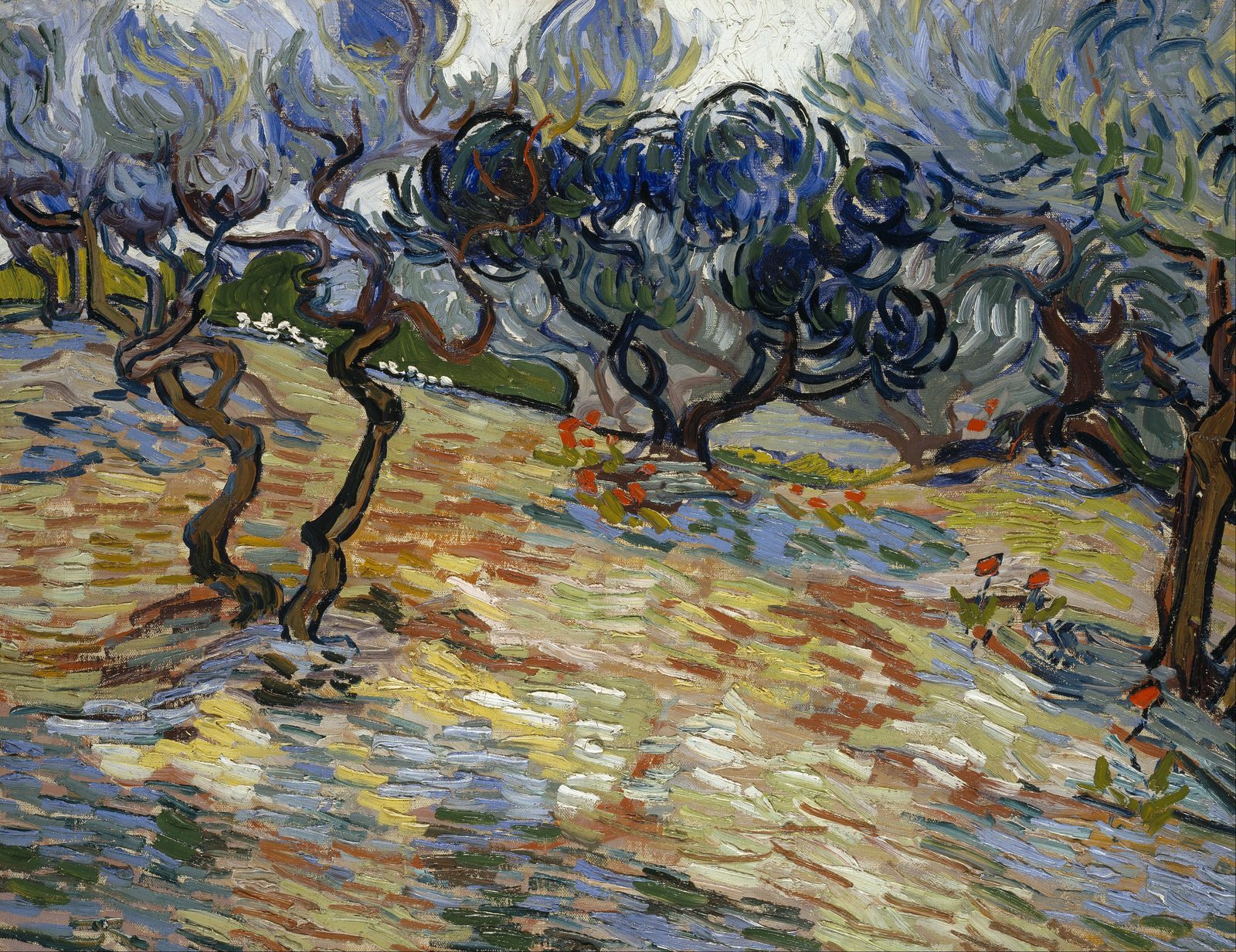
Olive Trees. Vincent van Gogh, Saint-Rémy-de-Provence, November 1889. Wikimedia Commons. Public domain.