
Psalm 49
20 verses · Wisdom psalm
No man can possibly redeem his brother or pay his ransom to God.
Introduction
The sons of Korah, the Riddle of Riches, Book 2: The Elohistic Psalter, Poetry, Psalms Overview.
The sons of Korah wrote this as a lesson for everyone, rich and poor alike, and the singer calls it a riddle he will open on the harp. It is a wisdom psalm for anyone who has felt small beside a wealthy and proud neighbour. Its argument runs on the ordinary business of ransom, where a life or a field could be bought back at a price. Listen for the one payment no one can make, and for the refrain that ends both halves. Then listen for the single line of hope the argument cannot supply by itself.
Context
- Who
- Israelites who felt small beside rich neighbours, addressed alongside all the peoples of the world
- What
- A wisdom poem addressed to all peoples on what wealth can and cannot buy in the face of death.
- Where
- Israel in the kingdom era, among family estates, ransom payments and rock-cut tombs.
- When
- The monarchy, with the date unstated.
- Why
- To free the poor from the fear of rich men and to point to the ransom only God can pay.
Historical context
The heading gives the psalm to the sons of Korah. The singer calls his lesson a proverb and a riddle at verse 4, so the psalm states its own office before it states its subject. The economy it describes belongs to the monarchy, when land was held by families and estates carried their owners' names. Israel's law allowed a ransom, a payment accepted in place of a forfeited life in certain cases, and a near kinsman could redeem a relative sold into debt slavery or buy back family land. That is what makes verses 7 and 8 land, since the one payment that cannot be made is the one that matters. Wealthy families were buried in rock-cut tombs in the hillsides outside Jerusalem, used by one household for generations, and naming an estate after yourself was how a man stayed in the record.
Significance
The psalm is addressed to every inhabitant of the world, and its subject is the fear of rich men. Its cure is arithmetic. When he dies he carries nothing away. It also leaves one line its own logic cannot supply, the redemption from Sheol that no man could pay, expected from the only one who can.
This chapter in Jewish lifeWhat this chapter is in Jewish life and reading.
How it is read
Ibn Ezra opens this chapter with a judgment about what the psalm is for, and the corpus carries his English here:
this psalm is very important, because it explains the light of the afterlife (lit. World to come) and the undying soul of wisdom. (Ibn Ezra on Psalms 49:1:1)
That is a Jewish commentator stating the doctrine of the world to come and the soul that does not die, from a psalm in the Hebrew Bible, and a Christian reader who has been told the Old Testament says nothing of the life to come meets the answer here. Rashi reads the psalm as an address to men who trust their money:
Hear this, all you peoples Because this psalm is based on people who rely on their riches, he says, “all you peoples,” for they all require admonition. (Rashi on Psalms 49:2:1)
He reads the ransom no brother can pay as a price beyond any possession, at Rashi on Psalms 49:8:1, and the redemption of the psalmist's own soul as God taking him in his lifetime into his ways, at Rashi on Psalms 49:16:1. The generation of the forefathers in the last lines he reads as the wicked under judgment, at Rashi on Psalms 49:20:1. Ibn Ezra also stands at Ibn Ezra on Psalms 49:6:1, 49:17:1 and 49:18:1 and Radak at Radak on Psalms 49:1:1, and Sefaria holds no English version of those references, so this card cites them without quotation.
What the rabbis say
The corpus records 40 places where the rabbinic literature takes up a line of this psalm, 31 of them in the Midrash. Rashi carries one of the smaller sayings himself at Rashi on Psalms 49:2:2, where the psalm's word for the earth is read by the Sages from the weasel, because the Rabbis taught that whatever lives on dry land is found in the sea as well, the weasel excepted, and he cites the tractate Chullin for it. Ein Yaakov, which gathers the narrative passages of the Talmud, takes the psalm up at Ein Yaakov, Khullin 9:2, Khagigah 1:10, Gittin 4:9, Moed Katan 1:8, Shabbat 2:26 and Rosh Hashanah 1:15. The Midrash on the Psalms treats it at Midrash Tehillim 49:1 and 49:2 and Bereshit Rabbah at Bereshit Rabbah 23:1, 11:2, 12:6 and 26:2. The Talmud takes up lines of the psalm at Jerusalem Talmud Shabbat 14:1:4, Avot DeRabbi Natan, Recension B 43:12, Chullin 127a:12, Avodah Zarah 18a:4, Avot DeRabbi Natan, Recension B 27:2, Chagigah 5b:20, Gittin 47a:6, Avot DeRabbi Natan 1:8 and Shabbat 31b:5.
Sources: Rashi, Rashi on Psalms, in The Judaica Press complete Tanach with Rashi, translated by A. J. Rosenberg, under a CC-BY licence; Ibn Ezra, Ibn Ezra on Psalms 49:1:1 and 49:10:1, quoted under the licence the corpus records for them; Radak, Radak on Psalms, cited at Radak on Psalms 49:1:1; Ein Yaakov, cited at Ein Yaakov, Khullin 9:2, Khagigah 1:10, Gittin 4:9, Moed Katan 1:8, Shabbat 2:26 and Rosh Hashanah 1:15; The Talmud, cited at Jerusalem Talmud Shabbat 14:1:4, Avot DeRabbi Natan, Recension B 43:12, Chullin 127a:12, Avodah Zarah 18a:4, Avot DeRabbi Natan, Recension B 27:2, Chagigah 5b:20, Gittin 47a:6, Avot DeRabbi Natan 1:8 and Shabbat 31b:5; MannaFest, the Sefaria corpus at scripts/data/sources/sefaria/psalms/49.json, fetched 2026-09-19, 2026.
Psalms 49:1-4
Hear this, all you peoples: reaches past Israel to everyone alive. Both low and high, rich and poor stand in the audience before a word of the teaching begins. The psalm calls its own teaching a proverb and a riddle, and it plays the riddle on the harp.
Psalms 49:1
“Hear and give ear, Ps. lxii. Not only, "Hear, all you Israelites, and give ear all the inhabitants of Canaan," but, Hear, all you people, and give ear, all you inhabitants of the world; for this doctrine is not peculiar to those that are blessed with divine revelation, but even the light of nature witnesses to it.”
Matthew Henry · Commentary on the Whole Bible (1707-1721)puritan
rich and poor alike: The Hebrew sets two names for mankind side by side, which John Gill gave as sons of Adam and sons of men. Albert Barnes heard one lesson for rich and poor alike. The poor need never fear or envy the rich, and the rich must never trust their wealth.
Psalms 49:2
“Both rich and poor together are called to a single vocation and invited to a certain humility and equality. The rich are not to turn up their noses at the poor, and the poor are not to be jealous of the rich. One grace joins both together. The Lord, though he was rich, became poor, so as to be Savior of poor and rich alike.”
Ambrose of Milan · written before 397 · Commentaries on the Twelve Davidic Psalms, On Psalm 49patristic
1 more voice on this verse
Psalms 49:2
“Both low and high,.... Or "both the sons of Adam and the sons of men".”
the meditation of my heart: The mouth will impart what the heart has weighed in meditation. Augustine saw in the pair a pledge that the wisdom flows from the heart, unlike men who honor God with the lips alone. Spurgeon said the Spirit who made the seers eloquent also made them thoughtful.
Psalms 49:3
“My mouth shall speak of wisdom. Inspired and therefore lifted beyond himself, the prophet is not praising his own attainments, but extolling the divine Spirit which spoke in him. He knew that the Spirit of truth and wisdom spoke through him. He who is not sure that his matter is good has no right to ask a hearing. And the meditation of my heart shall be of understanding. The same Spirit who made the ancient seers eloquent, also made them thoughtful. The help of the Holy Ghost was never meant to supersede the use of our own mental powers.”
Charles Spurgeon · The Treasury of David, Vol. 2 (1870)Particular Baptist
1 more voice on this verse
Psalms 49:3
“My mouth shall speak of wisdom,.... Or "wisdoms" (m); of Christ, who is so called, Pro 1:20. He being as a divine Person the wisdom of God, and the only wise God; and having all the treasures of wisdom in him, as man and Mediator: of him the prophet spake, and of him the apostles and all Gospel ministers speak; of the glories of his Person, of the fulness of his grace, and of his wonderful works; especially of that of redemption and salvation by him, in which there is an abounding of wisdom and prudence.”
I will incline my ear to a proverb: The singer who called the world to listen now listens first. Spurgeon wrote that he who would have others hear begins by hearing himself. Jamieson, Fausset and Brown took the word for proverb as a comparison, one image carrying a general truth.
Psalms 49:4
“I will incline mine ear to a parable. He who would have others hear, begins by hearing himself. As the minstrel leans his ear to his harp, so must the preacher give his whole soul to his ministry. The truth came to the psalmist as a parable, and he endeavoured to unriddle it for popular use; he would not leave the truth in obscurity, but he listened to its voice till he so well understood it as to be able to interpret and translate it into the common language of the multitude.”
Charles Spurgeon · The Treasury of David, Vol. 2 (1870)Particular Baptist
Psalms 49:5-9
Why should I fear: opens the singer's own answer. Those he fears trust in their wealth, and redeeming a brother is beyond any man. A soul's redemption is costly, and the life that does not see decay stands at Psalm 16:10, quoted of Christ at Acts 2:27.
Psalms 49:5
“Wherefore should I fear in the days of evil,.... This is the principal thing that all are before called to hearken to. This is the wisdom and understanding the psalmist had been meditating upon, and was about to utter; this is the parable he inclined his ear to, and the dark saying he would open; namely, that a saint has nothing to fear in the worst of times; which is a riddle to a natural man.”
1 more voice on this verse
Psalms 49:5
“Wherefore should I fear in the days of evil, when the iniquity of my heels shall compass me about? The man of God looks calmly forward to dark times when those evils which have dogged his heels shall gain a temporary advantage over him. Iniquitous men, here called in the abstract iniquity, lie in wait for the righteous, as serpents that aim at the heels of travellers: the iniquity of our heels is that evil which aims to trip us up or impede us.”
Charles Spurgeon · The Treasury of David, Vol. 2 (1870)Particular Baptist
boast in their great riches: Wealth is their trust and their boast. Barnes saw the first answer to the singer's fear: riches have no power to keep a man from death. Henry set this trust beside Mark 10:24, on how hard it is for those who trust in riches to enter the kingdom of God.
Psalms 49:6
“They that trust in their wealth,.... In their outward force, power, and strength; their horses, chariots, and armies; see Psa 33:16; or in their worldly goods and substance; which seems to be the sense of the word here, as appears from Psa 49:10. To "trust" in them is to set the eye and heart upon them; or to take up rest in them, to depend on them, to the neglect of divine Providence, with respect to future living in this world; and to expect eternal happiness hereafter, because favoured with many earthly enjoyments here: so to do is evil.”
1 more voice on this verse
Psalms 49:6
"Wherefore should I be afraid like them?" The days of old age and death are the days of evil, Eccl. xii. In the day of judgment the iniquity of our heels (or of our steps, our past sins) will compass us about, will be set in order before us. Every work will be brought into judgment, with every secret thing; and every one of us must give account of himself.
Matthew Henry · Commentary on the Whole Bible (1707-1721)puritan
redeem his brother: Albert Barnes rendered the Hebrew literally as a brother cannot by redeeming redeem, the doubled verb pressing the point. Basil of Caesarea carried the verse forward to Christ. If no man can pay this ransom, the One who redeems is more than a man.
Psalms 49:7
“Just as there is one God, "so too there is only one mediator between God and men, the man Christ Jesus." He is unique. He alone redeems humankind. He goes far beyond brotherly love, for he sheds his own blood for strangers. None other could offer him for his brother. To redeem us from sin, he did not spare his own body "but gave himself as redemption for all." … Why, you might ask, is Christ the only one who redeems?”
Ambrose of Milan · written before 397 · Commentaries on the Twelve Davidic Psalms, On Psalm 49patristic
1 more voice on this verse
Psalms 49:7
“None of them can by any means redeem his brother,.... That is, "with their substance", or "riches", as the Targum and Jarchi supply. Some, according to the order of the words in the original, render them, "a brother redeeming cannot redeem a man", or "anyone" (q): but, as Aben Ezra observes, אח, "a brother", is the effect, and איש, "a man", is the cause. The Targum is, "his brother that is a captive, a man redeeming cannot redeem with his substance"; or by any means redeem.”
the redemption of his soul is costly: Barnes took soul here as the life, and noted that the word for costly is used of gems in 1 Kings 10. Gill gave it as heavy, too weighty a ransom for the richest man in the world. Clarke saw that price paid by the death of Christ.
Psalms 49:8
“For the redemption of their soul is precious,.... Or "heavy" (s); it is, as Jarchi observes, "heavier than their substance": it is too weighty a matter for the richest man in the world to engage in; he is not equal to it; his riches are not an equivalent to the redemption of a soul which has sinned, and which is of more worth than the whole world: "what shall a man give in exchange for his soul?" or another for him? all the substance of his house would be utterly despised.”
1 more voice on this verse
Psalms 49:8
“For the redemption of their soul is precious, and it ceaseth for ever. Too great is the price, the purchase is hopeless. For ever must the attempt to redeem a soul with money remain a failure. Death comes and wealth cannot bribe him; hell follows and no golden key can unlock its dungeon. Vain, then, are your threatenings, ye possessors of the yellow clay; your childish toys are despised by men who estimate the value of possessions by the shekel of the sanctuary.”
Charles Spurgeon · The Treasury of David, Vol. 2 (1870)Particular Baptist
live on forever: No wealth can buy a life that never sees decay. Gill read the verse as a concession: though the rich man lived a thousand years twice over, he must die, and his brother too. Spurgeon called gold spent on embalming the dead a miserable business.
Psalms 49:9
“No price could secure for any man that he should still live for ever, and not see corruption. Mad are men now after gold, what would they be if it could buy the elixir of immortality? Gold is lavished out of the bag to cheat the worm of the poor body by embalming it, or enshrining it in a coffin of lead, but it is a miserable business, a very burlesque and comedy. As for the soul, it is too subtle a thing to be detained when it hears the divine command to soar through tracks unknown.”
Charles Spurgeon · The Treasury of David, Vol. 2 (1870)Particular Baptist
Psalms 49:10-13
wise men die: , and so do the foolish and the senseless, and all of them leave their wealth to others. They took their graves for eternal homes and their lands carried their names, yet a man's wealth cannot keep him. He is like the beasts that perish.
Psalms 49:10
“Or by the wise and the foolish we may understand the godly and the wicked; the godly die, and their death is their deliverance; the wicked perish, and their death is their destruction; but, however, they leave their wealth to others.”
Matthew Henry · Commentary on the Whole Bible (1707-1721)puritan
1 more voice on this verse
Psalms 49:10
“For he seeth that wise men die,.... This is a reason convincing the rich man, that with all his riches he cannot redeem his brother from death; since he must see, by daily and constant experience, that none are exempted from dying, no, not even the wise man; and therefore, not the rich, since wisdom is better than riches, and is said to give life, Ecc 7:12; and yet wise men die, yea, Solomon, the wisest of men, died.”
Their graves are their eternal homes—: Adam Clarke explained this reading. The Hebrew for their inward part and the Hebrew for their graves differ only by two letters in swapped order, and the Septuagint read graves. The rich man's dwelling for endless generations is then a small house, a tomb.
Psalms 49:11
“Their inward thought is, their houses shall continue for ever, and their dwelling places to all generations. He is very foolish who is more a fool in his inmost thought than he dare to be in his speech. Such rotten fruit, rotten at the core, are worldlings. Down deep in their hearts, though they dare not say so, they fancy that earthly goods are real and enduring. Foolish dreamers! The frequent dilapidation of their castles and manor houses should teach them better, but still they cherish the delusion.”
Charles Spurgeon · The Treasury of David, Vol. 2 (1870)Particular Baptist
1 more voice on this verse
Psalms 49:11
“One who is dead through sins does not dwell in a house but a sepulcher, since his soul is dead.… The thoroughly depraved person dwells in a sepulcher and does not even lay down a foundation of penance because of his dead works, but he is "like a whited sepulcher, which outwardly is very conspicuous but inwardly is full of dead men's bones and of all uncleanness." Therefore, when such a one speaks, he does not open his mouth in the word of God, but he has an open sepulcher as his throat.”
Basil of Caesarea · written before 379 · Homilies on the Psalms 19:6 (Ps 49)patristic
cannot endure: A man in all his wealth passes like a guest. Barnes noted that the Hebrew for endure means to lodge for a night, and he will soon pass away. Henry called the world an inn where the rich man scarcely gets a night's lodging.
Psalms 49:12
“Nevertheless man being in honour abideth not. He is but a lodger for the hour, and does not stay a night: even when he dwells in marble halls his notice to quit is written out. Eminence is evermore in imminence of peril. The hero of the hour lasts but for an hour. Sceptres fall from the paralysed hands which once grasped them, and coronets slip away from skulls when the life is departed. He is like the beasts that perish.”
Charles Spurgeon · The Treasury of David, Vol. 2 (1870)Particular Baptist
1 more voice on this verse
Psalms 49:12
“Nevertheless man being in honour abideth not,.... Or Adam: and some understand this of the first man Adam, who was created and crowned with glory and honour; but it did not abide with him, nor he in that: so some Jewish writers (y) interpret it.”
the fate of the self-confident: Spurgeon took these followers as the rich men's own children. They quote their fathers' worldly maxims and follow them in folly, blind to the failure before their eyes. Adam Clarke put it briefly: they adopt their maxims.
Psalms 49:13
“Their vain confidences are not casual aberrations from the path of wisdom, but their way, their usual and regular course; their whole life is regulated by such principles. Their life path is essential folly. They are fools ingrain. From first to last brutishness is their characteristic, grovelling stupidity the leading trait of their conduct. Yet their posterity approve their sayings. Those who follow them in descent follow them in folly, quote their worldly maxims, and accept their mad career as the most prudent mode of life. Why do they not see by their father's failure their father's folly?”
Charles Spurgeon · The Treasury of David, Vol. 2 (1870)Particular Baptist
Psalms 49:14-15
Like sheep they are destined: for Sheol, and death will be their shepherd. In the morning the upright will rule them. God redeems my life from Sheol and takes me to Himself, the ransom no man could pay at verse 7.
Psalms 49:14
“Like sheep they are laid in the grave. As dumb driven cattle, they are hurried to their doom, and are penned in within the gates of destruction. As sheep that go whither they are driven, and follow their leader without thought, so these men who have chosen to make this world their all, are urged on by their passions, till they find themselves at their journey's end, that end the depths of Hades.”
Charles Spurgeon · The Treasury of David, Vol. 2 (1870)Particular Baptist
2 more voices on this verse
Psalms 49:14
“The upright - Good men whom they abused at their pleasure. Morning - In the day of the general judgment, and the resurrection of the dead. Beauty - All their glory and felicity.”
John Wesley · Explanatory Notes upon the Old Testament (1765)evangelical
Psalms 49:14
“Now he is comforted, and thou art tormented. The righteous has hope in his death, so has David here hope in God concerning his soul. Note, The believing hopes of the soul's redemption from the grave, and reception to glory, are the great support and joy of the children of God in a dying hour.”
Matthew Henry · Commentary on the Whole Bible (1707-1721)puritan
But God will redeem: Barnes noted that the Hebrew reads from the hand of Sheol, the grave ruling over the dead. God takes the soul out of that hand. Clarke read the verse as resurrection, with death holding no rule over the one God takes.
Psalms 49:15
“But God will redeem my soul from the power of the grave. Forth from that temporary resting place we shall come in due time, quickened by divine energy. Like our risen Head we cannot be holden by the bands of the grave; redemption has emancipated us from the slavery of death. No redemption could man find in riches, but God has found it in the blood of his dear Son.”
Charles Spurgeon · The Treasury of David, Vol. 2 (1870)Particular Baptist
Psalms 49:16-20
Do not be amazed: when a man's wealth grows. He will carry nothing away when he dies, his abundance will not follow him down, and he joins the generation of his fathers. A man with riches and no understanding is like the beasts that perish, the refrain of verse 12.
Psalms 49:16
“In these last verses the psalmist becomes a preacher, and gives admonitory lessons which he has himself gathered from experience. Be not thou afraid when one is made rich. Let it not give thee any concern to see the godless prosper. Raise no questions as to divine justice; suffer no foreboding to cloud thy mind. Temporal prosperity is too small a matter to be worth fretting about; let the dogs have their bones, and the swine their draff. When the glory of his house is increased.”
Charles Spurgeon · The Treasury of David, Vol. 2 (1870)Particular Baptist
he will carry nothing away: When he dies, his splendor and abundance stay behind. Barnes thought Paul had this verse in mind when he wrote that a man can carry nothing out of the world. Henry said grace is glory that goes up with a man, while no earthly glory goes down after him.
Psalms 49:17
“For when he dieth he shall carry nothing away. He has but a leasehold of his acres, and death ends his tenure. Through the river of death man must pass naked. Not a rag of all his raiment, not a coin of all his treasure, not a joy of all his honour, can the dying worldling carry with him. Why then fret ourselves about so fleeting a prosperity? His glory shall not descend after him. As he goes down, down, down for ever, none of his honours or possessions will follow him. Patents of nobility are invalid in the sepulchre.”
Charles Spurgeon · The Treasury of David, Vol. 2 (1870)Particular Baptist
1 more voice on this verse
Psalms 49:17
“They shall descend, but their glory, that which they called and counted their glory, and gloried in, shall not descend after them to lessen the disgrace of death and the grave, to bring them off in the judgment, or abate the torments of hell. Grace is glory that will ascend with us, but no earthly glory will descend after us.”
Matthew Henry · Commentary on the Whole Bible (1707-1721)puritan
he blesses his soul—: To bless his soul is to praise himself, and Barnes read it as a man counting his lot happy while he lives. Spurgeon said most men worship success. Chrysostom saw that such praise lasts for the lifetime and is reversed after death.
Psalms 49:18
“Though while he lived he blessed his soul. He pronounced himself happy. He had his good things in this life. His chief end and aim were to bless himself. He was charmed with the adulation of flatterers. Men will praise thee, when thou doest well to thyself. The generality of men worship success, however it may be gained. The colour of the winning horse is no matter; it is the winner, and that is enough.”
Charles Spurgeon · The Treasury of David, Vol. 2 (1870)Particular Baptist
the generation of his fathers: He will join his fathers, and none of that generation will see the light of day again. Barnes noted that joining the fathers is the common Old Testament phrase for death. Henry read the lost light as utter darkness.
Psalms 49:19
“He shall go to be there where they are that shall never see light, shall never have the least glimpse of comfort and joy, being condemned to utter darkness. Be not afraid then of the pomp and power of wicked people; for the end of the man that is in honour, if he be not wise and good, will be miserable; if he understand not, he is to be pitied rather than envied.”
Matthew Henry · Commentary on the Whole Bible (1707-1721)puritan
1 more voice on this verse
Psalms 49:19
“He - Now he returns to the third person: such changes are frequent in this book. Go - To the grave and hell, where he shall meet with his wicked parents, who by their counsel and example, led him into his evil courses.”
John Wesley · Explanatory Notes upon the Old Testament (1765)evangelical
riches without understanding: The refrain of verse 12 returns, and here the fault named is a lack of understanding. Spurgeon said understanding is what sets men apart from animals. Matthew Henry added that such men perish like the beasts, yet unlike the beasts they must still face another world.
Psalms 49:20
“The song ends with the refrain, Man that is in honour, and understandeth not, is like the beasts that perish. Understanding differences men from animals, but if they will not follow the highest wisdom, and like beasts find their all in this life, then their end shall be as mean and dishonourable as that of beasts slain in the chase, or killed in the shambles. From the loftiest elevation of worldly honour to the uttermost depths of death is but a step.”
Charles Spurgeon · The Treasury of David, Vol. 2 (1870)Particular Baptist
2 more voices on this verse
Psalms 49:20
“But men in honour that understand not, that are proud, and sensual, and oppressive, are as beasts, and they shall perish, like the beasts, ingloriously as to this world, though not, like the beasts, indemnified as to another world. Let prosperous sinners therefore be afraid for themselves, but let not even suffering saints be afraid of them.”
Matthew Henry · Commentary on the Whole Bible (1707-1721)puritan
Psalms 49:20
“Understandeth not - Hath not true wisdom. The beasts - Though he hath the outward shape of a man, yet in truth he is a beast, a stupid, and unreasonable creature.”
John Wesley · Explanatory Notes upon the Old Testament (1765)evangelical
How this psalm is built
The form: A teaching hymn, its four opening verses an address to all humanity before a word of the lesson begins, as Spurgeon classes it.
The patterns in this chapter
| Device | What it does | Where to see it |
|---|---|---|
| The line that closes both halves | Verse 12 and verse 20 both end with a man who does not endure and is like the beasts that perish, and the two lines differ in what they name as the lack. Spurgeon calls verse 20 the song's refrain, and reads the difference as the point. Understanding is what separates a man from an animal, so a man who will not follow the highest wisdom ends where the animal ends.Charles Spurgeon, The Treasury of David, Vol. 2, 1870, on Psalm 49:20. | Psalm 49:12, Psalm 49:20 |
| The address to everyone alive | The first two verses call all peoples and all inhabitants of the world, and then divide them twice over, low and high, rich and poor. Henry reads the doubling as the psalm's way of saying that the teaching is not peculiar to Israel, and Clarke reads the four opening verses as an exordium that promises the deepest lessons of wisdom.Matthew Henry, Commentary on the Whole Bible, 1710, on Psalm 49:1. | Psalm 49:1, Psalm 49:2 |
| The ransom no man can pay, and the one God pays | Verse 7 says that no man can redeem his brother or pay his ransom to God, and verse 15 says that God will redeem my life from Sheol. The same verb stands on both sides, and the site's exposition note for verses 14 and 15 reads the second as the ransom no man could pay at verse 7. Clarke takes verse 15 as a plain statement of resurrection, out of the hand of Sheol.Adam Clarke, Commentary on the Bible, 1832, on Psalm 49:15. | Psalm 49:7, Psalm 49:15 |
| Death made the shepherd | Verse 14 sends the self-confident to Sheol like sheep and makes death their shepherd, which turns the Psalter's most familiar comfort inside out. The flock is still led, and the one leading it is the grave. Spurgeon reads the answer in the next verse, where the believer is brought forth from a temporary resting place.Charles Spurgeon, The Treasury of David, Vol. 2, 1870, on Psalm 49:15. | Psalm 49:14, Psalm 49:15 |
The argument of the psalm turns on one repeated word. A man cannot redeem his brother at verse 7, the redemption of a soul is costly at verse 8. God will redeem my life from Sheol at verse 15. The psalm states the impossibility first and answers it from the other side.
8 more paragraphs on the patterns
The New Testament's use
The psalm is not quoted in the New Testament, and its subject runs directly into the New Testament's teaching. The site's exposition note for verses 5 to 9 sets the life that does not see decay beside Psalm 16:10, which Peter quotes of Christ at Acts 2:27. The line about carrying nothing away at verse 17 stands behind the teaching about the man who lays up treasure for himself. Basil of Caesarea had already read verse 7 as the setting for a ransom that was eventually paid, since one thing was found worth as much as all people together.
The divine connection and the insight
Verse 15 is one of the earliest clear hopes of resurrection in the Psalter, and the site states it at the strength the text carries and no further. What the verse says is that God will redeem the psalmist's life from Sheol and take him to Himself. Clarke reads it as a plain statement of resurrection, out of the hand of Sheol. Others read it as rescue from an early death. The weight of it comes from its setting, since the psalm has just spent eight verses proving that no payment a man can make reaches that far.
The debate
How far verse 15 sees is the psalm's open question. Clarke and the commentators who follow him take it as resurrection and entrance into glory. A more restrained reading takes it as deliverance from dying before his time, which the same Hebrew can carry. The site names both and lets the verse stand in its own words.
Where it stands
Inside the Psalter the psalm belongs with Psalm 37 and Psalm 73. Those two chapters take up the prosperity of the wicked and answer it by looking at the end rather than at the present.
Keep studying
Sources for this chapter
The summary
Jamieson, Fausset & Brown, Commentary Critical and Explanatory; John Calvin, Commentaries; John Wesley, Notes on the Old Testament and Matthew Henry, Complete Commentary.
The form and classifications
Adam Clarke, Commentary on the Bible, 1832, on Psalm 49:1 and Charles Spurgeon, The Treasury of David, Vol. 2, 1870, on Psalm 49:1.
The exposition
Adam Clarke, Commentary on the Bible; Albert Barnes; Augustine of Hippo, On the Psalms; Basil of Caesarea, Homilies on the Psalms; Charles Spurgeon, The Treasury of David; Franz Delitzsch, Biblical Commentary on the Psalms; Jamieson, Fausset & Brown, Commentary Critical and Explanatory on the Whole Bible; John Chrysostom, Commentary on the Psalms; John Gill, Exposition of the Old Testament and Matthew Henry, Commentary on the Whole Bible.
The painting
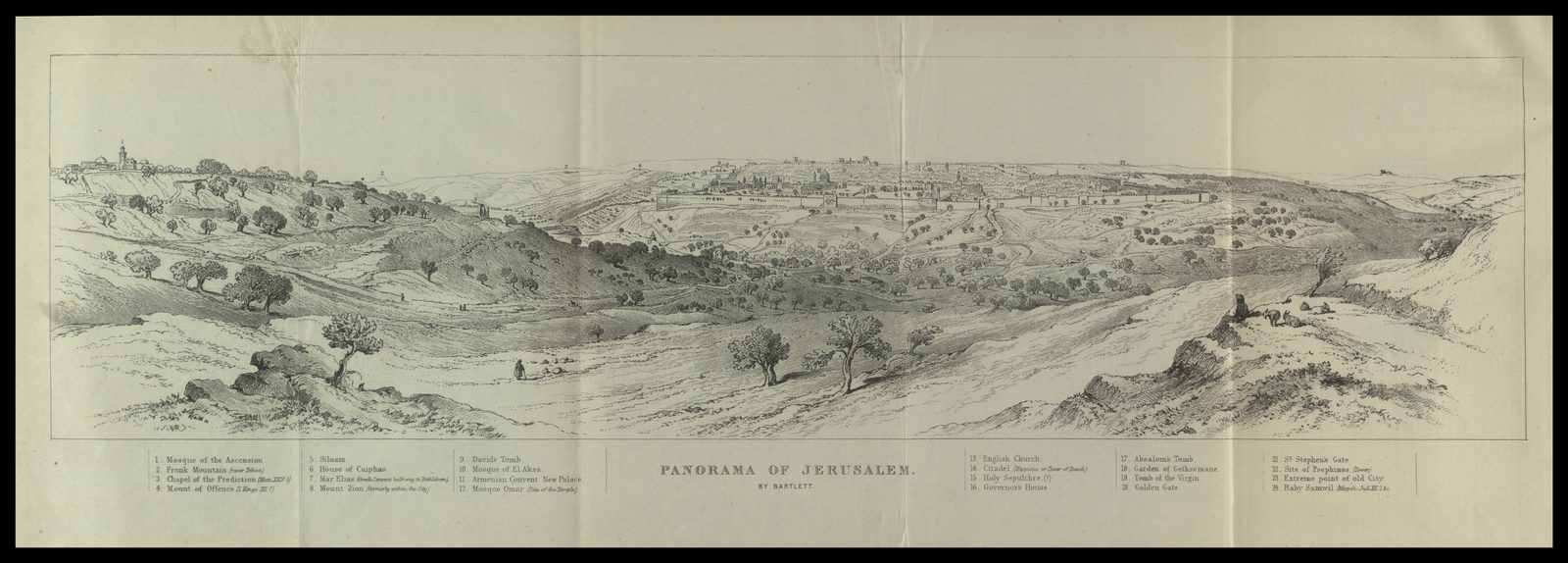
Panorama of Jerusalem. William Henry Bartlett, not stated on the file page. Wikimedia Commons. Public domain.