
Other
Nehemiah
Rebuilder of Jerusalem's Walls · Persian Empire/Post-Exilic · c. 5th century BC (fl. c. 445-433 BC)
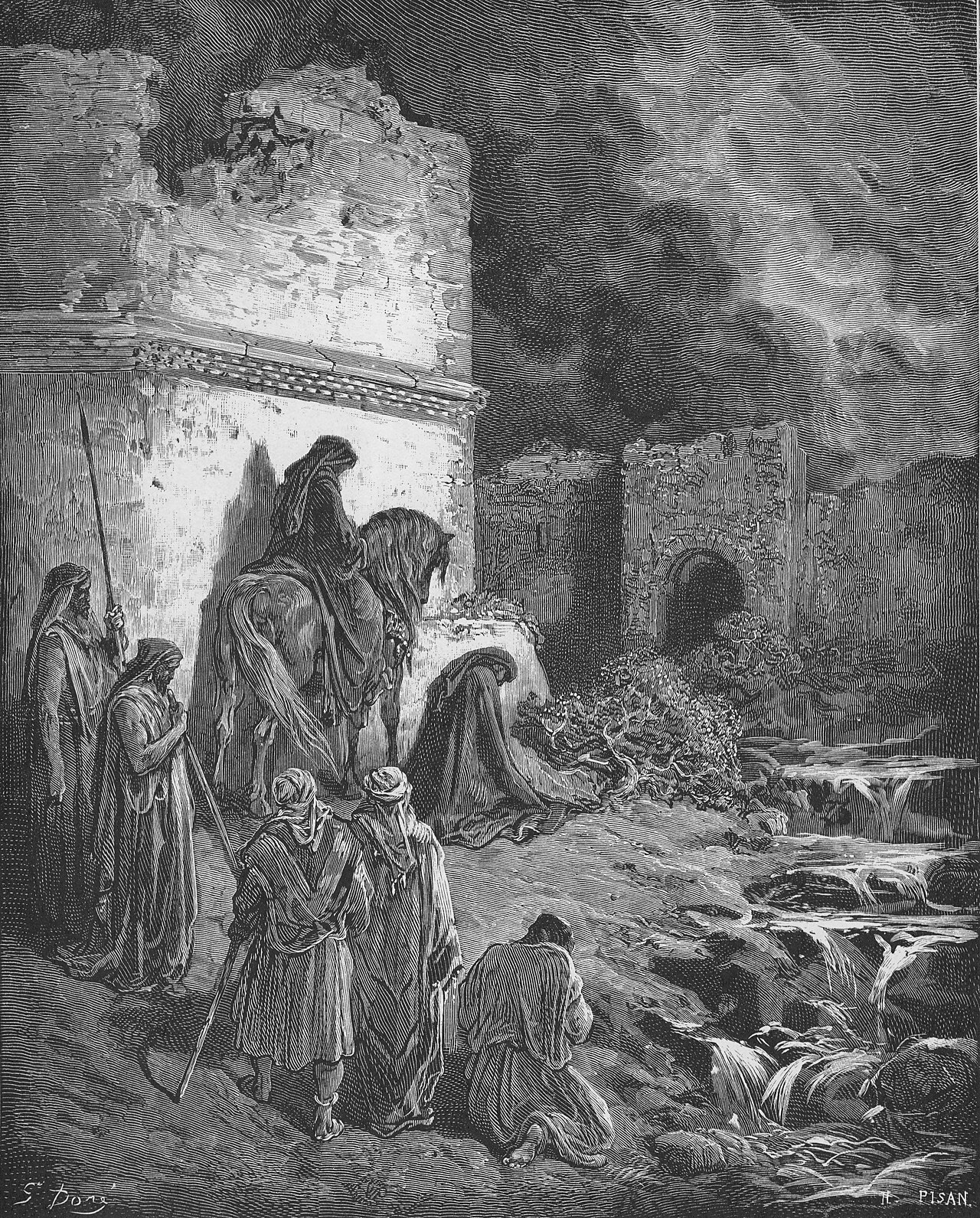
Nehemiah Views the Ruins of Jerusalem's Walls — Gustave Doré, The Holy Bible (1866), public domain
Summary
Nehemiah was cupbearer to the Persian king Artaxerxes who, grieved by reports of Jerusalem's ruined walls, obtained permission to return and lead the rebuilding effort despite fierce opposition, completing the wall in just fifty-two days.
- Among the passages here, Nehemiah is first named in Nehemiah 1:1: “These are the words of Nehemiah son of Hacaliah: In the month of Chislev…”
- The record places Nehemiah in Persian Empire/Post-Exilic.
- 9 verses name Nehemiah, in 2 books.
- 6 moments stand in order on this page, each with its verse.
On this page
Start here
Then I said to them, “You see the trouble we are in. Jerusalem lies in ruins, and its gates have been burned down. Come, let us rebuild the wall of Jerusalem, so that we will no longer be a disgrace.”
Nehemiah 2:17→- 6 key events in order
- 9 verses name Nehemiah, across 2 books
In Scripture
- Verses
- 9
- Books
- 2
Nehemiah
- Role
- Rebuilder of Jerusalem's Walls
- Era
- Persian Empire/Post-Exilic
- Dates
- c. 5th century BC (fl. c. 445-433 BC)
- Tribe
- Judah (Persian court official)
- Father
- Hacaliah
- Mother
- Unknown
- Spouse
- Unknown
The life in order
from the events the row records, with the first and last verse that names the person among the passages this page stands on
1Where the passages this page records open
2What the record holds, in its own order
- Heard of Jerusalem's ruinNehemiah 1:1-4These are the words of Nehemiah son of Hacaliah: In the month of Chislev, in the twentieth year, while I was in the citadel of Susa,
- Granted leave by ArtaxerxesNehemiah 2:1-8Now in the month of Nisan, in the twentieth year of King Artaxerxes, when wine was set before him, I took the wine and gave it to the king. I had never been sad in his presence,
- Rallied the buildersNehemiah 2:17-18Then I said to them, “You see the trouble we are in. Jerusalem lies in ruins, and its gates have been burned down. Come, let us rebuild the wall of Jerusalem, so that we will no longer be a disgrace.”
- Opposed the enemies' schemesNehemiah 4:1-23Now when Sanballat heard that we were rebuilding the wall, he was furious and filled with indignation. He ridiculed the Jews
- Completed the wallNehemiah 6:15-16So the wall was completed in fifty-two days, on the twenty-fifth of Elul.
- Public reading of the LawNehemiah 8:1-12At that time all the people gathered together in the square before the Water Gate, and they asked Ezra the scribe to bring out the Book of the Law of Moses, which the LORD had commanded for Israel.
3Where the passages this page records close
Biography
Nehemiah served as cupbearer in the court of Artaxerxes, a position of trust in the Persian empire, when he received word that Jerusalem's walls lay broken down and its gates burned, leaving the returned exiles in reproach and danger. He wept, fasted, and prayed for days before approaching the king, and Artaxerxes granted his request to return and rebuild, appointing him governor of Judah. Upon arrival, Nehemiah surveyed the ruined walls by night before revealing his plans, then organized the people by families to rebuild sections of the wall simultaneously. Opposition came swiftly from Sanballat, Tobiah, and Geshem, who mocked, threatened, and conspired against the work, forcing the builders to work with a tool in one hand and a weapon in the other. Despite external threats and internal problems of debt and exploitation among the people, which Nehemiah addressed directly by confronting the wealthy who charged interest against their poorer countrymen, the wall was completed in just fifty-two days, a feat that stunned Judah's enemies and was recognized as the work of God. Nehemiah's leadership extended beyond construction to spiritual renewal: alongside Ezra, he oversaw the public reading of the Law, leading the people to weep in conviction before celebrating with the joy of the LORD as their strength. He served as governor for twelve years, later returning to address further corruption in temple practice and Sabbath observance.
Then I said to them, “You see the trouble we are in. Jerusalem lies in ruins, and its gates have been burned down. Come, let us rebuild the wall of Jerusalem, so that we will no longer be a disgrace.”
Nehemiah's call to rebuild for the honor of God's city
More key verses
Text: Berean Standard Bible.
After I had made an inspection, I stood up and said to the nobles, the officials, and the rest of the people, “Do not be afraid of them. Remember the Lord, who is great and awesome, and fight for your brothers, your sons and your daughters, your wives and your homes.”
Then Nehemiah told them, “Go and eat what is rich, drink what is sweet, and send out portions to those who have nothing prepared, since today is holy to our Lord. Do not grieve, for the joy of the LORD is your strength.”
What they got right, and what they got wrong
Strengths
Fervent prayer joined to decisive action, courageous leadership under threat, integrity in addressing economic injustice, organizational skill in a massive undertaking
Weaknesses
Occasional harshness in confronting offenders, struggled with anger toward those who compromised the community's purity
Lessons
Prayer and practical action belong together in godly leadership. Opposition should be met with vigilance, not abandonment of the task. Physical restoration must be joined with spiritual renewal. Joy in the LORD is strength for hard work.
Spiritual significance
Nehemiah demonstrates that prayerful dependence on God and practical, organized leadership belong together, and that rebuilding physical structures must be joined to spiritual renewal to be complete.
How Nehemiah points to Jesus
Nehemiah's rebuilding of Jerusalem's broken walls pictures Christ's work of rebuilding what sin has broken down, restoring both structure and the presence of God among His people.
Nehemiah in Scripture
Open a book to read its mentions here. Text: Berean Standard Bible. Names repeat in Scripture, so some of these verses may speak of another person called Nehemiah. The two marks are drawn from the chapters this page's own references stand in.
Old TestamentNew Testamentsegment width = share of mentions
Old Testament2 books · 9 mentions
Ezra1 mention
Nehemiah8 mentions
- Nehemiah 1:1These are the words of Nehemiah son of Hacaliah: In the month of Chislev, in the twentieth year, while I was in the citadel of Susa,
- Nehemiah 3:16Beyond him, Nehemiah son of Azbuk, ruler of a half-district of Beth-zur, made repairs up to a point opposite the tombs of David, as far as the artificial pool and the House of the Mighty.
- Nehemiah 7:7accompanied by Zerubbabel, Jeshua, Nehemiah, Azariah, Raamiah, Nahamani, Mordecai, Bilshan, Mispereth, Bigvai, Nehum, and Baanah. This is the count of the men of Israel:
- Nehemiah 8:9Nehemiah the governor, Ezra the priest and scribe, and the Levites who were instructing the people said to all of them, “This day is holy to the LORD your God. Do not mourn or weep.” For all the people were weeping as they heard the words of the Law.
- Nehemiah 8:10Then Nehemiah told them, “Go and eat what is rich, drink what is sweet, and send out portions to those who have nothing prepared, since today is holy to our Lord. Do not grieve, for the joy of the LORD is your strength.”
3 further mentions in Nehemiah, read them in the book.
Keep studying
On this page
People1
Trails1
Books1
Doorway1
Keep this page