
The Unseen Realm
Territorial Spirits
One disputed word in the Song of Moses opens onto Daniel's princes, Paul's principalities, and the map behind the nations.
Summary
One disputed word in the Song of Moses opens onto Daniel's princes, Paul's principalities, and the map behind the nations.
- Deuteronomy 32:8's text question changes the verse's map.
- Daniel's princes of Persia and Greece are real actors in the narrative.
- Paul's principalities language assumes the same unseen geography.
- Where the text is plain and where the dispute sits are kept distinct.
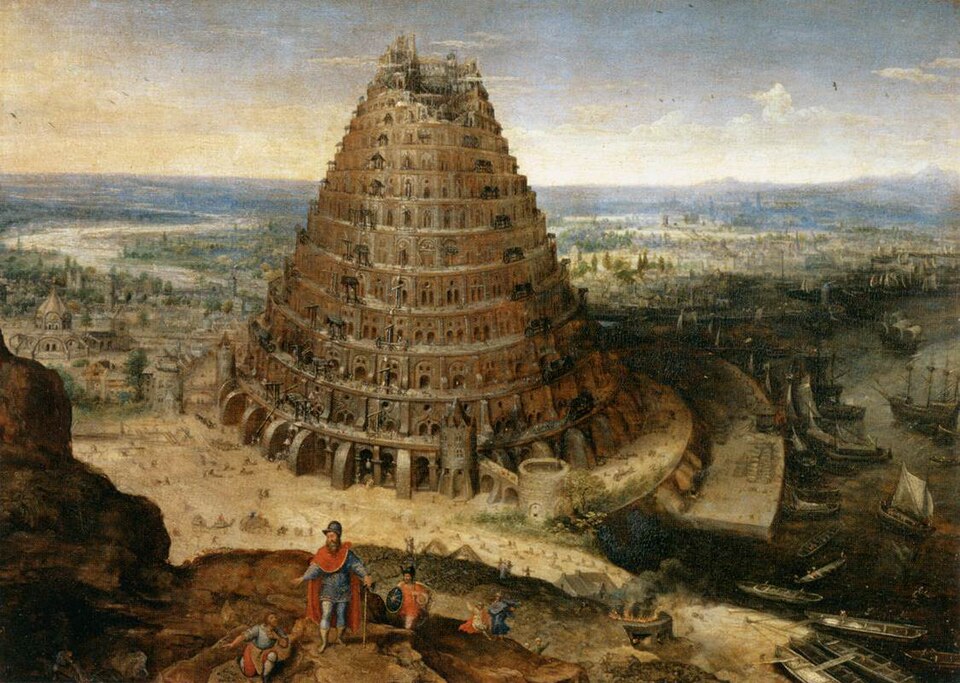
The Tower of Babel — Lucas van Valckenborch
Lucas van Valckenborch, The Tower of Babel (1594) — Public domain, via Wikimedia Commons
The Unseen Realm
The Deuteronomy 32 worldview
The idea begins with a single word. In Deuteronomy 32:8-9 (the Song of Moses), the Most High "divided to the nations their inheritance" and "set the bounds of the people according to the number of", and here the manuscripts fork. The Masoretic Text reads "the children of Israel"; the Dead Sea Scroll 4QDeut-j reads bene elohim, "sons of God," and the Septuagint (Brenton) makes it explicit: "according to the number of the angels of God." On the older, harder reading the nations were parcelled out to heavenly beings at the dividing of humanity, the scattering of Babel (Gen 11).
Verse 9 is the hinge on either reading: "Jehovah's portion is his people; Jacob is the lot of his inheritance" (Deut 32:9, ASV). Israel is not assigned to an intermediary. Every other nation gets a sar; Israel is kept by the LORD directly. Psalm 82 shows the sequel, God standing "in the congregation of God," judging among "the gods" who "judge unjustly" and "respect the persons of the wicked," sentencing them: "ye shall die like men, and fall like one of the princes" (Ps 82:1-2, 7). The allotment was real; so was its corruption.
This is the frame the site adopts, following the DSS/LXX witness, not because it is novel but because it is the reading the oldest copies preserve, and the one the later texts illuminate.
The Unseen Realm
Daniel's princes, Paul's principalities
Daniel 10 puts the concept in motion. Daniel prays; the answer is dispatched immediately but arrives twenty-one days late. The delay is not distance but resistance: "the prince of the kingdom of Persia withstood me one and twenty days; but, lo, Michael, one of the chief princes, came to help me: and I remained there with the kings of Persia" (Dan 10:13, ASV).
The angel then names the sequence, "the prince of Persia: and when I go forth, lo, the prince of Greece shall come", powers bound to named empires, with "Michael your prince" standing for Israel (Dan 10:20-21; cf. 12:1). The Hebrew sar (H8269) is the same word for a human captain; here it names something behind the throne.
Twenty-one days of resistance
"Prayer is heard at once in heaven, though the sensible answer may seem to be delayed. God's messenger was detained on the way (Da 10:13) by the opposition of the powers of darkness. If in our prayers amidst long protracted sorrows we believed God's angel is on his way to us, what consolation it would give us!"
— Jamieson, Fausset & Brown, Commentary Critical and Explanatory on the Whole Bible (1871), on Dan 10:12
Paul carries the concept into Greek without softening it, in the letter he wrote to Ephesus. The Christian wrestles "not against flesh and blood, but against the principalities (archē, G746), against the powers (exousia, G1849), against the world-rulers of this darkness (kosmokratōr, G2888) — a word Paul uses once and never again — against the spiritual hosts of wickedness in the heavenly places"
(Eph 6:12, ASV). Colossians 1:16 lists "thrones or dominions or principalities or powers" as things "created through him"; Colossians 2:15 delivers the resolution: at the cross Christ, "having despoiled the principalities and the powers... triumphing over them in it" (Col 2:15, ASV). The allotted powers of Deuteronomy 32 are the same powers disarmed at Golgotha. That is the arc the texts actually draw.
The Unseen Realm
Where the text is plain and where the dispute sits
The passages claim a great deal, and every reader agrees on the floor of it: real princes over kingdoms (Dan 10), real powers created and then disarmed (Col 1:16; 2:15), a believer's conflict that is genuinely cosmic (Eph 6:12). The live dispute is what follows from that floor, whether the principalities can be identified, engaged, and confronted region by region in intercessory prayer, or whether Scripture stops short of any such method.
This site's tradition stands in the Sheets/Pierce intercession-and-warfare stream. Dutch Sheets frames the intercessor's calling as a specific "watchman anointing", discerning what is moving over a family, city, or region and praying into the resistance Daniel 10 already describes, not merely narrating it (Watchman Prayer, 2000).
Chuck Pierce, Sheets's frequent ministry partner, folds territorial engagement into an integrated intercession-and-prophetic calling rather than a stand-alone technique (The Future War of the Church, with Rebecca Wagner Sytsema, 2001). On this reading, Dan 10's "prince of Persia" and Eph 6's principalities are not background theology; they are what the church's prayer life is actually up against, city by city.
Continuationist and deliverance-ministry teachers raise a caution with real force: no verse in Daniel or Ephesians assigns a name to a regional spirit, ranks it, or scripts a method for binding it. What Paul issues in the very next breath after naming the principalities (Eph 6:13-18) is "the whole armor of God", truth, righteousness, the gospel of peace, faith, salvation, the word of God, and "prayer and supplication... at all seasons in the Spirit" (Eph 6:13, 18, ASV), not a map.
Critics of the 1980s-90s "spiritual mapping" movement (identifying and confronting a city's presiding spirit by name, often from public research into local history and cults) argue the practice outran the text it claimed as warrant. These teachers hold the underlying reality Sheets and Pierce contend for as biblically warranted, while treating any specific naming-and-binding technique as resting on inference the text itself does not supply.
For completeness, a separate critical reading runs the other direction entirely, taking "principalities and powers" as human and structural authorities and the Deut 32 council as inherited Near-Eastern imagery rather than literal spirit-beings. The site does not adopt that reading, but records it as a genuine scholarly position. Every claim on this page is sourced to Scripture, the manuscript witnesses (4QDeut-j, LXX), the standard lexica, or a named work in print; what could not be sourced was left off.
Deuteronomy 32:8-9 · the divided inheritance2
The map behind the map
The Song of Moses says the nations were bounded — parcelled out when the Most High divided their inheritance. The oldest witnesses disagree over one word about how the count was reckoned, and that word is the seed of the whole idea. The figure reads top to bottom.
THE MOST HIGH
Elyon: He set the bounds (v. 8)
by the number of the sons of God (DSS / LXX)
prince 1
a nation
prince 2
a nation
prince 3
a nation
prince 4
a nation
ISRAEL
“the LORD’s portion” (v. 9)
no intermediary: YHWH keeps this one Himself
The word the manuscripts fight over
Masoretic Text
sons of Israel
“He set the bounds of the people according to the number of the children of Israel” (Deut 32:8, KJV, following the MT). A clean, national reading: the boundaries match Israel’s tribes or Jacob’s seventy souls.
Qumran + Septuagint
sons of God
4QDeut-j reads bene elohim; the LXX (Brenton) reads “according to the number of the angels of God.” The nations are apportioned to heavenly beings: the reading that stands behind Daniel’s “princes” and Paul’s “principalities.”
Site postureThe older, harder witnesses (DSS + LXX) carry the weight; the MT’s “sons of Israel” reads as the later, smoothed variant. Verse 9 is the hinge either way: Israel is the LORD’s own portion, held directly.
Daniel 10 · the princes named3
When an angel is delayed by a kingdom
Daniel prays; the answer is dispatched at once but arrives three weeks late. The reason given is not distance but resistance: a “prince” (sar) over a kingdom held the line until Michael broke through.
However, the prince of the kingdom of Persia opposed me for twenty-one days. Then Michael, one of the chief princes, came to help me, for I had been left there with the kings of Persia.A prince over Persia: not a Persian king, but a power behind the throne.
I must return at once to fight against the prince of Persia, and when I have gone forth, behold, the prince of Greece will come... Yet no one has the courage to support me against these, except Michael your prince.Persia, then Greece: princes tied to named empires; Michael is Israel's.
Michael returns in Daniel 12:1 as “the great prince who stands watch over your people”, the same allotment logic as Deut 32:9, now with a name. Psalm 82 shows the other side of the ledger: God judging the elohim who ruled the nations unjustly (Ps 82).
The Archangel Michael (Guido Reni)

Paul’s vocabulary of powers4
The same idea, in Greek
Paul never drops the concept; he renames it. The wrestling of Ephesians 6:12 is “not against flesh and blood, but against the rulers, against the authorities, against the powers of this world’s darkness.” The four load-bearing terms, three of them in that one verse:
For our struggle is not against flesh and blood, but against the rulers, against the authorities, against the powers of this world’s darkness, and against the spiritual forces of evil in the heavenly realms.kosmokratōr, 'world-rulers': appears nowhere else in the NT.
And having disarmed the powers and authorities, He made a public spectacle of them, triumphing over them by the cross.The cross disarms the very powers of the allotment: the resolution.
The line the texts do not cross
What is claimed, and what is added
The texts claim a great deal: real princes over kingdoms, real powers disarmed at the cross. They do not hand over a technique. Everything past the page below is labeled speculation.
◈Modern ‘territorial spirits’ practicecontested · Speculation: beyond the text
A late-20th-century movement (“spiritual mapping,” “strategic-level spiritual warfare”) built a method on Daniel 10 and Ephesians 6: identify the ruling spirit over a city or region, name it, and bind it in prayer. The underlying texts are real; the method is inferred, not commanded.
What Scripture gives instead (Eph 6:13-18):the believer’s armor is truth, righteousness, the gospel, faith, salvation, the word, and prayer. No verse names a regional demon or scripts a binding formula. The cautious-conservative reading holds the powers as real but the practice as unwarranted.
A critical reading goes the other way, reading “principalities and powers” as human and structural authorities, and the Deut 32 council as older Near-Eastern imagery. The site does not adopt it, but records it as a genuine position.
Follow the thread
Word study
kosmokratōrThe 'world-rulers' of Ephesians 6:12: a word Paul uses once and never again.Chapter
Psalm 82The divine council in session: God judges the 'gods' who ruled the nations unjustly.Verse
The disarmingColossians 2:15: where the allotted powers are stripped and paraded in defeat.Word study
sar: princeThe single Hebrew word that carries Persia, Greece, and Michael in Daniel 10.Keep Studying
On this page
Doctrines2