
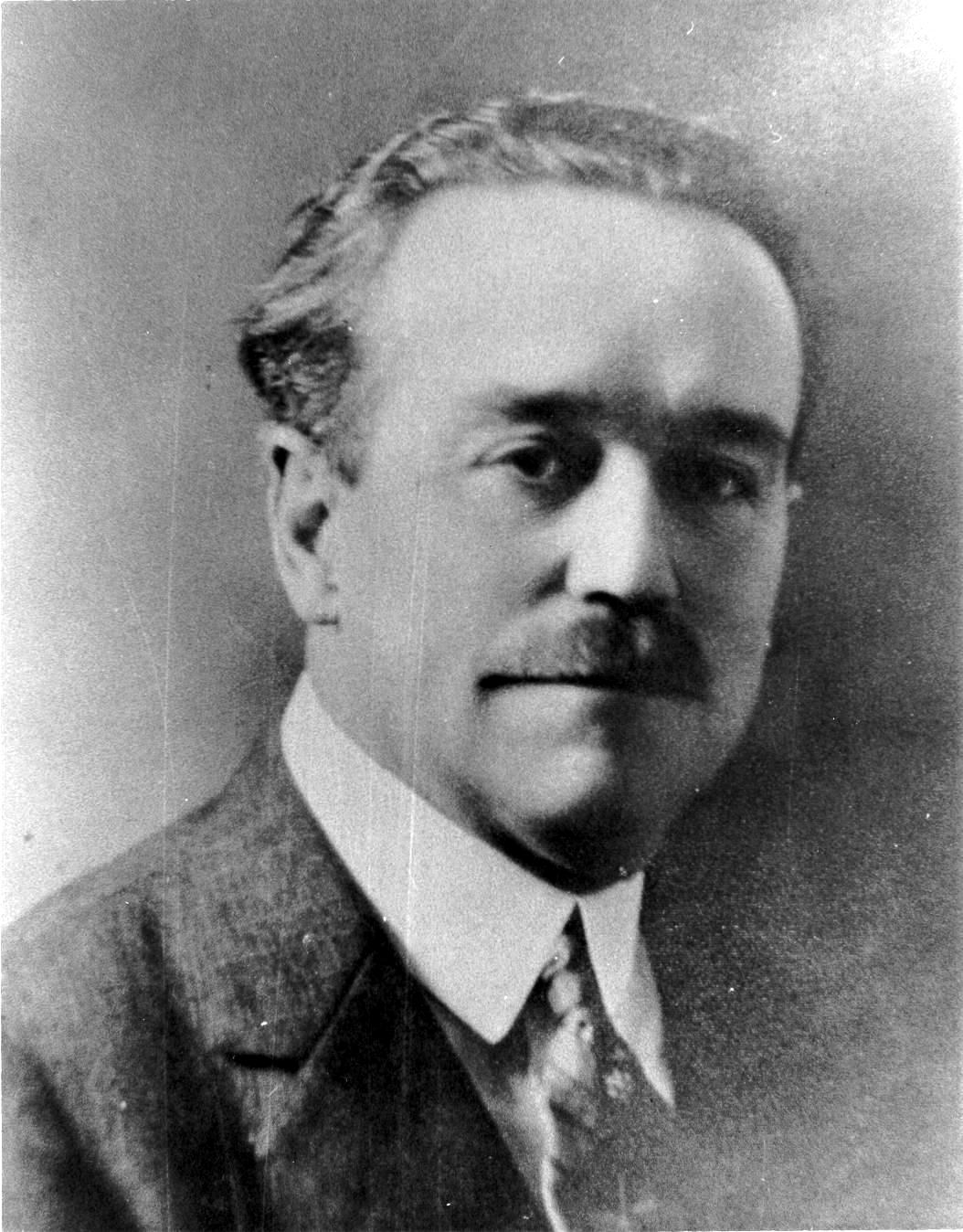
Photographer not named, Charles Fox Parham, before 1929. Public domain.
Kansas and Texas, 1873 to 1929 · Person · Featured Study
Charles Parham
He was a Kansas holiness preacher who framed the Pentecostal teaching of the first sign of the Spirit.
He taught that tongues are the Bible evidence of the Spirit's baptism, and he taught that God sent the flood on the mixing of races.
And they were all filled with the Holy Spirit and began to speak in other tongues as the Spirit enabled them.
And they were all filled with the Holy Spirit and began to speak in other tongues as the Spirit enabled them.
- Born
- 4 June 1873
- Died
- 29 January 1929
- Family
- wife: Sarah Parham
- Places
- Topeka, Houston, Zion City, Baxter Springs
Summary
Charles Fox Parham was born in Iowa in 1873. In January 1901 a student at his school in Topeka spoke in tongues. William J. Seymour heard his teaching at Houston in 1905 and carried it to Los Angeles.
- He denounced the meetings at Azusa Street, and Seymour's elders put him out.
- He was arrested at San Antonio in July 1907, and the outcome of the charge is disputed.
- His paper of April 1910 printed his teaching against the marriage of races.
The Texts He Taught
He built his teaching on the tongues of Acts 2, and Paul's sermon at Athens answers his teaching on race.
The question of this life is what Parham gave the Pentecostal movement and what he taught that the movement left behind. The Topeka and San Antonio papers, his own paper, his wife's life of him and the historians who have weighed them are the witnesses.
From one man He made every nation of men, that they should inhabit the whole earth; and He determined their appointed times and the boundaries of their lands.Paul told the Athenians that God made every nation from one man.
The Life in Order
Each date stands in a paper of the time, in his wife's book or in Vinson Synan's entry on him.
Most of his public life falls between 1898 and his arrest.
- 4 June 1873He was born at Muscatine, IowaSynan, Encyclopedia of the Great Plains
- 1893He became pastor of a Methodist church at Linwood, KansasSynan
- By 1895He became an independent holiness evangelistSynan
- 1898He opened a healing home in TopekaSynan
- 15 October 1900He opened his Bible school in the Stone mansionParham's own account, read by search; Topeka State Journal, 7 January 1901
- January 1901Agnes Ozman spoke in tongues, and by 7 January about fifteen students had the giftTopeka State Journal, 7 January 1901, page 4
- 1905William J. Seymour attended his daily lessons at HoustonSarah Parham (1930)
- September 1906He led meetings at Zion City, IllinoisLos Angeles Herald, 27 September 1906
- October 1906He visited Azusa Street and denounced its meetingsSynan; Sarah Parham (1930)
- 19 July 1907He was arrested at San AntonioSan Antonio Light, 19 July 1907, page 1
- April 1910His paper at Alvin, Texas, printed his chapter on creationGospel of the Kingdom 3:1, front page
- 29 January 1929He died, and he was buried at Baxter Springs, KansasSynan
Each step of the life stands with its witness.
1905, September 1906, October 1906, 19 July 1907, April 1910, 29 January 1929
From Linwood to Baxter Springs
He went from a Methodist pulpit to his own schools, and from Topeka to Houston, Zion City and Los Angeles.
He was a sickly boy, born at Muscatine, Iowa. He entered Southwest Kansas College in 1890 and left without graduating. At Linwood he took up the holiness teaching of an instant second blessing.
He left the Methodist Church to preach on his own. He taught divine healing and the near return of Christ, and Synan writes that he rejected any kind of church organization for the rest of his life. In 1899 he began a paper called the Apostolic Faith.
The press called the house Stone's Folly, and the school gave it up within a year of opening.
At Houston in 1905 he taught a school that William J. Seymour attended each day. Sarah Parham wrote that in Texas Black and white people were not allowed to mix, and that Seymour "was given a place in the class".
Voliva's party at Zion City called his followers "a disgrace to Zion" in the autumn of 1906. In October he went to the Azusa Street Mission, where Seymour led, and condemned what he saw. Synan writes that he called the meetings "darkey camp meeting stunts" and that Seymour and his elders put him out. By 7 November he held daily meetings of his own at the Temperance Temple in Los Angeles.
In the summer of 1907 the police at San Antonio took him and J. J. Jourdan, aged twenty-two, on an affidavit charging "an unnatural offense". He was released on bond the next Tuesday. Joseph Atkinson told the paper that Parham blamed the charge on Voliva and the Chicago Dowieites.
He spent his last years at Baxter Springs, Kansas, and Synan writes that several thousand followers came to his yearly camp meetings there.
The Bible Evidence
He taught that tongues prove the baptism in the Spirit and that they are languages for the mission field.
The holiness movement taught a second work of grace after conversion. Parham and his students searched Acts for the sign of a further baptism in the Spirit, and they settled on speaking in tongues.
He also taught that the tongues were human languages, given so that missionaries could preach without learning the languages in school. Synan writes that all Pentecostals except Parham dropped that belief after attempts in India and other places failed. Gary McGee calls it the flaw in Parham's doctrine.
In Their Own Words
He spoke to a Topeka reporter, and he wrote on the flood and on the sign of tongues.
Charles Fox Parham (1873 to 1929)
Topeka State Journal
Languages for the nations
“We have for long believed that the power of the Lord would be manifested in our midst, and that power would be given us to speak other languages, and that the time will come when we will be sent to go into all the nations and preach the gospel”
Pentecostal
About this saying1 paragraph
He said this to a reporter of the Topeka State Journal, which printed it on page 4 on 7 January 1901.
Charles Fox Parham
God's Plan of the Ages: Creation and Formation, Gospel of the Kingdom, volume 3, number 1, front page, column 3
The reason for the flood
“The reason for the flood is plainly seen. God intended to destroy man whom He had created, with all the half-breeds resulting from inter-marriages.”
Pentecostal
About this saying1 paragraph
He wrote this in April 1910 on the front page of his paper, Gospel of the Kingdom, at Alvin, Texas, under his own name.
Charles Fox Parham
A Voice Crying in the Wilderness, fourth edition (foreword December 1910), searched in the Garland reprint of 1985, page unseen
The sign of the baptism
“Now we want to say to private individuals or to schools, that the speaking in other tongues is an inseparable part of the Baptism of the Holy Spirit distinguishing it from all previous works; and that no one has received Baptism of the Holy Spirit who has not a Bible evidence to show for it.”
Pentecostal
About this saying1 paragraph
He printed this as his teaching on the Spirit's baptism in A Voice Crying in the Wilderness, in the edition whose foreword is dated December 1910.
The People Around Him
His wife wrote his life, his students carried his teaching, and his rivals opposed him.
His most important student went on without him.
| Person | Tie to Charles Parham | The witness |
|---|---|---|
| Sarah Parham | His wife, whose life of him was printed in 1930 | Sarah Parham, The Life of Charles F. Parham (1930) |
| Agnes Ozman | The student who first spoke in tongues at Topeka | Reports of the Kansas press |
| William J. Seymour | His student at Houston, who led the Azusa Street Mission | Sarah Parham (1930); Synan |
| Voliva | The leader at Zion City whose party opposed him | Baxter Springs News, 1 November 1906 |
| J. J. Jourdan | Held with him on the same affidavit | The Light's front page |
| John G. Lake | A man of Zion City whose allegiance turned to him in late 1906 | Barry Morton (2012) |
The Places of His Life
His work ran across Kansas and Texas, with months in Illinois and California.
His schools moved with him from Topeka to Houston.
| Place | What the witnesses say | The witness |
|---|---|---|
| Linwood, Kansas | His Methodist pastorate from 1893 | Synan |
| Topeka, Kansas | His healing home from 1898 and his school from 1900 | Synan; Topeka State Journal |
| Houston, Texas | His school of 1905, where Seymour heard him | Sarah Parham (1930) |
| Zion City, Illinois | His meetings of autumn 1906 | Los Angeles Herald; Baxter Springs News |
| Los Angeles | Azusa Street, and his own meetings at the Temperance Temple | Synan; Los Angeles Herald, 7 November 1906 |
| San Antonio, Texas | The city of the charge | The Light |
| Baxter Springs, Kansas | His home in his last years, and his grave | Synan |
His Teaching on Race
His own paper taught against the marriage of races, and his wife's book and a paper of 1927 show more.
His chapter of 1910 taught that marriage between races brought the flood and that Noah was chosen for "a pedigree without mixed blood in it". On the same page he wrote that if whites, Blacks and the native peoples of America went on marrying one another, disease would soon wipe out those of mixed blood.
Sarah Parham wrote of the Topeka school, "No colored people were ever in the school."
Cecil Robeck reports that Parham's paper at Baxter Springs called the Ku Klux Klan "these splendid men" in March 1927 and said their whole membership needed to be converted. Hyatt, in the Pneuma Review, answers that Parham never belonged to the Klan.
How the Key Verse Was Taught
John Calvin, John Wesley and Jonathan Goforth read the tongues of Pentecost.
John Calvin (1509 to 1564)
Commentary upon the Acts of the Apostles, volume 1, on Acts 2:4
John Calvin held that the disciples truly spoke in other languages.
“But we must first note that the disciples spoke indeed with strange tongues; otherwise the miracle had not been wrought in them, but in the hearers. So that the similitude should have been false whereof he made mention before; neither should the Spirit have been given so much to them as to others.”
Reformed
John Wesley (1703 to 1791)
Explanatory Notes upon the New Testament
John Wesley read the tongues as a pledge that the whole world would praise God.
“And this family praising God together, with the tongues of all the world, was an earnest that the whole world should in due time praise God in their various tongues. As the Spirit gave them utterance - Moses, the type of the law, was of a slow tongue; but the Gospel speaks with a fiery and flaming one.”
on Acts 2:4Evangelical
Jonathan Goforth (1859 to 1936)
By My Spirit, chapter I
Jonathan Goforth, a missionary in China, called Pentecost normal Christianity.
“But though we speak of the manifestations at Pentecost as being abnormal, yet we maintain that Pentecost was normal Christianity.”
Presbyterian missionary
What Historians Dispute
Historians differ on whether he founded the movement and on what came of the charge against him.
Whether he founded the movementJames Goff; Vinson Synan; Cecil Robeck; Allan Anderson
James Goff wrote in 1988 that Parham, more than Seymour, must be regarded as the man who began the Pentecostal movement. Synan writes that Parham is regarded as having begun the worldwide movement and as its "doctrinal father".
Cecil Robeck calls Topeka a short-term Bible school and tells the movement's story from Los Angeles. Allan Anderson names Topeka as the place "where many historians start", among several beginnings.
The outcome of the chargeVinson Synan; Sarah Parham; James Goff
Synan writes that Parham was acquitted. Sarah Parham wrote that "the case was never called", and Goff found no record of an indictment in the Bexar County Courthouse. No court file has been opened, and no record of a trial has been found.
Books to Read Next
Parham, Charles Fox
Vinson Synan, Encyclopedia of the Great Plains · 2011
This short entry gives the dates of his life and his break with Azusa Street.
Read the entry free at the University of NebraskaThe Life of Charles F. Parham
Sarah E. Parham · 1930
His wife's life of him is the movement's own account of him.
Fields White Unto Harvest
James R. Goff · 1988
Goff argues that Parham founded the movement and weighs the charge against him.
In print: find it wherever books are sold.
What Charles Parham Left
Pentecostal churches kept his doctrine of the first sign and went on without him.
Sources
Scripture is the Berean Standard Bible.
- The Holy Bible, Berean Standard Bible (read 2026)
- Vinson Synan, "Parham, Charles Fox", Encyclopedia of the Great Plains, edited by David J. Wishart (University of Nebraska, online)
- Charles F. Parham, God's Plan of the Ages: Creation and Formation, Gospel of the Kingdom 3:1 (Alvin, Texas, April 1910), front page.
- Charles F. Parham, A Voice Crying in the Wilderness, fourth edition (foreword December 1910)
- Topeka State Journal, 7 January 1901, page 4.
- Los Angeles Herald, 27 September 1906, page 8, and 7 November 1906, page 7; Baxter Springs News, 1 November 1906, page 4.
- San Antonio Light, 19 July 1907, page 1; 20 July 1907, page 8; 24 July 1907, page 2.
- Sarah E. Parham, The Life of Charles F. Parham (Joplin, 1930; Garland reprint, 1985)
- James R. Goff, Jr., Fields White Unto Harvest: Charles F. Parham and the Missionary Origins of Pentecostalism (1988)
- Cecil M. Robeck, Jr., in Cyberjournal for Pentecostal-Charismatic Research 14 (2005), and The Azusa Street Mission and Revival (2006)
- Allan Anderson, An Introduction to Pentecostalism (2004)
- Gary B. McGee, Asian Journal of Pentecostal Studies 6:1 (2003)
- Barry Morton, The Devil Who Heals, African Historical Review 44:2 (2012)
- Eddie Hyatt, Across the Lines: Charles Parham's Contribution to the Inter-Racial Character of Early Pentecostalism, The Pneuma Review.
- John Calvin, Commentary upon the Acts of the Apostles, volume 1, on Acts 2:4.
- John Wesley, Explanatory Notes upon the New Testament (1755), on Acts 2:4.
- Jonathan Goforth, By My Spirit, chapter 1.