
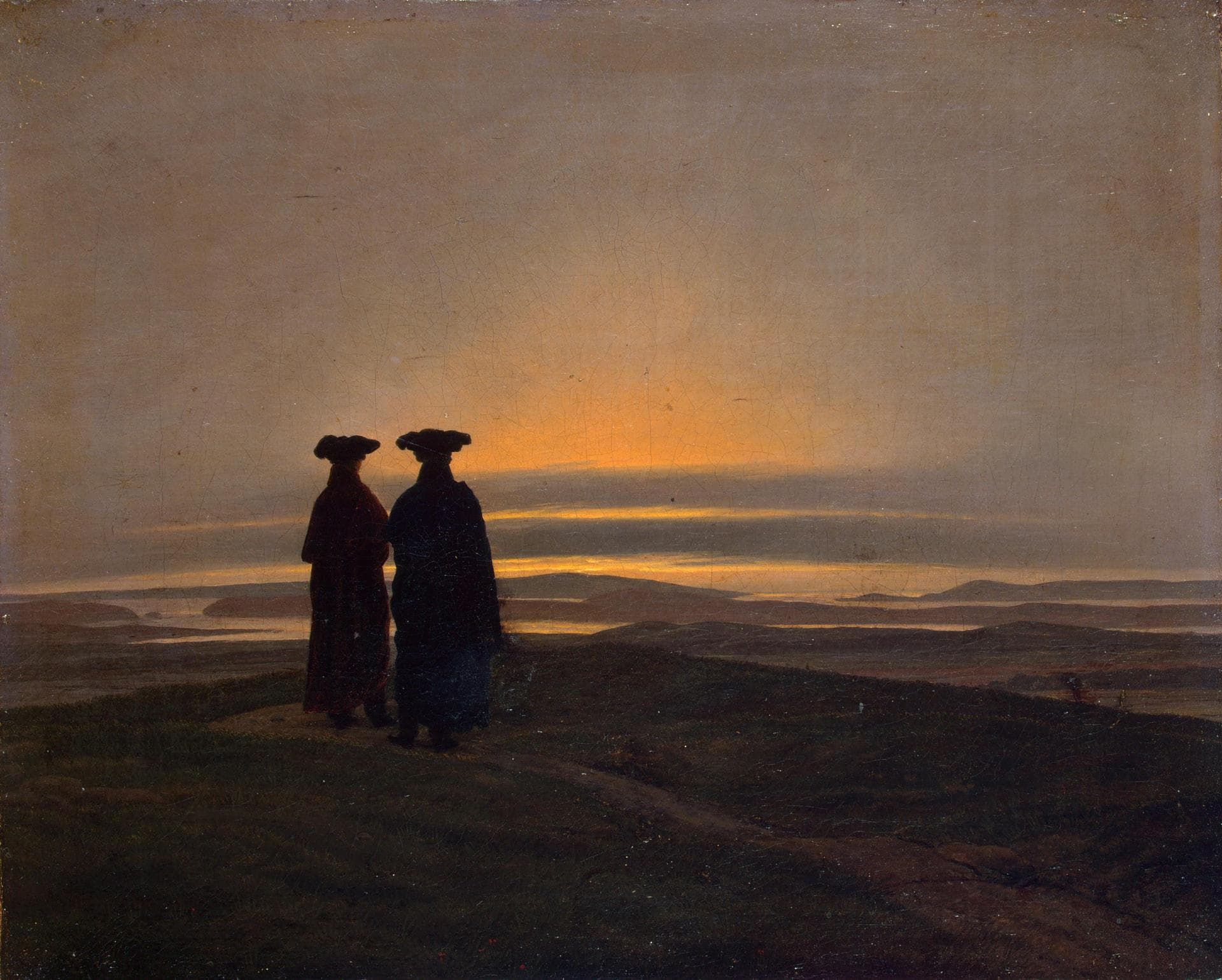
Ephesians 4:26 to 32 · Passage · Anger
Be Angry, Yet Do Not Sin
Paul wrote these verses to the believers at Ephesus about how the members of one body should deal with anger, theft and harmful speech.
The Greek noun Paul uses for the anger the sun must not set upon, parorgismos, stands nowhere else in the New Testament.
Be angry, yet do not sin; on your bed, search your heart and be still. Selah
- The passage
- Ephesians 4:26 to 32, Psalm 4:1 to 8
- Books
- Ephesians, Psalms
- Hold in memory
- Ephesians 4:26, Ephesians 4:31
Summary
The passage treats anger as a matter for the whole church, whose members belong to one another (Ephesians 4:25). Paul allows a believer to be angry and forbids the sin that anger breeds. He then turns the church from bitter speech to kindness and forgiveness, and the ground he gives for that turn is God's forgiveness in Christ.
- The words “Be angry, yet do not sin” come from Psalm 4:4 as its Greek translation renders it, and the Hebrew verb there, ragaz, can mean to tremble as well as to rage.
- Anger kept past sunset gives the devil a foothold (Ephesians 4:26 to 27).
- Ephesians 4:31 names six things to get rid of: bitterness, rage, anger, outcry, slander and malice.
- Teachers have read “Be angry” as a concession to weakness, as a command bounded by its object, and as a call to be angry at one's own sin.
Anger in the New Self
Be Angry, Yet Do Not Sin studies Ephesians 4:26 to 32 with Psalm 4:4, the line of David that Paul quotes. It belongs to the trial of anger and reads Paul's words on being angry without sinning.
The question it answers is what Paul permits, what he forbids and what he puts in anger's place. It sets the six things Paul names in Ephesians 4:31 beside their Greek words, follows the passage from the setting sun to the grieving of the Spirit, and reads the psalm Paul draws on. It also sets out three readings of the words “Be angry” with the teachers who hold them.
The passage stands inside Paul's charge to put off the old self and to put on the new self, “created to be like God in true righteousness and holiness” (Ephesians 4:22 to 24).
Six Things to Get Rid Of
The verb of the list, artheto, is an aorist passive imperative that means let it be taken away.
Paul's list in Ephesians 4:31 runs from bitterness to every form of malice, and two of its six Greek words are words for anger.
| The Berean word | The Greek word | Strong's number | Strong's gloss |
|---|---|---|---|
| “bitterness” | pikria | G4088 | acridity (especially poison), literally or figuratively |
| “rage” | thymos | G2372 | passion (as if breathing hard) |
| “anger” | orge | G3709 | violent passion (ire, or (justifiable) abhorrence) |
| “outcry” | krauge | G2906 | an outcry (in notification, tumult or grief) |
| “slander” | blasphemia | G988 | vilification (especially against God) |
| “every form of malice” | kakia | G2549 | badness, i.e. (subjectively) depravity, or (actively) malignity |
Paul follows the list with its opposite in Ephesians 4:32.
From Sundown to the Grieving of the Spirit
Paul moves from anger to theft, to speech and to the Holy Spirit.
“Be angry, yet do not sin.” Do not let the sun set upon your anger,The verse stands here because it gives anger both of its limits, the line of sin and the line of the setting sun.
The first verb, orgizesthe, is a present imperative, and the second, hamartanete, is a present imperative with the negative. Parorgismos is built on orge with the prefix para.
Anger and Murder of the Heart: Matthew 5:21 to 22 and Ephesians 4:26
Paul joins the limit of time to a warning, “and do not give the devil a foothold” (Ephesians 4:27). The thief is then told to steal no longer and to work with his own hands, “that he may have something to share with the one in need” (Ephesians 4:28).
Speech is to build up and to bring “grace to those who listen” (Ephesians 4:29). Then Paul writes, “And do not grieve the Holy Spirit of God, in whom you were sealed for the day of redemption” (Ephesians 4:30).
The Psalm Behind Paul's Words
The words Paul quotes first stood in an evening prayer of David.
In Psalm 4:2 David asks, “How long, O men, will my honor be maligned? How long will you love vanity and seek after lies?” The line Paul quotes is spoken to those men.
The Hebrew verb of Psalm 4:4 is rigzu, from ragaz, which Strong's glosses “to quiver (with any violent emotion, especially anger or fear).”
John Calvin, in his commentary on Ephesians (translated by William Pringle, 1854), noted that Paul's words occur in the Greek translation of the psalm. He wrote that the Hebrew verb “signifies either to be agitated by anger, or, to tremble,” and that the idea of trembling suits the psalm.
The rest of the psalm's line is the part Paul leaves out. Its Hebrew reads imru bilvavkhem, speak in your heart, upon your bed, and vedommu, be silent.
“‘Tremble and sin not.’ How many reverse this counsel and sin but tremble not. O that men would take the advice of this verse and commune with their own hearts. Surely a want of thought must be one reason why men are so mad as to despite Christ and hate their own mercies. O that for once their passions would be quiet and let them be still, that so in solemn silence they might review the past, and meditate upon their inevitable doom.”
Charles Spurgeon · The Treasury of David, Vol. 1 · on Psalm 4:4
The Sundown Rule in the Early Church
Tertullian tied the limit of Ephesians 4:26 to prayer.
died 220 · Tertullian
Tertullian taught that anger kept past sunset puts a believer's prayer at risk.
The reading2 paragraphs
Tertullian, in his treatise On Prayer (chapter 11), wrote that “our anger must not be maintained beyond sunset, as the apostle admonishes.”
He asked how rash it is “by perseverance in anger, to lose your prayer.”
Three Readings of “Be Angry”
Each reading has its teachers and meets an objection from the text of Ephesians 4.
A concession to human weaknessJohn Chrysostom; Adam Clarke
“Observe his wisdom. He both speaks to prevent our sinning, and, if we do not listen, still does not forsake us; for his fatherly compassion does not desert him. For just as the physician prescribes to the sick what he must do, and if he does not submit to it, still does not treat him with contempt, but proceeding to add what advice he can by persuasion, again goes on with the cure; so also does Paul. For he indeed who does otherwise, aims only at reputation, and is annoyed at being disregarded; whereas he who on all occasions aims at the recovery of the patient, has this single object in view, how he may restore the patient, and raise him up again. This then is what Paul is doing. He has said, ‘Lie not.’ Yet if ever lying should produce anger, he goes on again to cure this also. For what saith he? ‘Be ye angry, and sin not.’ It were good indeed never to be angry. Yet if ever any one should fall into passion, still let him not fall into so great a degree. ‘For let not the sun,’ saith he, ‘go down upon your wrath.’ Wouldest thou have thy fill of anger? One hour, or two, or three, is enough for thee; let not the sun depart, and leave you both at enmity. It was of God's goodness that he rose: let him not depart, having shone on unworthy men. For if the Lord of His great goodness sent him, and hath Himself forgiven thee thy sins, and yet thou forgivest not thy neighbor, look, how great an evil is this! And there is yet another besides this. The blessed Paul dreads the night, lest overtaking in solitude him that was wronged, still burning with anger, it should again kindle up the fire. […]”
John Chrysostom · Homily on Ephesians 14 · on Ephesians 4:26Patristic
Adam Clarke, in his Commentary on the Bible (1832), read the verb as a condition and wrote, “We can never suppose that the apostle delivers this as a precept.”
The objection: orgizesthe is an imperative in form, as hamartanete is, and Paul sets the two verbs side by side.
A command bounded by its objectJohn Wesley; Jamieson, Fausset and Brown
John Wesley, in his Explanatory Notes upon the New Testament (1755), wrote on the verse, “Anger at sin is not evil; but we should feel only pity to the sinner.”
Jamieson, Fausset and Brown, in their Commentary Critical and Explanatory (1871), pointed to the anger of Jesus in Mark 3:5, when He looked at His hearers “with anger and sorrow at their hardness of heart.”
They wrote that anger called for by circumstances should be like His, “without sin.”
The objection: five verses later Paul tells the same readers to get rid of all anger (Ephesians 4:31).
Anger at one's own sinAugustine of Hippo
Augustine of Hippo, in his Expositions on the Psalms, read the words as a call to be angry “with yourselves for your past sins, and henceforth cease to sin.”
The objection: Paul joins the words to the setting of the sun and to dealings with a neighbor, so the anger he speaks of is anger at another person (Ephesians 4:25 to 27).
Before the Sun Sets
Paul sets kindness and forgiveness where bitterness and malice stood. Anger that will not settle by evening, or that comes with sleeplessness or a pounding heart, is brought to a physician as well as to prayer, and prayer never takes the physician's place.
Sources
Scripture is the Berean Standard Bible.
- STEP Bible, Translators Amalgamated Greek New Testament and Hebrew Old Testament (Tyndale House, Cambridge), CC BY 4.0.
- STEP Bible brief lexicons of Extended Strongs (Tyndale House, Cambridge), CC BY 4.0, with the glosses of James Strong, Strong's Exhaustive Concordance of the Bible (1890)
- John Calvin, Commentaries on the Epistles of Paul to the Galatians and Ephesians, translated by William Pringle (Calvin Translation Society, 1854), on Ephesians 4:26.
- John Wesley, Explanatory Notes upon the New Testament (1755), on Ephesians 4:26.
- Adam Clarke, Commentary on the Bible (1832), on Ephesians 4:26.
- Robert Jamieson, A. R. Fausset and David Brown, Commentary Critical and Explanatory on the Whole Bible (1871), on Ephesians 4:26.
- John Chrysostom, Homilies on Ephesians, Homily 14, translated by John A. Broadus (Nicene and Post-Nicene Fathers, first series, volume 13, 1889)
- Augustine of Hippo, Expositions on the Psalms, Psalm 4, section 6 (volume 8 of the first series of the Nicene and Post-Nicene Fathers, 1888)
- Tertullian, On Prayer, chapter 11, translated by S. Thelwall (Ante-Nicene Fathers, volume 3, 1885)
- Charles Spurgeon, The Treasury of David, volume 1 (1869), on Psalm 4:4.
Keep Studying
In this trial7
People and groups11